IN THE ODYSSEY, WE DO NOT MERELY SEE ODYSSEUS. WE SEE OURSELVES
Nearly three millennia ago, The Odyssey narrated the story of a king struggling to return home after war. Yet the reason this epic continues to captivate readers across continents and centuries is that it transcends geography, history and mythology. It is not merely the story of Odysseus. It is the story of humanity itself. The Odyssey begins after the fall of Troy. The war is over. Victory has been achieved. Odysseus, King of Ithaca, longs to return to his wife Penelope and his son Telemachus. His destination is clear. His journey is not. Life often unfolds in the same manner. We know where we wish to arrive. We seldom know what awaits us on the road.
The first great challenge comes in the land of the Lotus-Eaters, where those who consume the lotus lose memory, purpose and the desire to continue their journey. The episode is profoundly relevant today. Every age possesses its own lotus flowers—comfort, distraction, complacency, consumerism and the seductive illusion that immediate pleasure is a substitute for meaningful purpose.
A CIVILIZATION THAT FORGETS ITS PURPOSE BEGINS TO LOSE ITS SOUL.
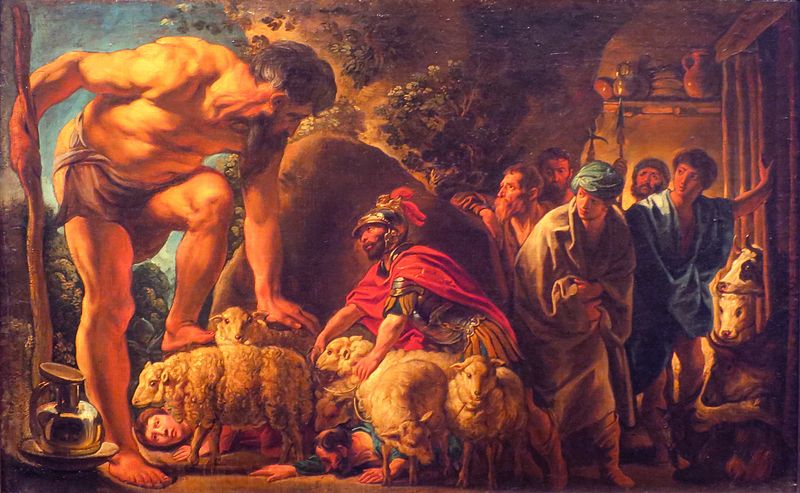
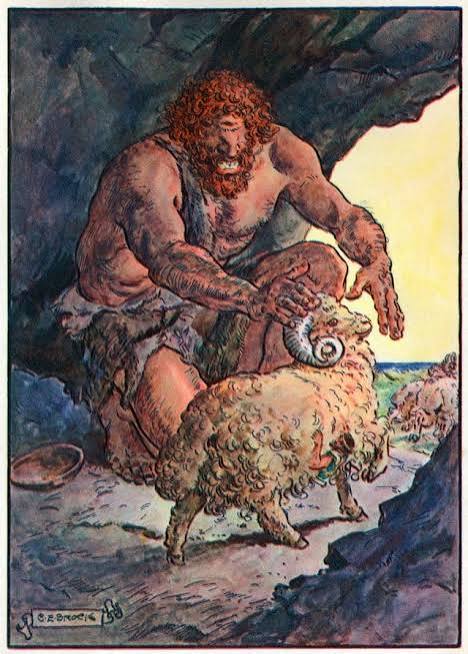
Odysseus forces his companions back to the ships and sails onward. Soon he encounters the Cyclops Polyphemus, a giant possessing immense strength but devoid of compassion and restraint. The Cyclops devours the weak simply because he possesses the power to do so. The Cyclops survives in every age. It appears whenever power is divorced from morality, whenever greed overwhelms conscience, whenever institutions forget their responsibilities, and whenever the strong exploit the vulnerable.
POWER WITHOUT CONSCIENCE BECOMES MONSTROUS. Odysseus escapes not through superior strength but through wisdom, patience and ingenuity. Civilization itself survives by the same virtues. His voyage then encounters another danger. Aeolus entrusts him with a bag containing destructive winds. Yet human impatience and mistrust lead his companions to open it, unleashing chaos and driving them far from home. The lesson remains timeless. Humanity’s greatest achievements often become its greatest dangers when knowledge is not accompanied by wisdom.
THE GREATEST THREATS OFTEN ARISE NOT FROM IGNORANCE BUT FROM THE MISUSE OF KNOWLEDGE.
The journey continues to the island of Circe, who transforms men into beasts. The symbolism is universal. Human beings possess extraordinary capacities for reason, empathy and moral judgment. Yet fear, hatred, greed and selfishness can reduce individuals and societies to their basest instincts. Civilizations rarely decline because they lack intelligence. They decline because they lose their moral bearings. Seeking guidance, Odysseus descends into the underworld and encounters the dead. There he listens to voices of memory, sacrifice and loss. The episode reminds us that every civilization carries an invisible burden of forgotten suffering. The victims of wars, famines, oppression, displacement and injustice continue to speak through history.
A NATION THAT FORGETS ITS SUFFERING RISKS REPEATING IT. Odysseus next confronts the Sirens, whose enchanting songs promise knowledge, certainty and fulfillment. Their voices remain audible in the modern world. They speak through demagoguery, fanaticism, propaganda, easy answers and seductive illusions. Wisdom does not require refusing to listen; it requires refusing to surrender judgment.
FREEDOM WITHOUT SELF-RESTRAINT IS ANOTHER FORM OF CAPTIVITY
Then comes the perilous passage between Scylla and Charybdis, where danger lies on both sides. There is no perfect route, only difficult choices. This episode captures one of the deepest truths of public life and human existence. Individuals and societies alike must often navigate between competing risks and imperfect alternatives. As the voyage progresses, Odysseus loses his companions one by one. Storms claim them. Errors claim them. Fate claims them. Eventually he stands alone.
At this point, the Odyssey ceases to be mythology and becomes autobiography. Every human being eventually encounters loss. Dreams perish. Friendships fracture. Health deteriorates. Loved ones depart. Certainties vanish. The great illusion of modernity is that every suffering can be cured. Yet the wisdom of the ages teaches otherwise.
A SUFFERING THAT CANNOT BE CURED HAS TO BE ENDURED. The ancient Stoics understood it. The sages of India understood it. The timeless wisdom of the Thirukkural teaches that one who is not intoxicated by temporary joys will not be overwhelmed by temporary sorrows.
HE WHO IS NOT INTOXICATED BY JOY WILL NOT BE DESTROYED BY SORROW. This truth finds a powerful echo in The Old Man and the Sea, where an ageing fisherman confronts the relentless sea and discovers a profound truth about human dignity.
MAN IS NOT MADE FOR DEFEAT. A MAN CAN BE DESTROYED BUT NOT DEFEATED. The old fisherman battles the sea. Odysseus battles the sea. Humanity battles the sea. The sea merely changes its name. For some it is poverty. For others illness. For others grief, loneliness, injustice, exile or disappointment. The waves differ. The struggle remains. When offered comfort, immortality and escape from hardship by Calypso, Odysseus refuses. He chooses uncertainty over complacency and struggle over surrender. He understands that human fulfillment cannot be found in comfort alone. After twenty years of absence, he finally reaches Ithaca. Yet even home has changed. His palace has been occupied. His household has suffered. His responsibilities remain. The restoration of justice still lies ahead.
The ending of the Odyssey contains one of its deepest insights. The destination is not the ultimate achievement. The true achievement is what the journey has made of the traveller. The epic therefore is not merely about returning home. It is about preserving one’s humanity amidst adversity. It is about courage without certainty, perseverance without guarantees and hope without illusions.
I DO NOT BELONG TO YOUR SCHOOL OF THOUGHT. I MAY BE DIFFERENT. Progress has always depended upon such individuals—those who think independently, who challenge prevailing assumptions, who continue despite criticism and who refuse to surrender their convictions.
I MAY NOT WALK FAST, BUT I WILL NOT WALK BACKWARDS. That simple declaration captures the essence of the Odyssey. Odysseus survives because he refuses to abandon the voyage. Humanity advances because countless individuals across generations have done the same. The enduring relevance of the Odyssey lies in its recognition that suffering is universal, that temptation is perennial, that power must be restrained by morality and that hope remains humanity’s most indispensable companion.
THE MEASURE OF A LIFE IS NOT WHETHER EVERY STORM WAS AVOIDED. THE MEASURE OF A LIFE IS WHETHER ONE CONTINUED TO SAIL. That is why the Odyssey remains immortal. It is not merely the story of an ancient Greek king. It is the story of mankind’s unending search for wisdom, dignity, justice, meaning and belonging. The names change. The centuries pass. Empires rise and fall. Technologies evolve. Yet the voyage continues.
And somewhere beyond the horizon, humanity still searches for its Ithaca.
Note
Christopher Nolan’s upcoming film The Odyssey is scheduled for worldwide release on 17 July 2026. The film is a large-scale adaptation of Homer’s immortal epic and has already generated enormous global interest.

M. Shiva Prasad, IPS (Rtd.) is a dedicated law enforcement professional who served the combined Andhra Pradesh cadre before opting for the Telangana cadre. Though a native of Andhra Pradesh, he considers himself a true Hyderabadi with an abiding love for the Telugu people. Driven by sincerity, fearlessness, and a lifelong fight against inequality and injustice, his ultimate strengths remain his goodwill and deep affection for the public and the police force. Today, he continues his mission by writing snippets and articles true to his conscience.
Email: Shivareach@yahoo.com
Mobile: 98480 38774