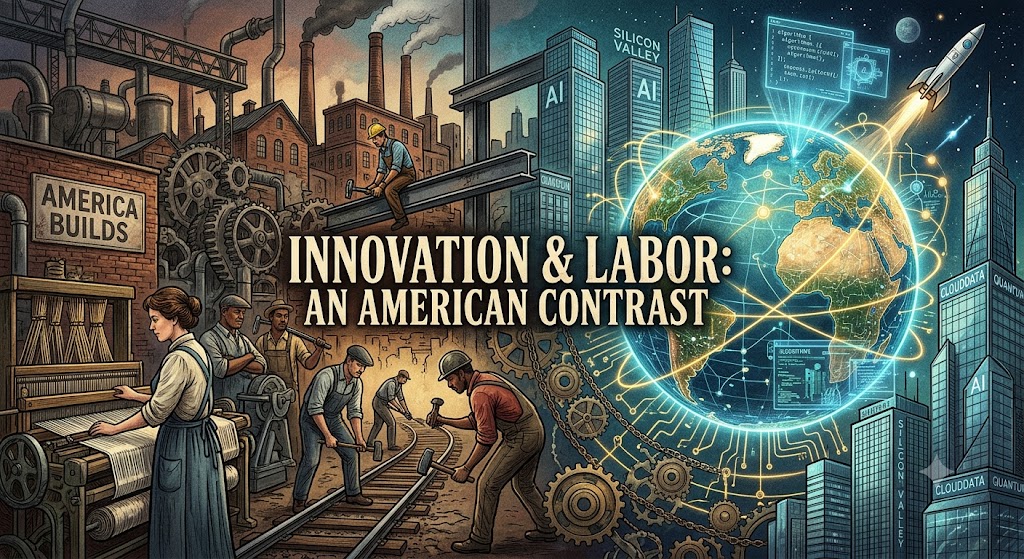
An indictment of racial hypocrisy, economic exploitation, imperial arrogance and the moral obligations of India’s global elite
“We have to give back to the nation its lost individuality and raise the masses.” — Swami Vivekananda
THE HELLHOLE EPISODE: AMERICAN EXCEPTIONALISM EXPOSED
When President Donald Trump shared a transcript containing the description of India as a “hellhole”, it exposed an uncomfortable contradiction in American political culture. The expression originated with conservative commentator Michael Savage, whose remarks Trump reposted without adding his own commentary. India’s indignation was understandable. The Ministry of External Affairs described the remarks as uninformed, inappropriate and in poor taste. The issue transcends one politician’s social-media activity. Why does America welcome Indian scientists, engineers, physicians and technology executives into its universities, laboratories and boardrooms, yet tolerate rhetoric that demeans the societies from which many immigrants originate?
India’s poverty, inequality and institutional shortcomings are real and must be confronted. But acknowledging domestic failures does not require accepting civilisational humiliation from abroad. A country cannot simultaneously celebrate the contributions of immigrants and disparage their origins without exposing the contradictions in its own public discourse.
WHO REALLY MADE AMERICA GREAT?
American prosperity was not fashioned by enterprise alone. Its history is inseparable from Indigenous dispossession, African enslavement, immigrant labour, industrial exploitation and the accumulation of wealth through unequal power. Indigenous peoples inhabited the continent for millennia before European colonisation dispossessed them of their lands. Enslaved Africans generated enormous agricultural wealth, particularly through plantation production, while slavery’s profits permeated shipping, insurance, finance and commerce. Generations of workers and immigrants subsequently helped build America’s railways, industries, cities and institutions.
The enslavers accumulated fortunes; enslaved Africans supplied coerced labour; Indigenous communities suffered dispossession; and generations of workers helped construct the prosperity that America celebrates today. The phrase “the slavers, the downtrodden and the rotten” is a polemical indictment, not a literal description of every American or every contributor to American prosperity. Its moral force lies in exposing the historical contradictions obscured by triumphalist national narratives. The republic that proclaimed liberty tolerated slavery. The nation that celebrated equality institutionalised racial segregation. The power that advocates international rules has, at various moments, subordinated other nations’ sovereignty to strategic interests. To acknowledge these realities is not to deny American achievements in science, technology, constitutional government or democratic reform. It is to reject the notion that national greatness confers immunity from historical accountability.
TRADE AND MIGRATION: INSTRUMENTS OF LEVERAGE
American trade and migration policies demonstrate how economic opportunity can become an instrument of geopolitical leverage. Tariffs, market-access restrictions, export controls and sanctions can protect domestic industries, pursue legitimate security objectives or pressure other governments. Yet when applied selectively or coercively, they can impose disproportionate costs on developing economies and undermine equitable international commerce. Migration policy presents a parallel contradiction. American universities and corporations benefit from highly skilled foreign professionals, while visa restrictions, uncertainty over immigration status and political hostility towards migrants can leave workers and families vulnerable to changing political priorities.
The H-1B visa system has enabled American employers to recruit specialised talent, but its employer-dependent structure can also constrain workers’ freedom to change jobs. The central question is whether trade and migration are governed by transparent, reciprocal rules or manipulated to maximise American advantage at the expense of weaker negotiating partners. India must respond not with indiscriminate confrontation, but with stronger domestic manufacturing, diversified export markets, skilled-employment opportunities and principled negotiations that protect national interests.
THE MILITARY-INDUSTRIAL COMPLEX: PROFIT IN THE SHADOW OF WAR

America’s global supremacy rests partly on its military reach and enormous defence industry. Its armed forces and security partnerships have shaped conflicts across continents, while American defence contractors supply sophisticated weapons systems to the United States and foreign governments. According to the Stockholm International Peace Research Institute (SIPRI), global military expenditure reached US$2.718 trillion in 2024, a record at the time. The United States accounted for US$997 billion, approximately 37% of the global total, making it the world’s largest military spender. (SIPRI)
These figures do not establish that American weapons alone cause global conflict, nor do they erase the security concerns of states purchasing arms. They do, however, expose the immense economic scale of a system in which insecurity generates sustained demand for military equipment. The 2003 invasion of Iraq, justified partly by claims about weapons of mass destruction that subsequent investigations failed to substantiate, remains a stark warning about the human consequences of disastrous strategic decisions. Weapons transfers can strengthen deterrence, but they can also intensify conflicts, prolong hostilities and inflict devastating civilian casualties.
When national security becomes inseparable from commercial interests, the danger is that peace ceases to be the overriding objective and war becomes a recurring market. America is not alone in exporting weapons or pursuing strategic advantage. Russia, China, European states and other arms suppliers must face the same scrutiny. The imperative is to strengthen international law, arms-control mechanisms, diplomatic conflict resolution and accountability for civilian harm.
INDIA’S TECHNOLOGICAL ELITE: WHO BENEFITS FROM GLOBAL SUCCESS?
Consider Sundar Pichai of Alphabet and Google, Satya Nadella of Microsoft, Shantanu Narayen of Adobe, Arvind Krishna of IBM, Raj Subramaniam of FedEx and Nikesh Arora of Palo Alto Networks. Neal Mohan, who leads YouTube, is another prominent American executive of Indian parentage. Their achievements deserve recognition. Their success reflects individual ability, family sacrifice, educational foundations, professional experience and the institutions that enabled them to flourish. It would be inaccurate to claim that India alone created every one of these leaders; some received much of their education in America, while others were educated substantially in India. Yet the contribution of Indian families, teachers and educational institutions to the development of many overseas professionals cannot be dismissed. The sacrifices of parents and the investment made in education helped prepare numerous Indians to compete internationally.
The relevant question is not whether these executives owe India compulsory allegiance. It is whether extraordinary success should inspire a voluntary commitment to the wider society from which some of their opportunities emerged. India received approximately US$129 billion in remittances in 2024, according to World Bank estimates. Such transfers support millions of households and strengthen the country’s external financial position. Diaspora philanthropy, investment and professional collaboration also contribute to development.
During India’s devastating COVID-19 crisis in 2021, Google announced ₹135 crore in relief funding, while Pichai announced a personal contribution of ₹5 crore. Microsoft also pledged support for India’s emergency response. These contributions must be acknowledged. Equally, remittances to families should not be confused with philanthropy, and corporate investment should not be presented as an executive’s personal donation. Corporate resources are subject to governance, shareholder obligations and legal responsibilities. The unanswered question is whether the enormous capabilities of India’s global professional community can be mobilised more systematically to support public education, scientific research, affordable healthcare, disability services and opportunities for disadvantaged children. The issue is not whether every successful Indian abroad must return home. It is whether individual advancement can be transformed into collective progress.
AMERICA’S ECONOMIC POWER AND INDIA’S STRATEGIC AUTONOMY
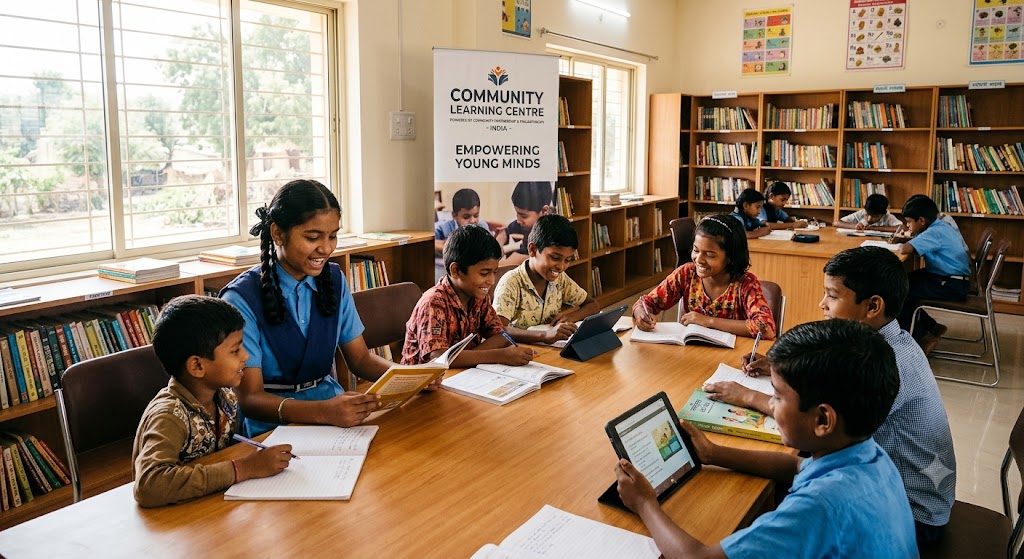
The United States exercises global influence not only through military strength but also through the dollar, capital markets, financial institutions and technological platforms. The dollar’s central role in international transactions confers significant advantages on Washington, including the capacity to impose financial sanctions that affect governments, companies and ordinary citizens beyond American borders. Sanctions may serve legitimate purposes when responding to aggression or serious violations of international law. Yet they can also impose humanitarian costs, disrupt commerce and place third countries in difficult positions. Their legitimacy must therefore be judged by their legal basis, proportionality, effectiveness and consequences.
American technology corporations have transformed communication, computing, commerce and scientific collaboration. Nevertheless, concentrated control over digital infrastructure raises concerns about privacy, market power, data ownership and technological dependence. India must engage with American innovation without surrendering its strategic autonomy. Investment in semiconductors, artificial intelligence, domestic research, advanced manufacturing and higher education is essential if India is to become a creator of technology rather than remain predominantly a market for imported products and services. The same principle applies to skilled migration. Indians should not be condemned for seeking better opportunities abroad. The more pertinent question is why India sometimes struggles to provide the research facilities, professional autonomy and resources needed to retain its most capable people. Brain drain becomes a national tragedy when talent leaves for want of opportunity and the country fails to establish meaningful channels through which that talent can contribute to national development.
RACIAL PREJUDICE AND CONDITIONAL ACCEPTANCE
Indian Americans occupy influential positions in business, science, medicine and technology. Their achievements, however, do not prove that racial prejudice has disappeared. American history includes the exclusion of Chinese immigrants, the wartime incarceration of Japanese Americans and the systematic oppression of African Americans. South Asians also encountered discriminatory immigration restrictions. These histories demonstrate how societies that benefit from immigrant labour can simultaneously construct barriers against immigrant communities. Contemporary immigration debates are more complex, but the underlying question persists: are migrants welcomed as equal participants in society or valued principally for the economic benefits they deliver? The contradiction becomes particularly glaring when immigrant professionals are celebrated for their contributions while their countries of origin are disparaged.
Yet America is not a monolith. Its civil-rights movements, constitutional institutions and citizens have repeatedly challenged racial discrimination. Criticism must target prejudice, discriminatory policies and political exploitation rather than condemn an entire population. India, too, must confront caste discrimination, religious hostility, economic exclusion and unequal access to opportunity. A country demanding respect abroad must demonstrate respect for human dignity at home. Civilisational pride without self-criticism is merely another form of arrogance.
VIVEKANANDA’S CHALLENGE: GIVE BACK, BUT BUILD INSTITUTIONS
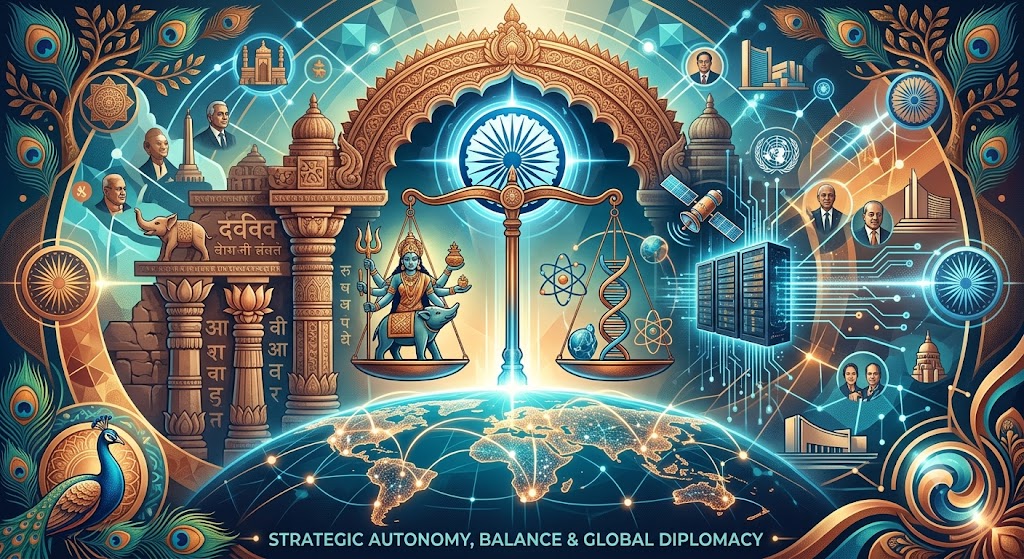
Vivekananda’s appeal to raise the masses provides an enduring moral framework. The worth of privilege lies not merely in personal advancement but in its capacity to enlarge the possibilities of others. Successful Indian-origin professionals could strengthen scholarships for disadvantaged students, support public universities and scientific laboratories, promote medical research, fund disability services and mentor young entrepreneurs. They could facilitate responsible investment in manufacturing, clean energy and advanced technology, while helping Indian institutions establish international research partnerships.
Such initiatives should be transparent, measurable and independent of political patronage. Philanthropy must complement, not replace, the government’s responsibility for education, healthcare and social protection. India must also reform its own institutions. It cannot expect the diaspora to compensate for inadequate public services, bureaucratic obstruction or insufficient research funding. The state must create conditions in which domestic and overseas talent can contribute effectively. The relationship must be reciprocal: responsibility from those with the capacity to contribute, and institutional reform from those entrusted with governing the nation.
CONCLUSION: GREATNESS IS NOT A LICENCE FOR CONTEMPT
America’s achievements are undeniable; so are the injustices embedded in its history. Its scientific leadership deserves recognition, but its economic and military power must remain subject to moral, legal and democratic scrutiny. India’s diaspora deserves appreciation, not suspicion. Nevertheless, the extraordinary ascent of Indian-origin executives raises a legitimate question about converting individual success into collective advancement. The answer is neither compulsory patriotism nor indiscriminate condemnation. It is a more demanding understanding of responsibility. The enslavers accumulated wealth; the enslaved supplied coerced labour; Indigenous communities endured dispossession; and generations of immigrants and workers helped build modern America.
History must remember all of them, not merely those whose names adorn corporate headquarters. India’s successful diaspora should be invited to widen educational, scientific and economic opportunities for those who may never possess the resources to seek their fortunes abroad. India itself must create institutions worthy of its people’s talent. America, meanwhile, must recognise that the people who contribute to its greatness are not diminished by the societies that nurtured them. A nation is not made great by humiliating another. A civilisation is not vindicated by denying its own failures. Professional success is not rendered meaningless by working abroad—but it can acquire a deeper purpose when it advances the welfare of others. The ultimate measure of greatness is not how much power a nation accumulates or how high an individual rises, but how faithfully both uphold human dignity and how generously they enlarge the opportunities of others.

M. Shiva Prasad, IPS (Rtd.) is a dedicated law enforcement professional who served the combined Andhra Pradesh cadre before opting for the Telangana cadre. Though a native of Andhra Pradesh, he considers himself a true Hyderabadi with an abiding love for the Telugu people. Driven by sincerity, fearlessness, and a lifelong fight against inequality and injustice, his ultimate strengths remain his goodwill and deep affection for the public and the police force. Today, he continues his mission by writing snippets and articles true to his conscience.
Email: Shivareach@yahoo.com
Mobile: 98480 38774


Sir
Your Amazing write ups which I never miss to go through. Your wonderful vocabulary sometimes needs to refer dictionary. The depth of the different subjects you lay upon are really mind blowing. It is an awakening for many like me. Keep us in awareness.
Mobile: 9849208014
Traveller in ELITE GROUP in whatsup.