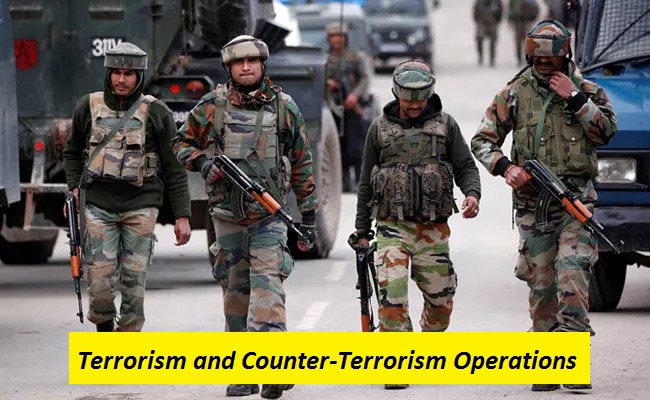
The Insidious Face of Asymmetrical Warfare
The Changing Geography of Global Terrorism, the World’s Deadliest Terrorist Organisations, and the Imperative of a Comprehensive Counter-Terrorism Strategy
“Terrorism rarely disappears; it adapts, decentralises, relocates, and re-emerges wherever political instability, weak governance, and ideological extremism converge.”
Introduction
Terrorism remains one of the most complex security challenges confronting the twenty-first century. It has evolved from a largely regional phenomenon into a decentralised and technologically enabled form of asymmetrical warfare. Unlike conventional military conflicts, terrorist organisations seek neither decisive battlefield victories nor territorial conquest alone. Their principal objective is to generate fear, weaken public confidence in the State, disrupt governance, and compel political or ideological concessions through violence.
Modern terrorist organisations are remarkably adaptive. Sustained military pressure has compelled many to abandon rigid hierarchies in favour of decentralised networks capable of operating independently across multiple countries. Advances in encrypted communications, social media, unmanned aerial systems, cryptocurrencies, cyber capabilities, and artificial intelligence have significantly enhanced their operational reach while reducing their dependence on physical infrastructure.
The contemporary struggle against terrorism therefore extends beyond conventional battlefields into cyberspace, financial systems, critical infrastructure, and the information domain. Counter-terrorism must likewise evolve into a multidimensional enterprise integrating intelligence, law enforcement, technology, financial regulation, diplomacy, and resilient democratic governance.
The Changing Geography of Global Terrorism
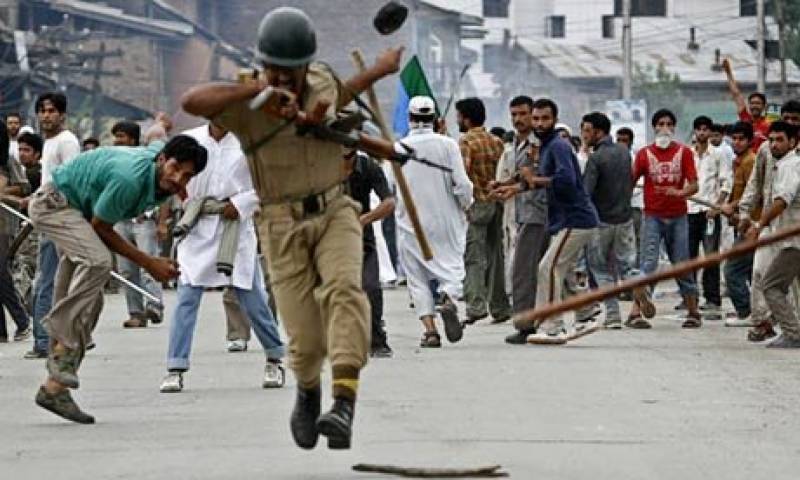
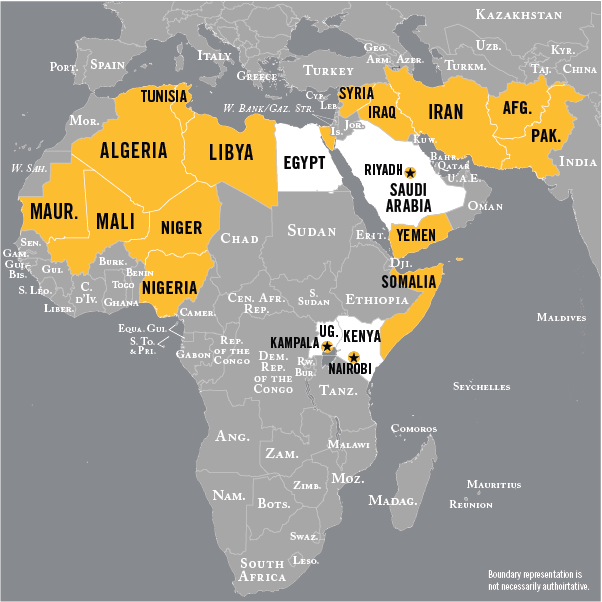
The geography of terrorism has undergone a profound transformation. During the late twentieth century, major theatres of extremist violence included Northern Ireland, Sri Lanka, Palestine, Chechnya, Kashmir, and Colombia. Following the attacks of 11 September 2001, international attention shifted to Afghanistan, Iraq, and Syria. Today, however, the principal epicentre of terrorist violence has moved towards the Central Sahel and Sub-Saharan Africa.
Pakistan
Pakistan continues to face significant terrorist violence while occupying a strategically sensitive position between South Asia, Central Asia, and the Middle East. The mountainous frontier with Afghanistan, limited state control in some border regions, prolonged regional instability, and the resurgence of Tehrik-i-Taliban Pakistan have created persistent security challenges. Militant organisations have targeted security forces, educational institutions, places of worship, and civilians, illustrating the long-term consequences of entrenched insurgency and extremist mobilisation.
Afghanistan
Afghanistan has endured more than four decades of conflict, beginning with the Soviet intervention, followed by civil war, the rise of the Taliban, international military intervention, and renewed political transformation after 2021. Rugged terrain, porous borders, fragmented political authority, and a weakened economy have enabled extremist organisations to survive despite repeated military campaigns. Afghanistan continues to influence the broader security dynamics of South and Central Asia.
The African Sahel
The Central Sahel—particularly Mali, Burkina Faso, and Niger—has emerged as the world’s most lethal theatre of terrorist violence. Fragile institutions, repeated military coups, weak border management, organised crime, climate stress, food insecurity, youth unemployment, and ethnic tensions have created an environment in which extremist organisations expand rapidly. The region demonstrates that terrorism flourishes where governance recedes and public authority weakens.
Nigeria
Nigeria faces multiple overlapping security threats, including Boko Haram, the Islamic State West Africa Province (ISWAP), criminal banditry, communal violence, and kidnapping networks. Governance deficits and humanitarian crises have prolonged instability, making Nigeria one of Africa’s most complex security environments.
Somalia
Somalia illustrates the consequences of prolonged state fragility. Following the collapse of central authority, Al-Shabaab developed into one of Africa’s most resilient extremist organisations by combining insurgency, taxation, propaganda, and local administration in areas under its influence.
Syria and Iraq
Civil war, sectarian conflict, and institutional collapse enabled the rapid emergence of the Islamic State between 2014 and 2017. Although the organisation has lost most of its territorial control, affiliated networks remain active across several regions.
Yemen
Years of armed conflict, humanitarian distress, fragmented governance, and regional rivalries have created conditions in which extremist organisations continue to operate alongside other armed groups.
Democratic Republic of Congo and Mozambique
Eastern Democratic Republic of Congo and northern Mozambique illustrate how weak governance, humanitarian crises, and competition over natural resources can create opportunities for extremist expansion. Insurgencies in these regions continue to threaten stability and development.
India
India’s security environment encompasses cross-border terrorism, Left Wing Extremism, insurgencies in parts of the Northeast, sporadic ideological radicalisation, and emerging cyber-enabled threats. Strengthened intelligence coordination, specialised investigative agencies, financial surveillance, improved border management, coastal security, and international cooperation have significantly enhanced India’s counter-terrorism capabilities, although sustained vigilance remains essential.
The World’s Principal Terrorist Organisations
Islamic State (IS)- Originating from Al-Qaeda in Iraq, the Islamic State evolved into a transnational organisation that briefly controlled extensive territory in Iraq and Syria. It established administrative structures, exploited oil resources, recruited foreign fighters, and used sophisticated digital propaganda. Although deprived of its territorial caliphate, IS remains active through affiliates operating across Africa, the Middle East, and Asia.
Al-Qaeda – Emerging during the Soviet-Afghan conflict, Al-Qaeda developed into a decentralised global network promoting long-term ideological insurgency through regional affiliates. Although sustained international operations have weakened its central leadership, affiliated organisations remain active in several conflict zones.
Jama’at Nasr al-Islam wal Muslimin (JNIM) – Operating primarily across Mali, Burkina Faso, and Niger, JNIM has expanded by exploiting fragile governance, communal tensions, and weak state institutions. Its strategy combines insurgency with influence over local communities.
Tehrik-i-Taliban Pakistan (TTP)- The TTP seeks to challenge the Pakistani state through armed insurgency, suicide attacks, bombings, and targeted assaults on security installations. Recent years have witnessed a resurgence in its operational capability.
Al-Shabaab – Al-Shabaab remains one of Africa’s most organised insurgent groups. It combines guerrilla warfare, intelligence gathering, propaganda, extortion, and local governance structures, demonstrating considerable resilience despite sustained military pressure.
Boko Haram and ISWAP – Originating in northeastern Nigeria, Boko Haram evolved into a violent insurgency before splitting into factions, including the Islamic State West Africa Province. Both organisations continue to destabilise the Lake Chad Basin through attacks on civilians, security forces, and infrastructure.
Lashkar-e-Taiba (LeT) – Lashkar-e-Taiba has been associated with several major terrorist attacks, including the 2008 Mumbai attacks. Its activities continue to influence regional security dynamics in South Asia.
Jaish-e-Mohammed (JeM) – JeM has been linked to significant terrorist attacks in India and remains an important concern in discussions of cross-border terrorism and regional security.
Common Characteristics of Contemporary Terrorist Organisations
Despite ideological differences, most contemporary organisations display similar operational characteristics:
* Decentralised leadership.
* Cross-border mobility.
* Sophisticated digital propaganda.
* Encrypted communications.
* Diversified financing through criminal enterprises.
* Exploitation of governance deficits.
* Recruitment through social media.
* Adaptation to sustained military pressure.
* Increasing use of commercially available technologies, including drones and cryptocurrencies.
Their resilience derives less from numerical strength than from organisational adaptability and the ability to exploit local grievances while maintaining transnational ideological networks.
The Future of Terrorism
Future terrorist threats are likely to be characterised by smaller, decentralised networks employing cyber operations, artificial intelligence-assisted propaganda, deepfakes, autonomous drones, encrypted communications, digital financial systems, and lone-actor radicalisation. These developments will further blur the distinction between physical and virtual battlefields.
Counter-Terrorism: The Need of the Hour:- An effective counter-terrorism strategy must extend beyond military operations. It requires integrated intelligence, technologically advanced policing, financial surveillance, secure borders, international cooperation, cyber resilience, professional investigation, judicial effectiveness, community engagement, and resilient democratic institutions. Military action can dismantle terrorist infrastructure, but lasting success depends upon preventing radicalisation, strengthening governance, protecting the rule of law, and denying extremist organisations the political, economic, and social conditions upon which they depend.
Conclusion
Terrorism is neither static nor confined by national frontiers. It continuously adapts to geopolitical change, technological innovation, and institutional weakness. The shift of terrorist violence from the Middle East to the African Sahel demonstrates that extremist organisations relocate whenever governance declines and instability deepens. Their operational methods continue to evolve, but their strategic objective remains constant: the creation of fear, disruption of governance, and erosion of public confidence.
The enduring lesson for governments is clear. Terrorism cannot be defeated by military force alone. Sustainable success depends upon capable institutions, effective intelligence, international cooperation, technological innovation, sound governance, economic opportunity, and the unwavering commitment of democratic societies to protect both national security and the rule of law.

M. Shiva Prasad, IPS (Rtd.) is a dedicated law enforcement professional who served the combined Andhra Pradesh cadre before opting for the Telangana cadre. Though a native of Andhra Pradesh, he considers himself a true Hyderabadi with an abiding love for the Telugu people. Driven by sincerity, fearlessness, and a lifelong fight against inequality and injustice, his ultimate strengths remain his goodwill and deep affection for the public and the police force. Today, he continues his mission by writing snippets and articles true to his conscience.
Email: Shivareach@yahoo.com
Mobile: 98480 38774