Witnessing the Magic of Garry Sobers: A Lifelong Cricket Memory
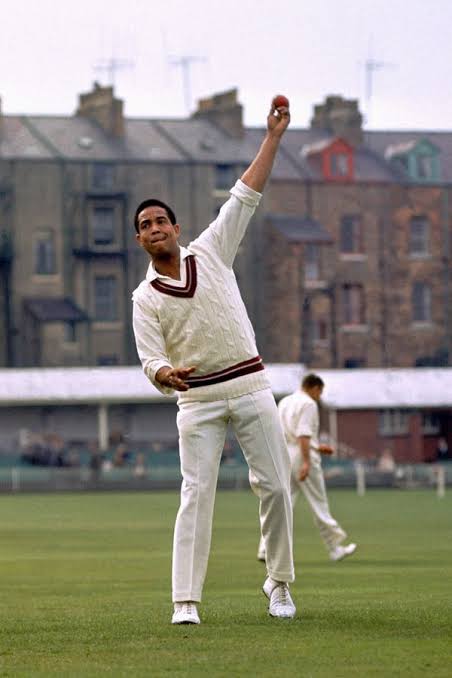
Never before has there been an all-rounder such as Garry Sobers, and never again is it likely that one will appear. He was the complete cricket machine: his versatility unique, his style and panache unsurpassed, and his exuberance contagious to those who watched.
I can proudly say I am one of the fortunate Indians who watched arguably the greatest cricketer Gary Sobers play the Indian bowlers. I remember to have watched three of the Indian spin quartet- Erapalli Prasanna, Srinivas Venkataraghavan (both off spinners), Bhagawat Chandrasekhar (a leg spinner) and Bishen Singh Bedi (a left -arm spinner) – bowl to Sobers and other West Indian batsmen at LB Stadium. Mansoor Ali Khan, the Nawab of Pataudi, was the captain. Although the West Indies won the series, the interest for cricket in India was at its top during that period.
Eleven Days Shy of 90: Remembering a Once-in-a-Lifetime Icon
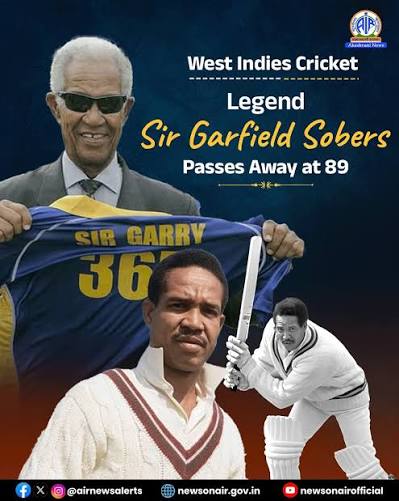
Passed away in Barbados on Friday, 17 July 2026, eleven days before his 90th birthday, Sobers was the best all-rounder who excelled in batting, fielding and bowling – both spin as well as pace. The dashing left-hander represented West Indies in 93 Tests in a career spanning two decades from 1954 to 1974. Sobers scored 26 centuries and his knock of 365 not out against Pakistan in 1958 was the highest individual Test score until his compatriot Brian Lara broke his record in 1994.
My thoughts are reflected by the comment made by the great England opener Geoffrey Boycott, “Anyone who saw him in his pomp will have wonderful memories of great batter, the greatest all-rounder, an icon, a once-in-your-lifetime, exceptional cricketer. And, even more important, a lovely man.” Sobers was born with two extra fingers – one on each hand. He removed them himself as a boy, using catgut and a sharp knife.
From the Streets of Bridgetown to Cricket Immortality
Sobers walked when he nicked the ball without troubling the umpire. Charlie Davis, who batted with Sobers for West Indies, once explaining the problem when he recalled, “He was too modest. He did not know how special he was. He expected us to bat like him. He thought all of us are like him.” Sobers was born in a small wooden house on Walcott Avenue in Barbados’ capital Bridgetown in July 1936. His father, who was a merchant seaman, died in a ship accident in 1942. At 14, Sobers was running around a furniture factory. Nobody ever coached him. He learnt everything by himself in the streets.
Sober’s maiden Test hundred against Pakistan ended only at 365 past Len Hutton world record. In September 1959, Sobers was driving in London in early morning one day when he was to attend a benefit match. When a curve came a flash of light was focused on his face from a heavy vehicle coming from opposite direction and he was involved in an accident. Fast bowler Tom Dewdney was in half-sleep mode sitting in the back seat while Collie Smith was in the front seat. Smith’s spine was broken. Smith died three days later. Sobers was fined ten pounds for careless driving. He was very upset with the passing of his great friend. Since then, he was batting for the sake of Smith. He made three centuries in his country against England. The motivation came from the death of his dear friend and teammate, Smith.
Six Sixes in an Over: The Day Sobers Defined Perfection
Wisden rated him as one of the five best cricketers of the 20th century along with Don Bradman, Jack Hobbs, Viv Richard and Shane Warn. At Swansea in 1968, he hit Malcolm Nash for six sixes in an over, the first man to do it in first-class cricket. Later, there are Ravi Sastry (playing for Bombay in 1985) and Yuvaraj Singh from India who emulated him by hitting every ball in an over for a six.
None of the other acclaimed all-rounders, from WG Grace and Wilfred Rhodes through to the great multi-dimensional cricketers of the 70s and 80s –Tony Greig, Ian Botham, Imran Khan, Kapil Dev, Richard Hadlee and Mike Proctor– and on to Andrew Flintoff, Jacques Kallis and Ben Stokes, of the modern era, could match the package of supreme skills that Sobers displayed.
The Ultimate All-Rounder’s Final Bow
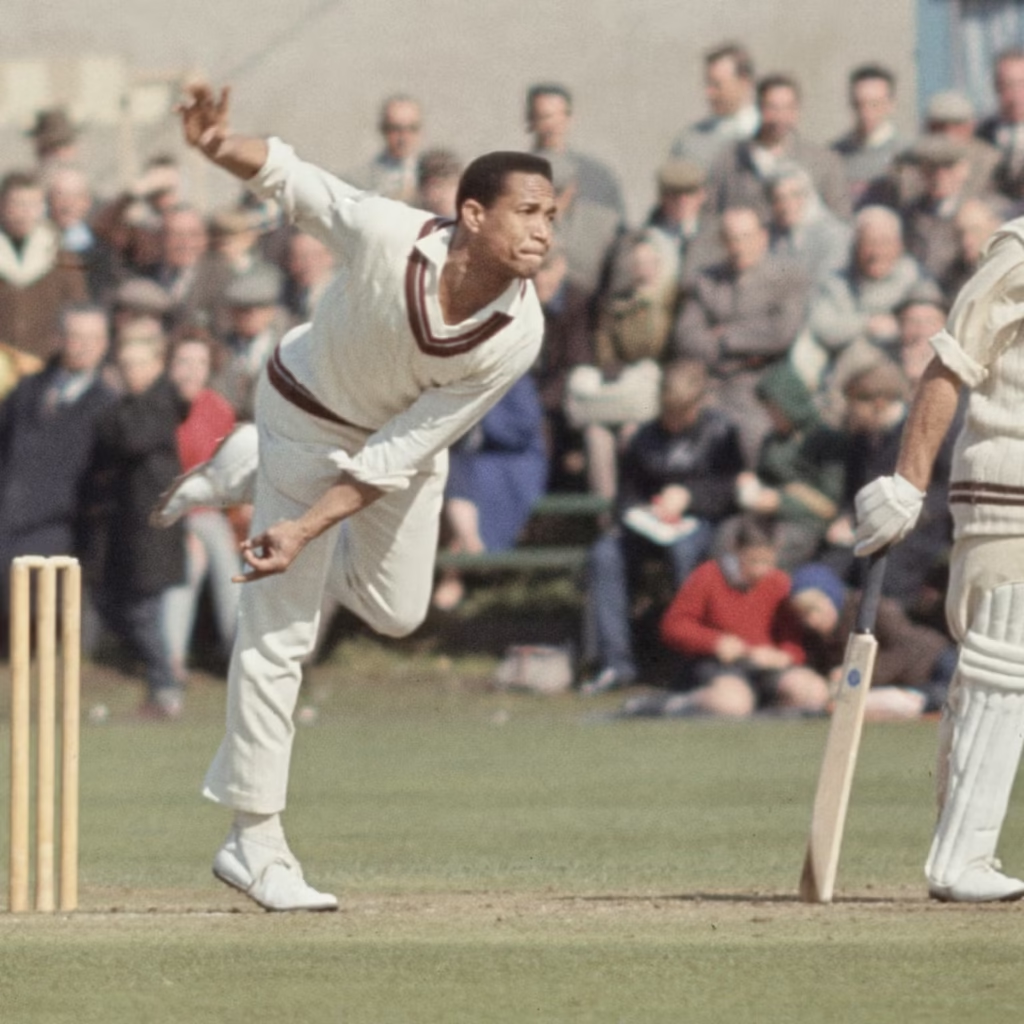
In 93 Tests, Sobers made 8,032 runs at an average of 57.78 and took 235 wickets. This was then a record which was over taken by South Africa’s Jacques Kallis. Sobers remained the only all-rounder to score 3000 plus runs and claim 100 wickets against an opponent – 3214 runs (averge 60.64) and 102 wickets in 36 Tests against England. He was again the only all-rounder to score 700 plus runs and take 20 wickets in a single Test series – 722 runs at an average of 103.14 runs and 20 wickets at an average of 27.25 runs per wicket against England in the five-Test series in 1966. He made his debut when he was 17 and retired when he was 38.
Kishore Shallow, president of West Indies cricket, announcing the demise of Garry Sobers, said, “In the story of cricket, there are great players. There are champions. Then there are rare individuals who redefine the very meaning of greatness. Sobers is one of them.” Sobers comes second to Bradman who himself said in 1988: “I’ve no hesitation at all in saying that Garry Sobers is the greatest all-round cricketer I ever saw.” Sunil Gavaskar, former Indian Test captain said, “The greatest cricketer to walk the earth has left us. He was everything we dream of becoming when we pick up the bat or the ball as kids. Memories keep flooding back and I will be holding those forever close to my heart.”
From Teenage Prodigy to Captain
Sobers often played down the importance of his natural talent. “People call me a genius. I don’t know much about geniuses. But I do believe that what I achieved was not just because of the ability that I was born with but also because I worked hard,” he quipped. He made first class cricket debut for Barbados when he was 16. Within a year, without proper coaching, Sobers was playing international cricket initially as a left arm slow bowler and later as an all-rounder. He took over as West Indies captain in 1965. He then joined Nottinghamshire, an English county, where he scored six sixes in an over. All this happened while Sobers was consuming rum and pursuing girls. “Well, it’s an exaggeration to say I was partying every night. Just every other,” Sobers told the Guardian newspaper in 2002. When he was touring India in 1966-67, he was briefly engaged to actor Anju Mahendru. He broke the relationship soon after he left the country. In 1969 in England, he married Prudence Kirby, an Australian. They were separated in 1984 and divorced in 1990. Sobers is survived by his three children, Matthew, Daniel and Genevieve and six grandchildren.

Prominent Journalist
Dr. K. Ramachandra Murthy is a versatile journalist with a distinguished career. Dr. Murthy began his extensive career with Andhra Prabha of The Indian Express group in Bengaluru. He was editor of Udayam, Vaartha and Andhra Jyothy. Dr. Murthy founded and edited HMTV news channel and The Hans India, an English newspaper. He was also editorial director of the Telugu newspaper, Saakshi. He was awarded Ph. D for his research work in rural reporting. Dr. Murthy’s five decades in journalism showcases his influential roles across both print and electronic media. He wrote the political biography of NTR published by Harper Collins.
Email: murthykondubhatla@gmail.com
Mobile: 9908002211