Debt Imperialism vs. Development
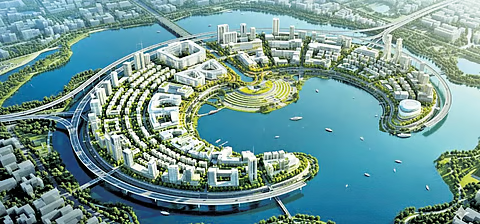
In July 2026, the Telangana state government officially marked its intent to commence physical execution by issuing administrative sanctions and cost estimates for the initial phase of the Musi Riverfront Development Project. The first phase focuses on a 21-kilometer stretch of the river corridor, specifically targeting development within designated Zone-1A and Zone-1B pathways.
The structural blueprint divides this 21-kilometer stretch into two key geographic corridors under an Engineering, Procurement, and Construction (EPC) execution model:
- Zone-1A: Covering a distance of 9.20 kilometers stretching from Himayathsagar to Bapu Ghat.
- Zone-1B: Spanning 11.80 kilometers from Osmansagar to Bapu Ghat.
The administration has projected an estimated cost of Rs 7,345.12 crores specifically dedicated to these Phase-1 development activities. A defining and highly controversial attribute of this administrative sanction is the absolute absence of direct state budgetary allocation. The government has mandated that the financial scaffolding of the project rely entirely on external borrowing and institutional grants:
Massive Loan: A massive loan of Rs 4,500 crores is being negotiated from the Asian Development Bank (ADB). The remaining balance of Rs 2,845.12 crores is directed to be pooled in the form of grants from state-owned corporations, primarily the Hyderabad Metropolitan Development Authority (HMDA) and the Telangana State Industrial Infrastructure Corporation (TGIIC).
A silent witness to Hyderabad’s history
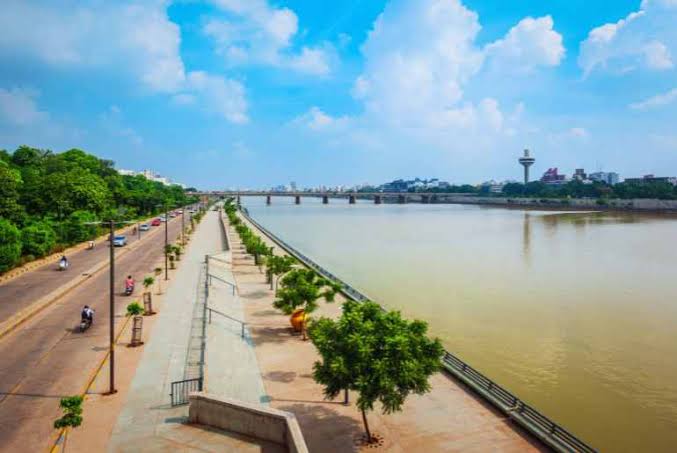
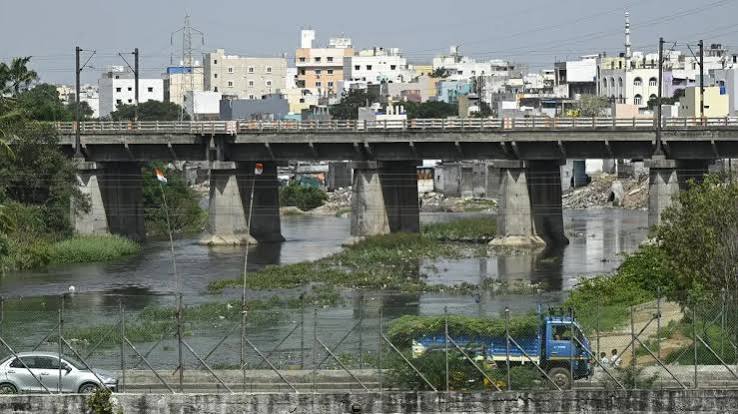
The Musi River, which winds through Hyderabad, stands as a silent witness to the city’s historic evolution. It was once a vibrant lifeline boasting pristine waters. Decades of unchecked industrialization and rapid urbanization. Better say less about administrative neglect. Ultimately, we have reduced this historic river to a heavily polluted urban drain. In a bold attempt to reverse this ecological decline and reshape the urban landscape of Hyderabad, the Government of Telangana has initiated the highly ambitious Musi Riverfront Development and Rejuvenation Project.
While the state executive under Chief Minister A. Revanth Reddy views this multi-thousand-crore project as a historic opportunity to establish a world-class cultural, ecological, and recreational asset, it has simultaneously ignited fierce resistance. Civil society, environmentalists, opposition political parties, and socio-political forums like the Telangana Republican Left Democrats (TRLD) have united in raising profound concerns regarding the project’s financial sustainability, its potential for large-scale human displacement, lack of transparency, and a deeply flawed ecological strategy.
The Bapu Ghat: Central Approvals
A pivotal milestone for Phase-1 occurred in June 2026, when the Union Ministry of Defence officially granted working permission and land clearance for the utilization of defense-held lands in Hyderabad. This clearance effectively eliminated a long-standing legal and logistical impasse between the state and central governments.
Following extensive institutional negotiations over legal and defense protocols, the central government approved the transfer of 83.81 acres of premium defense land under the jurisdiction of the Artillery Centre Golconda. The market value of this land parcel is estimated at approximately Rs 533.42 crores.
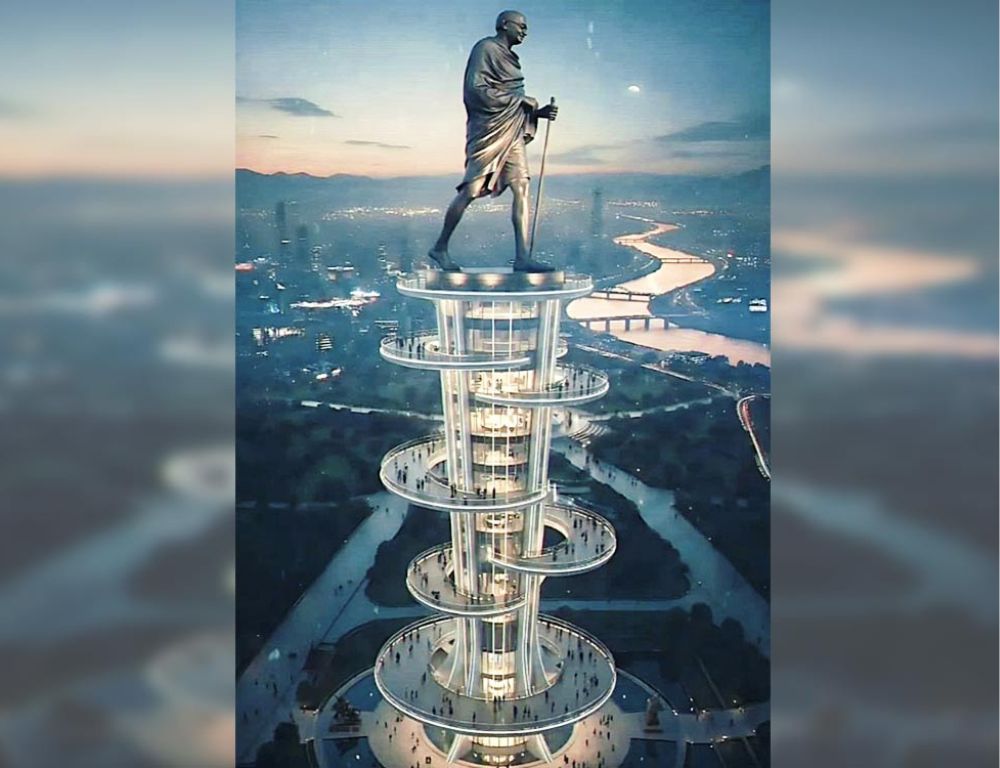
The acquisition of this territory paves the way for the state government’s flagship sub-project: the transformation of Bapu Ghat into an international-standard socio-cultural and tourism hub named the ‘Gandhi Sarovar’ project. Chief Minister Revanth Reddy expressed profound gratitude to Union Defence Minister Rajnath Singh, characterizing the clearance as a historic milestone that ensures the project moves beyond mere concrete construction to become an ecological, cultural, and magnificent public asset.
Despite the bureaucratic momentum, the government’s chosen financing strategy has drawn severe criticism from economic analysts and financial experts. Financial analysts warn that because final approvals for the ₹4,500 crore loan from the Asian Development Bank are still undergoing complex institutional negotiations, proceeding with tenders without confirmed debt security introduces severe financial vulnerability. Critics argue that relying completely on heavy external borrowing pushes the state treasury deeper into a debt trap. Ultimately, this shifts the financial burden onto the public through future municipal taxes and structural adjustments.
Furthermore, observers note that the sanctioned ₹7,345.12 crores is strictly earmarked for civil engineering and riverfront beautification works. Crucially, it completely excludes the massive capital required for land acquisition, compensation, and comprehensive rehabilitation. This omission has fueled allegations that the project’s budget is heavily inflated to benefit private consultancies, leaving the state’s actual financial liabilities unaddressed.
At What Human Cost?
The most politically sensitive aspect of the Musi Riverfront Project is its direct threat to the homes of thousands of poor and middle-class families living along the riverbanks. The deployment of the Hyderabad Disaster Response and Asset Protection Agency (HYDRA) for aggressive demolition drives along the Musi riverbed has triggered widespread public anxiety and political backlash.
At a high-profile intellectuals’ round-table conference organized in Hyderabad by TRLD President and former MLC Kapilavayi Dilip Kumar, prominent social activists, legal experts, and politicians gathered to condemn the government’s approach.
No Public Hearing? No DPR disclosure?
Distinguished human rights activist Professor Haragopal severely criticized the government for its total failure to conduct mandatory public hearings or initiate meaningful public consultation. He questioned the ethical basis of advancing a mega-project while keeping the affected communities completely in the dark, asserting that an absolute lack of transparency destroys public trust. Professor Haragopal argued that democracy requires the state to consult and involve affected citizens before making major structural decisions, rather than enforcing displacement by decree.
Echoing these concerns, MLC Ravindra Rao and the TRLD leadership emphasized that no developmental project can be justified if it leaves thousands of vulnerable citizens homeless. The forum collectively demanded a strict policy sequence: Comprehensive Rehabilitation First, Project Execution Second. They asserted that the state must secure permanent rehabilitation housing, guarantee livelihood protection, and provide fair compensation at market rates before a single structure is dismantled.
Bandaru Dattatreya’s concerns about Artificial Beautification
Beyond the socioeconomic disruption, environmentalists argue that the project’s core philosophy is fundamentally flawed. During the TRLD round-table conference, former Governor Bandaru Dattatreya shared a poignant historical perspective. He recalled that during his childhood, the Musi River flowed with clean, waist-deep natural water. It is tragic, he remarked, that decades of unregulated discharge have turned this historic river into a toxic channel filled with industrial effluents and municipal sewage.
What about the government’s current plan, which focuses heavily on “artificial beautification” rather than true ecological restoration? We need to be warned that traditional water bodies, lakes, and natural catchments that once formed Hyderabad’s natural hydrology are rapidly disappearing. According to environmental experts, building expensive concrete embankments, walkways, and commercial zones does nothing to resolve the river’s core crisis. True rejuvenation requires preventing industrial chemical waste and untreated urban sewage from entering the river channel in the first place. Critics argue the state should prioritize building a comprehensive network of Sewage Treatment Plants (STPs) and enforcing strict pollution controls on upstream industries. Creating cosmetic, concrete structures over a polluted river bed is an ecological failure that prioritizes real estate value over environmental health.
What is ‘Real’ Estate?
The Musi Riverfront Project has quickly become a central political battleground in Telangana. During the multi-party round-table discussions, which included leaders like BJP MP Etela Rajender, Congress MLC Addanki Dayakar, BRS MLC Ravinder Rao, and senior Congress leader KK Mahender Reddy, the opposition launched a coordinated critique of the ruling administration’s true motives.
BRS MLC Ravinder Rao delivered a detailed technical and political critique of the project. He strongly contrasted the current administration’s methods with the approach of the previous BRS government. Rao noted that the previous government successfully developed a 6-kilometer model stretch of the Musi River near Uppal and Nagole without displacing a single family or demolishing any houses. He demanded to know why the current administration refused to explore similar non-disruptive, alternative engineering designs.
Furthermore, Rao leveled serious allegations of land grabbing, claiming the project hides a massive, corporate-driven real estate agenda under the guise of river rejuvenation. He argued that the state’s true intent is to clear out poor communities to free up high-value urban land along the riverbank. This land, he alleged, will be handed over to private corporate entities for commercial complexes and luxury real estate ventures. Rao raised a sharp legal and ethical contradiction: if poor and middle-class residences are deemed illegal encroachments on the riverbed, how can the state legally build heavy commercial concrete complexes on those very same plots?
The opposition also challenged the government’s refusal to publicly release the project’s Detailed Project Report (DPR). Hiding the DPR from the public, opposition leaders argue, suggests hidden motives and double standards within the project’s planning.

Law professor and eminent columnist
Madabhushi Sridhar Acharyulu, author of 63 books (in Telugu and English), Formerly Central Information Commissioner, Professor of NALSAR University, Bennett University (near Delhi), presently Professor and Advisor, Mahindra University, Hyderabad. Studied in Masoom Ali High School, AVV Junior College, CKM College, and Kakatiya University in Warangal. Madabhushi did LL.M., MCJ., and the highest law degree, LL.D. He won 4 Gold Medals at Kakatiya University and Osmania University.
Email: cicsridhar@gmail.com
Mobile: 8447651505