Fidel Castro at the Threshold of His Birth Centenary
‘’ Health and Education’’
The Vision of an Egalitarian Republic
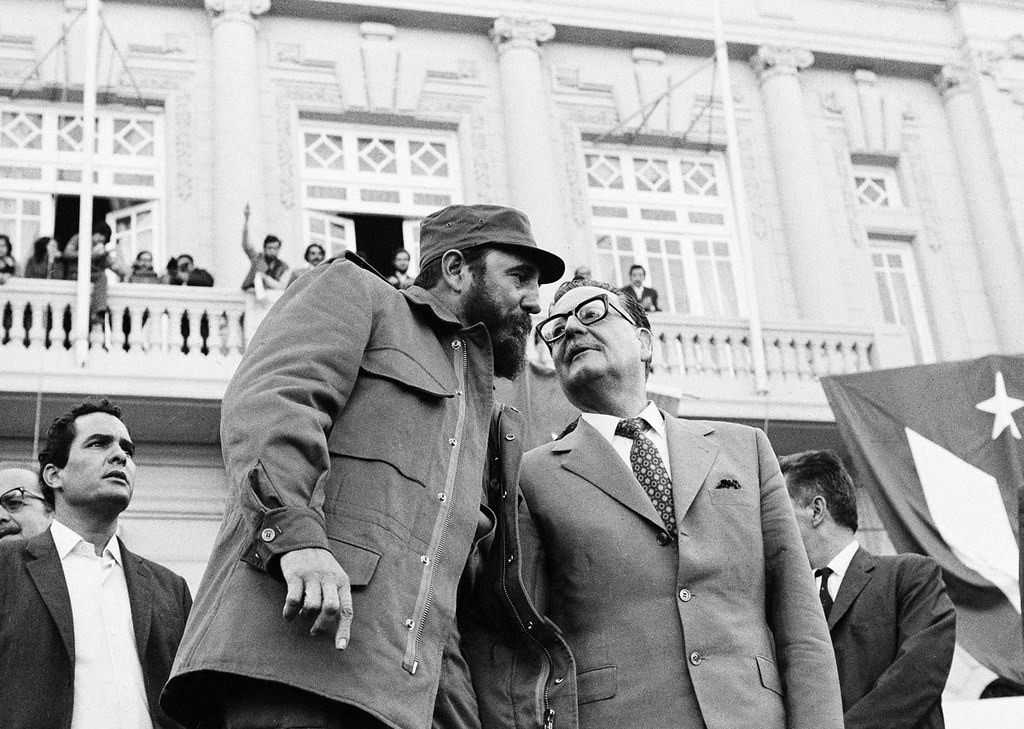
As Fidel Castro’s birth centenary is observed on 13 August 2026, history is compelled to revisit a paradoxical and consequential legacy. Few twentieth-century revolutionaries attempted, with comparable ideological determination, to reconstruct an entire society upon the principles of equality, public ownership, national sovereignty and resistance to foreign domination. Castro was unquestionably an authoritarian ruler, and his political system carried grave costs in respect of political liberty, pluralism, dissent and human rights. Yet to reduce his historical significance merely to the vocabulary of dictatorship would be to overlook another dimension of his legacy: the deliberate construction of Cuba’s public-health and educational systems as instruments of social emancipation.
For Castro, revolution was not merely the seizure of political power. It was intended to be a reordering of social priorities. The Cuban Revolution sought to displace a society in which access to education, medicine, land and economic opportunity was profoundly unequal with one in which essential services would be treated as social rights rather than commodities. Health and education consequently occupied a privileged place in the revolutionary project. The state became the principal financier, provider and organiser of both, while private and religious institutions were progressively brought under state control.
The Politics and Practice of Cuban Healthcare Reform
The most enduring expression of this philosophy was healthcare. Cuba sought to make medical treatment universally accessible without direct payment at the point of service and to move medicine beyond the confines of hospitals and urban elites. The family-doctor model, particularly from the 1980s onward, placed doctors and nurses within neighbourhoods and communities, emphasising prevention, maternal and child health, vaccination and primary care. The underlying proposition was deceptively simple but politically radical: the circumstances of one’s birth should not determine one’s right to medical attention.
Castro also understood medicine as an instrument of international solidarity and diplomatic influence. Cuban doctors were dispatched in considerable numbers to countries across Africa, Latin America and elsewhere, particularly after natural disasters and during public-health emergencies. Medical internationalism thus became an extension of Cuban foreign policy, but it was not merely diplomatic theatre. It reflected the revolutionary conviction that a small, resource-constrained country could acquire international stature not through military or economic power alone, but through the export of professional knowledge and humanitarian assistance.
High Ambitions, Hard Realities: The Strain on Cuba’s Medical Machine
Cuba’s investment in medical education reinforced that ambition. The expansion of medical training created an unusually large physician workforce relative to the country’s population and eventually enabled Cuba to sustain both domestic provision and extensive overseas missions. Its biomedical institutions likewise sought technological self-reliance, producing vaccines, pharmaceuticals and other medical products despite the country’s severe economic constraints. The achievement was particularly striking because it emerged from a poor island economy operating under prolonged external pressure.
Yet the Cuban health system should neither be romanticised nor caricatured. Its achievements in primary care, vaccination, medical education and international medical assistance coexist with serious structural deficiencies. Economic shortages, restricted access to medicines and equipment, deteriorating infrastructure, low remuneration and the continuing departure of professionals have placed considerable strain upon the system. A society may proclaim healthcare a universal right; sustaining that right requires resources, institutional renewal, professional incentives and technological capacity. Ideological commitment alone cannot substitute for them.
Classrooms for All: The Mobilization That Eradicated Illiteracy
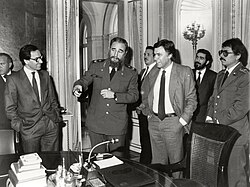
The educational revolution was perhaps even more transformative. The 1961 Literacy Campaign became one of the defining social enterprises of Castro’s early rule. Thousands of young volunteers were sent into rural and impoverished communities to teach literacy, converting the eradication of illiteracy into a national mobilisation. Education was subsequently expanded as a free public service from primary schooling through higher education. Rural schools were enlarged, teacher training was strengthened, and scientific and technical education received substantial state patronage.
The significance of this transformation lies not merely in the number of schools established or people taught to read. Literacy became, in the revolutionary conception, an instrument of citizenship. The ability to read, write and acquire knowledge was presented as a means of breaking the inherited hierarchy between the educated urban classes and the rural poor. The revolutionary state therefore attempted to transform education from a privilege of social position into an entitlement of citizenship.
Ideological Conformity and Social Access
But here too the contradiction is unmistakable. The nationalisation and standardisation of education gave the state extraordinary power over curricula, teachers, universities and intellectual life. Education was not politically neutral: it became an important vehicle for socialist ideology. Independent institutions were curtailed, religious education was displaced, and intellectual dissent could carry consequences. The same state that expanded literacy and educational access also narrowed the space for ideological pluralism.
This contradiction lies at the heart of Castro’s legacy. The revolution democratised access to certain social goods while restricting political freedom. It sought equality of opportunity in healthcare and education while tolerating little equality of political expression. It attacked inherited privilege but concentrated institutional power in the revolutionary state. It proclaimed emancipation from foreign domination while imposing a highly centralised domestic political order.
National Liberation on the World Stage
Castro’s egalitarianism was inseparable from his anti-colonialism. He viewed Cuba’s history through the prism of imperial dependence: the domination of a small Caribbean nation by stronger external powers, particularly the United States. The nationalisation of major enterprises, redistribution of land and rejection of foreign economic control were therefore presented not merely as socialist economic measures but as acts of national liberation. The revolution claimed that political sovereignty was incomplete if economic life remained subject to external ownership and influence.
This anti-colonial vocabulary subsequently extended beyond Cuba. Castro supported revolutionary movements in Africa and Latin America and cultivated Cuba’s identity as a champion of the developing world’s resistance to imperialism. Cuban internationalism, particularly in Africa, became one of the most consequential manifestations of this doctrine. For Castro, the sovereignty of smaller nations was part of a wider historical struggle against colonialism, racial domination and economic dependency.
Ideology in Practice
His rhetoric therefore possessed a distinctive moral architecture. The revolutionary was cast as the adversary of imperialism; the state as the guardian of collective welfare; education as liberation from ignorance; medicine as liberation from deprivation; and national sovereignty as liberation from dependency. This was not merely political rhetoric. In Cuba, it was translated into institutions whose effects survived many of the revolution’s economic and geopolitical reverses.
The central question, however, is whether such achievements required authoritarianism. History provides no simple affirmative answer. Universal healthcare, mass literacy and public education are not inherently dependent upon one-party rule. Democratic societies have also constructed extensive welfare states, free universities and universal health systems. The Cuban experience therefore should not be invoked to establish that social equality requires political authoritarianism. Rather, it demonstrates how a revolutionary state can mobilise resources with extraordinary speed when it makes social provision a central ideological priority.
Neither Saint nor Villain
Nor should the severe hardships experienced by ordinary Cubans be dismissed as merely the unavoidable price of independence. The United States embargo and broader external economic pressures unquestionably imposed substantial constraints upon Cuba, but domestic economic management, centralisation, bureaucratic rigidity and political restrictions also contributed to the country’s difficulties. A serious historical assessment must resist both extremes: the uncritical glorification of Castro and the equally simplistic dismissal of everything achieved under his rule.
What remains historically significant is the proposition at the centre of the Cuban experiment: that the measure of a nation’s progress cannot be confined to the accumulation of private wealth, but must include the distribution of knowledge, health, dignity and opportunity among its people. Castro’s Cuba attempted to make this proposition the organising principle of the state.
The Balance Sheet of Revolution
At his birth centenary, therefore, Fidel Castro’s legacy deserves neither hagiography nor historical amnesia. He was a revolutionary who challenged the established order of his hemisphere, an uncompromising anti-colonialist who sought Cuban economic sovereignty, and a political leader who made healthcare and education pillars of the revolutionary state. He was also an authoritarian ruler whose government curtailed political freedoms, suppressed dissent and subordinated institutions to a centralised ideological order.
The enduring lesson may lie precisely in this contradiction. Castro demonstrated the extraordinary social power of a state that places literacy, medical care and human capability at the centre of national policy. He also demonstrated the danger of believing that social justice necessarily requires the concentration of political power. Equality without liberty is incomplete; liberty without social justice can become privilege. The more difficult and enduring task for modern states is to reconcile the two.
Castro’s Ultimate Dilemma
Fidel Castro entered history as a revolutionary determined to break Cuba’s dependence upon a powerful neighbour and to create what he regarded as a more egalitarian society. His most durable institutional legacy may ultimately be found not in his speeches, military alliances or revolutionary mythology, but in the Cuban child who entered a school that poverty could no longer close, and in the patient who could approach a doctor without first asking whether he could afford one.
That is the paradox that history must confront at his centenary: a revolution that sought to emancipate society from economic privilege, yet constrained it through political power; a state that restricted dissent, yet expanded access to knowledge and medicine; a leader who fought imperial domination, yet built an intensely centralised domestic order.
The final verdict on Castro will remain contested. But the question he posed to the modern world remains remarkably relevant: Can a society be genuinely free when education and healthcare are privileges of wealth, and can it be genuinely just when political liberty itself is denied? The enduring challenge is not to choose between equality and liberty, but to build institutions capable of protecting both.
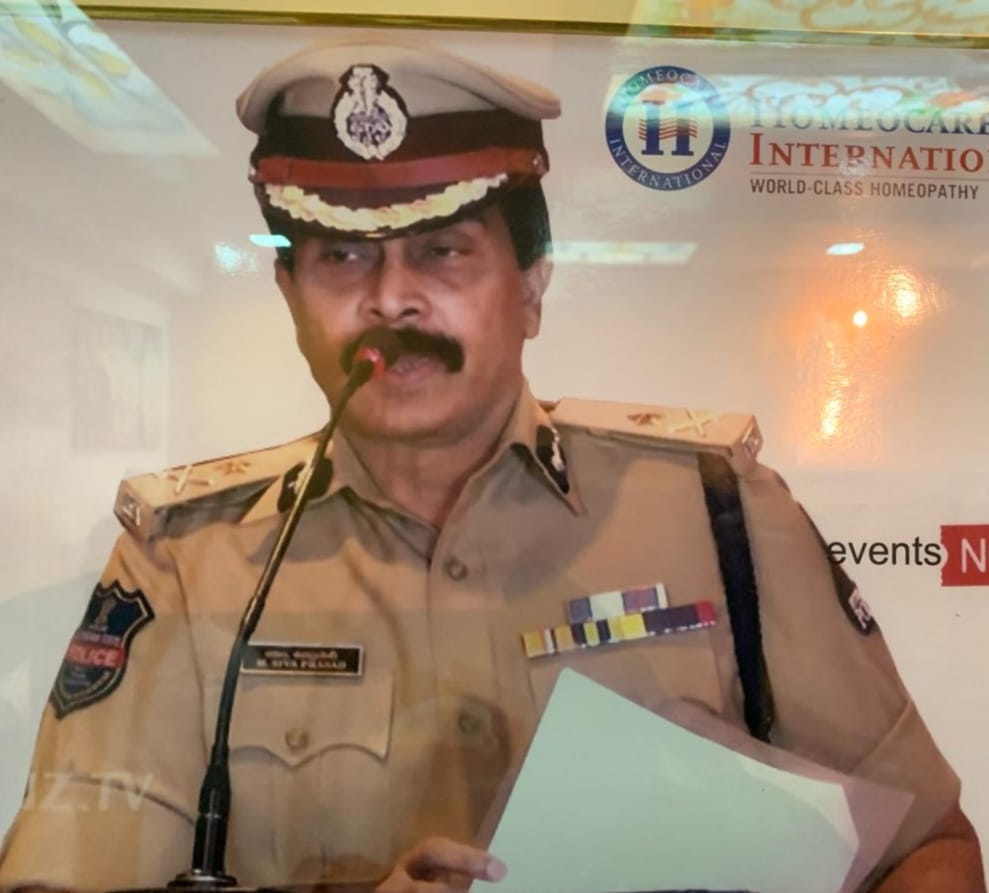
M. Shiva Prasad, IPS (Rtd.) is a dedicated law enforcement professional who served the combined Andhra Pradesh cadre before opting for the Telangana cadre. Though a native of Andhra Pradesh, he considers himself a true Hyderabadi with an abiding love for the Telugu people. Driven by sincerity, fearlessness, and a lifelong fight against inequality and injustice, his ultimate strengths remain his goodwill and deep affection for the public and the police force. Today, he continues his mission by writing snippets and articles true to his conscience.
Email: Shivareach@yahoo.com
Mobile: 98480 38774