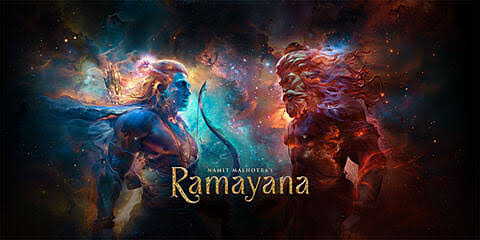
Ravana’s Swagger and Rama’s Silence: Are We Watching the Wrong Ramayana?
Since Nitesh Tiwari’s Ramayana: Part 1 arrived in theatres this Diwali, the public conversation has split into two loud camps. On one side is the technical applause. Viewers are marvelling at the visual effects, the Hans Zimmer and A.R. Rahman score, and the smooth English lip-syncing powered by Brahma AI. People feel proud that an Indian film can match global studio standards. They are talking about camera angles, sound design, and realistic battle scenes. On the other side is a heated character debate. Critics and fans are arguing that Yash’s charismatic portrayal of Ravana steals the screen. Many feel the film glorifies the villain while making Ranbir Kapoor’s Rama appear understated, quiet, and even passive. Social media is full of clips comparing their entry scenes, their dialogue delivery, and their raw screen presence.
Both debates reveal an uncomfortable truth about modern audiences. We are mesmerized by the packaging. We focus on frame rates, AI dubbing, and villainous swagger. In the process, we miss the deeper purpose of the epic itself. If we reduce the Ramayana to a contest of screen presence between a loud anti-hero and a quiet hero, we are watching the wrong story. We are treating a timeless manual on human conduct like a modern superhero franchise. To understand what the Ramayana is really telling us, we have to look past the special effects. We need to examine why modern eyes find Ravana so attractive. We also need to see why Rama feels hard to grasp today, and what this tension reveals about how we live, work, and lead.
Why Modern Audiences Fall for the Ravana Trap
Let us start with an honest question. Why does Ravana look so impressive on screen?
The popular complaint is that the filmmakers made the villain too strong, too smart, and too stylish. Some argue that showing Ravana’s grandeur weakens the moral message of the story. This complaint misunderstands Valmiki’s original design.
In the Ramayana, Ravana is never written as a clumsy or foolish monster. Valmiki gives him extraordinary qualities. Ravana is a brilliant scholar who mastered the Vedas. He is an accomplished musician who composed the Shiva Tandava Stotram. He is an able administrator who turned Lanka into a city of gold, wealth, and stunning architecture. Above all, he is a fierce devotee of Lord Shiva who endured harsh penance to earn his powers.In the language of Indian thought, Ravana possesses immense capability (Shakti) and deep knowledge (Vidya).So why do modern viewers find a well-crafted Ravana magnetic? The answer is simple. We live in an era that worships raw talent, disruption, and charisma. At the same time, we treat self-restraint as a sign of weakness. Look at our modern heroes in business, politics, and pop culture. Whom do we celebrate? We celebrate the founder who breaks every rule to build a giant company. We admire the leader who dominates the room with volume and aggression. We applaud the rebel who refuses to compromise, even when that refusal hurts others. In corporate boardrooms and public life, we routinely mistake volume for strength. We confuse dominance with leadership. We reward disruption even when it lacks an ethical anchor.
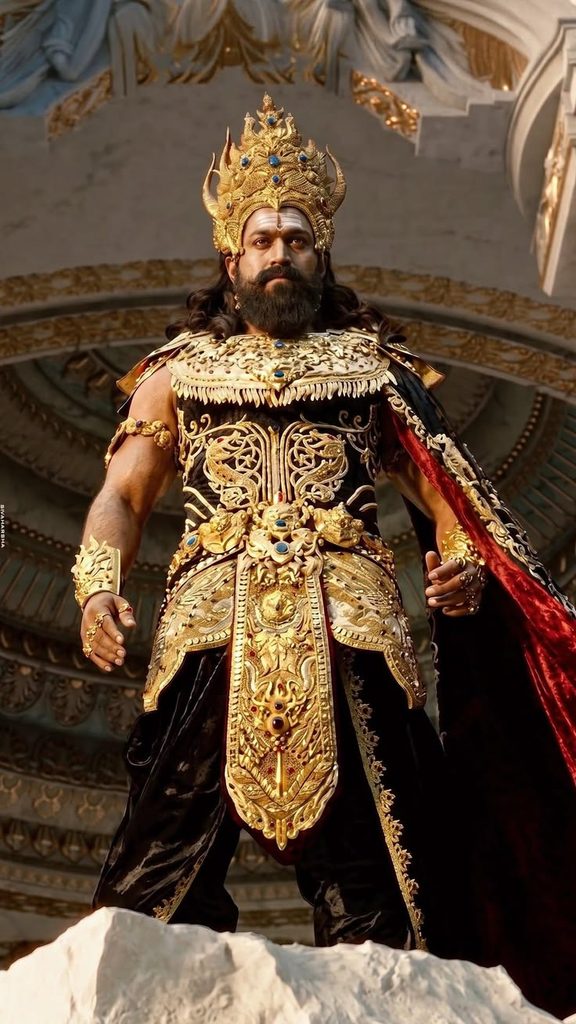
When an audience trained by this culture walks into a theatre and sees Ravana, they do not see a warning. They see a role model. They see a self-made empire builder who bends the world to his will. Valmiki did not make Ravana formidable by accident. The Ramayana is not a warning against a weak or incompetent villain. Anyone can defeat a weak villain. That teaches us nothing. Instead, the Ramayana is a warning against unanchored brilliance. It is a study of what happens when great power, high intelligence, and rare talent are cut off from Dharma, or ethical restraint. Ravana’s tragedy is not a lack of talent. His tragedy is an inability to master his own ego. He knows the scriptures, yet he refuses to let them guide his desires. He builds a golden city, yet he is willing to burn it down just to satisfy his pride. Showing Ravana’s grandeur does not diminish Rama. It raises the stakes of what Rama actually represents. If Ravana were weak, Rama’s victory would mean very little. Because Ravana is a giant of intellect and power, Rama’s victory becomes a triumph of character over mere capability.
Why Rama’s Restraint Looks Radical Today

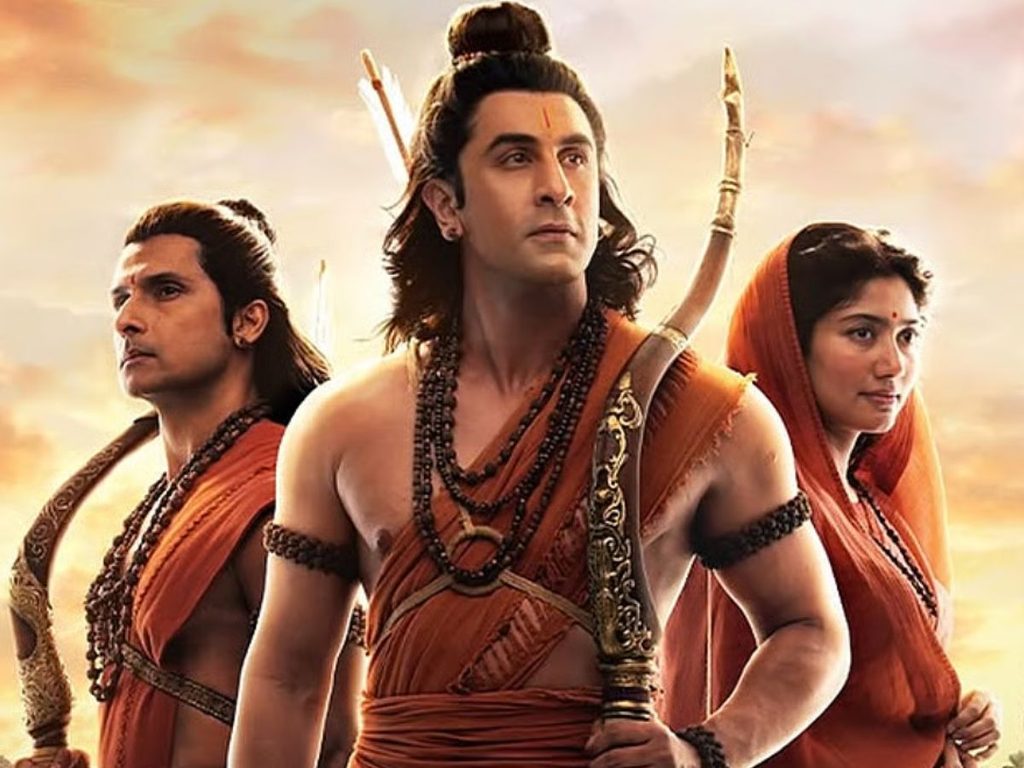
Now let us look at the other side of the debate. Why does Rama appear understated or passive to many modern viewers?
Modern cinema is addicted to loud bravado. Over the last twenty years, action films have trained us to expect heroes who roar, give fiery speeches, and crush their enemies with visible fury. We expect a hero to assert dominance at every turn.
Against that loud backdrop, Rama’s defining quality can easily be misread as passivity.
In Indian tradition, that defining quality is called Maryada. People often translate Maryada simply as rules or good manners. That translation is too narrow. Maryada is inner poise. It is composure under extreme provocation. It is the willingness to hold back your strength when using it would break a higher principle. Above all, it is the freedom to give up power rather than cling to it. Consider what happens in the first half of the epic, which the new film covers. Rama is the rightful heir to the throne of Ayodhya. He is loved by the citizens, respected by the ministers, and trained as a matchless warrior. On the morning of his coronation, everything is taken away from him. Through a palace plot, he is ordered into fourteen years of forest exile. His younger brother Bharata is given the crown instead. Think about how a modern hero would react to this injustice. A modern hero would fight for his rights. He would rally the army, expose the plot, and seize the throne he earned. Rama does none of this. He accepts the exile without a trace of bitterness. He does not blame his father, Dasharatha. He does not resent his stepmother, Kaikeyi. He does not even allow his fiercely loyal brother, Lakshmana, to start a rebellion on his behalf.
To a modern observer obsessed with personal rights and status, Rama’s behaviour looks puzzling. Why would a capable leader walk away from power?
Because Rama understands a truth that Ravana never learns. True sovereignty begins with self-mastery. If you need a throne to feel powerful, then the throne owns you. You are not free. You are a prisoner of your own status. By walking away from Ayodhya with complete inner calm, Rama proves that his dignity does not depend on his title. He absorbs betrayal, exile, and loss without losing his moral balance. That is not weakness. It is the hardest form of strength known to human conduct. Anyone can roar when provoked. Anyone can lash out when insulted. Very few people can hold immense power, or endure unfair loss, without letting anger, pride, or ego dictate their next move.
In the Ramayana, Rama’s quietness is not the absence of power. It is power under complete control. A shallow stream makes noise over rocks, while a deep river flows silently. In the same way, Rama’s stillness is the source of his unstoppable strength.
The Logic of And vs. The Trap of Either/Or
If we step back from the movie screen and look at our own lives, we can see why this distinction matters so much today. Modern life constantly pushes us into an “Either/Or” trap. We are told that we must choose between opposites. We are told that in our careers, we must either be aggressive and ruthless, or we will be left behind. We are told that we must either chase ambition and material success, or we can have inner peace. We are told that we must either embrace modern technology and speed, or hold on to traditional values.
Ravana is the ultimate symbol of this Either/Or mindset.
Ravana believes he must choose power over ethics. He believes his desires matter more than the rights of others. In his mind, humility is for the weak, and dominance is for the strong. Because he operates on Either/Or, his immense brilliance eventually destroys him and everything he built. Rama represents the exact opposite. Rama is the living model of The Logic of And. In Indian thought, life is never meant to be a battle between worldly skill and inner character. You do not have to give up strength to be ethical. You do not have to become passive to be peaceful.
Rama holds both together:
- He possesses unmatched martial skill and complete emotional restraint.
- He honours his family duty and protects the welfare of ordinary citizens.
- He lives with the simplicity of a monk in the forest and governs with the vision of an ideal king.
- He feels deep human grief when separated from Sita and never lets that grief turn into blind cruelty.
Look at how different this is from our modern confusion. When we watch Rama on screen, we are looking at someone who refuses to split his life into competing halves. He does not leave his values at the door when he enters a battlefield. He also does not lose his strength when he enters a forest hut.
This is why Rama is called Maryada Purushottama. He is not a passive saint who avoids conflict. He is a complete human being who joins power with principle.
What The Ramayana Teaches About Modern Leadership
You do not need to be a king in ancient Ayodhya or a ruler in golden Lanka to face this choice. Every professional, business owner, parent, and public leader faces the Rama-versus-Ravana choice every single week.
In modern organizations, we often hire and promote “Ravanas.”
We look for star performers who deliver big numbers, speak with absolute certainty, and dominate meetings. We overlook their arrogance, their lack of empathy, or their habit of bending rules. We excuse these flaws because their short-term results look like a golden Lanka. For a while, this works. The numbers go up. The headlines look impressive. The swagger feels exciting. Then, sooner or later, the hidden cost of unanchored brilliance arrives. Because there is no inner restraint, one unchecked impulse leads to a major mistake. A toxic culture drives away good people. A disregard for ethics triggers a public collapse. History, both ancient and modern, is full of fallen empires built by brilliant leaders who could master everything except their own egos.
Now contrast that with Rama’s model of leadership.
Look at how Rama builds his team during his exile. He has no treasury, no royal army, and no official title. He is a wandering exile in the forest. Yet wherever he goes, people willingly join his cause.
Why? Because Rama leads through trust, respect, and shared purpose rather than fear or dominance.
When he meets Guha, the boatman chief, Rama treats him as a dear friend and equal. He erases social barriers without giving a speech about equality. When he meets Shabari, an elderly tribal devotee, he honours her devotion with genuine humility. When he forms an alliance with Sugriva and Hanuman, he does not treat them as hired soldiers. He treats them as respected partners in a shared moral mission. Rama’s leadership is quiet, steady, and deeply empowering. He does not need to be the loudest person in the room to earn loyalty. His consistency does the work. People trust him because they know his actions are guided by Dharma, not by his mood or personal ambition. In an age of noisy self-promotion and fragile leadership, Rama’s quiet authority is not outdated. It is deeply radical.
Technology, AI, and the Danger of Mistaking Tools for Wisdom
This brings us back to the other major topic around the new Ramayana movie: technology. Much has been written about the film’s visual effects, its global music score, and its use of artificial intelligence tools like Brahma AI to make actors speak smoothly in multiple languages. There is nothing wrong with celebrating this achievement. Using modern technology to carry an Indian story to global audiences is a great example of The Logic of And in action. Ancient wisdom needs modern tools to travel across borders and reach new generations. Valmiki used the poetic meter of Sanskrit shlokas to preserve the story for his era. Centuries later, Tulsidas used the local dialect of Awadhi to bring it to ordinary homes. In the same way, modern filmmakers are right to use IMAX cameras, CGI, and AI to tell the story in the language of the twenty-first century. The danger is not in using modern tools. The danger lies in letting the tools become the entire conversation. Think about what happens when our discussions after the movie begin and end with CGI details, AI lip-sync accuracy, box-office records, and entry scenes. When we do that, we flatten a deep manual on human conduct into just another visual spectacle.
Look at how this mirrors our broader relationship with artificial intelligence today.
Every day, we marvel at how fast AI can write code, create images, translate languages, and process huge amounts of data. Like Ravana’s Lanka, our technological world is becoming shinier, faster, and more capable by the hour. Yet technology is only an amplifier. It amplifies whatever intent we bring to it. If we bring greed, vanity, and distraction to powerful tools, technology will only help us harm ourselves faster. If we bring wisdom, empathy, and ethical clarity, those same tools can elevate human life. AI can translate Rama’s dialogues into English, Spanish, or Japanese with flawless lip movement. It cannot teach us how to keep our calm when we are treated unfairly. CGI can recreate the golden towers of Lanka in breathtaking detail. It cannot teach us how to let go of our ego when we are wrong. When we obsess over the spectacle and ignore the substance, we are admiring the buildings of Lanka while forgetting why Lanka fell.
The Epic as a Mirror, Not Just Entertainment
Why has the Ramayana survived for thousands of years across India and Southeast Asia? It is told in hundreds of languages, folk songs, puppet shows, and temple carvings. It has not survived simply because it is an exciting adventure story with battles, mythical creatures, and dramatic twists. Thousands of adventure stories have been written and forgotten over the centuries. The Ramayana has survived because it acts as a mirror. Every generation that watches, reads, or listens to it reveals its own character through what it chooses to admire. In eras that valued duty, sacrifice, and social harmony, audiences naturally admired Rama’s poise, Sita’s quiet strength, Lakshmana’s selfless devotion, and Hanuman’s humble service. They saw Rama’s restraint not as a flaw, but as the highest peak of human growth.
Today, we live in an era of extreme individualism, instant gratification, and loud self-assertion. Social media algorithms reward outrage and vanity. Modern culture often tells us to grab everything we can, assert our ego at every chance, and never back down. So when we walk into a theatre today and watch Ramayana, our modern habits act like a filter. They make Ravana’s swagger look cool and familiar. At the same time, they make Rama’s silence look strange and uncomfortable. The fault does not lie in Valmiki’s story. It does not even lie in how the film is staged. Our reaction itself is the diagnosis. It shows us what we have trained ourselves to worship. Look at the other characters in the epic as well.

Look at Hanuman.Hanuman possesses immense strength. He can leap across an ocean and lift an entire mountain. Yet he never uses his power to build an empire for himself. He never boasts about his feats. His entire strength is dedicated to service (Seva). He represents power anchored in humility.
Look at Sita. Her strength is not loud or aggressive. Yet she stands unbroken in the middle of Ravana’s golden palace, completely untouched by his wealth, threats, and pressure. She proves that true freedom is an inner state that no external prison can touch.
Look at Bharata. He is handed the crown of Ayodhya on a silver platter. Yet he refuses to enjoy a throne gained through injustice. He places Rama’s sandals on the royal seat and governs merely as a caretaker.
Every single pillar of the Ramayana challenges our modern obsession with ego, entitlement, and spectacle. It reminds us that greatness is measured not by how much power we collect. It is measured by how cleanly we hold that power, and how gracefully we can let it go.
Reclaiming the Real Story
Watching Ramayana on a giant screen with great music and visual effects can be a moving experience. It is encouraging to see Indian stories told with confidence and technical skill on a global stage. Let us appreciate the craft. Let us enjoy the music, the scale, and the innovation that brings these ancient characters to life for a new generation. At the same time, let us not stop at the surface. When the theatre lights come back on and we step out into our busy lives, the real test of the Ramayana begins. Life will inevitably hand each of us moments of power, moments of temptation, and moments of unfair loss. We will face situations where we can crush someone weaker than us, bend a rule for personal gain, or let our anger ruin a relationship. In those moments, the swagger of Ravana will whisper that we should take what we want because we are strong enough to get away with it.
And in those same moments, the quietness of Rama will ask a much harder question. Can we hold our strength with restraint? Can we protect our integrity when no one is watching? Can we choose what is right over what is merely profitable?
Technology can render Lanka in dazzling detail, and AI can carry our voices across every continent. Yet no amount of visual magic can answer the central question the Ramayana still asks every viewer.
When given power, brilliance, and provocation, will we live like Ravana, or will we master ourselves like Rama?
Author Biography: – R Srinivasa Murthy, the author, is a corporate leader, an independent writer, and a student of Hindhu Philosophy. He Identifies as a Demystic, committed to removing unnecessary mysticism from traditions to offer practical systems for the next generation. His upcoming book, Logic of And: Sanatana Dharma as a Toolkit for the Contemporary Seeker, aims to bridge ancient wisdom with modern life to foster an inclusive, living civilisation.

With a journalistic long journey, we bring you https://primepost.news, a dynamic platform committed to unraveling the intricate tapestry of Indian politics, particularly delving deep into the heart of Telangana and Andhra Pradesh. Our blog is not just a source of news; it’s a reservoir of insights, analysis, and thought-provoking reviews.

“Truth and patiens always win”
Don’t panic and blame other when we are in problem, our character built our real team to face problems. Do your work without complaint success will come automatically at you.
Wonderful thoughts
Explanation superb sir😍.
In our life Ramayanam and Mahabharatam is a two epic shown how to live our life with Spiritual context.
Ramayana shows never loose our Honesty and Dharma in every Sad times.
We never loose our Dharma in bad situation of our life..
Thank you sir 🌞👏😍👍
Superb sir😍😍😍
In that story you are Telling one line which is super.
When Ma sita abducted by Ravana.At that time Ma sita asking Saint Ravana about the Vedas slogan line of some spiritual context.
Ravana told the Vedas slogan line Exactly.See how Ravana was memorized and learn the Vedas.He is having lot of potential talents about Sanatana Dharma and vedics.
He was villain,But he knows the knowledge of Vedas as well as all known.
Superb Explanation 🤩 😍 🎉 🕊️ sir.
True