Findings from The Reporters’ Collective Election Audit Series of Chittoor
Wider Critiques of EVM Vulnerability and Turnout Anomalies
In November 2026, The Reporters’ Collective published a three-part investigative series based on 4,212 pages of confidential Reports of the Returning Officer (RRO) across 530 constituencies from the 2024 electoral cycle. While these internal records do not prove EVM software manipulation, they point to gaps in mandatory cross-verification protocols. In the third instalment of its audit, The Reporters’ Collective examined records from Andhra Pradesh’s Chittoor parliamentary seat, which encompasses seven assembly segments, including Kuppam. Because Lok Sabha and Vidhan Sabha elections were held simultaneously, voters stood in a single queue at each booth under the same presiding officer and cast both votes sequentially. Under ECI rules, presiding officers must issue numbered slips to everyone in line at the 6:00 PM closing time—meaning the headcount in the queue must be identical for both elections. However, internal reports submitted a day apart recorded conflicting figures: Officials reported 56,067 voters waiting in the 6:00 PM queue across Chittoor. Vidhan Sabha Records: Across the same seven assembly segments, officials logged 24,596 voters in the queue—a discrepancy of 31,471 voters in the exact same lines. According to the Collective, ECI rules require returning officers to flag such mismatches for scrutiny or potential re-polling, yet no inquiry was recorded.
Mismatches and Missing Logs in Earlier Audit Reports
The Chittoor report followed two earlier investigations by The Reporters’ Collective covering other states: Unreconciled Vote Totals (Part 1): The first report found that in 51 of the 530 constituencies examined across three states, the total votes recorded as cast on polling day did not match the final votes counted, indicating that cross-checks between voter registers (Form 17A) and EVM control units failed to resolve discrepancies.
Missing End-of-Day Records (Part 2): Published on November 18, 2026, the second report found that in 200 constituencies across Maharashtra, Haryana, and Jammu & Kashmir, the ECI had no internal record of votes polled after 5:00 PM—data that presiding officers are required to log every two hours using the EVM’s “Total” button. In Maharashtra’s Kopri-Pachpakhadi segment, records implied 89,878 votes were cast in the final hour across 366 booths (roughly four voters per minute per booth), while 23 constituencies lacked logs of closing slips issued.
Official Response from Election Authorities
Responding to the second audit report, the Maharashtra Chief Electoral Officer rejected the Collective’s conclusions as “misleading,” attributing the variations to differences between statutory forms and internal administrative formats. The Reporters’ Collective countered that reconciling figures after polling day undermines real-time audit safeguards, while noting that the ECI did not respond to queries regarding the Chittoor records. Beyond internal RRO discrepancies, legal and economic observers have raised separate concerns regarding targeted tampering risks and statistical anomalies in late-night polling data.
Prashant Bhushan on Targeted Manipulation Risks
Speaking at a seminar organised by the Forum for Constitutional Democracy in Hyderabad on November 22, 2026, Supreme Court advocate Prashant Bhushan addressed the feasibility of EVM manipulation. Responding to a question, Bhushan stated that compromising EVMs across a large number of constituencies would be operationally risky, as deploying software personnel widely to insert malicious code would carry a high chance of exposure. Instead, he suggested that any potential interference would more plausibly target select, closely contested segments, alongside concerns over electoral roll deletions and procedural opacity.
Parakala Prabhakar on Late-Night Voting Rates in Andhra Pradesh
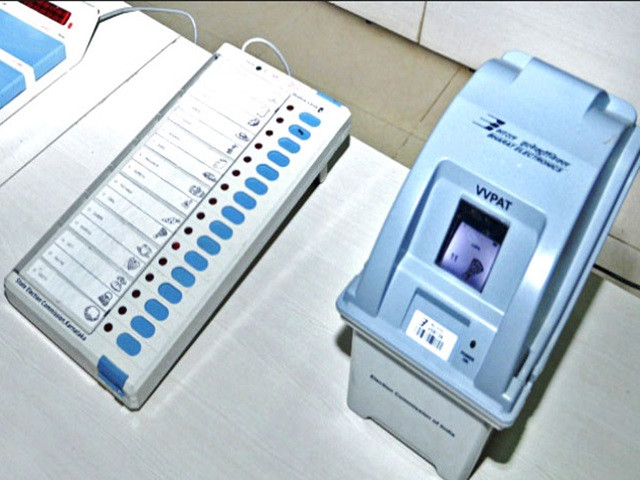
Political economist Parakala Prabhakar examined time-series turnout disclosures published by the ECI for the 2024 Andhra Pradesh elections. According to ECI figures, state-wide turnout stood at 68.04% at 5:00 PM and 68.12% at 8:00 PM, before rising by 8.38 percentage points between 8:00 PM and 11:45 PM, and by another 4.16 percentage points (approximately 17.2 lakh votes) between 11:45 PM and 2:00 AM. Prabhakar noted that across the roughly 3,500 booths where voting reportedly continued past midnight, this pace equated to one voter every 20 seconds. Factoring in the mandatory seven-second Voter Verifiable Paper Audit Trail (VVPAT) display window across two separate EVMs per voter, he argued that such throughput would be physically implausible without public verification through Form 17C records and booth videography.

With a journalistic long journey, we bring you https://primepost.news, a dynamic platform committed to unraveling the intricate tapestry of Indian politics, particularly delving deep into the heart of Telangana and Andhra Pradesh. Our blog is not just a source of news; it’s a reservoir of insights, analysis, and thought-provoking reviews.