The Lifeblood of Democracy!
What we need now is not to chant the Preamble like a mantra, but to live by its ‘Basic Structure’ every single day. We have got used to reciting the Indian Constitution like a morning prayer. We garland it. We bow before it. But the Constitution is not a holy book to be wrapped in saffron silk and kept on a high shelf, worshipped from a distance. It is the shield that protects the self-respect and the rights of the ordinary citizen. A building stands on its walls and pillars; Indian democracy stands on the ‘Basic Structure’ of the Constitution. And where is that Basic Structure? Not in some far-off place. It is right there, alive, in every letter of the Preamble. “We, the People…” These words belong to the people. Those in power have not grasped how deep they go, and so they keep twisting the Constitution in every possible way, one convenient amendment after another.
Every Word of the Preamble Carries Weight
Look closely, and you will find that every syllable of the Preamble has its own force. It opens with “We, the People of India.” These words were not written to spread hatred, or to hand over the country to one religion. Nor does “We, the People…” mean that those who voted for the ruling party in the last election are human beings and the rest are something less.
In 1950, when the Constitution came into force, “We” meant its makers, Gandhi, Nehru, Patel and Azad. It also meant its critics, those who argued against it and then signed it all the same, saying, “Yes, this is ours.” It covered every human being and every citizen, and even the foreigners living in the country at the time. Nobody can say it was meant for one sect or one community. “We, the People” also includes everyone born after 1950, the baby opening its eyes this very second, and the children yet to be born on this soil. “People” is not limited to those holding citizenship papers. Article 21 protects all human beings. It is Article 19(1)(a) that was written for citizens alone.
To twist the basic meaning of citizenship is a serious wrong. It is an injustice, even an atrocity. As some friends rightly put it, citizenship (Paurasatvam) is not just a legal status; it is an ethos (Tatvam). The revolutionary poet Sri Sri said, “Plurality is the strength of the individual.” Those are seed-syllables (Beejaksharas), small words carrying great power. This country is not the family property of whoever wins today’s election. Rulers have no right to cook up new meanings of “de-citizenship” whenever they please. The State has no power to take citizenship away. Its constitutional duty, its dharma, is to protect it.
The Promise of ‘All’
The Preamble resolves “to secure to all its citizens…” Underline the word ‘All’ three times. The whole aim of the Constitution is justice for everyone, leaving out not even one person. Do our leaders really understand what they are reading in “to constitute India into a Sovereign Socialist Secular Democratic Republic and to secure to all its citizens…”? Do they know what a solemn resolve is? In “all its citizens,” the word that matters is ALL. Read it again. And again. Think about it. You do not need to know Telugu for this; the English word ALL is enough. It does not split people into devotees of Vishnu and enemies of Shiva. It does not mark out people of other faiths to be hunted down. ALL is not for tyrants like Ravana, Kamsa or Narakasura. It means social, economic and political justice for everyone. Anyone with humanity in him is a human being. ALL does not belong to gangs of flatterers who divide people by gender, religion or money and then trade them for power. For those who have humanity, ALL means all of us, together.
When we translate the English Preamble into Telugu, Nyayanni (justice, in the singular) will not do. It has to be Nyayalni (justices, in the plural), because justice here has many sides. That small plural ending holds the whole vision of the Preamble: Social Justice, Economic Justice and Political Justice for all. Next to them stand the liberties of thought, expression, belief, faith and worship. Have we ever stopped to notice this? If we have not, how can we claim to understand the Constitution? Then there is Equality, in two forms: Equality of status and of opportunity. This right is broken every day, everywhere. Every government is bound to punish the crimes of inequality. But who will do the punishing? The government is supposed to enforce the law. Does it? So the whole of society ends up as the victim. Last, the Preamble promises the Dignity of the individual. Who, today, treats every person as a human being with a dignity of his or her own? That promise, too, is still waiting to be kept. And who is protecting Fraternity, which is meant to assure the unity and integrity of the Nation? Did earlier governments do it? Is this government doing it? Has dividing people become the habit of everybody? We should be ashamed.
Fraternity and ‘All’: The Life of the Preamble
Read the Preamble carefully and three guiding ideas come out of it.
1.Fraternity is the real foundation. Brotherhood, friendship, the feeling that we all belong to one human family: this is where the strength of our Constitution lies. I remember the Shashtipoorthi (60th birthday) celebrations of M.S. Acharya, editor of the Janadharma weekly, in Warangal. A felicitation volume for Kaloji was released there. I was a young journalist then, helping to organise the event, and I sat through every speech before Kaloji gave the closing address. The People’s Poet Kaloji Narayana Rao said: “I have not yet moved from ‘I’ to ‘We’… True democracy exists only when we say ‘We’!” I have not heard a better definition of the collective spirit the Preamble has in mind.
2.Social justice comes before legal technicalities. The Preamble does not say “Legal Justice” anywhere. It simply says “Justice.” If judges and lawyers shut themselves up in dry legal language and procedure, the common citizen will never get real justice. Guarantees like Article 16 cannot be left as promises on paper. The Constitution does its job only when they actually bring light into the lives of marginalised communities.
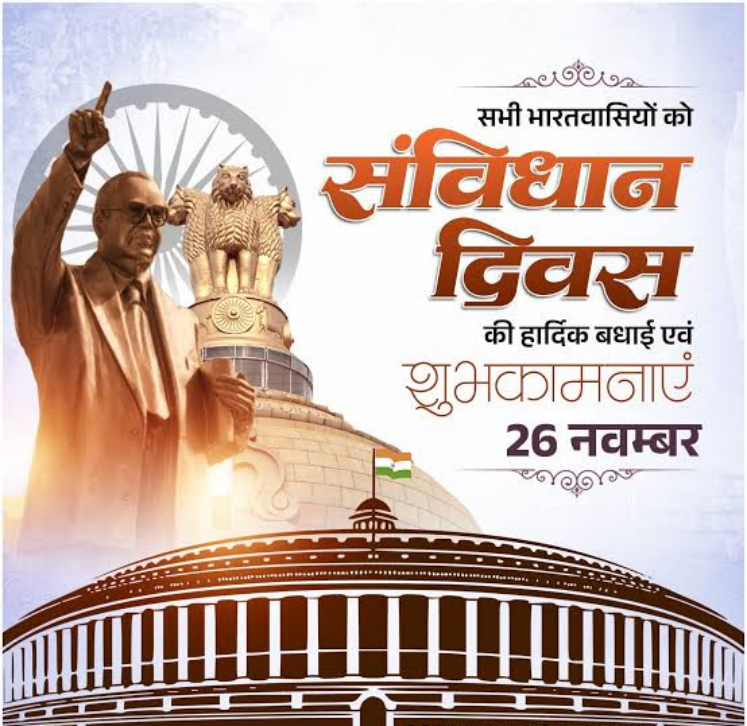
3.A covenant we gave ourselves. Where was this Constitution made? In our own Constituent Assembly, on November 26, 1949, we “adopted, enacted, and gave to ourselves this Constitution.” We wrote it, and we wrote it for ourselves. It was not a poem churned out by AI, nor intelligence borrowed from Google. Adopted means we accepted it of our own free will. Enacted means we gave it the force of law after long debate and agreement. In those early years the Left called the Constitution useless. Right-wing papers wrote editorials saying it did not suit our traditions and our epics. Today the very people who rejected it put garlands on it and sing hymns to it. Good. Better late than never. But what are we really doing with it?
The whole Preamble is one sentence. Yet that one sentence is an epic. There is great depth in it for anyone who wants to understand, and those who misread it will carry the burden of their own foolishness. It is the Song of India, the Epic of India, a Bharatiya Geetha as great as the Bhagavad Gita.
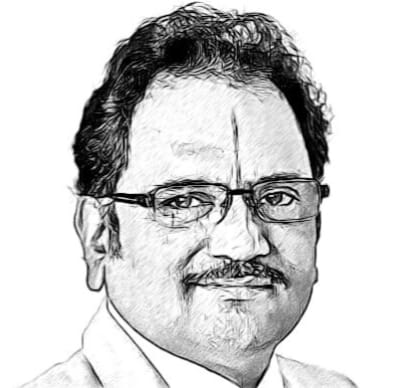
Law professor and eminent columnist
Madabhushi Sridhar Acharyulu, author of 63 books (in Telugu and English), Formerly Central Information Commissioner, Professor of NALSAR University, Bennett University (near Delhi), presently Professor and Advisor, Mahindra University, Hyderabad. Studied in Masoom Ali High School, AVV Junior College, CKM College, and Kakatiya University in Warangal. Madabhushi did LL.M., MCJ., and the highest law degree, LL.D. He won 4 Gold Medals at Kakatiya University and Osmania University.
Email: cicsridhar@gmail.com
Mobile: 8447651505