Celebrating the Indian Constitution: Samvidhan Divas
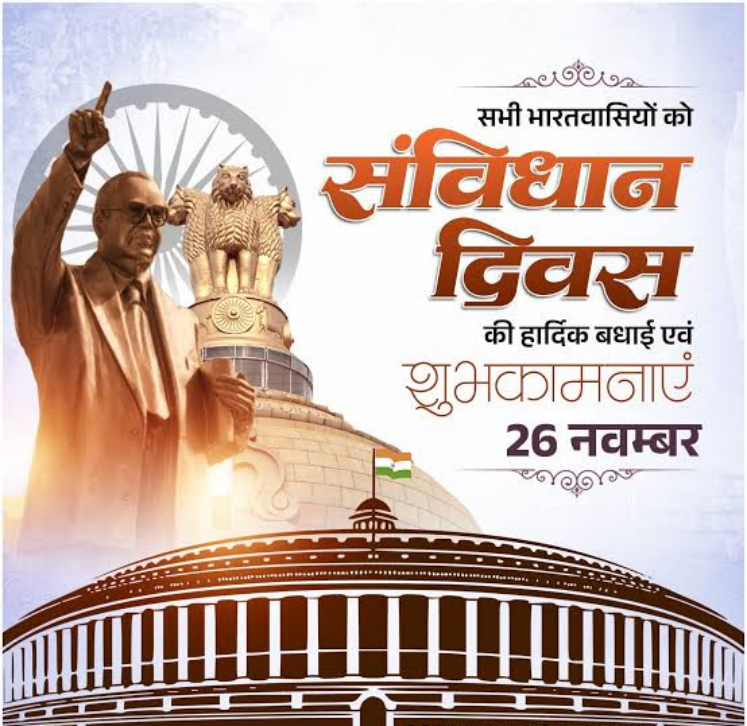
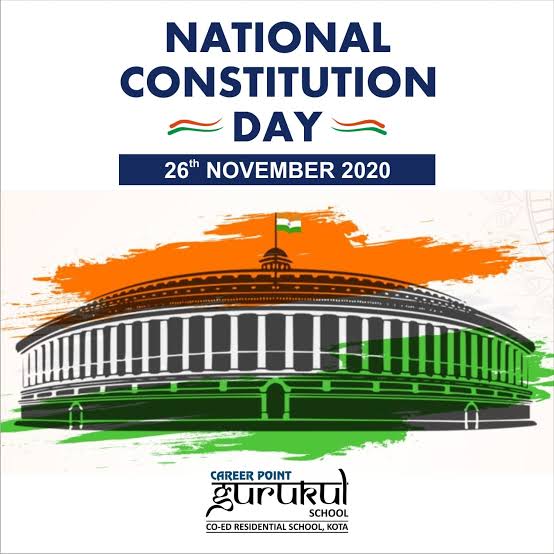
It is a very significant Samvidhan Divas (Constitution Day or National Law Day). It is observed in India every year on November 26 to mark the adoption of the Indian Constitution by the Constituent Assembly on November 26, 1949. It later came into effect on January 26, 1950, which is celebrated as Republic Day. Constitution on this day after 2 years, 11 months, and 18 days of work. The Government of India officially declared November 26 as Constitution Day in 2015 to mark the 125th birth anniversary of Dr. B. R. Ambedkar, Chairman of the Drafting Committee. It was previously observed as National Law Day. Schools, colleges, government offices, and institutions across the country hold readings of the Preamble, debates, quizzes, and awareness programs on constitutional values, rights, and duties. You can also explore official campaigns and quizzes on MyGov.
Keeping the Soul of the Constitution Alive
In the dark days of the Emergency, in 1975-76, a majority of the Supreme Court judges held that citizens had no right to life. Justice H.R. Khanna stood alone and wrote his historic Dissent. He kept the soul of the Constitution alive. Later, in 2002, three years before the Right to Information Act came in, the Supreme Court held that voters have a fundamental right to know the criminal record of the candidates. Then came the RTI Act of 2005, shaped letter by letter through hard debate. That, too, was a constitutional wonder. Those who think some fundamental rights belong only to citizens usually point to Article 19(1)(a). But can Article 14, equality before the law, be read apart from Article 19? Does Article 19 anywhere say that equality means something else? It never did. The Constitution does not belong only to the courts and the rulers. Indian democracy will last and grow only if we understand every word of the Preamble and keep alive our basic right to ask questions.
People and Citizens: ‘We the People’
Our Constitution does not begin with “We the Citizens.” It begins with “We the People of India.” So the generation that wrote it, the generation living now and the generations not yet born all have an equal stake in it. Freedom of speech and expression under Article 19(1)(a) belongs to citizens. But the Right to Life under Article 21 belongs to every human being who breathes on this soil, citizen or not.
Fortunately, Dr. B.R. Ambedkar gave us a code of conduct like no other, a “Bharatiya Geetha” that can stand beside the Bhagavad Gita. Now suppose someone falls flat on the ground before entering the Supreme Court, Rashtrapati Bhavan or Parliament. Suppose we threaten to send people to jail if their children do not recite the Preamble every morning before going to school. Is that patriotism? And the one who does not do it, is he guilty of sedition? When Swami Vivekananda came back from America, he lay down on the ground and put that soil on his forehead. That was real devotion. Fear had nothing to do with it. It came from pride in his own land. Every citizen should respect the soil of this country, out of love for it, and not out of contempt for the neighbour’s soil.
The Trick Hidden in the Word ‘Shall’
Part III of our Constitution sets out the Fundamental Rights. Articles 14 to 18 deal with the Right to Equality, and Article 16 promises all citizens equality of opportunity in public employment:
Article 16(1): “There shall be equality of opportunity for all citizens in matters relating to employment or appointment to any office under the State.”
Article 16(2): “No citizen shall, on grounds only of religion, race, caste, sex, descent, place of birth, residence or any of them, be ineligible for, or discriminated against in respect of, any employment or office under the State.”
Here the word “shall” means a duty that cannot be avoided. But right after these two clauses, the commanding “shall” vanishes. In its place comes a softer phrase: “Nothing in this article shall prevent…” In plain words, the State may do this, if it wants to.
This is a quiet piece of legal sleight of hand. Nothing is guaranteed. What it really says is, “We will if we can, and if we can’t, we won’t.” See how this wording runs through the other six clauses of Article 16:
Article 16(3): Parliament is not prevented from making laws that require residence within a State or Union Territory before certain public jobs.
Article 16(4): The State is not prevented from reserving appointments or posts for any backward class of citizens which, in the State’s opinion, is not adequately represented in the services.
Article 16(4A): The State is not prevented from providing reservation in promotions, with consequential seniority, for Scheduled Castes (SC) and Scheduled Tribes (ST) who are not adequately represented in State services.
Article 16(4B): Reserved vacancies left unfilled (the backlog) can be carried forward to later years as a separate class, outside the 50% annual ceiling on reservations. This came in through the 81st Amendment.
Article 16(5): A law may require that the person holding an office connected with a religious or denominational institution belong to that religion or denomination.
Article 16(6): The State may reserve up to 10% of appointments for Economically Weaker Sections (EWS) of citizens not covered by the existing SC/ST/OBC quotas. This came in through the 103rd Amendment.
An Open Secret
Article 16 promises equal opportunity in public jobs. But if rulers and legal experts do not respect the spirit of the clauses that begin “Nothing in this article shall prevent…”, those clauses may remain paper assurances and nothing more. Why amend the Constitution only to write in promises that no government is bound to keep? Prime Ministers, Chief Ministers and Home Ministers shower assurances on the public all the time. What are those words worth? It is for us, the citizens, to expose these open secrets and get past them. Our citizenship, rightly understood, is our strength. No government, past or present, will change this on its own. Most of the leaders in India are on bail.
And the Clouds Over Our Democracy Today
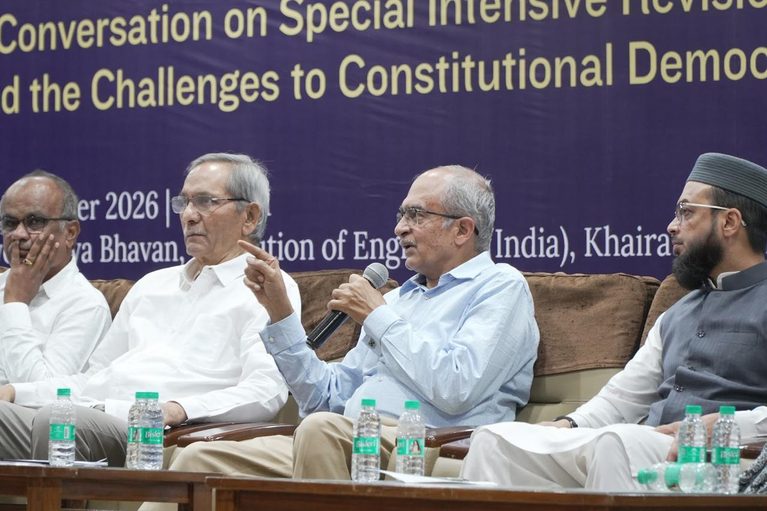
The Basic Structure of our Constitution faces three serious challenges today. Voting rights and citizenship are under a shadow. Millions of names are being struck off the voters’ lists in the name of “de-citizenship” and Special Intensive Revisions (SIR) of electoral rolls. This is worrying. Once we start asking who is a voter and who is a citizen, the founding principles of the Constitution are put to a hard test. Justice V.R. Krishna Iyer saw bail as a protection of personal liberty. Today, many ministers and chief ministers facing serious criminal charges fight elections and hold on to power while out on bail. Democratic values are turned into a joke. Saving Public Interest Litigation (PIL). PIL is the most revolutionary constitutional tool India has built since 1950. It carries the voice of those who have no voice into the courts. Any attempt to weaken it must be resisted, and resisted firmly.
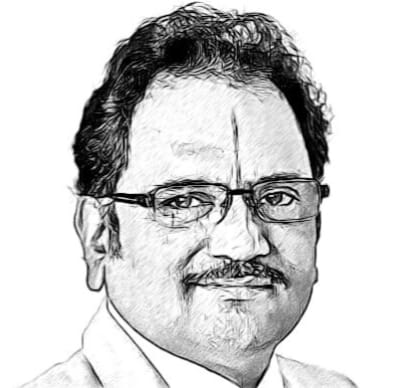
Law professor and eminent columnist
Madabhushi Sridhar Acharyulu, author of 63 books (in Telugu and English), Formerly Central Information Commissioner, Professor of NALSAR University, Bennett University (near Delhi), presently Professor and Advisor, Mahindra University, Hyderabad. Studied in Masoom Ali High School, AVV Junior College, CKM College, and Kakatiya University in Warangal. Madabhushi did LL.M., MCJ., and the highest law degree, LL.D. He won 4 Gold Medals at Kakatiya University and Osmania University.
Email: cicsridhar@gmail.com
Mobile: 8447651505