Inside the Income-tax Act, 2025: Key Changes and Transitional Impact
From Dual Terms to ‘Tax Year’: How the Income-tax Act, 2025 Streamlines Indian Tax Law
Battula Bala Krishna, IRS-2002, Commissioner of Income Tax, International Taxation and Transfer Pricing, Hyderabad. explains various issues on the Income-tax Act, 2025 in an interview with the Prime Post. Excerpts from his interview follow.
Prime Post: Could you provide an overview of the Income-tax Act, 2025 and when it comes into force?
Battula Bala Krishna: The Income-tax Act, 2025 came into force with effect from April 1, 2026, replacing the Income-tax Act, 1961 (which in turn had its roots in the Income-tax Act, 1922). Aimed at simplifying and modernising the tax law, the new Act is primarily a legislative recodification rather than a substantive overhaul. The Government has made it very clear that it neither imposes a new tax nor enhances the existing tax burden. Further, in consequence to the new Act, the CBDT notified the Income-tax Rules, 2026 on 20th March 2026, complete with re-engineered forms.
Prime Post: What necessitated this transition from the 1961 Act?
Battula Bala Krishna: The 1961 Act had become increasingly complex through successive amendments and a plethora of provisos and explanations, with several sections becoming redundant. Hence, the new Act basically aimed at making the law into a coherent code by:
* Consolidating related provisions
* Incorporating provisos into the main text
* Reducing cross-references
* Adopting tables and formulae wherever appropriate
* Deleting redundant provisions
Prime Post: How significant is the reduction in the size of the Act? Does it reduce the scope of the law?
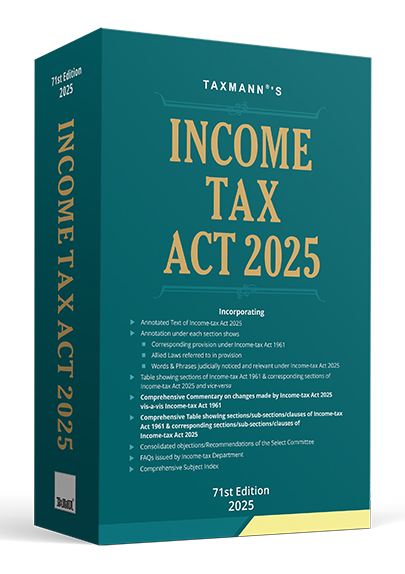
Battula Bala Krishna: As a result of this streamlining, the statute has been reduced from 819 sections to 536 operative sections, arranged into 23 Chapters and 16 Schedules. However, it is important to note that this reduction reflects a simplification of drafting, not a reduction in the scope of the law. The Income-tax Act, 2025 is, in substance, a clearer and more logically organised version of the 1961 Act. Its significance lies not in altering the tax law, but in making it more accessible, coherent, easier to administer, and simpler to understand. Thus, the tax framework remains largely unchanged.
Prime Post: Are there any core conceptual changes in how tax terms are defined?
Battula Bala Krishna: Core provisions such as the charge of tax, heads of income, residential status, computation provisions, presumptive taxation, transfer pricing, GAAR, TDS/TCS, faceless administration, appellate remedies, revisionary powers, and penalty provisions continue substantially on the same principles. The most significant principal conceptual change is the replacement of the concepts of ‘previous year’ and ‘assessment year’ with a single term: ‘tax year’, without altering the accounting period or the manner of taxation. This change directly addresses the confusion arising out of using the dual terms ‘previous year’ and ‘assessment year’ simultaneously.
Prime Post: How will the transition be managed for ongoing proceedings under the 1961 Act?
Battula Bala Krishna: The most significant legal development is the transitional framework under Section 535 in the Income-tax Act, 2025, which preserves continuity despite the repeal of the 1961 Act:
Ongoing Proceedings: Proceedings relating to tax years commencing before 1st April 2026 including assessments, reassessments, rectifications, revisions, penalties, and appeals—will continue to be governed by the repealed Income-tax Act, 1961.
Existing Options and Approvals: Existing options, approvals, notifications, and circulars also continue unless inconsistent with the new law.
Finance Act, 2026 Safeguards: The Finance Act, 2026 further strengthened these provisions by ensuring that post-commencement violations of conditions attached to deductions or exemptions allowed under the repealed Act can be brought to tax in the year of default.
Judicial Precedents: Judicial precedents under the 1961 Act continue to guide the interpretation of corresponding provisions that have been materially re-enacted.
Prime Post: What is your final takeaway for tax authorities and tax practitioners during this period?
Battula Bala Krishna: Both statutes are set to operate simultaneously for several years. Tax authorities and practitioners must first determine the applicable tax year, identify the corresponding statutory provision, and ensure that proceedings are initiated, defended, and decided under the correct enactment. Ultimately, the transition is less about learning a new tax regime than about correctly applying the appropriate statutory framework.

Editor, Prime Post
Ravindra Seshu Amaravadi, is a senior journalist with 38 years of experience in Telugu, English news papers and electronic media. He worked in Udayam as a sub-editor and reporter. Later, he was associated with Andhra Pradesh Times, Gemini news, Deccan Chronicle, HMTV and The Hans India. Earlier, he was involved in the research work of All India Kisan Sabha on suicides of cotton farmers. In Deccan Chronicle, he exposed the problems of subabul and chilli farmers and malpractices that took place in various government departments.
Email: ravindraseshu7@gmail.com
Mobile: 9063718675