“Divided Room, Shared Voice: India Forges Consensus at BRICS New Delhi Summit”
New Delhi Declaration Yields Substantial Blueprint for Global Governance Reform”
The two-day 18th conference of BRICS was concluded on Sunday evening on successful note in New Delhi. Leaders agreed to address each other’s concerns over economic, trade relations, facilitate meaningful market access. BRICS stands for Brazil, Russia, India, China and South Africa. BRICS today has eleven major emerging markets and developing countries of the world: Brazil, China, Egypt, Ethiopia, India, Indonesia, Iran, Russia, Saudi Arabia, South Africa and United Arab Emirates. It serves as a platform for consultation and cooperation on contemporary issues having global as well as regional significance and issues of global political and economic governance. Building
Multilateralism Over Might: Xi and Modi Demand Global South Leadership at BRICS
“The might-makes-right logic does not hold” was Chinese President Xi jinping’s central message for BRICS countries as he called for the realignment of the global order and for the Global South to become a key driver of the world’s multipolarity. He also proposed five initiatives to “cement the foundation of greater BRICS cooperation.” The initiatives include extending support in developing and implementing artificial intelligence models. Jinping stressed that all nations, regardless of their size, strength, and wealth, must be treated as equal members of global community. The Global South countries and nations should hold high the banner of multilateralism, uphold the authority and role of the United Nations, support multilateral institutions in advancing reform and increasing efficiency, and ensure the equal participation of all countries in international affairs.
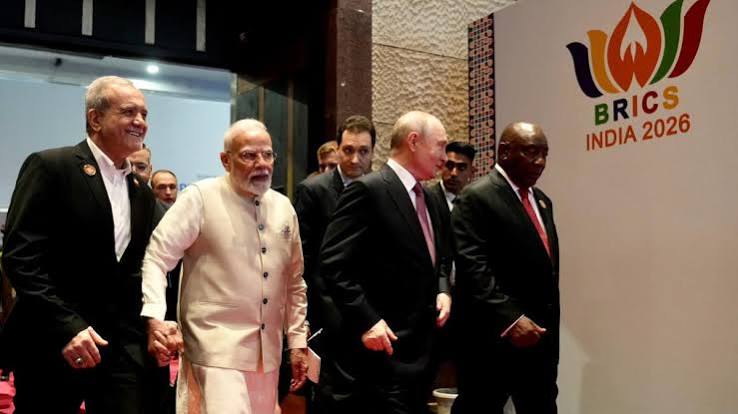
Prime Minister Narendra Modi, with Xi Jinping on his side, on Sunday asked leaders of the BRICS grouping to recognize the dangers of weaponising ‘technology and critical minerals’ which could undo all the gains the world has achieved so far on shared progress and prosperity. ‘No crisis remains contained within a region these days,’ Modi commented. “The world is witnessing increasing tensions, having a significant negative impact on the lives of ordinary people,” he observed. Besides Xi Jinping, Russian President Vladimir Putin, Iranian President Masoud Pezeshkian, Malaysian Prime Minister Anwar Ibrahim and Indonesian President Prabowo Sibianto were also present during Modi’s address.
‘Under India’s presidency, we have focused our efforts on four pillars: resilience, innovation, cooperation and sustainability. I am pleased that, with your cooperation and support, we have been able to transform our shared vision into a win-win situation,’ Modi said.
Modi Leads Multilateral Push in Delhi
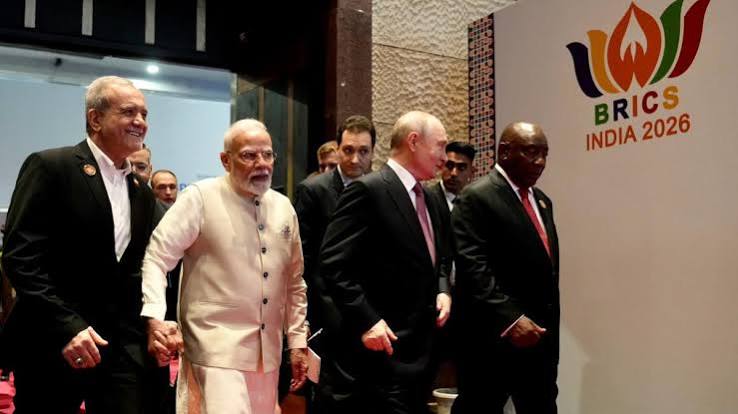
Indian Prime Minister Narendra Modi has an opportunity to interact with Chinese President Xi Jinping and Russian President Vladimir Putin and Iran President Masoud Pezeshkian on the first day of the conference on one-on-one basis. On the second and final day he had bilateral talks with the leaders of Brazil, South Africa, Malaysia and other countries. While emphasizing the need to maintain peace along the border, Modi also had discussions with Xi on trade and exchange of people. He also used the opportunity to bring about some understanding between Iran and UAE. After the talks in Delhi, the Iranian delegation has said it will take the initiative forward in improving its relations with UAE.
Modi and Putin discussed on the 11th about strengthening relations between India and Russia. Less than two weeks ago, Putin and Modi had met in Bishkek on August 31 on the margins of the Shanghai Cooperation Organisation (SCO) Summit. The two leaders reviewed political, economic, defence, energy, space, skill mobility and people to people cooperation. They also discussed the conflicts in West Asia and the Black Sea and their implications for maritime trade and Indian seafarers. Modi had passed on the baton to China which will be organizing the BRICS summit next year. The inaugural BRIC summit took place in Yekaterinburg in Russia in 2009. South Africa was taken as member and it started attending the BRICS summits since 2011 in Sanya. The rest of the eleven nations had joined in 2024 and 2025.
Xi Jinping has come to India after seven years during which time the Galwan clashes and border conflict between India and China took place. India and China said after the talks that they are partners and not rivals. They said they are keen on resolving the border question soon. Modi, who was the host of the conference, emphasized on three mutuals – mutual respect, mutual sensitivity and mutual interest – which Delhi has been following as the basis of its foreign policy.
140-Point New Delhi Declaration Adopted
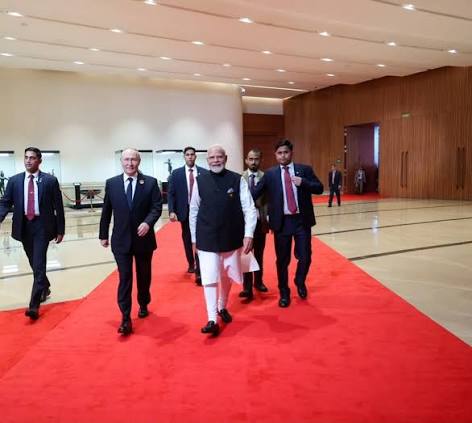
The 140-point New Delhi Declaration was released on Saturday evening. The declaration expressed deep concern over the continued escalation of tensions in West Asia and called for exercising maximum restraint, as well as avoiding actions that could further aggravate the situation. The New Delhi Declaration reaffirmed BRICS’ support for a lasting two-state solution to the Israeli-Palestine conflict, while urging deeper international institutional support for Palestine and reaffirming Israel’s legal obligation to ensure the provision of humanitarian aid in Gaza. The Declaration called for an immediate end to unilateral economic sanctions and expressed concern over rising protectionist policies, warning that arbitrary tariff hikes and green-labelled trade barriers are disrupting global supply chains and hurting emerging economies.
The New Delhi Declaration adopted at the BRICS summit reaffirmed members’ commitment to the bloc’s spirit of mutual respect, sovereign equality, and democracy. Iran and UAE had backed down from tough positions as text on West Asia omits direct references to US-Israeli attack on Iran and Iran attack on UAE. The Declaration has called for comprehensive reforms of UN, support for greater role for Brazil and India in UNSC.
The opposition Congress has questioned the progress made in the BRICS summit contending that it is not a win when Arunachal, Ladakh or even those who carried out Pahalgam terror attacks were not mentioned. However, during his discussion with Xi Jinping, Modi had emphasized that stability along the border remains central to the future of India-China relations. The Indian foreign ministry in a statement said “the two leaders expressed commitment to a fair, reasonable, and mutually acceptable resolution of the boundary question.” The New Delhi Declaration also condemned the Pahalgam terror attack in ‘strongest terms.’
Frictionless Consensus
The BRICS summit happened in the weekend when wars, disrupted energy supplies and soaring costs are fragmenting the world order. At the same time, the grouping has expanded, and the diversity of its participants and interests gave the summit a special significance. For instance Iran, Saudi Arabia and UAE which became members two years ago are in conflict and have divergent interests. The summit which took place at Bharat Mandapam in New Delhi had leaders who represent almost half of the world’s population, 40 percent of global GDP and over quarter of the global trade. The geopolitics makes the lineup even more audacious with leaders like Xi Jinping, Putin, Modi and South Africa’s Cyril Ramaphosa participating. The summit can be described as successful. There was no acrimony. Everything went on smoothly. The New Delhi Declaration also was substantial and meaningful. What more can one expect from summits like this?
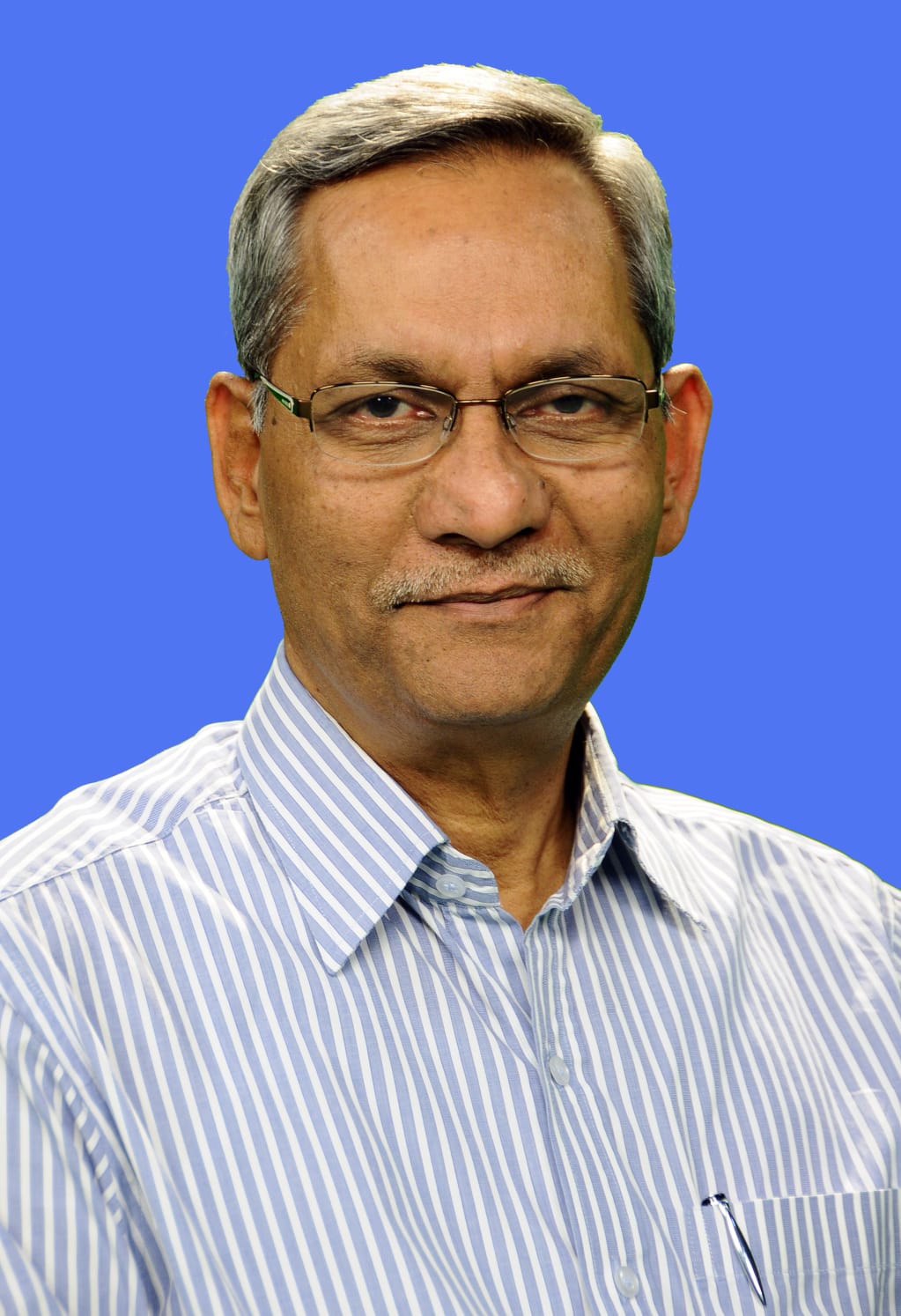
Prominent Journalist
Dr. K. Ramachandra Murthy is a versatile journalist with a distinguished career. Dr. Murthy began his extensive career with Andhra Prabha of The Indian Express group in Bengaluru. He was editor of Udayam, Vaartha and Andhra Jyothy. Dr. Murthy founded and edited HMTV news channel and The Hans India, an English newspaper. He was also editorial director of the Telugu newspaper, Saakshi. He was awarded Ph. D for his research work in rural reporting. Dr. Murthy’s five decades in journalism showcases his influential roles across both print and electronic media. He wrote the political biography of NTR published by Harper Collins.
Email: murthykondubhatla@gmail.com
Mobile: 9908002211