The Temple in Your Mind
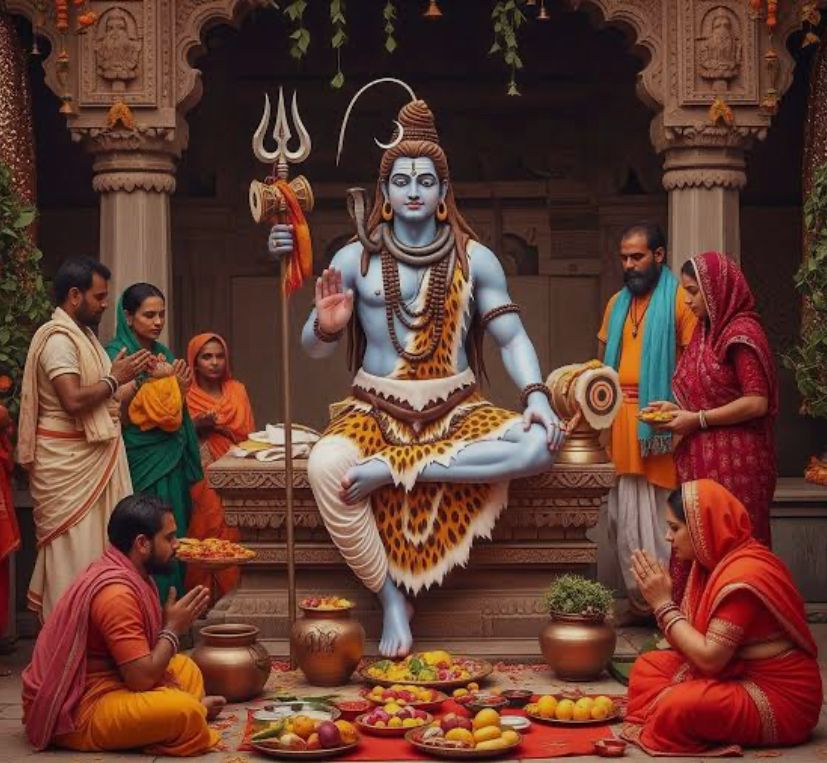
We often think of temples as places. Places we visit, pray, and leave. But some temples do not stay where they are built. They travel with us. The twelve Jyotirlingas of Shiva are like that. They exist across India, but they also exist across life.
Ancient stories tell us of a great pillar of light. It appeared suddenly, connecting the earth to the heavens. Two great powers tried to find its ends. One (Brahma) took the form of a swan and flew as high as possible. The other (Vishnu) took the form of a boar and dug deep into the earth. Neither could find the beginning or the end. This legend is a lesson for us. It reminds us that truth cannot be measured by the ego. We cannot master the infinite by simply “climbing higher” or “digging deeper” in the material world. We must learn to look at the light itself.
This series is not about describing buildings or temple architecture. It is about understanding what they point to. Each Jyotirlinga is seen here as a way of looking at life. Not as ritual, but as perspective. We move from geography to legend, then history and meaning. Finally, we return to the present. We ask: what does this mean and why does it matter now?
This is the first reflection. It begins with Somnath.
- Geography: Where Land Meets Persistence
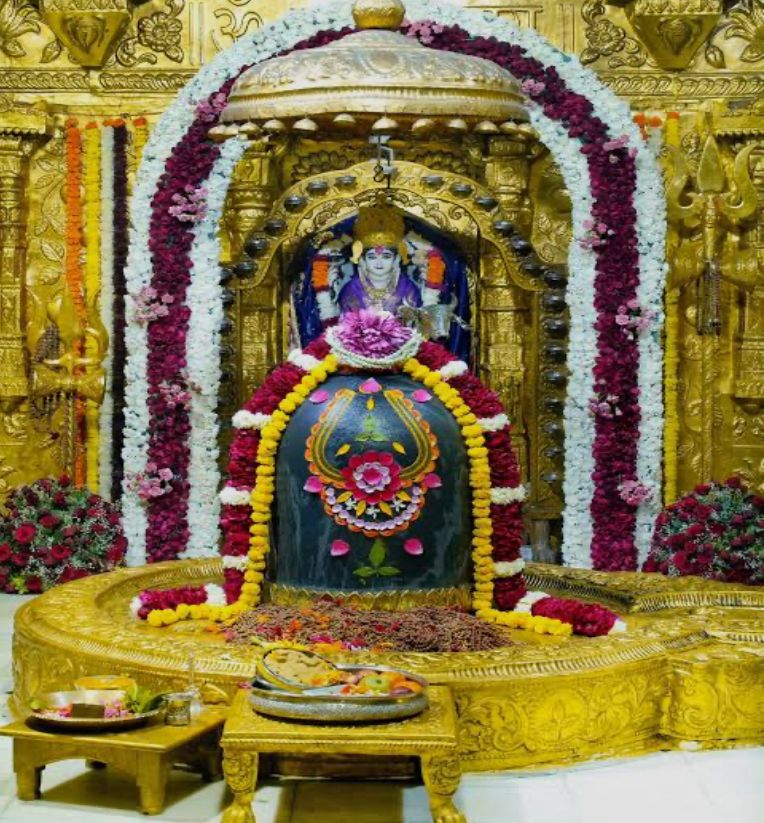
Somnath stands in the Saurashtra region of Gujarat. It faces the Arabian Sea. Land ends here and water begins. The sea is always moving. Waves arrive without pause. The wind shifts without a pattern. Nothing here suggests stillness. And yet, the temple stands.
We must also look at the resilience of the geography itself. This coastline faces the constant salt of the sea and the force of the monsoon. The ground beneath the temple has held firm through every storm. The geography does not give up. It provides the steady platform for the spirit to return. This reflects a deeper condition of life. Change does not stop. Stillness must be found within it.
2. The Legend: The Story of the Fading Moon
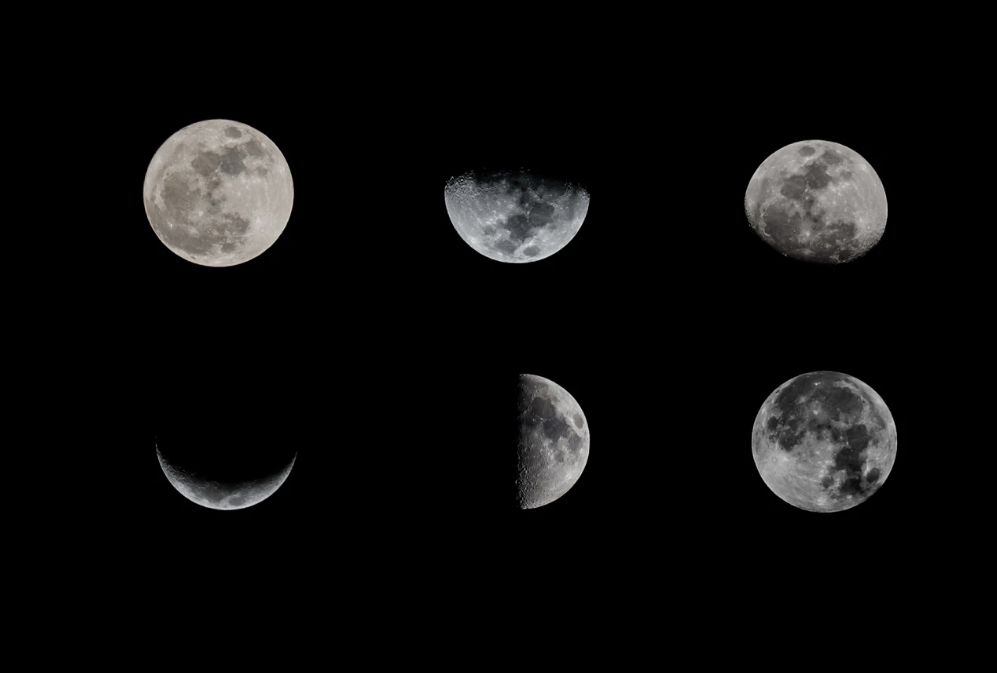
Chandra is the Moon God. One day, he was cursed. Because of this curse, he began to lose his glow. Every night, he got smaller and weaker. He was “waning.” He felt his power leaving him. He was afraid that soon, he would disappear forever.
We all feel like this sometimes. Sometimes, a project fails. Sometimes, we lose our confidence. We feel like our “light” is going out. We think we are becoming nothing.
Chandra did not run away. He went to a quiet place by the sea at Somnath. He stopped looking at his problems and turned his mind toward Shiva. He prayed. He waited. He became still.
The Lesson: Phases, Not Ends
Shiva did not make the curse go away. Instead, he gave the Moon a new rhythm. He told the Moon: “You will fade, but then you will grow back. You will have phases.”
This is a toolkit for our own lives:
- Waning is not Dying: When you feel weak or “low,” it is just a phase. It is a time to rest and gather strength.
- Turning Inward: When things go wrong outside, do not fight the world. Become still. Find your centre. This is where your recovery begins.
- The Bounce back: Just as the moon becomes full again, you will find your strength again. Your light is never gone; it is just waiting to return.
In Simple Terms: Somnath teaches us that life moves in circles. You might be “waning” today, but that is exactly what prepares you to “wax” and shine tomorrow. Your strength is like the moon—it always comes back.
3. History: Rebuilding as a Choice
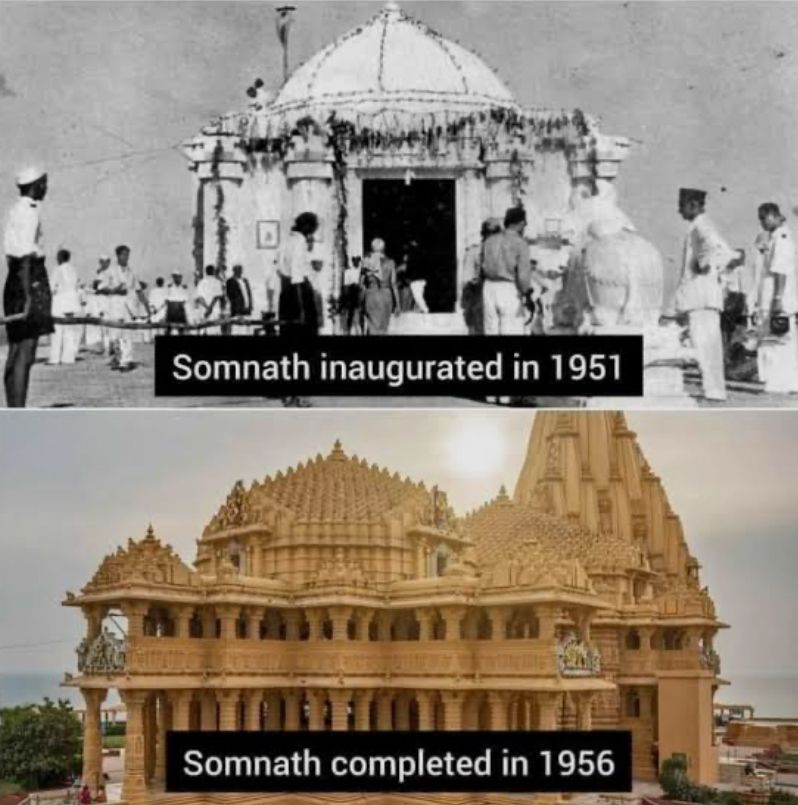
Somnath has not had a smooth history. It was destroyed and rebuilt many times, and by some counts, up to eleven times over many centuries. One noted event is the attack by Mahmud of Ghazni. But the story does not stop there. This repeated rebuilding shows the resilience of the structure and the people. The stones were broken, but the “idea” of the temple remained in the soil. In modern India, its reconstruction was supported by Sardar Vallabhbhai Patel. It was not just preserved. It was restored again and again. It stands today because of a collective refusal to let the light go out.
4. Deeper Meaning: Beyond Resilience
There is a difference between endurance and renewal. Endurance is holding on. Renewal is beginning again. Somnath is about refusing to stop. What is broken does not define the end. What follows does. Rebuilding carries intention and awareness. It is not a return to the past. It is a movement forward. Life does not ask us to avoid breaking. It asks if we are willing to rebuild and bounce back.
5. Contemporary Relevance: Restarting with Awareness
Modern life rarely destroys us visibly. But it unsettles us. Plans fail and direction becomes unclear. We hesitate to begin again because it feels uncertain. But Somnath shows that restarting is not going backwards. You do not begin from zero. You begin from understanding and experience. Failure is not an end. It is a break within a longer journey.
6. Real-Life Examples
The Individual: The Mid-Life Shift Think of a person who has spent twenty years in one profession. Suddenly, the industry changes. The role is no longer there. To the world, the career seems to be fading like the moon. But this person does not start from zero. He takes his foundation. He takes his discipline and his wisdom. He applies them to a new field. He is not a beginner. He is an expert starting a new journey. This is personal renewal.
The Individual: Recovery from Failure Consider a student who fails a major exam. The structure of the plan has broken. However, the geography of the mind is still strong. She looks at the ruins of the failure to see what went wrong. She rebuilds her habits with new awareness. She does not just try again. She begins again with more light.
The Corporate: Think of a company that finds its main product is no longer needed. The market shifts. The old ways wane like the moon. Instead of closing, the leadership uses the foundation of talent and trust to build something new. They do not start from zero. They start from the hard lessons of the past. This is the Somnath spirit. They choose to rebuild with a new awareness. The old form fades so the new can grow.
About the Author
R Srinivasa Murthy, the author, is a corporate leader and independent writer, Demystic and seeker of Hindu philosophy. He is a Demystic dedicated to stripping away unnecessary mysticism from Hindu studies to present a practical system for the next generation. His upcoming book, “Logic of And: Sanatana Dharma as a Toolkit for the Contemporary Seeker“, bridges the gap between ancient wisdom and modern life to build an inclusive and living civilisation.

With a journalistic long journey, we bring you https://primepost.news, a dynamic platform committed to unraveling the intricate tapestry of Indian politics, particularly delving deep into the heart of Telangana and Andhra Pradesh. Our blog is not just a source of news; it’s a reservoir of insights, analysis, and thought-provoking reviews.


Rebooting in life clearly explained. I found this article will make Gen-Z to view things in optimistic way.
True. Every holy site conveys a message. We need to understand the message rather than getting stuck in the rituals. That is the entire effort.. thanks for encouragement
మీరు మంచిగా వ్రాస్తున్నారు. ఇంకా బాగా వ్రాయగలరు. తెలుగు అనువాదం కూడా ఉంటే మరింతమంది చేరువకాగలరాని నా నమ్మకం.
I read this article couple of times,primarily due to the simple way it connects to our roots.
In our day to day life,we have lost the resilience to handle difficult situations.This article is very informative and helps in understanding and building the problem solving attitude within ourselves.
It also refreshes our memory on history and beyond.
The very idea of mapping Jyotirlingas to real life issues and finding solutions is great. It is another – excellent way of respecting Sanatan Dharma, its wisdom and the history, and also being responsive and responsible to the current and future generations. Hearty congratulations dear author – Mr. Srinivasamurthy!
Very nicely elaborated and linking it to the present corporate is stupendous.
Good comparison between Jyotirlingas – personal life. If read this book before 20 years i could have been achieved better than today.
This series is very useful for younger generation when they dip in, studies, work, and dipression …100% they will survive. Illustrations are very good inspiration for the working people…..you are a very good writer…keep it up.
From temples to transformation. Very powerful prospective.
What stood out to me is how beautifully the author has demystified something that often feels abstract . Many of the insights now seem obvious, but they really weren’t until they were articulated this way. Nothing felt forced or stretched, which made the reading experience even more engaging. It truly feels like a thoughtful offering for seekers.
When I read Shiva parivar-I thought the author is inspired by Amish,by seeing the flow..But by this Somnath,he got his own style. Excellent analysis and inspiring article.
Incredible essay! Wonderfully researched and very informative. I really enjoyed reading this and learnt a lot from it. Hope to read many more from you.
RS,
It’s great start!!
Great explanation for motivation to face ups and downs of of life. By taking ancient rich indian history and mythology.