The Digitalisation of Dissent
Appropriation of Gandhi and the Limits of Political Engineering
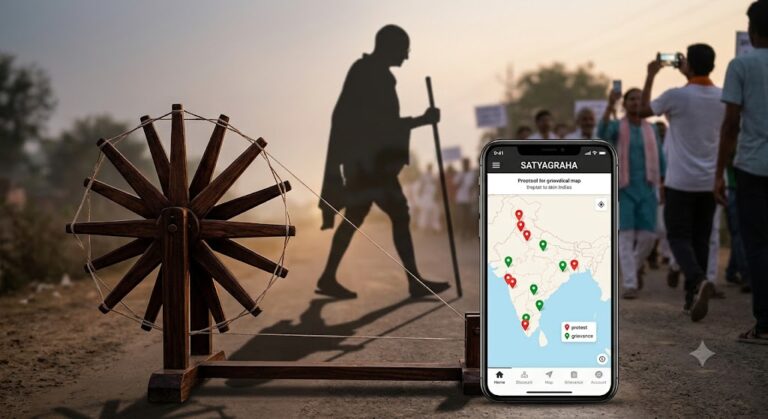
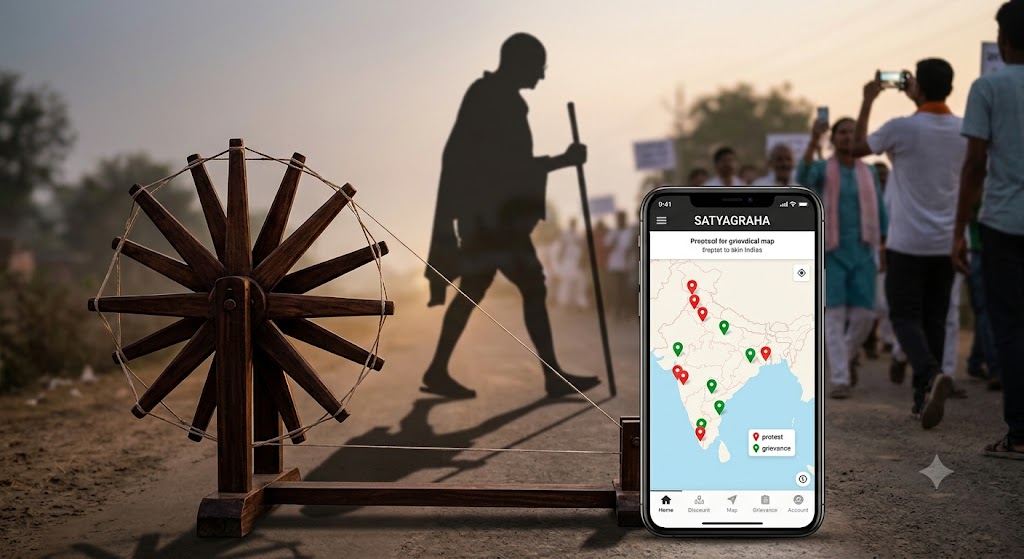
The launch of the ‘Satyagraha’ digital platform by Leader of the Opposition Rahul Gandhi on October 3, a day after Gandhi Jayanti, raises a question that transcends the fortunes of one political party or one political leader: what is the sanctity of Satyagraha in contemporary Indian politics, and can a philosophy born of truth, sacrifice and non-violence be reduced to a digital instrument of political mobilization? The platform seeks to bring together protests and grievances from across the country and place them on a common digital map. Students, Gen Z, farmers, Adivasis, Dalits, women and other citizens are invited to register their struggles concerning education, examinations, unemployment, corruption, labour, land, health, social justice and the environment. Rahul Gandhi has promised that his team will examine the submissions and extend support in Parliament, on the streets or through institutional intervention. The platform reportedly crossed 10,000 submissions within nine hours of its launch.
The response is certainly noteworthy. It demonstrates that grievances are abundant and that citizens are willing to articulate them when provided with a convenient digital channel.
But the existence of grievances is not the issue. The political ownership sought over those grievances is.
What is Satyagraha?
Satyagraha was never merely a synonym for protest.
Mahatma Gandhi fashioned it as a philosophy of resistance founded upon satya — truth — and agraha — steadfast insistence upon truth. It demanded discipline, moral courage, non-violence, self-restraint and, above all, a willingness to suffer for a principle.
The freedom struggle did not acquire its moral force because Gandhi possessed a sophisticated communication platform. It acquired its force because men and women were prepared to endure imprisonment, repression and hardship for a cause they believed to be just.
That distinction cannot be ignored.
A grievance submitted online is not necessarily Satyagraha.
A protest displayed on an interactive map is not necessarily Satyagraha.
A hashtag is not Satyagraha.
And political mobilisation, however extensive, does not automatically acquire Gandhian sanctity.
The name therefore imposes a moral obligation upon those who invoke it.
From the Dandi March to the digital map
The contrast is striking.
Gandhi’s Satyagraha involved the mobilisation of human beings through personal contact, sacrifice and physical participation. The contemporary political world operates through television, social media, data analytics, digital campaigns and algorithmic amplification.
The transition from the spinning wheel to the smartphone is inevitable in a technological democracy. There is nothing inherently objectionable in using technology to expose injustice or connect citizens.
Indeed, if the platform genuinely enables neglected citizens to reach constitutional institutions, it could perform a useful democratic function.
But technology can also transform public suffering into political data.
That is where vigilance becomes necessary.
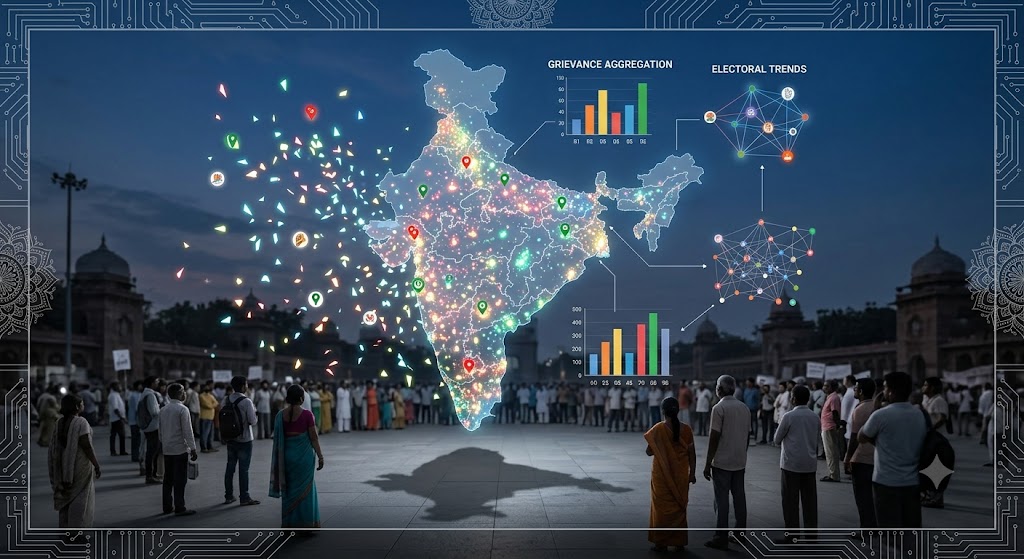
The politics of aggregation
A farmer’s land dispute, a student’s examination grievance, a woman’s safety concern, a worker’s labour dispute and an environmental conflict may all be genuine. But they are not necessarily manifestations of one political phenomenon.
A political organisation can aggregate them, place them on one map and construct a larger narrative of governmental failure.
This is the central political attraction of such a platform.
Is it a mechanism for listening to citizens—or a mechanism for organising citizens’ anger?
The answer will ultimately depend upon what happens to the submissions after they enter the political system. If grievances are investigated impartially and taken to Parliament, courts, administrative authorities and appropriate institutions, the platform may strengthen democratic accountability.
If they are selectively amplified, politically packaged and converted into electoral ammunition, the exercise would resemble conventional political mobilisation wearing the moral clothing of Satyagraha.
The digital age and the new political arsenal
Indian politics has already travelled a long distance from conventional campaigning.
Padyatras, public meetings and door-to-door campaigns have been supplemented by television studios, SMS campaigns, WhatsApp groups, online petitions, influencer networks, targeted advertising, digital membership drives and data-based constituency management.
The new Satyagraha platform belongs to this evolving political ecosystem.
That does not make it illegitimate.
But it makes political scrutiny indispensable.
For there is a fundamental difference between democratic technology and technological politics.
The former uses technology to make citizens more powerful.
The latter uses citizens’ data, emotions and grievances to make political organisations more powerful.
Policy paralysis cannot be cured by political cartography
India does not suffer from a shortage of grievances. It suffers, in many areas, from a shortage of effective solutions.
Education requires structural reform. Examination systems require integrity. Youth require employability and productive opportunities. Agriculture requires technological and institutional transformation. Public health requires investment. Labour requires dignity and protection. Women require safety and justice. Environmental concerns require serious enforcement.
A digital map can identify these problems.
It cannot solve them.
A political slogan can expose governmental failure.
It cannot substitute for governance.
A viral campaign can mobilise public anger.
It cannot replace policy.
The real test of any political movement is therefore not how many grievances it collects but how many problems it helps resolve.
The danger of political bankruptcy
There is an uncomfortable possibility that contemporary politics, across party lines, is increasingly becoming a competition in the manufacture, aggregation and amplification of grievances rather than a competition in policy competence.
That would represent political bankruptcy.
No democracy can permanently survive if every social problem is converted into an electoral weapon and every protest into a partisan constituency.
The Opposition has an essential constitutional role. It must expose governmental failures, represent citizens and demand accountability. But it must also offer credible alternatives.
Likewise, the ruling establishment cannot dismiss every protest as a conspiracy of the Opposition.
The existence of political motivation does not make a public grievance false. Equally, the existence of a genuine grievance does not make every political interpretation of it legitimate.
This distinction is essential to democratic sanity.
No political party is sancta sanctorum
There is another truth that needs to be stated without fear or favour.
No political party in India is sancta sanctorum.
No party possesses a monopoly over patriotism.
No party possesses a monopoly over constitutionalism.
No party possesses a monopoly over social justice.
And no party possesses a monopoly over truth.
The Congress cannot claim exclusive ownership of Gandhi merely because it invokes his name. Nor can any other political party claim exclusive ownership of nationalism, democracy or constitutional morality.
The citizen must remain larger than the party.
Can 140 crore Indians really be hoodwinked?
India is too large, too argumentative and too politically conscious to be permanently manipulated by any single communication strategy.
The history of Indian elections is full of surprises. Political formations that appeared invincible have been defeated. Leaders surrounded by enormous organisational machinery have been rejected. Narratives carefully constructed in Delhi have collapsed at the ballot box.
One cannot fool 140 crore Indians merely by constructing a sophisticated political narrative around their grievances.
Nor can elections be won indefinitely through a Machiavellian matrix of identity, grievance, symbolism, social media and political arithmetic.
The Indian voter ultimately asks questions that no algorithm can evade:
Where are the jobs?
Why are examinations failing?
Why are institutions weakening?
Why is corruption continuing?
Why are public services inadequate?
Why are prices rising?
What is the alternative?
And, above all:
What will you actually do?
The initial euphoria will not be the final verdict
The early response to Satyagraha is impressive. More than 10,000 submissions in nine hours, if sustained and verified, indicate a considerable reservoir of public dissatisfaction.
But the first wave of digital enthusiasm is not a political mandate.
The real test will come after the novelty disappears.
Will the platform continue for years, as promised?
Will submissions be independently verified?
Will genuine grievances be pursued regardless of the political identity of the complainant?
Will unsuccessful cases also be acknowledged?
Will the platform produce institutional remedies rather than merely political narratives?
And will those who submit their grievances remain citizens with agency—or become data points in an electoral database?
These questions will determine whether the initiative becomes democratic infrastructure or merely another political experiment.
Gandhi’s name is not a political trademark
The most sensitive issue, however, is the invocation of Gandhi himself.
Gandhi’s Satyagraha was directed against an empire. It demanded that the resister first discipline himself before demanding justice from another.
Its power came from truth before strategy, sacrifice before convenience, conscience before calculation.
To use the word Satyagraha in the age of social media is therefore not wrong. But it should not be cheapened.
The word carries a civilisational and moral inheritance.
Gandhi’s Satyagraha was a test of the individual before it became a weapon against authority. Modern political mobilisation often reverses that order: it begins by testing the vulnerability of the political opponent.
That is the distinction that must not be lost.
Satyagraha or political gimmick?
It would be intellectually lazy to dismiss the initiative outright as a gimmick. Genuine citizens’ grievances deserve to be heard, whoever raises them.
But it would be equally naïve to assume that a political party has suddenly discovered a non-partisan instrument of public emancipation.
The platform has been created by a political party’s leadership and will inevitably operate within a political environment. Its intentions must therefore be judged by its conduct over time.
If it becomes a genuine bridge between citizens and institutions, it deserves democratic respect.
If it becomes an instrument for selectively collecting grievances, amplifying discontent and constructing an electoral narrative, it will deserve to be called what it is:
a political gimmick dressed in Gandhian vocabulary.
The verdict should not be delivered today.
Let the platform prove itself.
The citizen will have the last word
India does not need more political theatre. It needs political seriousness.
It does not need merely the aggregation of anger. It needs the transformation of anger into policy.
It does not need competing parties claiming ownership of public suffering. It needs institutions capable of resolving that suffering.
And it certainly does not need the sacred vocabulary of the freedom struggle converted into electoral branding.
Satyagraha cannot be digitised merely by putting protests on a map. Its sanctity lies in the truth of the cause, the integrity of the movement, the discipline of its participants and the sacrifice they are prepared to make.
India’s 140 crore citizens are not a captive audience for political experimentation.
They may listen.
They may participate.
They may protest.
They may even be temporarily carried away by political euphoria.
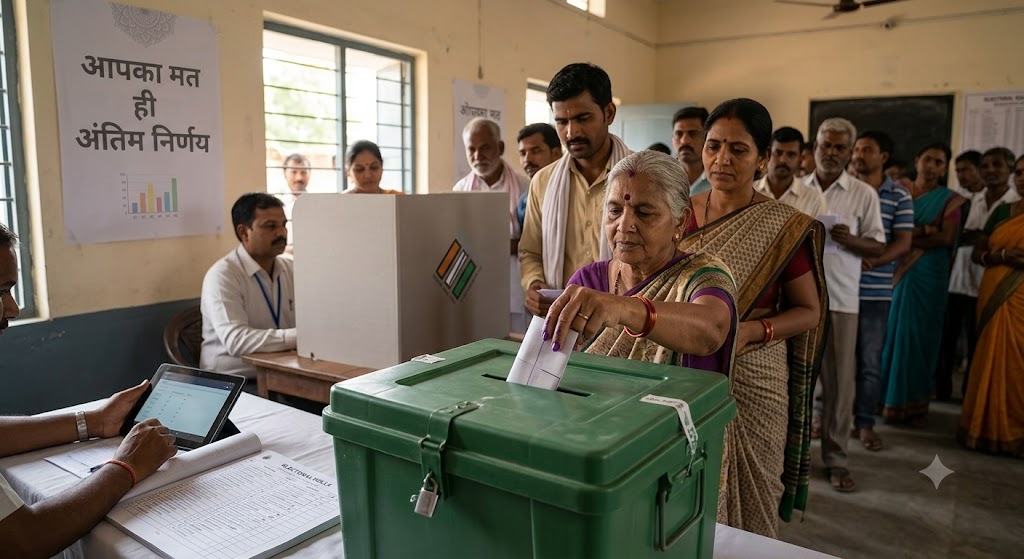
But when the moment of judgement arrives, they vote.
And the ballot box has repeatedly demonstrated that the Indian citizen is considerably less gullible than political strategists sometimes imagine.
The ultimate map of Indian democracy is not digital.
It is the ballot paper.
And upon that map, every political gimmick—however sophisticated, however cleverly branded, however skilfully wrapped in the vocabulary of Gandhi—must eventually confront the uncompromising geography of public judgement.
Note: Views are personal.
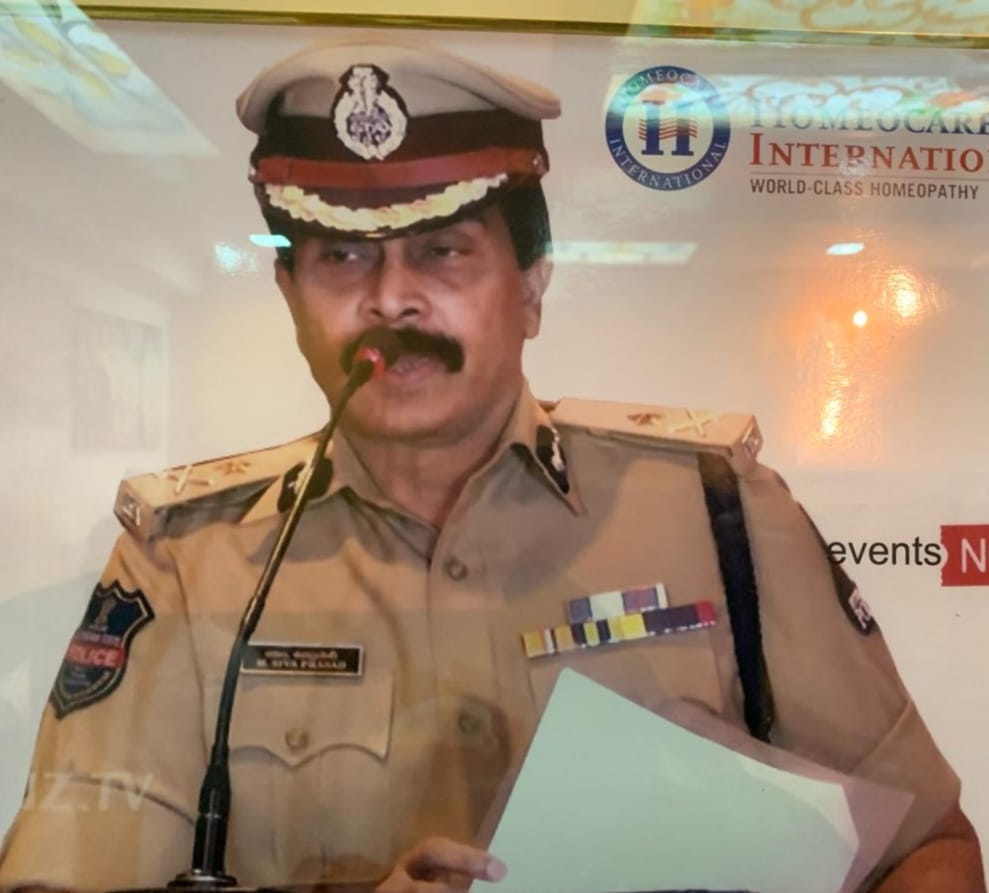
M. Shiva Prasad, IPS (Rtd.) is a dedicated law enforcement professional who served the combined Andhra Pradesh cadre before opting for the Telangana cadre. Though a native of Andhra Pradesh, he considers himself a true Hyderabadi with an abiding love for the Telugu people. Driven by sincerity, fearlessness, and a lifelong fight against inequality and injustice, his ultimate strengths remain his goodwill and deep affection for the public and the police force. Today, he continues his mission by writing snippets and articles true to his conscience.
Email: Shivareach@yahoo.com
Mobile: 98480 38774