Taking the Soul from the Body
Judicial Warning
Justice Bhuyan Critiques Electoral Disenfranchisement at NALSAR
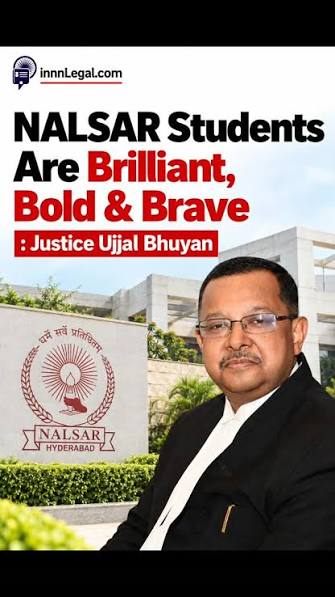
The NALSAR University of Law became a venue for discussing the disenfranchisement of millions of voters and citizens, too. The judiciary uses sensational and very significant ‘deliberate’ language. Such indignation is seldom voiced without grave cause. When sitting judges of the Supreme Court critique statutory processes, they typically couch their critiques in the guarded cadence of formal judgments. Yet, speaking at the 19th National Academy of Legal and Research (NALSAR) Justice B.R. Sawhney Memorial Moot Court Competition in Hyderabad, Justice Ujjal Bhuyan shattered this customary reticence with words that should shake the democratic conscience of the Republic:
“If any process results in disenfranchising millions and millions of Indian citizens, making them second-class citizens in their own country in the sense of being citizens without voting rights, such a process is intrinsically arbitrary. No amount of whataboutery can justify it. It strikes at the very heart of the Constitution, and I would go to the extent of saying that it is a negation of the constitutional order which we have adopted under the Constitution of India.”
Franchise, the very “heart of our democracy!
Justice Bhuyan’s unsparing reprimand was aimed squarely at the Special Intensive Revision (SIR) of electoral rolls, a centralized revision exercise overseen by the Election Commission of India (ECI) that has reportedly purged over 13 crore names from voter rolls nationwide. His condemnation does not stand in isolation. It reverberates alongside the urgent alarm sounded by former Supreme Court judge Justice Rohinton Nariman, who recently observed that
the common man’s franchise, the very “heart of our democracy”, is today in “great peril.”
These are not warnings that signal an administrative lapse or bureaucratic oversight. What the country faces today is a two-pronged constitutional crisis: the systematic, non-transparent disenfranchisement of citizens at the grassroots, alongside an alarming breakdown of collegial governance within the constitutional body entrusted to safeguard the ballot.
Does the CEC Manufacture Second-Class Citizens?
The foundational premise of our Republic was an audacious act of constitutional faith. In 1950, when affluent Western democracies were still wrestling with gender and racial barriers to the franchise, the framers of India’s Constitution enacted universal adult suffrage under Article 326 without hesitation or property qualifications. They recognized that the ballot was not a privilege dispensed by the state; it was the fundamental instrument through which a colonially subjugated populace claimed equal ownership over their collective destiny. As Justice Bhuyan forcefully noted, our Constitution does not, and cannot, recognize two classes of citizens: those endowed with the right to vote, and those stripped of it. When millions of voters find their names struck from rolls through centralized algorithms, mass automated purging, or opaque profiling, the state effectively creates a de facto disenfranchised subclass.
Let us go back to history of a case: Under established constitutional doctrine in E.P. Royappa v. State of Tamil Nadu and Maneka Gandhi v. Union of India, arbitrariness is the fatal enemy of Article 14. An administrative process that operates wholesale, without transparent criteria, intelligible differentia, or discernible nexus to statutory objectives, is inherently ultra vires. Stripping individuals of their electoral identity based on opaque revision protocols reduces universal citizenship to a fragile, contingent status, a revocable license subject to the administrative whims of Nirvachan Sadan.
Procedural Guillotine of Democracy
Beyond substantive equality, the current revision exercise dismantles basic procedural due process. The Representation of the People Act, 1950 (RPA), alongside the Registration of Electors Rules, 1960, does not grant the Election Commission carte blanche to purge voter lists en masse. Section 22 of the 1950 Act explicitly dictates that before any entry is amended, transposed, or deleted on grounds of non-residence or lack of qualification, the concerned person must be given a reasonable opportunity of being heard.
The bedrock common-law canon of natural justice, audi alteram partem (listen to the other side), is not an optional luxury to be bypassed for bureaucratic speed. As Justice Bhuyan pointedly observed: “Except in the case of a dead voter, the name of a voter once enlisted in the electoral roll cannot be deleted without notice and hearing. From the persona of an Indian citizen, the right to vote or right to be included in the voters list cannot be detached. It will be like taking out the soul from the body.” The metaphor is devastatingly apt. To disenfranchise a voter through a backroom deletion, without individual notice, verification, or opportunity to appeal, is civil erasure. When citizens arrive at polling booths only to discover they no longer exist on the registers of democracy, the damage is already absolute and irreversible. A post-facto inquiry or an apology after the election cannot restore a suppressed ballot.
Governance crisis unfolding within Nirvachan Sadan
This assault on procedural fairness cannot be separated from the governance crisis unfolding within Nirvachan Sadan itself. The Election Commission was never intended to operate as a monocracy. While Article 324 created the office of the Chief Election Commissioner (CEC), decades of administrative growth and constitutional jurisprudence culminated in the multi-member Commission structure.
In its landmark 1995 ruling in T.N. Seshan, CEC of India v. Union of India, a Constitution Bench made the legal hierarchy clear: the CEC is primus inter pares—the first among equals. The CEC possesses no monarchical power, no overriding veto, and no higher status than fellow Election Commissioners. The governing statute reinforced by the 2023 legislation, mandates that the business of the Commission shall, as far as possible, be transacted unanimously, and where opinion differs, decided strictly by majority.
14 blunders
Yet reports that Election Commissioners have formally registered their dissent 14 times in the past 10 months over unilateral determinations point to a breakdown of this collegial obligation. When a Chief Election Commissioner overrides fellow commissioners, directs centralized deletions without consensus, and disregards institutional debate, the Commission ceases to act as a constitutional body and begins behaving like an executive department. A unilateral umpire cannot inspire bilateral trust. When dissent is muffled inside the very institution designed to serve as the supreme arbiter of electoral legitimacy, the democratic process itself loses credibility.
The Judiciary is now in the shadow of the Executive
This internal decay cannot be understood in a vacuum; it is the direct structural outcome of a weakened appointments process. In Anoop Baranwal v. Union of India (2023), a unanimous Constitution Bench of the Supreme Court held that the independence of the Election Commission was an indispensable component of the rule of law and the Basic Structure. Recognizing that executive dominance in appointments creates an inherent conflict of interest, the Court constituted a selection committee comprising the Prime Minister, the Leader of the Opposition, and the Chief Justice of India.
The CJI is replaced by a Minister & Constitutional Republicanism
The legislative annulment of this judgment, replacing the Chief Justice with a Union Cabinet Minister, restored absolute executive discretion over the selection of the election watchdog. As Justice Nariman warned, when the executive chooses its own referee, the institutional spine required to withstand executive pressure is compromised from the start. What is seen today in the Special Intensive Revision is the inevitable downstream consequence of that statutory reversal: An Election Commission increasingly aligned with the operational impulses of the Union executive rather than the deliberative demands of constitutional republicanism.
Restoring the Basic Structure
In Kesavananda Bharati and subsequent jurisprudence, democracy and free and fair elections were established as unalterable pillars of the Basic Structure of the Constitution. An election cannot be free if voters are systematically purged by opacity, nor can it be fair if the governing referee rejects internal accountability.
Justice Bhuyan’s words must serve as an urgent call to action. The Supreme Court cannot remain a spectator while the “soul is taken out from the body” of the Indian citizen. The higher judiciary must establish enforceable, transparent procedural protocols:
- No voter deletion, outside verifiable certificates of death, should take place without personal, recorded notice, physical verification, and written reasons delivered to the citizen.
- The internal minutes, dissents, and voting records of the Election Commission must be made public to preserve institutional transparency.
- Automated and centralized bulk deletions must be halted until subject to independent, public algorithmic audits.
Democracy does not perish solely through dramatic overthrows; it dissolves quietly through institutional atrophy, bureaucratic fiat, and the creeping disenfranchisement of ordinary people. If India is to honor the constitutional vision it adopted in 1950, it must reaffirm that every citizen holds an inviolable claim to their vote, and that no authority, however powerful, stands above the Constitution.
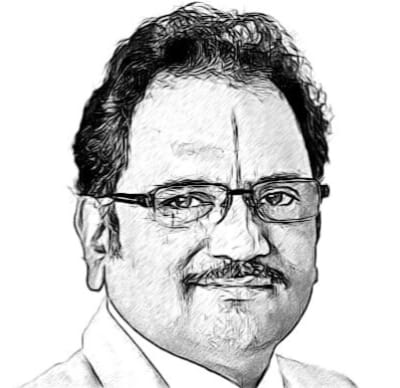
Law professor and eminent columnist
Madabhushi Sridhar Acharyulu, author of 63 books (in Telugu and English), Formerly Central Information Commissioner, Professor of NALSAR University, Bennett University (near Delhi), presently Professor and Advisor, Mahindra University, Hyderabad. Studied in Masoom Ali High School, AVV Junior College, CKM College, and Kakatiya University in Warangal. Madabhushi did LL.M., MCJ., and the highest law degree, LL.D. He won 4 Gold Medals at Kakatiya University and Osmania University.
Email: cicsridhar@gmail.com
Mobile: 8447651505