CHINA, GREAT-POWER RIVALRY-INDIA’S IMPERATIVE OF STRATEGIC AUTONOMY
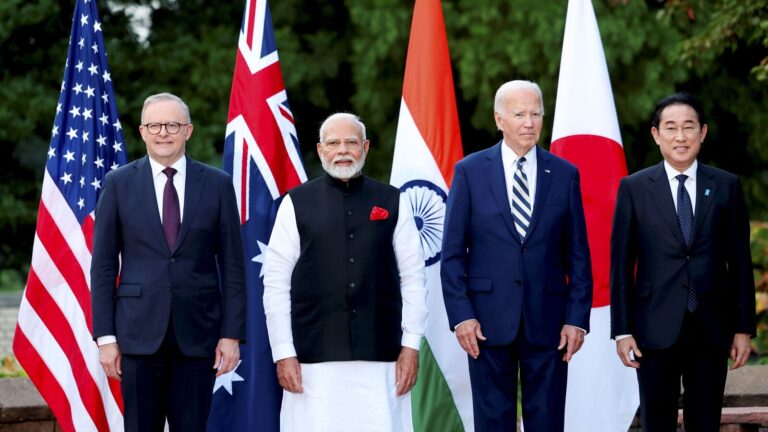
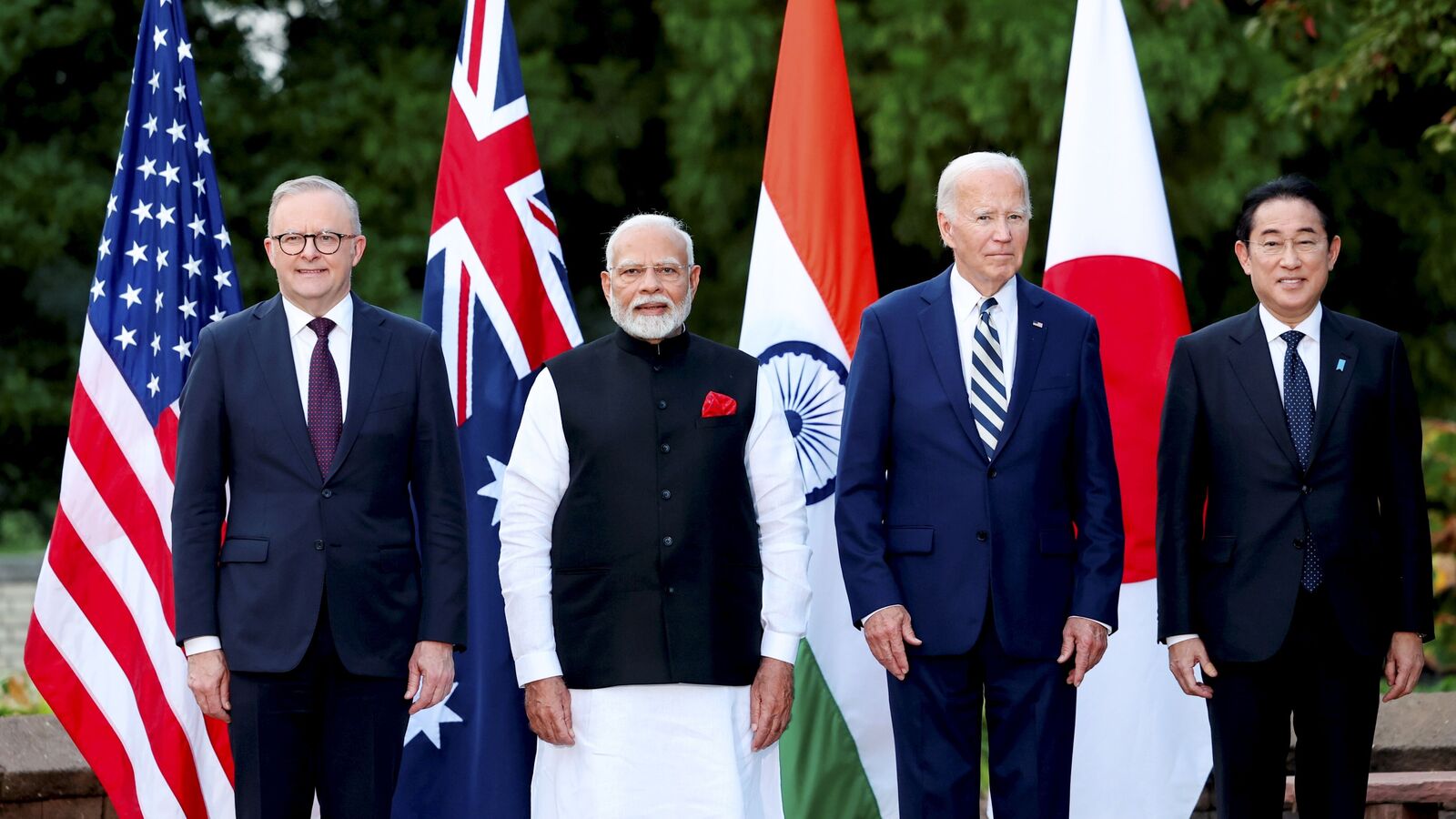
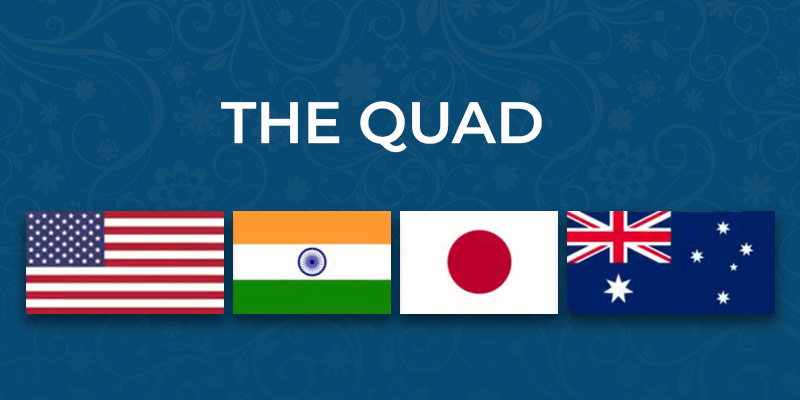
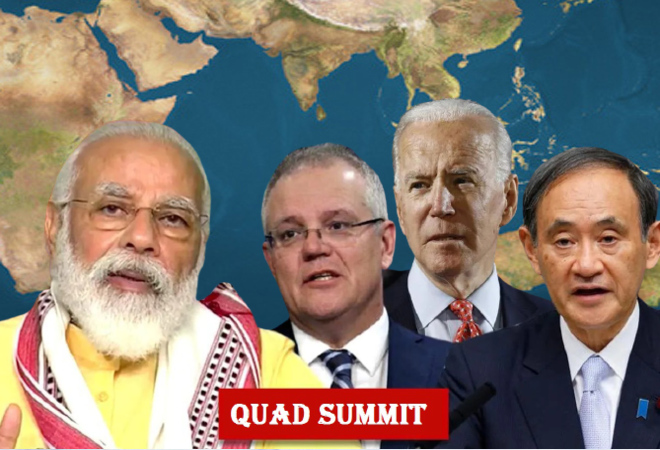
The Quadrilateral Security Dialogue (Quad), comprising the United States, India, Japan and Australia, embodies one of the central paradoxes of contemporary geopolitics: four consequential Indo-Pacific powers seek to influence the regional balance of power without accepting the binding obligations of a military alliance. Its renewed leaders-level engagement at the Manila Summit on November 17, 2026, attended by Donald Trump, Narendra Modi, Anthony Albanese and Sanae Takaichi, has reinforced their opposition to unilateral changes in the regional status quo through force or coercion. Yet, diplomatic convergence should not be mistaken for strategic unity. The Quad has considerable political influence, expanding economic and technological ambitions, and growing maritime cooperation, but no mutual-defence treaty, integrated military command or enforceable collective-security mandate.
Its central contradiction is unmistakable: it seeks to deter coercion without guaranteeing collective intervention. Is the Quad, therefore, an emerging architecture of regional stability or an elaborate exercise in geopolitical signalling? More importantly, what tangible strategic dividends can India derive from an arrangement whose members share concerns but not necessarily commitments?
FROM HUMANITARIAN COOPERATION TO GEOPOLITICAL ALIGNMENT
The Quad’s origins lie in the humanitarian cooperation following the devastating Indian Ocean tsunami of December 2004. Its first formal iteration emerged in 2007 under Japanese Prime Minister Shinzo Abe, but divergent national interests and apprehensions about antagonising China led to its premature stagnation. Its revival in 2017 reflected a transformed geopolitical environment, particularly China’s expanding maritime influence and military assertiveness.
Elevated to leaders’ level in 2021, the grouping progressively widened its agenda beyond maritime security to include critical minerals, resilient supply chains, semiconductors, artificial intelligence, cybersecurity and disaster management. The evolution represents the growing importance of minilateral diplomacy: smaller groupings of strategically aligned nations cooperating on selected priorities without assuming the obligations of conventional alliances. The Quad’s significance lies precisely in this flexibility, although its limitations are equally embedded in its design.
CHINA: THE UNSTATED STRATEGIC DENOMINATOR
China remains the principal geopolitical consideration behind the Quad’s evolution. Although its members avoid describing the grouping as an anti-China coalition, their apprehensions regarding Beijing’s military expansion, maritime assertiveness, economic coercion and regional influence are unmistakable. However, the four countries do not share an identical China policy. Washington regards Beijing as its principal strategic competitor; Japan confronts immediate security concerns in East Asia; Australia must balance its defence partnership with America against its substantial economic relationship with China. India faces unresolved territorial disputes, persistent border tensions and strategic competition with Beijing, while seeking to preserve diplomatic and economic manoeuvrability.
This divergence is the Quad’s defining vulnerability. Its members agree on the necessity of maintaining the Indo-Pacific balance but differ over the extent of confrontation they are prepared to undertake. Strategic ambiguity permits cooperation without compelling an irreversible commitment. Yet, it also raises doubts about the credibility of collective deterrence. The Quad must therefore avoid becoming an exclusively China-centric formation. Its legitimacy should derive from the positive objectives of regional stability, sovereign equality, freedom of navigation and economic prosperity, rather than merely from opposition to another power.
A STRATEGIC PARTNERSHIP WITHOUT A DEFENCE GUARANTEE
Comparisons between the Quad and NATO are fundamentally misplaced. Unlike NATO, the Quad has no mutual-defence treaty, integrated military command, permanent secretariat or enforceable collective-security obligations. Its functioning rests on political consensus and voluntary cooperation. Maritime surveillance, intelligence-sharing, naval exercises and defence interoperability can strengthen regional preparedness. Nevertheless, none guarantees military intervention if a member faces aggression. A confrontation in the Taiwan Strait, the South China Sea or along India’s Himalayan frontier would expose the limitations of this arrangement. The Quad can influence strategic calculations, improve regional preparedness and raise the costs of coercion. It cannot, in its present institutional form, guarantee collective defence. Its strength lies in strategic coordination; its weakness lies in the absence of reciprocal security obligations.
GREAT-POWER DIPLOMACY: PARTNERSHIP AND POWER POLITICS
For Washington, the Quad reinforces American influence in the Indo-Pacific without requiring the commitments of a conventional alliance. Japan views it as an instrument of regional security, while Australia considers it an important extension of its defence partnerships. India’s position is fundamentally more complex. It welcomes American technological and defence cooperation but refuses to subordinate its foreign policy to Washington’s strategic priorities. The transactional character of American diplomacy under President Trump also raises questions about the consistency of American commitments. A partnership cannot be sustainable if economic pressure, unequal expectations and unilateral policy decisions undermine mutual confidence. The Quad’s less visible strategic dimension includes maritime intelligence, military preparedness, interoperability and supply-chain realignment. These activities can progressively alter regional power calculations without transforming the grouping into a formal military bloc. However, the credibility of such cooperation ultimately depends on reciprocity and political continuity.
INDIA: FROM STRATEGIC AUTONOMY TO STRATEGIC CAPABILITY
For India, the Quad is neither an ideological commitment nor a diplomatic obligation. It is an instrument to advance national interests in a rapidly changing geopolitical environment.India’s geographical position gives it considerable strategic leverage. The Indian Ocean is indispensable to international commerce, energy transportation and global supply chains. Its maritime geography, economic potential, military capabilities and demographic scale make it an essential Indo-Pacific stakeholder.
But geographical advantage alone does not translate into strategic power. India must convert diplomatic recognition into technological capacity, economic resilience, defence self-reliance and credible maritime strength. The most important consideration is that strategic autonomy should not be confused with strategic equidistance or diplomatic passivity. India need not maintain identical distances from competing powers. It must retain the freedom to cooperate with different countries according to the issue, the national interest and the prevailing geopolitical circumstances. Its relationships with Russia, Iran, the Gulf countries and the wider Global South remain important. Equally, constructive engagement with China is necessary to manage border tensions, economic interdependence and regional stability. Participation in the Quad must strengthen India’s bargaining position, not narrow its diplomatic choices.
A FIVE-POINT STRATEGIC ROADMAP FOR INDIA
1. Maritime supremacy and regional security: India must strengthen maritime domain awareness, naval surveillance, intelligence-sharing and coastal security. The Andaman and Nicobar Islands, India’s strategic position astride vital sea lanes and its naval capabilities should form the foundation of a credible Indian Ocean security policy. Cooperation must enhance India’s independent operational capacity.
2. Technological sovereignty and defence production: Quad partnerships should facilitate joint research, technology transfer and domestic manufacturing in semiconductors, artificial intelligence, aerospace, cybersecurity and advanced defence systems. India must move beyond the role of a defence importer towards becoming a competitive producer and exporter.
3. Critical minerals and economic resilience: Excessive dependence on concentrated global supply chains creates strategic vulnerability. India should diversify access to lithium, cobalt, rare earths and other essential minerals, develop domestic processing capabilities and establish alternative manufacturing networks. Supply-chain cooperation must result in investment, employment and industrial competitiveness.
4. Independent diplomacy and regional leadership: India should deepen engagement with ASEAN and the wider Global South while maintaining constructive relations with Russia, Iran, the Gulf countries and other strategic partners. It must resist attempts to turn the Quad into an exclusive geopolitical bloc. India’s leadership will be credible only when smaller regional nations perceive it as a stabilising and development-oriented power.
5. Accountability and measurable national gains: Every major Quad initiative should be evaluated against clear outcomes: technology transfer, domestic investment, manufacturing capacity, maritime security, employment generation and strategic preparedness. Periodic assessments should distinguish actual achievements from diplomatic announcements. The governing principle must be clear: India should cooperate where interests converge, negotiate where they diverge and retain the sovereign freedom to disagree. Its strategic autonomy must be backed by economic strength, technological competence and military preparedness.
THE GLOBAL ORDER AND THE QUAD’S FUTURE
The Quad’s emergence reflects the fragmentation of the post-Cold War international order. American primacy faces increasing challenges from China’s economic and military ascendancy, while Russia continues to contest Western strategic interests. Meanwhile, the Global South increasingly resists being compelled to choose between competing centres of power. The Quad could contribute to a more balanced Indo-Pacific through maritime cooperation, resilient supply chains, technological partnerships and regional capacity-building. Its future, however, will depend on institutional continuity, economic deliverables and the willingness of its members to assume reciprocal responsibilities.
Three trajectories are possible: gradual strategic consolidation, diplomatic stagnation arising from divergent national interests, or a sharper security orientation following a regional crisis. The decisive test would be whether the four countries can sustain cooperation when their individual political and economic interests are under pressure. The Quad must also recognise ASEAN centrality and the legitimate concerns of smaller Indo-Pacific nations. Regional stability cannot be imposed through great-power competition; it must be sustained through consultation, economic opportunity and respect for sovereignty.
CONCLUSION: INDIA MUST SHAPE THE QUAD, NOT BE SHAPED BY IT
The Quad is neither an Asian NATO nor an inconsequential diplomatic congregation. It is a flexible strategic arrangement whose influence derives from the combined capabilities of four major Indo-Pacific democracies. Its absence of binding obligations, however, remains a fundamental limitation. Diplomatic solidarity is not a security guarantee, and declarations cannot substitute for institutional preparedness or political resolve.
For India, the strategic imperative is considerably larger than participation in a quadrilateral forum. It must use the partnership to accelerate technological advancement, strengthen maritime capabilities, diversify its economy and enhance its international bargaining power. It must neither become an instrument of American geopolitical calculations nor allow apprehensions about China to circumscribe its independent choices. India must shape the Quad through its own capabilities and national priorities, rather than allow the Quad to shape the contours of India’s foreign policy.
Ultimately, the Quad will be judged not by the frequency of its summits or the eloquence of its communiqués, but by its capacity to preserve regional stability, deter coercion and deliver tangible economic and strategic benefits. Without reciprocal commitment, institutional continuity and demonstrable outcomes, it risks becoming an elaborate exercise in diplomatic choreography. Diplomacy creates convergence; economic strength sustains influence; military preparedness commands respect. For India, strategic autonomy must culminate in strategic capability.

M. Shiva Prasad, IPS (Rtd.) is a dedicated law enforcement professional who served the combined Andhra Pradesh cadre before opting for the Telangana cadre. Though a native of Andhra Pradesh, he considers himself a true Hyderabadi with an abiding love for the Telugu people. Driven by sincerity, fearlessness, and a lifelong fight against inequality and injustice, his ultimate strengths remain his goodwill and deep affection for the public and the police force. Today, he continues his mission by writing snippets and articles true to his conscience.
Email: Shivareach@yahoo.com
Mobile: 98480 38774