Institutional Drift and the Indian Express Mumbai Edition Exposed
How the Internal Fractures at the ECI Were Uncovered
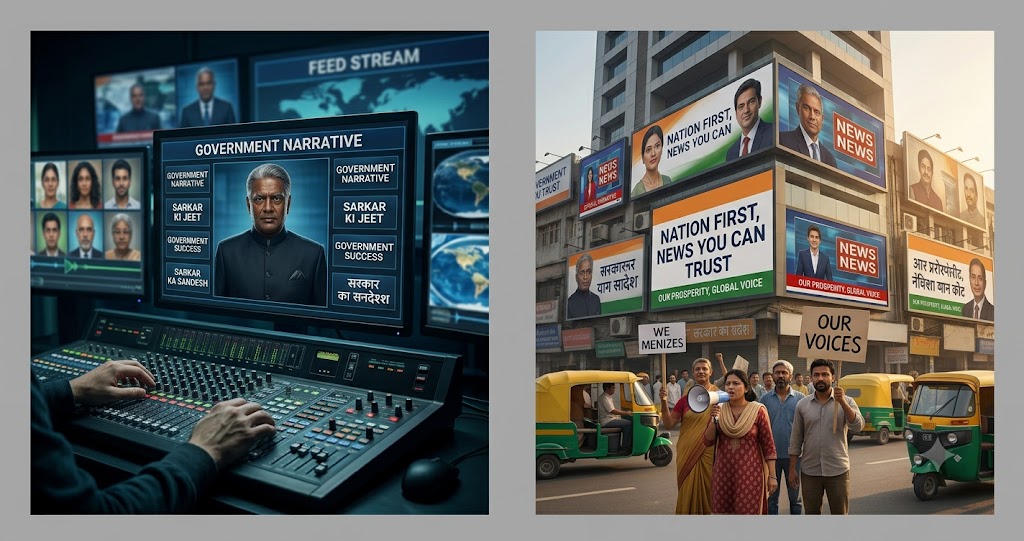
The operational proximity between prominent mainstream media outlets and the ruling National Democratic Alliance (NDA) government has drawn growing criticism regarding its impact on democratic discourse and press freedom. Rather than serving as an independent fourth pillar, significant sections of both electronic and print media have consistently cushioned the ruling administration from public scrutiny. During crucial political developments, major television networks and national dailies systematically minimized coverage of opposition press briefings and public attacks from the INDIA bloc. Critical briefings—such as those delivered by senior parliamentarian Kapil Sibal raising constitutional and governance concerns—received muted coverage, often relegated to inner local pages or omitted from primetime broadcast lineups altogether.
The Erosion of Journalistic Neutrality in Mainstream Media
This editorial imbalance extends across both English and Hindi news channels, where core principles of journalistic neutrality are increasingly discarded. Anchor-driven debates frequently feature panels structured to mirror the ruling party’s narratives. Individuals brought on as independent subject matter experts frequently echo official party lines while directing coordinated attacks against opposition figures, functionally acting as extensions of the government’s communications apparatus. By marginalizing dissent and filtering major political critiques out of the national spotlight, media outlets weaken the checks and balances vital to a robust democracy. When public broadcasting channels and print publications default to defending authority rather than holding it accountable, the electorate is denied access to fair, balanced, and complete political commentary.
Down-playing Opposition Voices
In an era where major sections of the electronic and print media face scrutiny for downplaying opposition voices and minimizing critical press coverage, independent investigative reporting remains a crucial pillar of democratic accountability. While mainstream debate shows and television broadcasts often mirror official narratives, print investigations continue to probe deeper institutional workings. A notable example of this function emerged through The Indian Express investigative series detailing internal conflicts within the Election Commission of India (ECI) under Chief Election Commissioner (CEC) Gyanesh Kumar.
The Core Findings of the Indian Express Investigation
The investigative report revealed an unprecedented institutional divide within the three-member election panel. Over a period of ten months, Election Commissioners Sukhbir Singh Sandhu and Vivek Joshi formally recorded 14 separate written objections regarding administrative procedures, software modifications, and decision-making protocols managed by the top leadership.
concerns highlighted in the report include:
Centralization of Digital Infrastructure: The investigation detailed how the rollout of new IT portals (such as ECINet) shifted control of electoral roll updates toward central IT authorities in New Delhi, overriding or restricting access for field-level Electoral Registration Officers (EROs) who possess statutory authority under the Representation of the People Act, 1950.
Procedural and Form Alterations:
The report documented objections raised by the two Election Commissioners regarding “unauthorized and illegal” modifications to voter registration workflows, specifically concerning Form 6 and the handling of electoral roll deletions under the Special Intensive Revision (SIR).
Bypassing Collective Consensus: Under Section 18 of the Chief Election Commissioner and Other Election Commissioners Act, 2023, decisions and procedures are intended to be transacted through unanimous agreement or majority opinion. The notes revealed that significant administrative directives were issued without formal concurrence from the full commission, leading the two commissioners to escalate their concerns to the Cabinet Secretary.
Institutional Impact and Policy Revisions
The publication of these internal records prompted widespread public and political discourse, bringing institutional transparency to the forefront. In response to the disclosures, the Election Commission convened to review its administrative protocols. The poll panel subsequently announced a series of procedural adjustments aimed at restoring institutional checks and balances.:
Mandatory Agendas and Minutes: Agendas must now be formally circulated prior to all full-commission meetings, with official minutes recorded afterward. IT Review Committees: Any new software modules, system updates, or digital portals must be evaluated by a designated committee of officers before being submitted for commission approval.
Field Access Protection:
Directives were established to ensure that statutory field officers retain necessary access to digital systems for managing voter rolls without central overrides. The Indian Express investigation serves as a case study in how investigative print journalism can document institutional mechanics, enforce regulatory checks, and prompt administrative reforms within key constitutional bodies.

Editor, Prime Post
Ravindra Seshu Amaravadi, is a senior journalist with 38 years of experience in Telugu, English news papers and electronic media. He worked in Udayam as a sub-editor and reporter. Later, he was associated with Andhra Pradesh Times, Gemini news, Deccan Chronicle, HMTV and The Hans India. Earlier, he was involved in the research work of All India Kisan Sabha on suicides of cotton farmers. In Deccan Chronicle, he exposed the problems of subabul and chilli farmers and malpractices that took place in various government departments.
Email: ravindraseshu7@gmail.com
Mobile: 9063718675