From the Navin Chawla controversy of 2006 to the internal dissent of 2026
The CEC is not an ordinary department of the Central Government. The Election Commission of India occupies a unique position. It is a constitutional authority entrusted with the superintendence, direction and control of elections under Article 324 of the Constitution. Its decisions determine who may vote, who may contest, how electoral rolls are prepared, and ultimately whether citizens can have confidence in the electoral process. Now we know the process as SIR Special Intensive Revision, a very serious controversy challenging the basis of democracy itself and the structure of the Constitution.
This new controversy concerning internal differences among the Election Commissioners cannot be treated merely as another political dispute between the ruling party and the Opposition. These disclosures concerning objections recorded by two Election Commissioners raise a more fundamental question.
Is every important electoral decision being taken by the constitutionally authorised body, through the legally prescribed procedure, and with sufficient transparency to command public confidence?
In 2006, the BJP demanded the removal of Election Commissioner Navin Chawla, though not exactly the present problem. This question assumes greater significance when viewed against the BJP-led NDA’s conduct. It’s a history involving the CEC as an institution. This comparison is revealing because the BJP then insisted that even the appearance of political influence over an Election Commissioner could damage the credibility of the electoral institution.
Today, the same credibility requires the ruling establishment to be willing to examine allegations about the functioning of the Commission. This issue definitely very may be politically inconvenient.
The Indian Express: Sensational disclosure
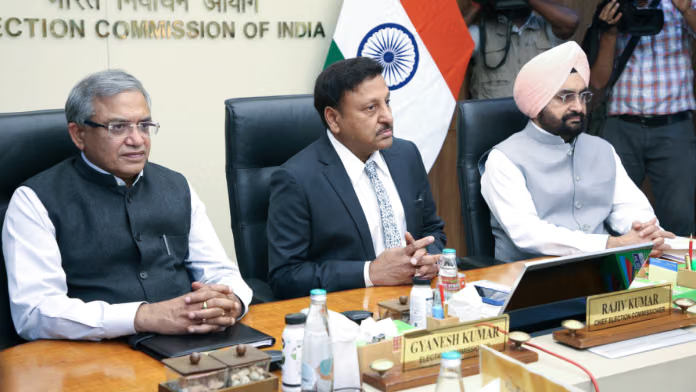
The sensational investigation by The Indian Express has brought to public attention internal records showing that Election Commissioners Sukhbir Singh Sandhu and Vivek Joshi recorded objections. The dissent was raised at least 14 times over ten months concerning decisions and administrative measures associated with the Special Intensive Revision of electoral rolls.
The reported objections related to matters of extraordinary importance: addition of new voters, deletion of names, changes to Form 6, access to electoral databases, centralisation of the voter database and the functioning of electoral software. Under the new Parliamentary enactment, the two Commissioners reportedly complained that certain steps were taken without their knowledge. In some instances, described actions as “unauthorised” or “illegal.”
One of the clearest examples concerns Form 6, which is used by citizens seeking inclusion as voters.
A new SIR-related declaration appeared on the online Form 6, requiring applicants to answer questions concerning whether their own name or that of a parent or grandparent appeared in the electoral roll of the previous SIR, according to the Indian Express investigation. The investigation reported that the change was made even though two Commissioners had recorded in May that such a statutory form could not be altered without amending the Registration of Electors Rules, 1960. If the statutory form prescribed under the Rules can be changed without the legally required amendment, the issue is one of statutory authority. If, on the other hand, there was a lawful authority for the alteration, that authority should be disclosed. It is not a minor administrative dispute.
It is not rumour. Not as political speculation. The answer should therefore be documentary. Where are the answers?
Who proposed the alteration?
Who approved it?
Under what provision?
Was the full Commission consulted?
Was the Government required to amend the Rules?
Who instructed the IT system to implement the change?
Dissent is essential. Not itself mean illegality
It is challenging. The Government has to be worried. And really. The Election Commission has responded that its actions have been in accordance with “law and instructions”. It has also said that concentrating on particular internal notes over ten months presents only “one part of the picture”.
Unresolved questions that demand public explanation. The Commission announced nine decisions addressing several concerns raised by the two Commissioners, although questions concerning Form 6 and certain West Bengal appeals remain. The Commission is correct on one important institutional principle: internal disagreement does not by itself establish illegality. A constitutional body with several members may have different opinions. Indeed, disagreement can be a healthy feature of institutional deliberation.
Refer to TN Seshan and the Supreme Court’s earlier jurisprudence concerning the three-member Election Commission. It is established that the Commissioners have an institutional role in decision-making; the Commission is not simply the personal office of the CEC. T.N. Seshan v. Union of India is an important issue. Therefore, it would be wrong to conclude that every decision questioned by an Election Commissioner is automatically invalid. But the opposite proposition is equally substantial. A statement that “the final decisions were unanimous” cannot by itself answer whether a particular administrative act was lawfully authorised.
- Suppose a statutory form is altered before the Commission has lawfully approved the change.
- Suppose an ERO, who has statutory responsibility for electoral registration, is technically prevented from exercising that authority because a central database overrides his decision.
- Suppose an appeal is filed in the name of the Commission without a clearly identified authorisation.
In each case, the critical question is not simply whether the Commission ultimately supports the broad policy. It is whether the particular act was authorised in the manner prescribed by law. That is why the internal notes matter. Despite the amendment of the Right to Information Act, valid information cannot be denied.
Law with unanimity and majority
The legal framework has recognised the possibility of disagreement and decision by majority. Therefore, the proper constitutional question is not whether every Commissioner personally agreed with every action. We need to discuss now the unanimity, majority and the law. Need legal precision. It would be incorrect to say that every decision of the Election Commission is illegal unless it is unanimous. The relevant questions are:
- Was the full Commission entitled to take the decision?
- Was the decision taken according to the applicable procedure?
- Where there was disagreement, was the legally applicable decision-making rule followed?
- Was the decision properly recorded?
- Was its implementation authorised?
S.Y. Quraishi and O.P. Rawat
This distinction is important because otherwise a genuine institutional issue could be weakened by an overstated legal proposition. Former Chief Election Commissioners S.Y. Quraishi and O.P. Rawat have reportedly suggested that the Commission should disclose the relevant decisions and indicate whether they were unanimous or based on a majority. Such disclosure would transform a political controversy into an ascertainable institutional record. The public does not need competing political narratives. It needs the minutes.
Who controls the electoral database?
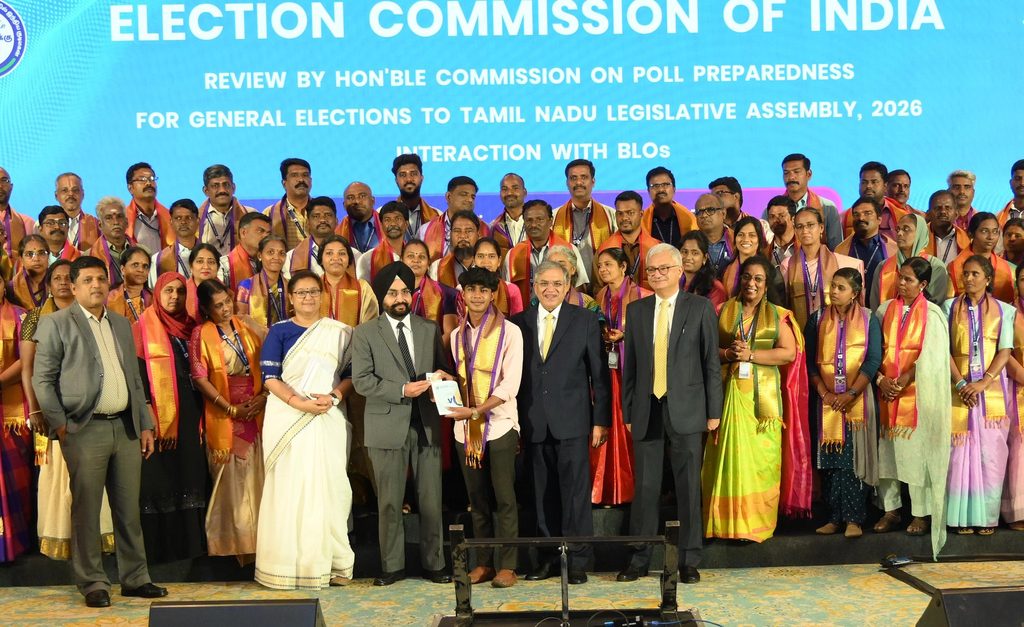
Like the basic question of who decides the voter, is it the Government, CEC, or the natural process, similar to citizenship. This is a deeper concern. The Indian Express reported that the two Commissioners objected to the centralisation of electoral-roll data and sought an audit, while concerns were also raised about field officials not having complete access to the relevant systems. The investigation further reported instances in which central database processes appeared capable of overriding decisions made by officials at the state or local level.
This deserves serious examination because electoral registration is not simply an IT exercise.
Parliament has created statutory authorities and procedures for determining voter eligibility. Technology is supposed to facilitate the exercise of statutory power; it cannot silently replace the statutory authority.
Software cannot become a source of legal power. If an Electoral Registration Officer has statutory authority to decide, a computer system cannot be designed in such a way that an unidentified central administrator can override that determination without legal authority. This is why an independent technical audit is necessary if the reported allegations are substantiated.
The audit should establish who has access to the database, who can modify entries, whose decision prevails when local and central records differ, whether modifications are logged, and whether every modification can be traced to a legally authorised officer.
West Bengal is the central point.
There are unanswered appeals. The controversy becomes still more serious in relation to West Bengal. The reports have raised questions about a large number of appeals relating to deleted or restored voters, including the reported filing of approximately 16.1 lakh appeals on behalf of the ECI. The question attributed to Commissioner Sandhu is straightforward: who authorised the filing of these appeals in the name of the Election Commission? Again, this does not require a political answer. There should be a file. The right to information. The file should identify the competent authority, the decision, the legal provision, the officer who authorised it, and the person who actually filed the appeal. If the records establish lawful authorisation, the controversy can be substantially resolved. If they do not, corrective action becomes necessary.
SC’s perception test
In a recent split judgment, Justice Dipankar Datta observed that replacing the CJI with a Union Cabinet Minister in the Prime Minister-led selection panel prima facie gives the Union Government an effective veto and raises concerns under what he described as the “perception test”. The matter involves a constitutional question about the independence of the Election Commission, and the judgment must be understood as a judicial observation in a divided Bench, not as a final declaration that the 2023 Act is unconstitutional. The institutional controversy has acquired another dimension because of the Supreme Court’s recent consideration of the 2023 law governing appointments to the Election Commission. Under the 2023 law, the selection committee consists of the Prime Minister, the Leader of Opposition and a Union Cabinet Minister nominated by the Prime Minister. This replaced the arrangement contemplated by the Supreme Court in Anoop Baranwal, where, pending legislation by Parliament, the selection committee consisted of the Prime Minister, the Leader of Opposition and the Chief Justice of India.
Who is the citizen?
A constitutional institution must not merely be independent in fact. Citizens must have reasonable grounds to believe that it is independent. An election umpire may make every decision correctly, but if one side has an overwhelming role in selecting the umpire, the losing side may still question the process. Institutional legitimacy therefore involves both actual independence and credible independence. That is the significance of the ‘perception test’.
Law professor and eminent columnist
Madabhushi Sridhar Acharyulu, author of 63 books (in Telugu and English), Formerly Central Information Commissioner, Professor of NALSAR University, Bennett University (near Delhi), presently Professor and Advisor, Mahindra University, Hyderabad. Studied in Masoom Ali High School, AVV Junior College, CKM College, and Kakatiya University in Warangal. Madabhushi did LL.M., MCJ., and the highest law degree, LL.D. He won 4 Gold Medals at Kakatiya University and Osmania University.
Email: cicsridhar@gmail.com
Mobile: 8447651505