Navigating Policy Paralysis
The Opposition’s Mixed Success and the Executive’s Retreat
Has the BJP’s Bold Decision-Making Narrative Taken a Hit?
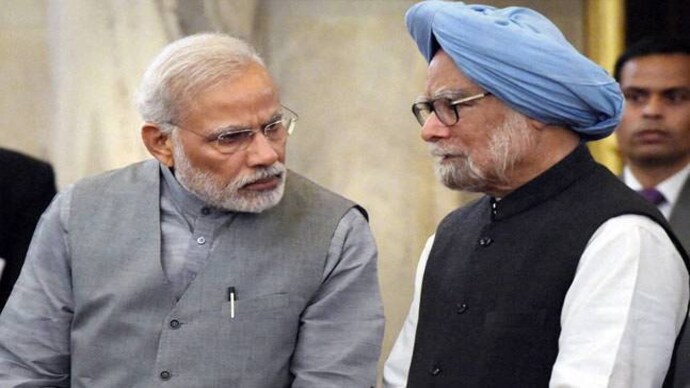
The Unique Selling Point (USP) of the BJP has been its ability to take quick and bold decision. The UPA government of Dr Manmohan Singh was derided as a dispensation afflicted with policy paralysis that could not take timely decisions and the people had voted for the BJP and Narendra Modi in 2014. But during the Parliament session just concluded the Modi government appeared to be on the backfoot. The BJP narrative took a hit in the monsoon session. It is a different matter that the BJP leaders claim legal and constitutional success as they could pass 12 Bills amidst altercation and confusion. But passing Bills when the opposition was in an agitation mode without a modicum of debate within minutes of introduction cannot be claimed as a legal or constitutional success.
Shifting Goalposts and Absent Leadership
The Opposition also cannot claim total success as it could not stick to one goalpost. The resignation of the Union Education Minister Dharmendra Pradhan goes to the credit of the Cockroach Janata Party (CJP) and Sonam Wang Chuk, a social and educational activist from Ladakh. Rahul Gandhi can claim success in keeping the opposition united. But he has been shifting the goalpost as far as Union Home Minister Amit Shah is concerned. First Rahul demanded that Amit Shah as HM should make a statement on the lathi charge and the use of pellet guns on the protesting students. When Shah was ready to make a statement on the last day, the Leader of the Opposition said the nation is not interested in long speeches and it just wants to know from Shah whether he ordered the use of pellet guns and the lathi charge on the students. Rahul also said if Amit Shan had ordered the police to use pellet guns, he should resign as it is an irresponsible decision and if he had not ordered he should resign since he would be considered as incompetent. After the Parliament session ended Rahul was saying that their campaign would not end till the Prime Minister Narendra Modi and Amit Shah resign.
Changing the goalposts has been the basic problem with Rahul Gandhi right from the beginning. Shah also failed to make a statement. At the end of the session it is known that both the PM and HM kept away from Parliament except for some minutes on the first day and the last day. It is natural for the opposition to insist on a statement from Home Minister on the unfortunate developments on July 20. One cannot understand why the HM could not attend the House and make a statement in spite of the fact that he was available in the Parliament complex. It is also strange for the PM not to attend the Parliament even though he was very much available in Delhi. Modi who did pranam while entering the Parliament twelve years ago for the first time did not show the same reverence to the august House in due course. Dr Karan Singh (95), former Union Minister, who was MP as far back as 1967, reminded the viewers of India Today channel on the evening of Thursday, the last day of the session, that the First Prime Minister Jawaharlal Nehru was attending the parliament at 11 am, in time for the question hour, every day of the sessions with religious punctuality.
The Modi Government’s Retreat on Key Bills and Shifting Stances on the CJP
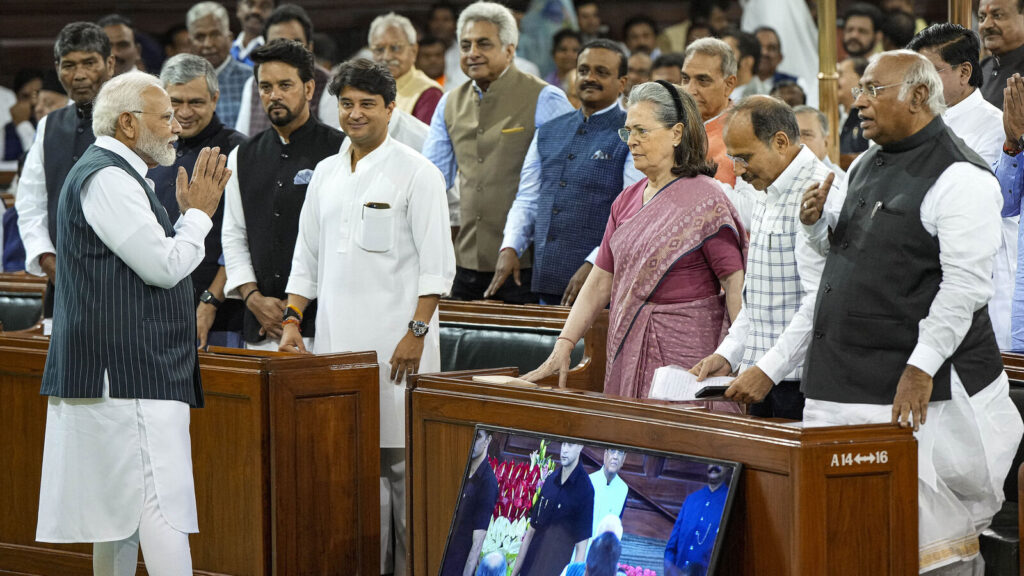
The Modi government had to refer the Foreign Contributions Regulation (Amendment) Bill, 2026, which required a simple majority, to the Joint Committee of Parliament. Neither the Constitution Amendment Bill to operationalize the women’s quota law nor the Delimitation Bill was introduced, as was expected before the session began since the BJP remained unsure of its numbers with the DMK uncertain of its support.
The BJP was not sure of itself for the last two months, ever since the CJP has started the protest. The party did not visualize the power of the fledgling organization. The BJP leaders called the CJP’s young leaders as ‘tukde-tukde gang,’ anti-national and trouble makers at the instance of foreign countries. Pradhan called the CJP leaders anti-national. At the time of resignation also he said he was resigning because he did not want the country to fall into the hands of anti-nationals. Prime Minister Modi was silent at the beginning and then he was talking as though he enjoyed a special relationship with the youth. He was the first among the BJP leaders to realize that the student protesters cannot be taken for granted. But even the PM was not very sure that he should compromise with the students. He only started using the Instagram and creating the reels. It was the RSS chief Mohan Bhagavat who came out openly pointing out that the students had a right to protest and the government has to hold talks with them. Then the BJP leaders have taken the cue from the RSS chief and started praising the CJP. But it is not easy to take the youth leaders for a ride. They are not so gullible.
Rising Stature and Strategic Distance
Rahul Gandhi was not found at Jantar Mantar. He did not even meet the fasting leader Sonam Wang Chuk although his grandmother Indira Gandhi had flown all the way from Delhi to Ladakh to persuade Wang Chuk’s father, Sonam Wangyal, to give up his indefinite fast in the early 1980s. To be kind to him, one can conclude that Rahul did not want to take the credit for the movement launched by the CJP. True to that stand, he has been acknowledging the role of the student leaders while he limited his engagement to that of applauding. It was only after the beating of the protesters black and blue with nailed lathis and firing of pellet guns by the armed police on July 20 that Rahul, as LOP, started demanding that Shah should give a statement and resign. This time Rahul’s image has gone up by several notches.
Paralysis at the Top
The BJP has not only proved to be ineffective in the parliament, but failed even otherwise as a ruling party to take some important decisions. Nitin Nabin was appointed as national president of the BJP for three years. Out of the term, eight months are already over and he is yet to appoint his office bearers. Moreover, the BJP bastion in Bihar, Bankipur, which he and his father represented contiuously for a number of terms since 1995, was lost to Prashant Kishor, the election strategist, whose party had scored a zero in the Bihar Assembly elections held less than a year ago. There has been talk of Cabinet expansion at the Centre for more than six months. But Modi was not able to decide on that also. The BJP, after twelve years in power, appears to have acquired the habits and problems of the Congress party in postponing the decisions. Third term is not an easy task. In Uttar Pradesh, the Yogi government is getting ready to pay Rs.50, 000 to each and every woman in order to start some business (an excuse). The money paid before elections, as was done in Maharashtra and Bihar, is the money paid to buy the votes of the women voters. Ten years of Yogi rule are not giving any confidence that he would be voted for the third term. The SIR conducted in UP had removed some 2.8 crore voters. The Election Commission is in BJP’s pocket. Even then it is not sure of the third term in UP.
Prominent Journalist
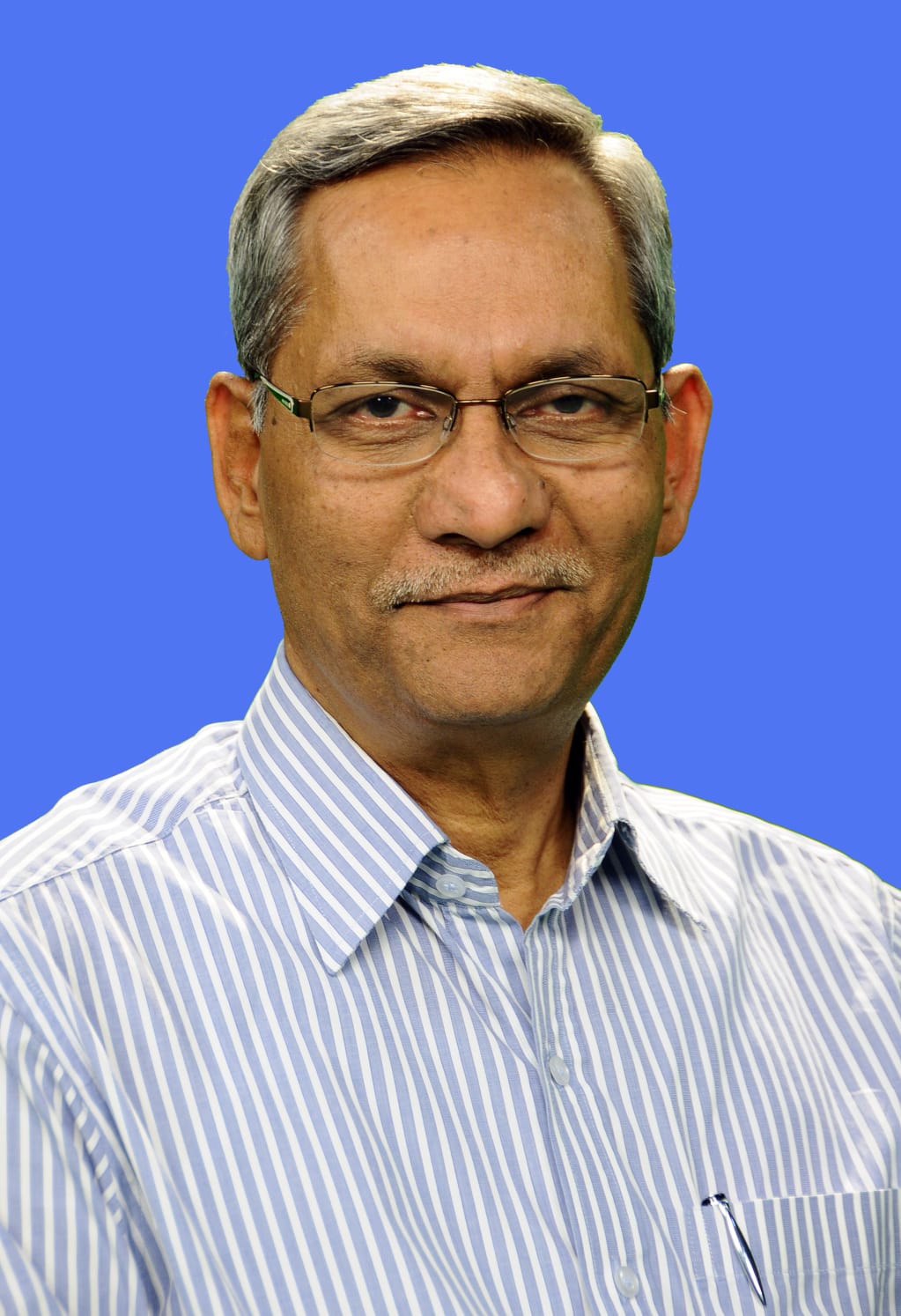
Dr. K. Ramachandra Murthy is a versatile journalist with a distinguished career. Dr. Murthy began his extensive career with Andhra Prabha of The Indian Express group in Bengaluru. He was editor of Udayam, Vaartha and Andhra Jyothy. Dr. Murthy founded and edited HMTV news channel and The Hans India, an English newspaper. He was also editorial director of the Telugu newspaper, Saakshi. He was awarded Ph. D for his research work in rural reporting. Dr. Murthy’s five decades in journalism showcases his influential roles across both print and electronic media. He wrote the political biography of NTR published by Harper Collins.
Email: murthykondubhatla@gmail.com
Mobile: 9908002211