The social cost of disinvestment of CPSEs far exceeds the perceived social benefits
CPSE disinvestment, particularly that of IDBI, needs to be reviewed
“The following is the full text of E.A.S. Sarma’s letter to the President of India, Droupadi Murmu, on the disinvestment of IDBI.”
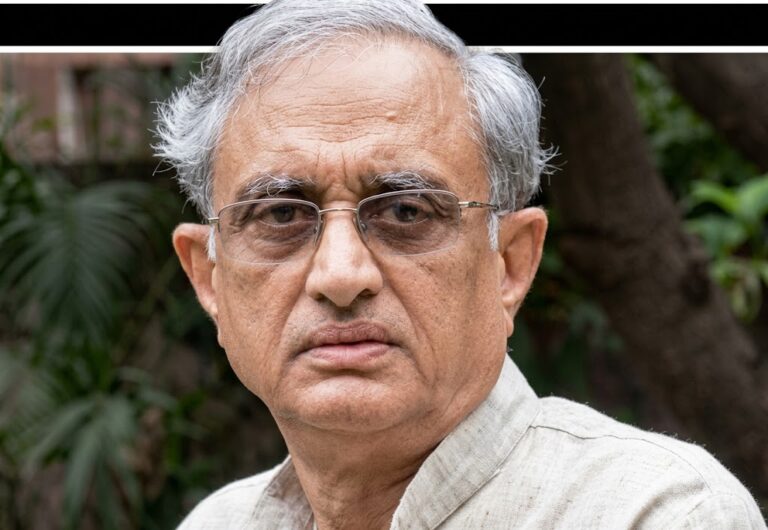
E A S Sarma
Former Secretary to the Government of India
To
Smt Droupadi Murmu
President of India
Rashtrapati Bhawan
Respected Rashtrapati Ji,
There are 475 CPSEs in the country, with a total capital investment of Rs 37,12,393 crores, employing 7,81,552 persons, out of whom 4,16,118 belong to the SC/ST/OBC categories. Those CPSEs earn a net profit of Rs 3,08,674 crores annually. On behalf of the people, the President of India holds Rs 4,50,740 crores of equity holdings in those CPSEs, which, in return, declare dividends annually of the order of Rs 1,38,503 crores.
Shortcomings in the ongoing exercise of CPSE disinvestment:
The government has presently undertaken an aggressive exercise to privatise several of those CPSEs through strategic disinvestment and to monetise CPSEs’ assets, an exercise that raises serious concerns of public interest. The justification put forward by the government that disinvestment helps raise additional fiscal resources is fallacious, as private firms that successfully bid for CPSE equity raise borrowings from the same pool of national savings that the State can readily access on far better terms, without having to lose ownership control over a CPSE. The justification that privatisation leads to better management of an undertaking is equally questionable, as there are several CPSEs that have been functioning efficiently and have withstood global competition.
Under Article 12 of the Constitution, CPSEs are instruments in the hands of the State for fulfilling its welfare role and for fulfilling the mandate enjoined upon it by the Directive Principles (“that the ownership and control of the material resources of the community are so distributed as best to subserve the common good, that the operation of the economic system does not result in the concentration of wealth and means of production to the common, and so on). Moreover, CPSEs play a crucial role in promoting the country’s self-reliance in strategic areas of the economy.
Private companies operate primarily with the objective of maximising their profits, and therefore, cannot be expected to function in alignment with the Directive Principles. The model of disinvestment presently adopted for disinvestment is inherently flawed, as the government has precluded other CPSEs from taking part in bidding, thereby severely restricting competition and a proper price discovery. This has invariably resulted in the government underselling valuable public assets. In the long run, therefore, it is imprudent for the government to privatise CPSEs and/or monetise public assets to raise fiscal resources.
Most of the lands in the occupation of CPSEs were originally acquired by the concerned States under the erstwhile land acquisition legislation on the ground that those lands were needed for a “public purpose”, a term defined in that legislation as land needed for a company wholly owned by the government. It is therefore prima facie illegal for the government to alienate those lands to a private entity in the name of disinvestment.
Recent instances of CPSE disinvestment that raised public uproar:
In recent times, at least two cases of disinvestment, that of the Central Electronics Ltd (CEL) and Pawan Hans, had to be aborted by the government at an advanced stage of approval, when there was public uproar against the possibility of their slipping into the hands of dubious bidders.
The disturbing case of IDBI disinvestment:
The latest case of CPSE disinvestment is that of IDBI, which raises similar concerns of public interest as referred above. Set up in 1964 as a development finance institution, IDBI has enlarged its presence in terms of its portfolio of activities and in terms of its outreach across the country. It has presently a network of 2,122 branches across the country, providing access to people in many remote areas. IDBI has on its rolls 19,108 employees, including 9,500 employees belonging to SC/ST/OBC. It has 6,911 women employees and 884 differently abled employees.
The Central government and LIC hold 45.48% and 49.24% equity shares in IDBI.
Recent CCEA decision on IDBI:
The CCEA recently approved the strategic sale of the Centre’s share upto 30.48% and LIC’s share upto 30.24% in favour of Fairfax, a Canadian company for a consideration of Rs.52,878 Crores, leaving a residual shareholding of 15% with the Centre and 19% with the LIC. This leaves both the Centre and the LIC as minority shareholders having little say in decisions on the future of IDBI (https://www.pib.gov.in/PressReleasePage.aspx?PRID=2323468®=48&lang=2)
Lack of transparency in valuation of IDBI’s net worth:
It was in May, 2021 that the government took a decision on strategic disinvestment of IDBI. Except the cursory information provided by DIPAM in the Preliminary Information Memorandum (PIM) issued in October 7, 2022, there has been no transparency whatsoever in the disinvestment process that followed. The names of the agencies that valued IDBI, the methodology adopted for valuation and the inputs that went into valuation have not been disclosed either to the Parliament or to the public. By deliberately excluding other public sector undertakings from bidding for IDBI equity, in terms of Para 11.1(viii) of PIM, the possibility of a banking behemoth like the SBI introducing competition in bidding has been eliminated, leaving the field open to a few smaller private entities. It is ironic that competent, highly professional public sector undertakings were excluded but foreign entities were allowed to bid for IDBI. The outcome of it was that the entire bidding process became severely restricted to two foreign entities, one from the UAE and another from Canada, suggesting that the government would rather entrust IDBI’s ownership and management control to a foreign agency than its own domestic public sector banks.
IDBI, a profit earning PSU:
After the government took the decision to privatise IDBI in May, 2021, it dragged its feet for five years, during which time IDBI improved its performance and earned profits of Rs 48,151 crores, with its annual profits increasing year after year. Thus, even before the decision to sell IDBI’s equity was taken, IDBI had already earned 91% of the disinvestment proceeds now being realised.
Lack of clarity on the net woth of IDBI:
As a part of the opaque process of valuation of IDBI and fixation of the reserve price, the initial bids were invited in the financial year 2025-26 with the reserve price fixed at Rs.94.42 per share. When it fixed the reserve price at that level, the government’s team of experts would have examined all alternatives available, including “Relative Valuation by the Market Multiple Method” and “Asset Valuation Method”, as indicated in their statement (https://www.pib.gov.in/PressReleasePage.aspx?PRID=2323468®=48&lang=2) and arrived at that benchmark as being the best indicator of the true net worth of the bank. Offers from the two foreign agencies, to whom the bidding process became restricted, fell short of that reserve price. At that stage, considering that there was not enough competition and therefore the bid offers did not match the networth of IDBI, the government ought to have thrown open the bidding process to a wider set of bidders including other PSU banks. Instead, the government resorted to other valuation methods in a highly contrived manner to justify a reserve price that is 19.5% lower than the reserve price fixed earlier. In response, the Canadian bidder offered Rs 81 per share on the basis of which the government hastily finalised the aggregate sale of 60.72% of IDBI’s equity to that bidder.
It is not clear whether IDBI’s networth has been properly assessed by the government and whether the potential value of its land assets has been factored into valuation. For example, there is a 50+ acre land property held by IDBI in a highly developed area of Hyderabad, where a recent auction conducted by the Telangana State government revealed a market value of Rs 269 Crores per acre. On that basis, IDBI’s Hyderabad land holding alone should be valued at Rs 13,450 Crores! If other urban properties of IDBI were to be valued similarly, the total value of its lands would be phenominally high, far in excess of the approved bid value of Rs 52,878 Crores.
LIC”s policy holders kept in the dark:
LIC’s equity share in IDBI was funded by 262 million policy holders. In all fairness, the government and LIC should have taken them into confidence before approving the sale of IDBI equity. To the best of my knowledge, they were not kept in the picture.
IDBI’s retail depositors not taken into confidence:
As on 31-3-2026, public deposits in IDBI stood at Rs.3,47,163/- crores, as against IDBI’s total business of Rs.6,00,789/- crores. Many small investors have invested their hard earned savings in IDBI, assuming that it has the government’s backing. Privatising IDBI would imply letting them down, without their consent.
Uncertainty in the future of IDBI’s employees:
Transfer of ownership and control of IDBI to a foreign agency will introduce uncertainty in the future of its employees, especially, the SC/ST/OBC employees, as the terms of disinvestment do not provide any safeguard . Also, once IDBI becomes a private entity, it will do away with reservations for SC/ST/OBC candidates for whom reservations offer not only employment but also social empowerment.
It is in that context that the SC/ST/OBC employees of IDBI have rightly demanded that the government should protect their rights https://www.thehindubusinessline.com/ money-and-banking/idbi-bank-sc-st-and-obc-employees-forum-seeks-protection-of-rights-careers/article70521406.ece). The government appears to have brushed aside their interests.
Why privatise IDBI, when it is earning profits?
Had the government not been in a hurry to conclude the sale of IDBI, the latter would have maintained the increasing trend in its profitability year after year and at the same time continued to play its role in promoting the welfare mandate envisaged in the Directive Principles.
IDBI is a co-partner with the government in many flagship welfare schemes:
IDBI hosts more than 18.72 lakh accounts under the Pradhan Mantri Jan Dhan Yojana (PMJDY); more than 10.86 lakh Bank account holders under Pradhan Mantri Suraksha Bima Yojana (PMSBY); more than 3.81 lakh Bank account holders under Pradhan Mantri Jeevan Bima Yojana (PMJJBY); more than 5.48 lakh Bank account holders under Atal Pension Yojana (APY); maintains 191 Aadhaar Enrolment Centres; one Rural Self Employment Training Institute (IDBI-RSETI) at Satara District which trained 7,165 candidates out of whom 5,241 have got employed.
Due to re-classification of IDBI Bank as a “private sector bank” by RBI, Metro and Urban Branches of IDBI Bank have unfortunately stopped providing interest subvention for KCC loans to farmers since March, 2019. Once the Bank goes into the hands of the Canadian company, even the semi-urban and rural branches are likely to be stopped from lending to farmers. IDBI may also stop giving small loans viz., MUDRA /PMSVANIDHI/ Stand Up India, education loans to students which are normally offered as unsecured loans.
CCEA’s decision to hand over the majority equity share to the Canadian company not only closes the chapter of IDBI’s role as a development finance institution but also as a co-partner in the above flagship welfare schemes.
Legal implications of IDBI disinvestment:
As referred earlier, many of the land parcels presently in occupation of IDBI had been originally acquired under the erstwhile land acquisition legislation, which prohibits alienation of those lands to a private agency.
Additionally, Section 5(1) of the Industrial Development Bank (Transfer of Undertaking and Repeal) Act, 2003 implicitly provides an assurance that under no circumstance, the service conditions of IDBI’s employees be altered. The terms of disinvestment of IDBI, as spelt out by government, violate that provision.
Breach of an assurance given to the Parliament:
In the 13th Lok Sabha, the Parliamentary Standing Committee on Finance dealt in detail with the IDBI(Transfer of Undertaking and Repeal) Bill 2002 and in its 46th Report of June, 2003 at Para 33 had observed as follows:
“The Committee are given to understand that there is huge investment of Rs. 10,000 crores by general public in IDBI which is not secured. They are of the opinion that this dispensation holds good so long as IDBI is a Government owned banking company, but the day the Government holding in converted IDBIcomes below 51% there will be chaos – like situation in the country making investors panicky. Hence, they recommend that the Government should make provisions which will ensure that Government’s shareholding in IDBI do not come below 51%” The then Finance Minister to Lok Sabha on 08.12.2003 and Rajya Sabha on 15.12.2003 gave an assurance that Government shall at all times maintain not less than 51% equity holding in IDBI as a Banking Company. The above assurance was taken on the records of the Government Committee on Assurances. In other words, the decision taken by the present government to disinvest IDBI constitutes a a breach of that Parliamentary assurance.
Fairfax’s Conflict of Interest:
Fairfax faces a conflict of interest as it has already acquired a majority share in the Catholic Syrian Bank (https://www.fairfaxindia.ca/press-releases/fairfax-india-to-acquire-51-of-the-catholic-syrian-bank-ltd-2018-02-20/) As a matter of policy, RBI does not permit the same promoter to control two banks at time. The government’s decision to disinvest IDBI in favour of Fairfax is thus ab initio vitiated by such a clear conflict of interest.
Also, Fairfax has a significant stake in IIFL Capital Services, IIFL Finance, 5paisa Capital and Valueattics Re, covering finance and insurance sectois. There could be an additional conflict of interest in relation to such involvement.
I have conveyed the above concerns in a recent letter addressed to the Finance Minister (https://countercurrents.org/2026/10/idbi-bank-disinvestment-governments-sale-of-60-72-stake-to-canadian-firm-raises-serious-legal-and-public-interest-concerns/) To the best of my knowledge, the government has not acted on that letter. Since it is the President who holds equity shares in CPSEs on behalf of the people, I seek your intervention in directing the government to review CPSE disinvestment in general and IDBI investment in particular.
In view of the multiple concerns referred above, I feel that an independent enquiry should be ordered to examine the legality and prudence of disinvesting IDBI. The findings from that enquiry should be placed before the Parliament for a discussion, not only on disinvestment of IDBI but also on the desirability of disinvestment of other CPSEs. Pending such an enquiry, the government should keep in abeyance the decision to hand over IDBI’s ownership and management control to Fairfax.
Respectfully,
E A S Sarma, Visakhapatnam – Date – 18-10-2026, —
E.A.S.Sarma, 14-40-4/1 Gokhale Road, Maharanipeta, Visakhapatnam 530002,
Mobile: 91-9866021646, Email: eassarma@gmail.com –
Website: http://eassarma.in

With a journalistic long journey, we bring you https://primepost.news, a dynamic platform committed to unraveling the intricate tapestry of Indian politics, particularly delving deep into the heart of Telangana and Andhra Pradesh. Our blog is not just a source of news; it’s a reservoir of insights, analysis, and thought-provoking reviews.