Balancing Voter Access and Electoral Verification
Democracy and Electoral Integrity: Why Roll Revision Matters
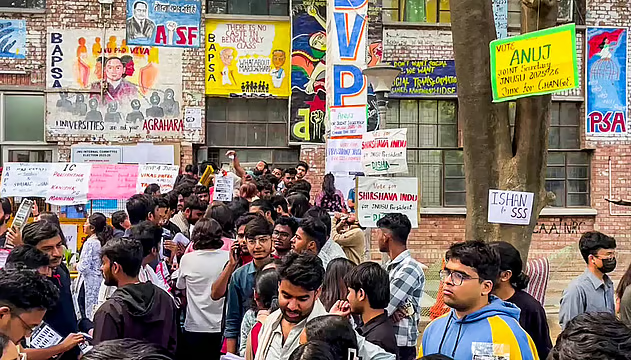
The controversy surrounding the Special Intensive Revision (SIR) of electoral rolls has acquired a distinctly political character. Opposition parties, civil-society groups and sections of the younger generation have questioned the methodology, particularly the documentation required and the possibility of genuine voters being excluded. Such concerns merit serious examination. Yet, beneath the political clamour lies a more fundamental question: can a democracy afford to tolerate ineligible, duplicate or fictitious names on its electoral rolls merely because verification may be inconvenient?
The Election Commission is constitutionally entrusted with the preparation and revision of electoral rolls. Electoral revision is not, in itself, an assault upon democracy; it is an essential instrument for safeguarding the integrity of the franchise. India has an enormous and highly mobile electorate. Deaths, migration, changes of residence, duplication and outdated records can all distort electoral rolls. A democracy must therefore possess the institutional capacity to ascertain who is legally entitled to vote.
But electoral integrity cannot become an excuse for electoral exclusion.
A genuine citizen satisfying the statutory requirements must have a clear, accessible and time-bound opportunity to establish eligibility. If a name is wrongly excluded, an effective remedy must be available. Conversely, once an entry is established to be ineligible or fictitious, its continued presence cannot be defended in the name of democratic rights. The right to vote and the integrity of the vote are complementary, not competing, democratic values.
The Supreme Court’s consideration of the Bihar SIR has illustrated the importance of maintaining this balance. The Court recognised the Election Commission’s authority to undertake electoral-roll revision while emphasising procedural safeguards and opportunities for affected persons to establish their eligibility. The proper question, therefore, is not whether electoral rolls should be verified, but whether verification is undertaken lawfully, transparently, fairly and with adequate avenues of redress. The deeper irony is that Indian political discourse becomes intensely agitated over the mechanics of voter-list revision while remaining comparatively subdued about the larger maladies that surround elections.
Where is the equivalent public movement against the enormous expenditure associated with elections? Where is the sustained campaign against money power, caste mobilisation, communal considerations, regional loyalties and political patronage? Where is the national debate on the influence of entrenched social networks and dominant groups in the selection of political candidates?
An Enduring Pillar of the Republic
Elections to Parliament, State Legislatures and local bodies have become extraordinarily expensive enterprises. Money, organisation, social identity and patronage inevitably influence the electoral environment. Yet these structural distortions rarely generate the same intensity of public mobilisation as an immediate controversy involving electoral administration.
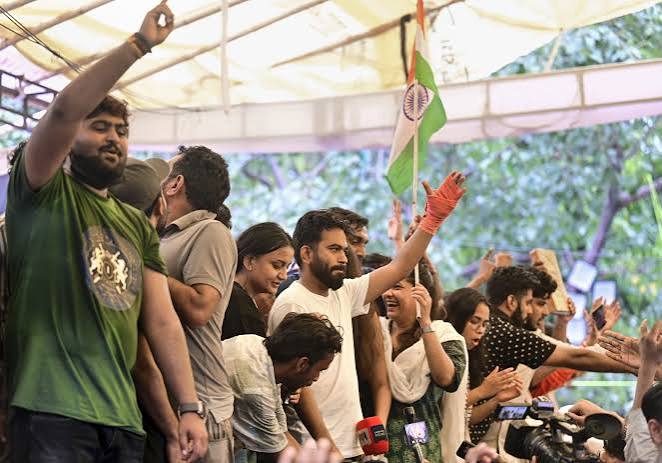
If India’s Gen Z wishes to inherit a healthier democracy, it must look beyond the immediate controversy and interrogate the entire electoral ecosystem.
The issue cannot be reduced to which political alliance gains or loses from SIR. Political parties and alliances are transient; the electoral roll is an enduring instrument of the Republic. The same constitutional principle must apply whether a party is in power or in opposition.
I am politically unaffiliated and believe that citizens should retain the liberty to exercise even the NOTA option. My concern is therefore not with the electoral fortunes of any political party, but with the credibility of the democratic process itself.
Indian elections operate within a social environment in which caste, creed, money, language, region and personality frequently influence political behaviour. Governments and alliances change from State to State; in one State one political combination may prevail and in another its principal opponent may do so. Such alternation is inherent in a federal democracy. But beneath these political changes lies a deeper question: how free is the individual citizen from the social and financial pressures that shape electoral choice?
The SIR controversy should consequently become the occasion for a larger national conversation.
The Election Commission must be transparent. Its procedures must be intelligible. Genuine voters must not be arbitrarily excluded. Every disputed deletion must carry an effective avenue of redress. At the same time, political parties cannot reasonably demand that questionable electoral entries remain untouched merely because verification is politically inconvenient.
If a particular procedure creates unnecessary hardship, the courts and the legislature can prescribe appropriate safeguards and alternatives. Constitutional institutions exist precisely to ensure that administrative power remains within the bounds of law. But procedural criticism should not obscure the legitimacy of the underlying democratic objective: an electoral roll must contain those who are entitled to vote and exclude those who are not.
There is an obligation upon citizens as well.
A democracy cannot be defended merely by protecting the right to vote; it must also protect the integrity of the vote.
A duplicate, fictitious or otherwise ineligible entry, if ultimately used to cast a vote, can dilute the franchise of a genuine citizen. The precise extent of such irregularities must be established by evidence, not political assertion. But the principle is elementary: the franchise belongs to eligible citizens, and the electoral roll must faithfully reflect that constitutional reality.
The youth of India should therefore refuse to allow the SIR debate to become merely another battlefield between rival political parties.
Let Gen Z ask the harder questions.
Why does money power continue to loom so large over elections?
Why does caste remain such a formidable instrument of political mobilisation?
Why do entrenched networks continue to influence political nominations?
Why is extravagant electoral expenditure increasingly treated as an inevitable feature of democratic competition?
And why does public outrage so often erupt around partisan controversies while the deeper structural weaknesses of Indian electoral politics remain insufficiently challenged?
These questions transcend party politics.
The legitimate democratic demand should be simple: verify every voter fairly; protect every genuine voter rigorously; remove every ineligible entry lawfully; and provide an effective remedy against every wrongful exclusion. That is neither a partisan demand nor a defence of any political party. It is the minimum constitutional logic of representative government. India’s youth, therefore, has a choice—not between one political party and another, but between fighting over the symptoms of electoral disorder and confronting its deeper causes. Let the youth fight the real battle: not for political parties, not for false or fictitious voters, but for a clean, credible and constitutionally secure electoral franchise.
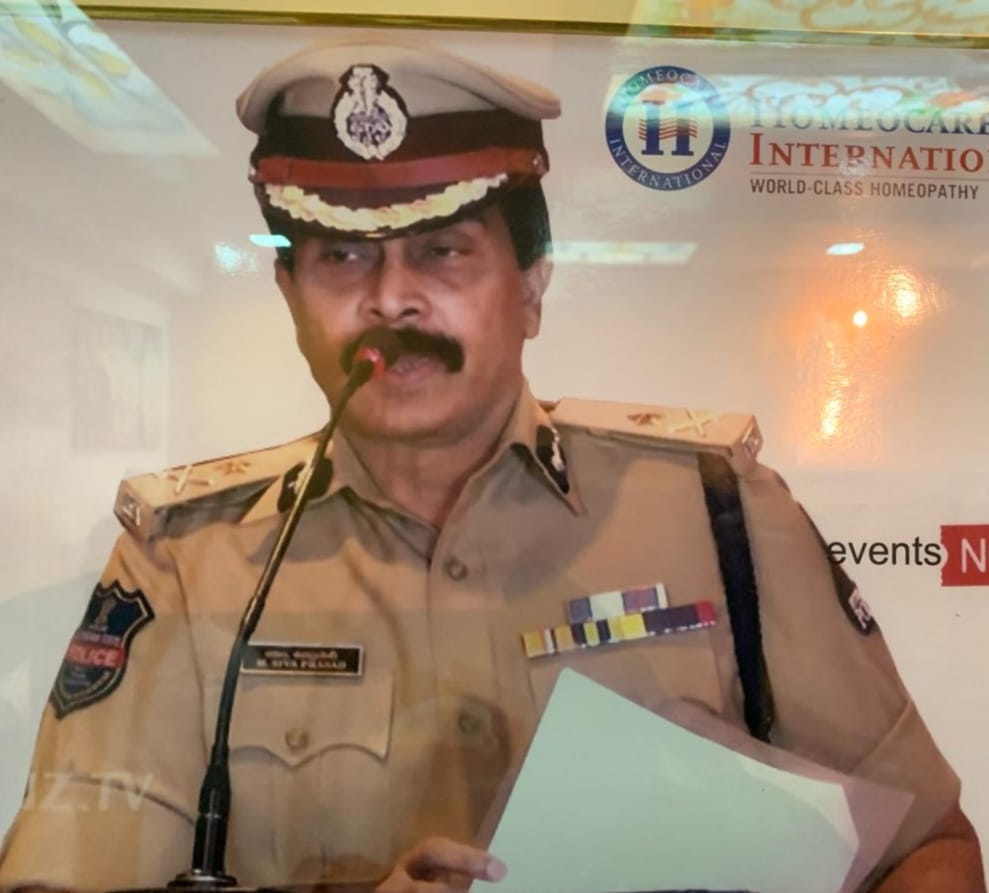
M. Shiva Prasad, IPS (Rtd.) is a dedicated law enforcement professional who served the combined Andhra Pradesh cadre before opting for the Telangana cadre. Though a native of Andhra Pradesh, he considers himself a true Hyderabadi with an abiding love for the Telugu people. Driven by sincerity, fearlessness, and a lifelong fight against inequality and injustice, his ultimate strengths remain his goodwill and deep affection for the public and the police force. Today, he continues his mission by writing snippets and articles true to his conscience.
Email: Shivareach@yahoo.com
Mobile: 98480 38774