Paper 5: Who stands by You?
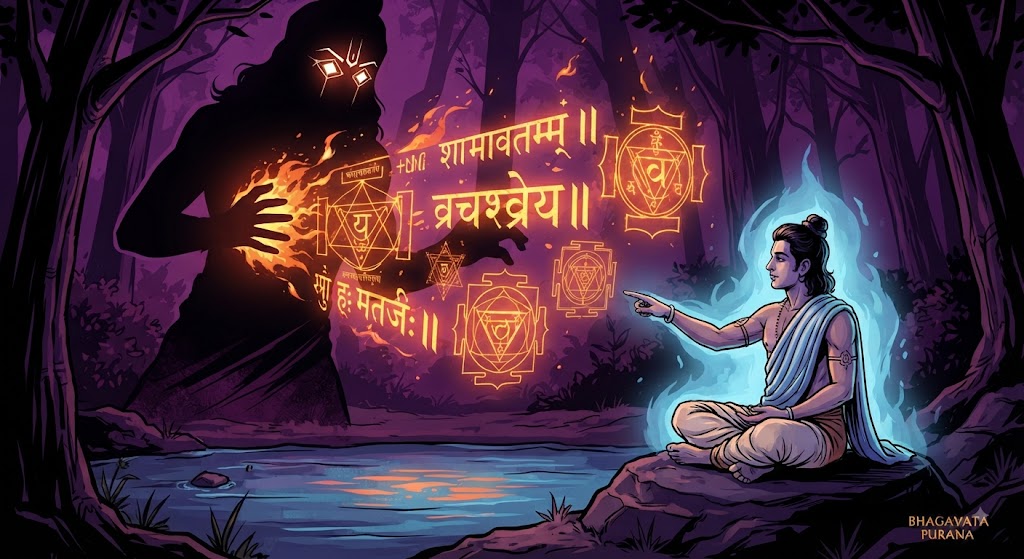
Yudhisthira stood tall by the edge of the water. He had just unravelled the silent patterns of our habits. The Yaksha, sensing the profound clarity of the prince, leaned forward with his next set of riddles. The voice from the shadows asked four beautiful questions about travel, companionship, and our final destination:
- Who is the friend of a traveller?
- Who is the friend of one who stays at home?
- Who is the friend of a sick person?
- And who is the friend of one who is dying?
These questions seem to ask for a list of close caretakers, like a guide, a spouse, or a doctor. But the Yaksha was mapping out the emotional and spiritual architecture of human life. He was asking about what actually accompanies you when you step into unknown territory, what anchors you in your domestic life, and what stays with you when everything else falls away.
Yudhisthira answered match for match:
- A learning mind is the friend of a traveller.
- A life partner is the friend of one who stays at home.
- A doctor is the friend of a sick person.
- And charity is the friend of one who is dying.
Let us look closely at these four companions. They show us how to navigate our shifting roles from the busy world outside to the quiet spaces within.
The Companion in the Unknown: Lifelong Learning
Yudhisthira says a learning mind is the friend of a traveller.
When you leave your familiar surroundings—whether a student moving to a new city for studies, or a professional stepping into a new career path—you leave behind your comfort zone. You are on your own. In that vulnerability, your only true friend is your capacity to learn, adapt, and look at the world with open eyes.
In his career guide Learnability, author Nick Lazaris argues that specific technical skills can become obsolete overnight, but your baseline capacity to continuously learn is your ultimate survival tool. When you step into the unknown, your fancy past titles cannot help you, but a sharp, learning mind will always show you the way.
The Domestic Anchor: The Sacred Partner
The riddle states that a life partner is the friend of one who stays at home.
Home is not just a physical structure made of brick and mortar. It is the emotional sanctuary where you take off your professional armour, drop your societal masks, and return to your raw, authentic self. To find true peace within those walls, you need a companionship built on deep trust, mutual respect, and shared values. A life partner is someone who sees your flaws, understands your struggles, and chooses to stand by you anyway.
In his landmark book The Seven Principles for Making Marriage Work, legendary relationship researcher Dr. John Gottman proves that the single greatest predictor of long-term domestic peace is emotional safety and mutual respect between partners. A strong, harmonious partnership transforms a simple house into a sacred space where your soul can rest and recharge.
The Gentle Healer: Restoring Balance
When asked about the friend of a sick person, Yudhisthira points directly to a doctor.
When your body is broken by illness or your mind is exhausted by stress, you realize how fragile human life truly is. In those moments of vulnerability, you cannot rely on empty theories. You need someone who brings tangible knowledge, precise skill, and genuine compassion to guide you back to health. A true healer reassures the spirit while repairing the frame. This answer reminds us to respect our health as a sacred duty, because without a strong vessel, you cannot perform your daily duties.
The Final Wealth: What Outlives the Flesh
The final riddle asks for the friend of one who is dying, and Yudhisthira gives a profound answer: charity, or Daana.
When a person reaches the absolute end of their journey, every single worldly asset is stripped away in an instant. You cannot take your bank balances, your corporate empires, or your luxury vehicles with you across that final threshold. Even your physical body must be left behind on the earth.
The only thing that actually survives you, the only force that accompanies your soul, is the goodness you left behind. It is the charity you gave, the lives you touched, and the kindness you shared without asking for anything in return. Your ultimate friend at the final hour is your own generosity.
Connecting the Lessons to Our Daily Life
How do we take these four companions and use them tomorrow?
- The Traveller’s Friend (Embracing Curiosity): Imagine stepping into an unfamiliar project, a new academic course, or a new city where you feel out of your depth. Instead of letting anxiety take over, call upon your true companion—a curious, learning mind. Ask questions like a beginner, stay adaptable, and view every unfamiliar obstacle as a masterclass in growth.
- The Domestic Anchor (Protecting Home Peace): Look at how you enter your home after a long, exhausting day. It is easy to vent workplace frustration or academic burnout on those closest to you. Consciously choose to protect your domestic anchor. Treat your partner and family with quiet respect, offer genuine listening, and make your home a sanctuary of mutual safety.
- The Gentle Healer (Respecting Physical & Mental Health): Think about how often we push through fatigue, ignoring physical pain or mental burnout in the name of productivity. Remember that taking care of your body and seeking medical or expert guidance when broken is not a sign of weakness—it is a foundational duty. Protect your health so you can continue to serve those who depend on you.
- The Final Wealth (Living with Daily Generosity): Look at your daily interactions. Generosity is not just about writing a check at the end of life; it is a daily habit. Practice giving your time, your patient listening, your encouragement, and your kindness today. What you give away freely to elevate others becomes the only wealth that stays with you forever.
When you travel with an open mind, nurture your home with warmth, care for your well-being, and walk with a generous heart, you never walk alone. The quality of your journey is defined by the companions you choose to travel with.
Author Biography: – R Srinivasa Murthy, the author, is a corporate leader, an independent writer, and a student of Hindhu Philosophy. He Identifies as a Demystic, committed to removing unnecessary mysticism from traditions to offer practical systems for the next generation. His upcoming book, Logic of And: Sanatana Dharma as a Toolkit for the Contemporary Seeker, aims to bridge ancient wisdom with modern life to foster an inclusive, living civilisation.

With a journalistic long journey, we bring you https://primepost.news, a dynamic platform committed to unraveling the intricate tapestry of Indian politics, particularly delving deep into the heart of Telangana and Andhra Pradesh. Our blog is not just a source of news; it’s a reservoir of insights, analysis, and thought-provoking reviews.