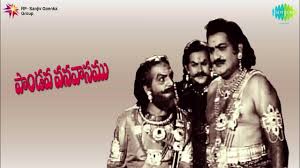
Analyzing the Epic Duel in Pandavavanavasam
The Life and Cinematic Journey of S.V. Ranga Rao
S.V. Ranga Rao (S.V.R.) was not just an actor; he was a “Mahanata” (Great Actor) whose presence on screen often overshadowed even the lead heroes. His ability to humanize villains and bring a Shakespearean depth to mythological characters remains unparalleled in Indian cinema.
Full Name and Early Life
His full name was Samarla Venkata Ranga Rao. Born on July 3, 1918, in Nuzvid, Andhra Pradesh, he was a man of imposing physical stature and intellectual depth. Before entering the glitz of Madras (now Chennai), he was a well-educated individual with a Bachelor’s degree in Science, which was quite rare in the film industry at that time.
Entry into Films
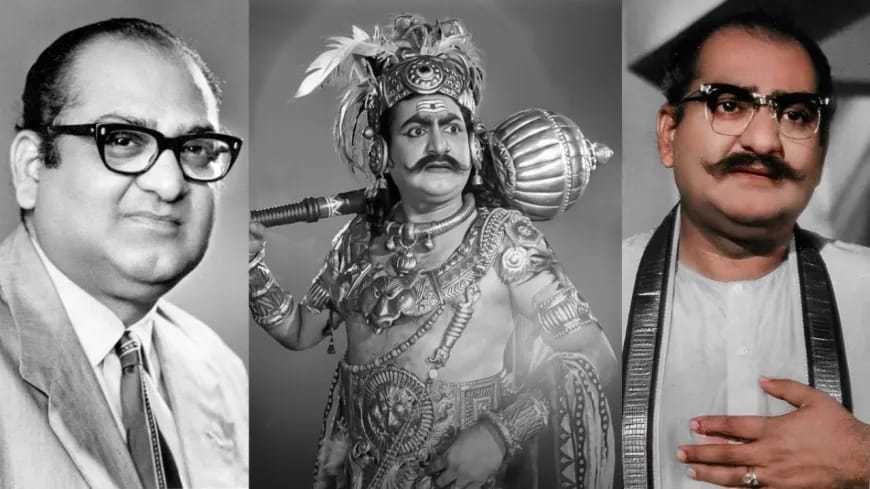
Ranga Rao’s journey into the celluloid world was not an overnight success. His debut was in the 1946 film Varudhini. Surprisingly, after his first film, he briefly left the industry to work as a budget assistant in the TAS (Technical Audit Section) of the Railways. However, the pull of the stage and screen was too strong. His big break—the one that defined the rest of his career—came with the role of the Nepala Manthrik in Pathala Bhairavi (1951). His portrayal of the sorcerer was so terrifyingly authentic that he became an overnight sensation.
Memorable Experiences and Legacy
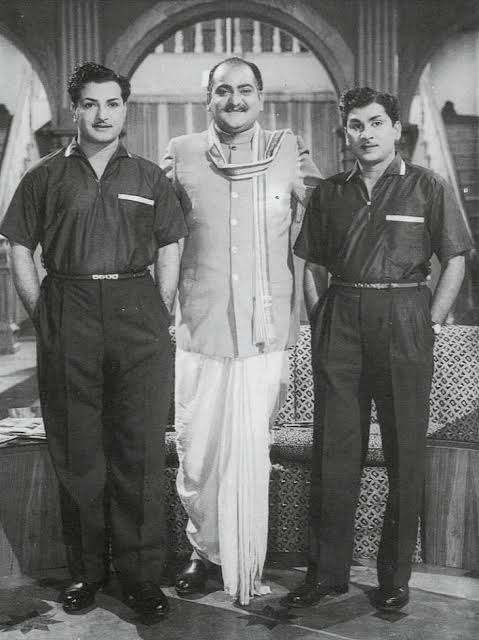
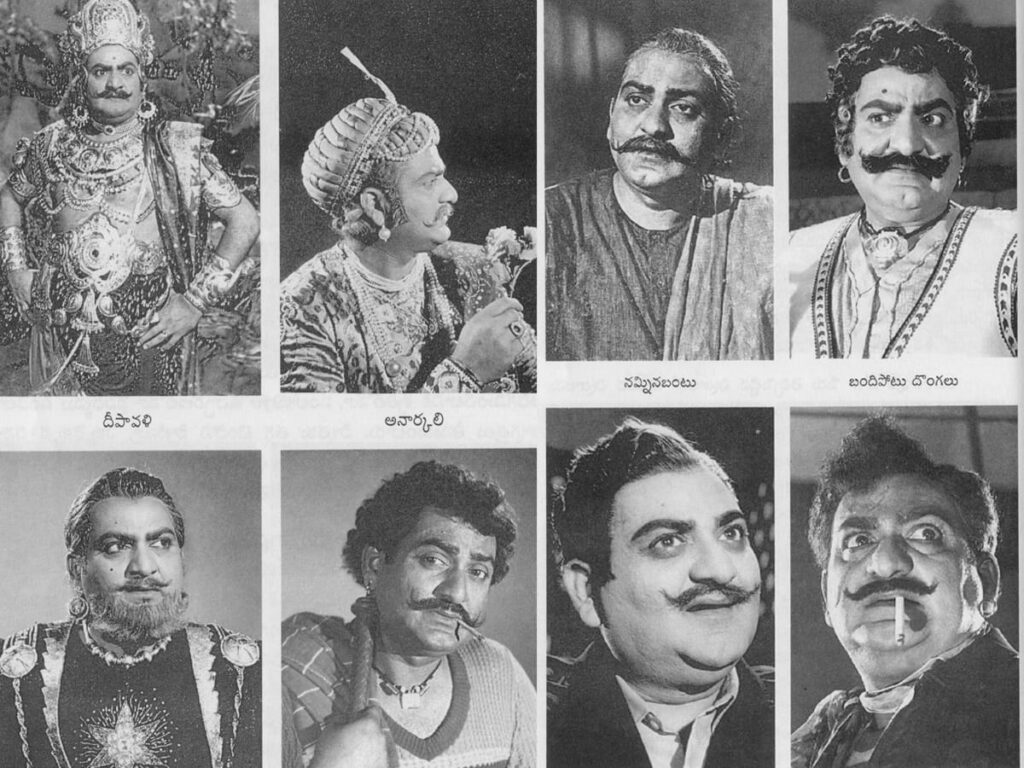
One of his most significant milestones was winning the Best Actor Award at the Afro-Asian Film Festival in Jakarta (1963) for his portrayal of Keechaka in Narthanasala. He was the first Indian actor to receive such international recognition. S.V.R. was known for his “Natural Method” of acting. He didn’t just deliver dialogues; he lived the character’s breath and pause. Whether it was the grandfather in Thatha Manavadu or the family patriarch in Pandanti Kapuram, he transitioned from a “menacing villain” to a “sentimental father figure” with ease, earning him the title of a versatile legend.
The Epic Duel: S.V.R. vs. N.T.R. in Pandavavanavasam
The confrontation between Duryodhana (S.V.R.) and Krishna (N.T. Rama Rao) in Pandavavanavasam is a masterclass in acting. The sequence involving the padyaalu (poems) is the soul of the film.
Here is an analysis of that performance across twelve parameters
- Vocal Resonance- Ranga Rao’s bass voice provided a majestic weight to Duryodhana’s arrogance, contrasting with NTR’s lyrical Krishna.
- Facial Contortion- During the poems, his facial muscles shifted from regal pride to suppressed rage as Krishna challenged his authority.
- Diction (Spashtaatha) – Every syllable of the complex Telugu padyaalu was delivered with surgical precision, making the literature accessible to the masses.
- Body Language- He maintained a stiff, upright posture to symbolize the “unbending” nature of Duryodhana, even when standing before a God. SVR’s body language and diction as Ghatotkacha character in Mayabazaar was extraordinary.
- Eye Expression (Netrabhinayam)- His eyes would widen with “Veera Rasa” (heroism) during the challenge and narrow with “Asuya” (envy) during the argument. In Gundamma Katha, SVR’s action as father of two sons is sober one.
- The Power of Silence— Between the lines of the poems, S.V.R. used heavy breathing and silence to signal Duryodhana’s internal turmoil.
- Emotional Range- He successfully portrayed Duryodhana not as a petty thief, but as a tragic, ego-driven King who felt wronged by fate.
- Chemistry with NTR–The “competitive acting” between the two legends elevated the scene; S.V.R. never backed down, creating a perfect foil for NTR’s divinity.
- Rhythm and Timing- He synchronized his hand gestures with the meter of the padyam, hitting the “Taala” (rhythm) of the poetry perfectly.
- Interpretation of Text– He gave the verses a “Manava Sahaja” (human-natural) feel, making the mythological dialogue feel like a real-time debate.
- Costume Command- Despite the heavy jewelry and crown, his movements remained fluid; he wore the character as comfortably as a second skin.
- Impact of “Ahankara”– He managed to make the audience admire Duryodhana’s steadfastness, a feat only achievable by an actor of his caliber.
Conclusion
From the subtle comedy of a faux-rich man in Missamma to the towering ego of Mayasura, S.V. Ranga Rao was the backbone of the Golden Age of Telugu Cinema. His performances weren’t just “acting”—they were an institutional study for future generations. Even today, when one thinks of the Mahabharata on screen, the image of S.V.R. as the defiant Duryodhana remains the gold standard.
Principal Correspondent, Prime Post
Vidya Sagar Chaturvedula is a passionate film enthusiast whose four-decade career spans multiple sectors, including media and industry. Fluent in Telugu, Hindi, and English, he has a deep appreciation for cinema, particularly films in those three languages. His passion goes beyond simple viewing; he enjoys analyzing directional skill, the emotional depth of actors’ performances, and the profound meaning embedded in dialogue. Mr. Sagar is known for his ability to clearly articulate and narrate his insightful film analyses after watching a movie.
Email: sagar.chaturvedula@gmail.com
Mobile: 9030702917

Very Nice Review…😊
SVR was one of the legendary actors in Telugu Film Industry.
He is character artist. He achieved awards and got name in the movie Tathamanavadu. Good narration
Very Good Teview
S V Ranga Rao was a great actor. Good review.
Great actor
Good read
Good review 👍
Good review sir 👍
SVR is a versatile legend! I would like to quote him as extraordinary in action and delivering verses of mythology thats native to telugu especially unparalled. Memories ever cherished reflecting into the films viz. Mayabazar, Pandavavanavasam, Pathalabhairavi, and Gundammakatha and many more. Very nice biography him. 🙏
While the actor is too good to be ignored but to be acclaimed only for his presence and performance in films
The review happened to be a classical
Analisis that brought out the positive qualities of negetive characters and the lmpressions etched on our memories
Sir SVR is one of the best actors
Yours Review is very good
Of all the movie s
Pathala bharavi good performance
The best dialogue is
Sahasa seyara. Dim baka
Hats off sir.
I have sent twice
Your Review is fantastic.
S V రంగారావు లెజన్డ్రీ నటుడు. ఏ పాత్రలో నటించినా చాలా నిండుతనం కనిపిస్తుంది. తండ్రిపాత్ర మామ, అన్న ఇలా ఏపాత్రలో నైనా చాలా బాగా చేస్తాడు దుర్యోధనుడు రావణాసురుడు ఇలా దుష్టపాత్రలు మాయలుపకీరు వేషాలు ఏది చేసినా చాలా బాగా రాణిస్తాడు అందరిహృదయాల్లో అలాంటిపాత్రలకు ఎస్ వి రంగారావే గుర్తుకు వస్తాడు. చాలా గ్రేష్ట్ ఆర్టిస్ట్.
Your Review is great.
Pandavavanavasam a very nice film. SVR, NTR, SAVITRI all acted well. The judam scene and poems are high light. It is Kamalakar Kameswara raos master piece. Nice review
S. V. Ranga Rao garu was one of the greatest actors in Indian cinema, known for his powerful screen presence and unforgettable performances. His expressions, dialogue delivery, and versatility brought every character to life with perfection. Even today, his roles remain timeless and continue to inspire generations of actors and movie lovers. A true legend whose contribution to Telugu cinema will always be remembered.
S. V. Ranga Rao garu was one of the greatest actors in Indian cinema, known for his powerful screen presence and unforgettable performances. His expressions, dialogue delivery, and versatility brought every character to life with perfection. Even today, his roles remain timeless and continue to inspire generations of actors and movie lovers. A true legend whose contribution to Telugu cinema will always be remembered.Great review.
Good review
SV Rangarao garu , no words are enough to describe his acting talent.Even of same age he played father roles to NTR and ANR in many movies.In characters like keechaka,Duryodhana and Ravanasura he looks so cruel on the other hand he is as jovial in characters like todikodallu,missamma,appudu CHESI pappu koodu etc.Telugu industry history remains incomplete without mentioning SVR and Savitri garu.Nice review