—————-
The Shenzhen Declaration exposes the contradictions of great-power diplomacy, selective multilateralism, economic coercion and the continuing subordination of the international order, hostage by the ambitions of its most powerful custodians.
The Paradox of Custodianship vs. Dominance
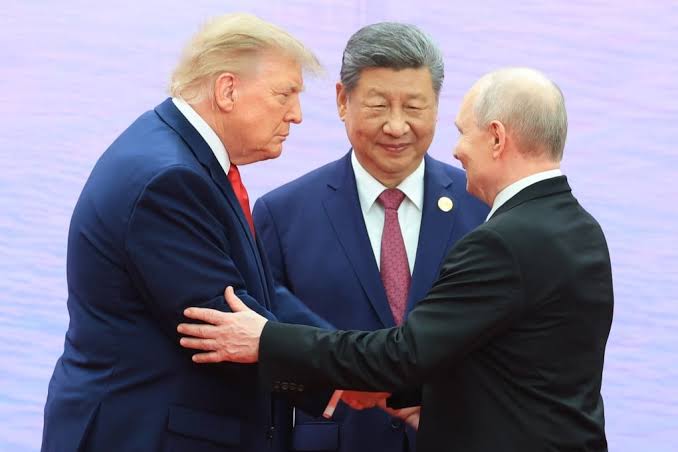
THE UNPRECEDENTED NOVEMBER 19, 2026, MEETING BETWEEN US PRESIDENT DONALD TRUMP, CHINESE PRESIDENT XI JINPING AND RUSSIAN PRESIDENT VLADIMIR PUTIN IN SHENZHEN, ON THE MARGINS OF THE APEC SUMMIT, HAS INTRODUCED AN INTRIGUING DIMENSION TO CONTEMPORARY GEOPOLITICS. THE THREE LEADERS ISSUED A FOUR-POINT DECLARATION TOWARD PEACE, ADDRESSING NUCLEAR RISK REDUCTION, ENERGY SECURITY, UNITED NATIONS REFORM AND IMMUNITY FOR STATE OFFICIALS. YET, BENEATH ITS REASSURING DIPLOMATIC VOCABULARY LIES AN UNCOMFORTABLE QUESTION: CAN THE WORLD’S MOST POWERFUL MILITARY, NUCLEAR AND GEOPOLITICAL ACTORS CREDIBLY PROCLAIM THEMSELVES CUSTODIANS OF PEACE WHILE PRESERVING THE VERY PRIVILEGES AND INSTRUMENTS THROUGH WHICH THEY EXERCISE GLOBAL DOMINANCE?
The declaration is remarkable as much for its omissions as for its assertions. There are no binding nuclear disarmament commitments, verifiable arms-reduction targets, concrete ceasefire arrangements for Ukraine or West Asia, or institutional mechanisms to ensure implementation. Nor is there any commitment to establish a permanent G3 institution. The gathering produced diplomatic symbolism without corresponding obligations. Peace was proclaimed, but the instruments of confrontation remained untouched.
THE ABSENT INDIA: A WORLD ORDER WITHOUT REPRESENTATION
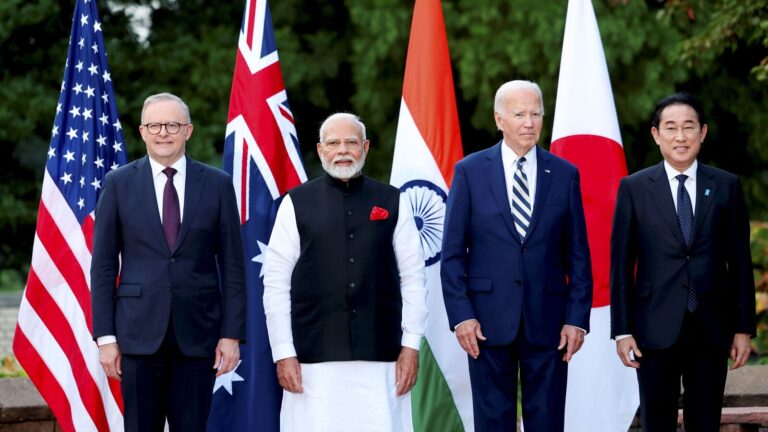
India’s absence is particularly consequential. The world’s most populous nation, a nuclear power, a major economy and an influential voice of the Global South cannot be relegated to the margins of deliberations concerning international security and governance. The G3 was an informal gathering, not an APEC institution; India’s non-membership of APEC is a separate issue. Nevertheless, three permanent members of the UN Security Council assembling to discuss international stability without India exposes the inadequacy of an international order still dominated by inherited privileges.
The more fundamental question is whether these powers genuinely favour a multipolar world or merely seek to preserve their own exclusive directorate. Multipolarity cannot mean replacing one hegemon with three. A representative international order cannot be constructed through exclusive understandings among the powerful while other consequential nations remain spectators. Nuclear risk reduction cannot be reduced to diplomatic declarations while military establishments continue to modernise their arsenals and expand their strategic reach.
UN REFORM: WILL THE PRIVILEGED SURRENDER THEIR PRIVILEGES?
The G3’s invocation of United Nations reform is perhaps its most revealing proposition. All three leaders represent permanent members of the Security Council, an institution whose structure reflects the geopolitical settlement of 1945 rather than the demographic, economic and strategic realities of the twenty-first century. The veto remains the ultimate instrument of institutional privilege. Five nations retain the authority to frustrate collective decisions, even when the overwhelming majority of the international community supports them.
India’s legitimate claim to permanent membership rests on its population, economic significance, democratic credentials, peacekeeping contributions and growing international responsibilities peacekeeping contributions and growing international responsibilities. Yet, will China genuinely support India’s elevation? Will the existing permanent members agree to dilute their own institutional supremacy? The contradiction is glaring: those who monopolise the authority to reform the international system also possess the power to obstruct its democratisation. Under Article 108 of the UN Charter, amendments require ratification by all five permanent members. Thus, the beneficiaries of the existing order hold the keys to its transformation.
IMMUNITY OR IMPUNITY?
“The declaration’s emphasis on state sovereignty, official immunity, and limitations on the jurisdiction of the International Criminal Court raises equally serious concerns, even though sovereign equality and diplomatic immunity are established principles of international law.” But sovereignty cannot become a convenient sanctuary against accountability for grave international crimes. The ICC’s jurisdiction is governed by the Rome Statute and its legal framework, with recognised limitations, particularly concerning non-member states. Nevertheless, the larger principle remains that individuals cannot be placed beyond the reach of international justice merely because they occupy positions of power.
If immunity is invoked selectively to protect powerful officials, while weaker nations are subjected to international scrutiny, the distinction between sovereignty and impunity becomes dangerously blurred. International law cannot be a weapon against the weak and a privilege for the powerful. The credibility of the international judicial system depends upon consistency, impartiality and accountability, irrespective of political stature.
ENERGY SECURITY AND ECONOMIC COERCION
The G3’s commitment to stable energy supplies is equally paradoxical. The United States, Russia and China exercise enormous influence over global energy production, consumption, refining, technology and supply chains. Yet international energy markets remain vulnerable to sanctions, embargoes, production restrictions, maritime insecurity and geopolitical confrontation.
For energy-importing economies such as India, these decisions have direct consequences for inflation, fiscal stability and economic growth. Energy cannot be transformed into an instrument of geopolitical blackmail. The same contradiction pervades international trade. Unilateral tariffs, export controls, sanctions and technological restrictions have increasingly become instruments of geopolitical coercion. The United States has deployed tariffs as leverage in international trade negotiations; China possesses considerable influence over critical-mineral and manufacturing supply chains; Russia exercises strategic leverage through energy and commodities. The language of free trade becomes hollow when powerful nations reserve the right to dictate market access and commercial terms. The developing world is expected to embrace globalisation while simultaneously confronting arbitrary trade restrictions and discriminatory economic practices. This is not equitable global economic cooperation. It is economic nationalism reinforced by geopolitical muscle.
INDIA MUST NOT BECOME A SPECTATOR
The Shenzhen encounter should prompt New Delhi to intensify its pursuit of strategic autonomy. India must strengthen its campaign for permanent Security Council membership, diversify energy supplies, accelerate indigenous defence production, protect critical supply chains and deepen partnerships across the Global South. Its engagement with the Quad, BRICS, G20 and other multilateral platforms must be guided by national interest rather than bloc politics. India should neither seek permission to become a consequential power nor accept an international hierarchy designed without its participation. Its diplomatic weight must be matched by economic resilience, technological self-reliance and military preparedness. The objective must be a genuinely representative global order, not the creation of another exclusive geopolitical club.
THE MORAL BANKRUPTCY OF GREAT-POWER POLITICS
The Shenzhen declaration may facilitate dialogue among three formidable powers. Such dialogue is indispensable to preventing catastrophic conflict. But diplomatic engagement must not be confused with moral leadership, and a declaration must not be mistaken for a transformation of international conduct. The real test is whether these three nations are prepared to restrain their military ambitions, accept meaningful nuclear risk-reduction measures, abandon coercive economic practices and support democratic reform of the United Nations. Until then, their pronouncements on peace will remain overshadowed by the contradictions of their own power politics. The world does not need three self-appointed custodians of peace who retain the privileges of veto, Instruments of military coercion and the economic leverage to discipline weaker nations.
It needs an international order founded on equality, accountability and reciprocal restraint. SATAN PREACHING SERMONS is an arresting metaphor. But the greater danger is a world in which the powerful claim the authority to define peace, the privilege to dispense justice and the discretion to impose economic punishment.
THE ULTIMATE PARADOX OF SHENZHEN IS THAT THREE POWERS, WHICH COMMAND THE WORLD’S FORMIDABLE MILITARY ARSENALS, EXERCISE DISPROPORTIONATE INFLUENCE OVER ITS ECONOMIC ARTERIES AND MONOPOLISE THE HIGHEST INSTITUTIONAL PRIVILEGES, HAVE ASSEMBLED TO PREACH PRIVILEGES, WITHOUT SUBMITTING THEIR OWN CONDUCT TO ANY COMMENSURATE OBLIGATIONS. THEY SEEK TO PRESERVE THE VETO WHILE PREACHING REFORM, INVOKE SOVEREIGNTY WHILE DEMANDING IMMUNITY, ADVOCATE FREE TRADE WHILE PRACTISING ECONOMIC COERCION, AND PROMISE ENERGY STABILITY WHILE RETAINING THE INSTRUMENTS TO DISRUPT IT. THIS IS NOT THE ARCHITECTURE OF A JUST WORLD ORDER; IT IS THE PERPETUATION OF GREAT-POWER HEGEMONY UNDER THE SANCTIMONIOUS VOCABULARY OF PEACE. INDIA MUST CHALLENGE THIS ENTRENCHED HIERARCHY, NOT MERELY SEEK ACCOMMODATION WITHIN IT. FOR PEACE CANNOT BE THE PRIVATE PROPERTY OF THREE SUPERPOWERS, INTERNATIONAL JUSTICE CANNOT BE CONDITIONAL UPON POLITICAL CONVENIENCE, AND THE SOVEREIGNTY OF NATIONS CANNOT BE SUBORDINATED TO THE WHIMS OF THE POWERFUL. WHEN THE ARCHITECTS OF GLOBAL INSECURITY ASSUME THE MANTLE OF ITS GUARDIANS, THE WORLD MUST DISTINGUISH DIPLOMACY FROM DECEPTION. THAT, IN ESSENCE, IS THE PROFOUND REVELATION OF SHENZHEN: SATAN PREACHING SERMONS WHILE REFUSING TO RELINQUISH THE INSTRUMENTS OF HIS OWN DOMINION.
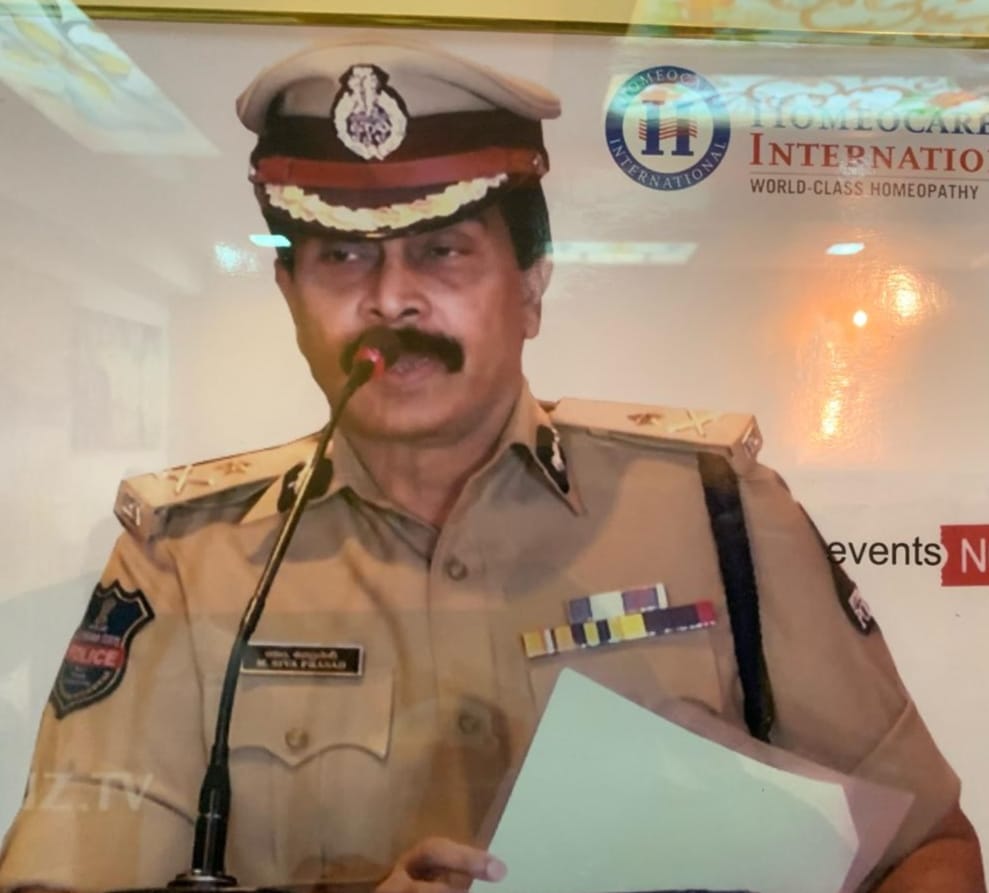
M. Shiva Prasad, IPS (Rtd.) is a dedicated law enforcement professional who served the combined Andhra Pradesh cadre before opting for the Telangana cadre. Though a native of Andhra Pradesh, he considers himself a true Hyderabadi with an abiding love for the Telugu people. Driven by sincerity, fearlessness, and a lifelong fight against inequality and injustice, his ultimate strengths remain his goodwill and deep affection for the public and the police force. Today, he continues his mission by writing snippets and articles true to his conscience.
Email: Shivareach@yahoo.com
Mobile: 98480 38774