Why 2028 Candidates Might Actually Thank the ECI for Deleting Ghost Electors
Candidates Fewer Votes to Buy, Big Savings Ahead
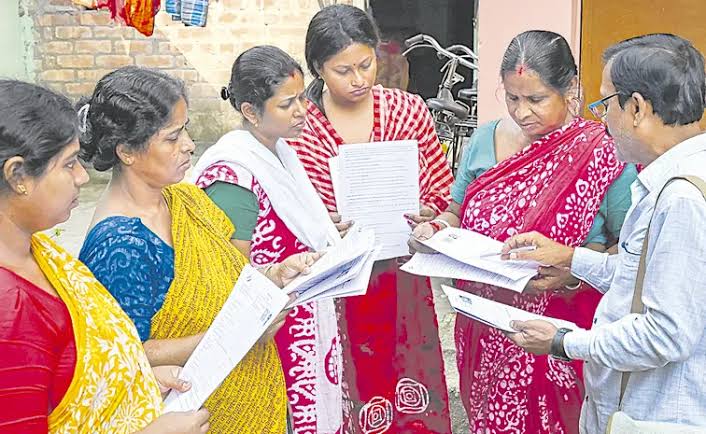
The Election Commission of India’s Special Intensive Revision (SIR) 2026—conducted through rigorous house-to-house enumeration, pre-filled forms, and verification against legacy voter data—is poised to deliver an unexpected political dividend in the 2028 Telangana Assembly elections. Beyond its administrative objective of purifying electoral rolls, the exercise is likely to drastically reduce illicit campaign spending for political candidates across the state.
The Economics of Unofficial Cash Distribution
In Telangana and Andhra Pradesh, vote-buying has become an entrenched electoral phenomenon. Major political parties frequently distribute Rs1,000 to Rs 2,000 per voter across virtually all assembly segments. This practice cuts across socio-economic lines, with wealthy households and property owners accepting cash distributions as routinely as marginalized voters. Prior to the SIR, an average Assembly constituency in Telangana contained roughly 2.5 to 3.5 lakh registered voters. Consequently, candidates typically budgeted anywhere from Rs 15 crore to Rs 25-crore solely for illegal cash distribution to voters during the final days of campaigning.
Shrinking Voter Rolls, Shorter Expense Sheets
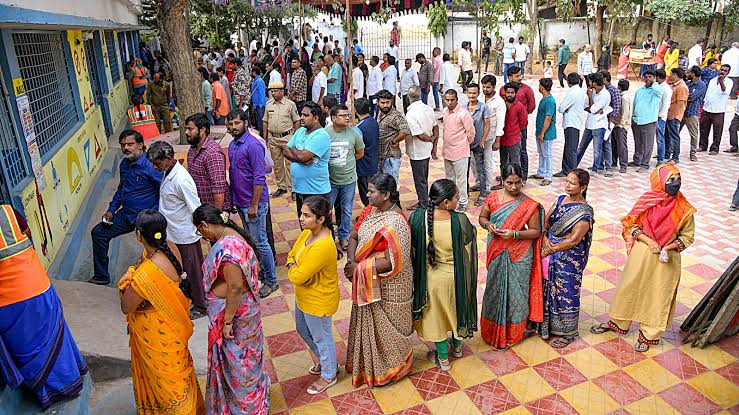
Following the conclusion of the door-to-door enumeration phase on August 10, 2026, state election authorities identified millions of “uncollectible” entries—primarily duplicate listings, untraceable voters, deceased electors, and permanently shifted citizens. With thousands of non-existent or duplicate entries purged, the actual electorate per constituency could see significant reductions. A leaner, verified voter base directly compresses candidate expenses:
Pre-SIR Target Base: ~3,000,000 to 3,500,000 electors per segment.
Post-SIR Target Base: Substantially reduced active voters per segment.
Direct Financial Impact: Estimated cash distribution budgets could plunge from Rs 20 crore down to Rs 12 crore per candidate in heavily pruned constituencies.
Big Relief to Politicians
How SIR-2026 Promises to Lower the Price Per Vote in 2028
Less Voters, Less Cash
Politicians Relief as Deleting Untraceable Voters slashes Election Cash Budgets
Why Greater Hyderabad Drives the Biggest Drop in Voter Numbers
How the Special Intensive Revision (SIR) Could Curb Campaign Expenditures for 2028 Telangana Assembly Elections
The Urban-Rural Divide and Dual-Voting Elimination
The electoral dividend will be most pronounced for candidates contesting in the Greater Hyderabad Municipal Corporation (GHMC) area and neighboring urban constituencies. Official data indicates that non-submission of enumeration forms was significantly higher in urban centers than in rural belts, with nearly 40% of urban forms unreturned by the August 10 deadline.
Election officials attribute this stark disparity to dual registration and seasonal migration:
Dual Registration: Thousands of IT professionals, government employees, and migrant workers maintained voter registrations in both urban Hyderabad and their native villages across rural Telangana or Andhra Pradesh. Confronted with the mandatory physical/online verification during the SIR, many abandoned their urban entries in favor of their native village registrations.
Tenant Mobility: High turnover among urban renters resulted in vast numbers of untraceable entries in metropolitan rolls.
The door-to-door enumeration phase for the Special Intensive Revision (SIR) of electoral rolls in Telangana officially concluded on August 10, 2026, following two ECI extensions (from July 24 and August 10).
Key Data and Digitization Progress
Electorate Coverage: Out of the state’s total 3.38 crore registered electors, 78.14% (over 2.64 crore forms) were successfully digitized by the August 10 deadline. Mass Flagging and Deletions: Chief Electoral Officer C. Sudharshan Reddy highlighted that nearly 71 lakh electors (~21% of the total electorate) have been flagged under the uncollectible category for potential deletion from the rolls.
Breakdown of Uncollectible Entries:
Permanently Shifted: ~43 lakh
Absent / Untraceable: ~10.3 lakh
Deceased Electors: ~9.1 lakh
Duplicate Entries: ~6.6 lakh
Geographical Disparities and Anomaly Patterns
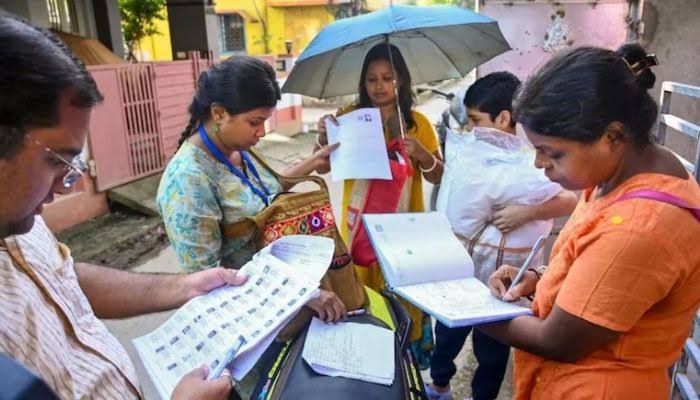
The SIR exercise highlights two distinct regional trends across Telangana:
Urban Migration Bottlenecks
The Greater Hyderabad metropolitan belt—comprising Hyderabad, Medchal-Malkajgiri, and Ranga Reddy districts—serves as the epicenter of uncollectible forms.
Together, these three districts account for 41.5 lakh uncollectible forms, representing 58.6% of the state’s total flagged entries.
Migration, tenant turnover, gated communities, and locked houses contributed to lower digitization rates in these urban centers.
High Anomaly Rates in Northern and Western Districts
While urban centers suffered from uncollected forms, northern and western districts recorded high rates of data discrepancies:
Adilabad: 28.5% anomaly rate (30.4% in Adilabad Assembly constituency)
Nizamabad, Nirmal, Medak, Kamareddy, and Sangareddy: Recorded anomaly rates between 23.8% and 27.4%.
Lower Relative Rate in Urban Belt: While 27.13% is higher than the statewide average of 20.95%, Ibrahimpatnam recorded one of the lowest uncollectable form percentages in the Greater Hyderabad / Ranga Reddy region (compared to constituencies like Sanathnagar at 45.66% and L.B. Nagar at 43.41%).
Next Steps in the SIR Roadmap
With the enumeration phase closed, the Election Commission of India (ECI) moves to the claims and verification phase.
Conclusion
By eliminating phantom entries, dual-state voters, and untraceable urban profiles, the SIR exercise effectively strips away the wasteful spending candidates previously incurred paying non-existent voters or those who ultimate voted elsewhere. As the final rolls are published in late 2026, political parties preparing for 2028 will find that while the ground fight remains intense, the financial burden of direct voter payouts may be significantly lightened.
Editor, Prime Post
Ravindra Seshu Amaravadi, is a senior journalist with 38 years of experience in Telugu, English news papers and electronic media. He worked in Udayam as a sub-editor and reporter. Later, he was associated with Andhra Pradesh Times, Gemini news, Deccan Chronicle, HMTV and The Hans India. Earlier, he was involved in the research work of All India Kisan Sabha on suicides of cotton farmers. In Deccan Chronicle, he exposed the problems of subabul and chilli farmers and malpractices that took place in various government departments.
Email: ravindraseshu7@gmail.com
Mobile: 9063718675