Jyotirlinga Map – Paper 11
Prelude: The Quiet Return
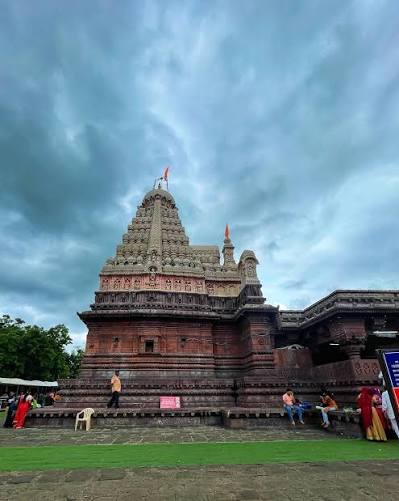
The village of Verul in Maharashtra is a famous place. Most people go there to see the Ellora caves. Those caves are grand and show what human hands can build with stone. But a short walk away is the Grishneshwar temple. It is a simple place. While the caves are about big ambitions, this temple is about the quiet corners of the human heart.
This is a vital stop on our map. It offers us a lesson in how to heal. In our earlier look at Somnath, we saw how a temple can rise again after being broken by outside forces. That was a story of public. strength. Grishneshwar is different. It is not about fighting the world. It is about staying steady when your own world feels like it is falling apart.
The site is a tribute to the power of a calm mind. It tells us that when we keep our inner balance, we find the strength to rebuild. Healing does not have to be loud. It is often a slow and private work. Grishneshwar teaches us to return to our core values. It shows us that even after a great loss, we can find our way back to being whole again.
Legends: The Strength of a mother
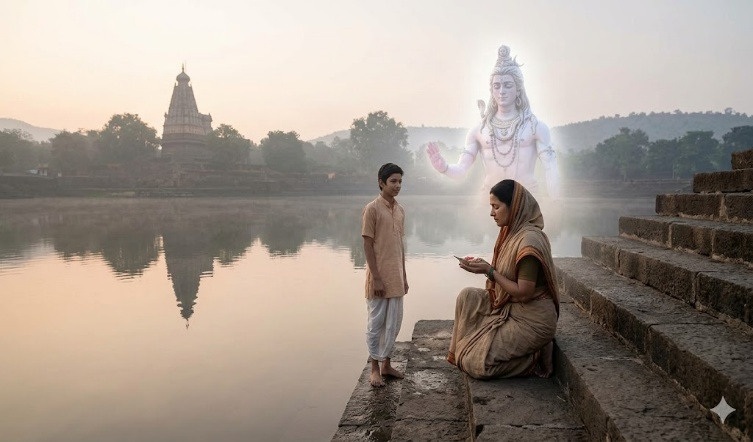
The story of Grishneshwar is the story of a woman named Ghushma. She was a simple person who lived a life of prayer and quiet work. Her life was peaceful until a great tragedy struck. Her own sister became very jealous of her. In a fit of anger, the sister took the life of Ghushma’s only son.
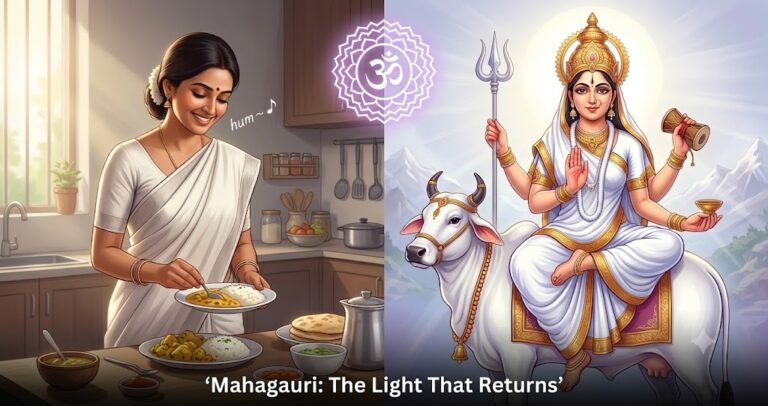
This is where the lesson begins. When Ghushma heard the news, she did not scream or give up on her life. She did not let her grief turn into bitterness. Instead, she went to the lake where she prayed every day. She continued her rituals as if nothing had changed. Her mind stayed fixed on her path.
Because she stayed so steady, the story says that Shiva was moved. He appeared before her and brought her son back to life. He then stayed at that spot to bless all seekers. This legend is not just about a miracle. It is about emotional balance. Ghushma did not let a terrible event change who she was. She kept her inner rhythm. This discipline is what allowed her world to be restored.
There is also a story about a local king. While hunting in the forest, he found a hidden lake. As he rested there, his body and mind felt a sudden sense of peace. He realized the land itself held a special power to heal. He decided to build a shrine to mark the spot. This story reminds us to stop and look for the peace that is already around us.
History and Geography: A Place of Rebuilding
The Grishneshwar temple is located in the Aurangabad district of Maharashtra. It sits very close to the Ellora caves, which are a UNESCO World Heritage site. While the caves are carved into the hills, the temple stands on the flat plains nearby. The structure we see today is built of red volcanic rock. It has a beautiful five-tier spire that catches the light of the setting sun.
The history of this temple is a story of coming back to life. Like many ancient sites, it was damaged during the various wars that swept through the region. However, the local people never forgot the sanctity of the spot. In the 16th century, Maloji Bhosale, the grandfather of Chhatrapati Shivaji Maharaj, took up the task of repairing the temple and the nearby lake.
Later, in the 18th century, Queen Ahilyabai Holkar of Indore completely rebuilt the temple. She was known for her wisdom and her work in restoring holy sites across India. Because of her efforts, the temple regained its former glory. The geography of the site is simple, but its history shows that a dedicated person can bring life back to a forgotten place.
Deeper Meaning: The Grace of Rebuilding
Grishneshwar comes toward the end of our journey, but it is not the final stop. It serves a very specific purpose on the map. Most of us have felt broken at some point. We lose a project we worked hard on, a dream we held dear, or someone we love. In those moments, it feels like our inner world has shattered.
The deeper meaning of this site is about the grace of putting those pieces back together. The name Grishneshwar is tied to compassion. This is the quiet, steady kindness we must show ourselves when we are hurting. It is the voice that tells us it is okay to feel the pain, but it is also possible to move forward.
This site teaches us that life is made of cycles. Things break, and then they are repaired. The temple itself was damaged many times, but it always rose again. This is a message for the heart. Real strength does not mean you have never been hurt. It means you had the courage to rebuild. Grishneshwar prepares us for the final steps of our journey by showing us that we are stronger than our tragedies.
Relevance to Contemporary Life: The Power of the Inner Anchor
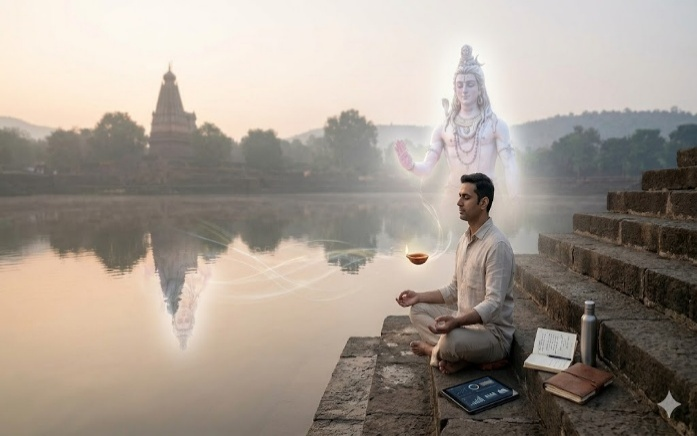
In the world today, we are often told that being strong means being loud or fast. We think that if we do not react instantly to a problem, we are being weak. But Grishneshwar teaches us something different. It shows us that true power is the ability to remain still when the world around us is in a storm.
Life does not always go as we planned. We all face moments where something we value is taken away or broken. It could be a dream that did not come true, a health setback, or a deep personal loss. Our first instinct is often to panic or to strike out in anger. However, the seeker knows that these reactions only add to the chaos.
This site reminds us of the importance of our daily rhythm. When our world feels shaky, our simple, steady habits act as an anchor. By keeping to our personal discipline, we protect our inner peace. This is not about ignoring the pain. It is about choosing not to let the pain drive the vehicle of our lives. When we stay focussed, we find that we have the clarity to rebuild, one small step at a time.
Real Life Examples: Finding the Path Back
A great historical example of this spirit is Queen Ahilyabai Holkar. She lost her husband, her father-in-law, and her son. Most people would have been consumed by such a heavy loss. Instead, she chose to rebuild. She did not just fix the Grishneshwar temple. She restored holy sites and rest houses all over India. She found her stability by serving a purpose larger than her own pain. She showed us that the best way to heal our own hearts is often to help mend the world around us.
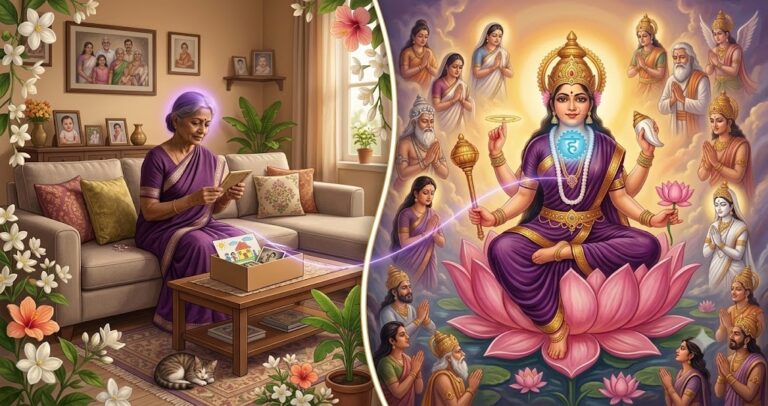
We see this same strength in modern life during a sudden health crisis. When someone receives a difficult diagnosis, their first feeling is often that their life is over. The lesson of Grishneshwar is seen in those who do not let the illness become their whole identity. They continue their simple daily walks, they keep up with their reading, and they stay connected to their loved ones. By keeping these small rhythms, they stay steady.
Another example is found in the loss of a long-term dream. Sometimes, a plan we have worked on for years simply does not happen. It feels like a door has been slammed shut. The lesson here is to avoid the bitterness that often follows. People who find peace are those who, like Ghushma, return to their lake of daily discipline. They do not waste energy on anger. They keep their minds clear and their habits strong. Eventually, they find that a new door has opened, often leading to a better path than the one they lost.
Seeker Summary: The Lesson of the Twelve
Our visit to Grishneshwar brings us to a vital realization. Strength is not always found in the grand gesture or the loud victory. More often, it is found in the quiet persistence of a heart that refuses to stay broken. We have seen that restoration is a natural part of the human cycle. By keeping our internal balance and sticking to our daily discipline, we find the path back to ourselves. We learn that no loss is final as long as we remain centred.
About the Author
R Srinivasa Murthy, the author is a corporate leader, independent writer, is a student of Hindu philosophy. He is a Demystic, dedicated to stripping away unnecessary mysticism around traditions and practices to present a practical system for the next generation. His upcoming book, “Logic of And: Sanatana Dharma as a Toolkit for the Contemporary Seeker”, bridges the gap between ancient wisdom and modern life to build an inclusive and living civilisation.

With a journalistic long journey, we bring you https://primepost.news, a dynamic platform committed to unraveling the intricate tapestry of Indian politics, particularly delving deep into the heart of Telangana and Andhra Pradesh. Our blog is not just a source of news; it’s a reservoir of insights, analysis, and thought-provoking reviews.

Excellent article Sir. The Grishneshwar Jyotirlinga beautifully highlights the power of staying focused with faith and determination. A simple, inspiring, and thought-provoking read. Looking forward to the next article in the series.
The way author explained it too simple to understand I feel it’s mind-blowing.
Thanks for Taught a lesson of inner peace keep us and move towards our life to Shiva in Divine way.
The way you are telling the truth of life is fantastic sir.
The inner life of peace is More important than anything in the world.
The Divine and spiritual context only teaches and bring us to that Eternal peace life.
I like this Spiritual context through Divine is mandatory for our life.
Plz week on week share like this spiritual context sir.we cross our Age year on year in this Eternal life.which is more important thing ???.I internally felt ,what you are telling and finding way in these spiritual context.
I have No words to say internally,what I feel while I Read this context.
Thanks sir.
A great lesson of restraint and indefatigable attitude of life force from the background stories of the Jyotirlinga. Reminds us of the story of Newton who lost his lifetime works in fire due its dog ( named Diamond?), but remained calm on what cannot be reversed. Great thought process dear author! Hearty congratulations!!
*his dog
A beautifully written article. Grishneshwar reminds us that unwavering focus and faith are the foundations of both spiritual growth and success in life. Real-life example – “Finding the path back” tells us how we can restore our strengths with focus and faith. The Seeker Summary in this article is Excellent. Thanks for sharing.