The Silent Threat Steering Modern Elections
Since Independence Day of 15 August 1947, the average patriot considered the right to vote to participate in the democratic process. They consider it a “Votlla Panduga” (a celebration to purchase new clothes, Gandhi Topi, Khaddar Dhoti, and Lalchi or curta, etc reaching the polling booth). At the same time, if they could not cast a vote in the booth, his/her co-voters consider it equal to death, -maybe called civil death. Most of the people say not voting on the day, despite the polling day as holiday, is opposed to civilization.
It is the true resilience of the world’s largest democracy. It is measured not by the sheer scale of its electorate, but by the unhindered ability to vote. It is the sacred, transparent duty of every eligible individual to exercise their franchise.
It is the duty of the Government to prepare clean voter lists; an administrative necessity; a corrupted electoral roll compromises the integrity of an election. It should not be an inflated responsibility. However, if this purification process inadvertently strips a single genuine citizen of their vote without strict adherence to due process, it represents a structural flaw. Never consider it deliberate wrong or crime.
The real test of a democracy begins long before polling day – it starts the moment the electoral roll is compiled. This list is the first clock of democracy, and keeping it accurate is the true “Bharat Gita,” the constitutional song of India’s soul, like Jana Gana Mangala.. or Vande Mataram.
Only to Cleanup! SIR Friction
The central controversy of the SIR process lies in the staggering scale of its net deletions. Prominent political economists and public policy analysts, including Dr. Parakala Prabhakar, have raised urgent concerns regarding the math underlying these revisions. Dr. Prabhakar has starkly characterized the disproportionate, large-scale purging of dissenting groups, secular voters, and minorities under the SIR as a form of “political genocide of citizenship”—a systematic shrinking of the electorate designed to fundamentally alter India’s diverse social fabric.
To evaluate these assertions, we must analyze the statistical data emerging from Phase II of the SIR cleanup alongside the demographic critiques:
| State | Estimated Eligible Adult Populationdrop of | Post-SIR Electoral Roll Count | Net Deletions / Statistical Discrepancy |
| Uttar Pradesh | ~16.1 Crore | ~12.5 Crore | ~2.04 Crore absolute deletions (~10.2% roll reduction) |
| Bihar | ~8.22 Crore | ~7.42 Crore | ~47 Lakh to 80 Lakh records removed |
From a demographic standpoint, critics argue that in a naturally growing population, the absolute number of adults crossing the threshold of 18 should lead to expanding voter lists. When numbers contract by millions, it signals a massive institutional correction.
Two serious doubts
While administrative bodies attribute these drop-offs to cleansing millions of historical “ghost entries,” duplicate voter IDs, and unmapped migrant shifts accumulated over decades, analysts warn that the deficit points to structural exclusion. In a balanced electoral ecosystem, a 1:1 correlation between eligible adults and registered voters is the ideal baseline; any massive, unaccounted-for deficit indicates that the machinery of registration is lagging behind the population it is meant to represent.
| THE PRINCIPLE OF NATURAL JUSTICE IN S.I.R. [BLO House Visit]──>[Pre-Filled Form Check]──>[If Deletion Proposed]│ [Open Public Review]<──[Statutory Notice Given<──[Written Reason Provided] |
Our PREAMBLE with pride claims that “We are the people of India…” But now the point is: We are the doubtful CITIZENS of India! It is not this author’s comment or criticism.
How do you decide ‘citizenship’?
Section 20 of the Passports Act, 1967, allows the government to issue an Indian passport to someone who is not an Indian citizen – if it is “of the opinion that it is necessary so to do in the public interest”. Hence, we are told, possession of an Indian passport cannot be proof of citizenship.
Various media say this section’s exceptional savings clause – designed, presumably, to help India’s foreign intelligence assets or allies get out of a spot of bother. And this is why an Indian passport cannot be proof of citizenship for the 99.9999% of Indian passport holders who are actually Indian?! Never mind that the government maintains a closely guarded list of the handful of non-Indians who have been granted Indian passports. Even if their total number since 1967 has crossed, say, three digits, the number still valid is likely to be even smaller. A simple search in the MHA’s secure database would allow any query over citizenship to be instantly resolved.
Passport is not enough!
Some prominent daily reported the case on September 3, 2013, with the headline, ‘Passport alone no proof of citizenship: Bombay HC’. This decision by Justice K U Chandiwal is not available online. We need to notice that
- the story does not actually quote the judge saying what the headline does, and
- even if the judge explicitly said in his (unavailable) judgment what the headline says, the passports in question were actually not valid since they had already been ‘terminated’ – presumably because the government realised they had been fraudulently obtained:
“The Bombay High Court has refused to grant relief to a man and three others charged with being illegal immigrants even after they produced passports (later terminated), Aadhaar cards and birth certificates to prove they were Indians.” (Emphasis added). In other words, the question of whether a valid passport constitutes proof of citizenship has not quite been definitively settled in the courts.
Clean-up and Transparency
The core problem is often less about the necessity of the cleanup and more about its execution. While the Election Commission outlines a clear role for Booth Level Officers (BLOs) to conduct physical, door-to-door verification and encourages political parties to appoint Booth Level Agents (BLAs) for localized oversight, fears of automated or centralized digital deletions persist.
The challenge before India, therefore, is profound. The Republic must preserve both the purity of the electoral rolls and the universality of adult franchise. Democracy loses its moral authority if governments begin to determine who may participate in elections rather than allowing the people, without fear or discrimination, to choose their governments. Protecting both electoral integrity and the citizens’ right to vote is the true constitutional test of Indian democracy.
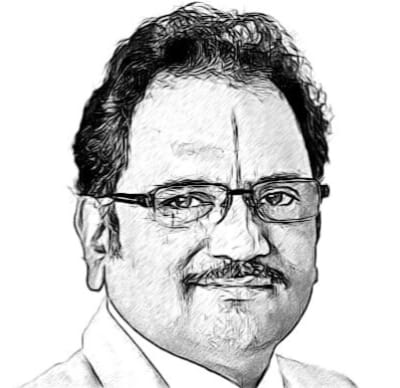
Law professor and eminent columnist
Madabhushi Sridhar Acharyulu, author of 63 books (in Telugu and English), Formerly Central Information Commissioner, Professor of NALSAR University, Bennett University (near Delhi), presently Professor and Advisor, Mahindra University, Hyderabad. Studied in Masoom Ali High School, AVV Junior College, CKM College, and Kakatiya University in Warangal. Madabhushi did LL.M., MCJ., and the highest law degree, LL.D. He won 4 Gold Medals at Kakatiya University and Osmania University.
Email: cicsridhar@gmail.com
Mobile: 8447651505