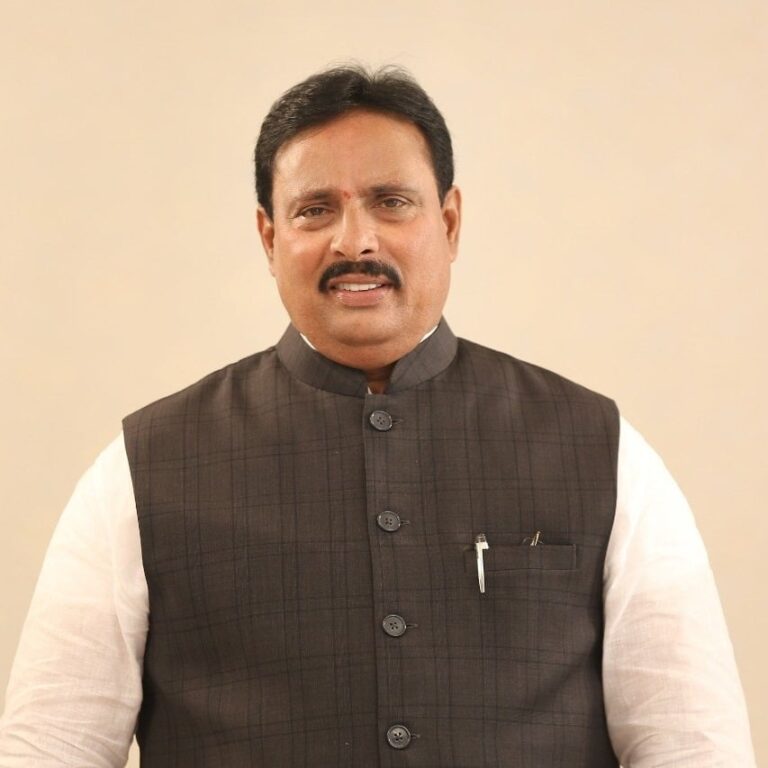
The Evidence Was Conclusive
Doesn’t the Speaker or the Leader of the House Know that Danam is Disqualified as an MLA? The Speaker of Telangana should have been convinced that the facts speak for themselves:
- Danam Nagender contested and won on a BRS ticket in the 2023 Assembly elections,
- Subsequently filed his nomination on April 23, 2024, as the Congress candidate for the Secunderabad parliamentary constituency.
- Danam himself does not deny this.
- These facts are explicitly affirmed in the counter-affidavits filed by the respondents themselves;
- They require no separate discovery or evidentiary trial.
The Telangana High Court noted that in Form-26 filed for the Lok Sabha election on April 23, 2024, Danam Nagender explicitly named the Indian National Congress as his party, and in Form-7A, his name appeared alongside the Congress party and its official ‘Hand’ election symbol.
Form-26 from the 2023 Assembly election, the official Gazette notification of elected members, Form-26 submitted on April 23, 2024, for the Lok Sabha election, the final list of contesting candidates for Secunderabad, and the official Congress ‘B-Form’ allotted to him are all irrefutable documents establishing political defection.
It took a 91-page judicial pronouncement to reiterate what was already common public knowledge.
Padi Kaushik Reddy’s petition had also highlighted Danam Nagender publicly donning the Congress scarf on March 15, 2024, alongside extensive media and social media coverage. In truth, even those corroborating details were superfluous—the official nomination papers alone had already settled the question.
Danam is not an MLA
Now, it is upheld that Danam is not an MLA; the next question is: Whether he belonged to BRS or Congress? The first is answered, and no one can know the second. Doesn’t the Speaker or the Leader of the House (the Chief Minister) know that Danam Nagender is disqualified as an MLA? Is it just him, or aren’t all ten defected legislators equally disqualified? Every single syllable, sentence, drafted affidavit, sworn declaration, legislative phrase, and affidavit drafted and filed through the Assembly Secretary, is it wrong to call every one of them a blatant lie? Do not assume that falsehoods are not uttered inside the Assembly. One can hardly expect an official minister to speak the truth; that is what goes by the name of politics. Whether one regards them as sacred, calls them political paragons of virtue, labels them patriotic degenerates, or mocks them as legislative stalwarts, we are left with no choice but to listen and to write about it. Our journalists sit tight-lipped in press conferences, take down these lies, and dutifully publish them in newspapers.
Article 191(2): Nagender disqualified from the office of MLA
The judgment declared Danam Nagender disqualified from the office of MLA under Article 191(2) read with Paragraph 2(1)(a) of the Tenth Schedule of the Constitution, effective retrospectively from April 23, 2024, the very date he filed his nomination as an Indian National Congress candidate for the Lok Sabha elections. This is an open constitutional reality that ought to have been declared the very next day after the petition was filed, not some state secret. It is a raw, bleeding fact. There is no need to repeatedly brandish the text of the Constitution before everyone’s eyes. The august office of the Speaker (regardless of the party in power) is endowed with the powers of a judge. Yet, when they knowingly perpetuate falsehoods, it is treated neither as a crime, nor as a constitutional offense, nor as an offense under the penal code.
This is not about specific names; whoever occupies that august Speaker’s chair from any party commits this wrong, and no one stands to hold them accountable in the dock of truth.
Another lie: Appealing to the Supreme Court?
Right after the verdict was delivered on September 18, 2026, Danam Nagender himself claimed that he would not appeal to the Supreme Court. But he took U-turn. Whether that holds true remains to be seen. However, right before the Telangana High Court bench, his counsel intervened to state that they would challenge the ruling in the Supreme Court and prayed for the operation of the judgment to be suspended until then.
Responding to this, the senior counsel appearing for Padi Kaushik Reddy reminded the court that the disqualified Danam Nagender had already enjoyed the fruits of his office unlawfully for two and a half years. It is not Danam alone; nearly every word spoken in these situations stands in direct contradiction to the constitutional spirit. On one hand, his lawyer requests a suspension of the disqualification order to file an appeal before the Supreme Court; on the other, Danam publicly claims he will not move the Supreme Court. This is not an isolated instance. Every defected, high-and-mighty MLA speaks in this exact vein. Everyone knows this reality. The Speaker knows it. The Chief Minister knows it.
This public lie cannot be masked as a secret. Yet they stall and wait until the Supreme Court speaks, fully aware of what the eventual outcome will be. Even the common citizen knows this. The MLAs and political leaders who deliberately utter falsehoods know it; lawyers even advise them that stretching the truth is par for the course. Every defecting MLA poses as an embodiment of truth while persistently dealing in deception. Pointing this out plainly may sound harsh, yet ignoring it undermines public decency.
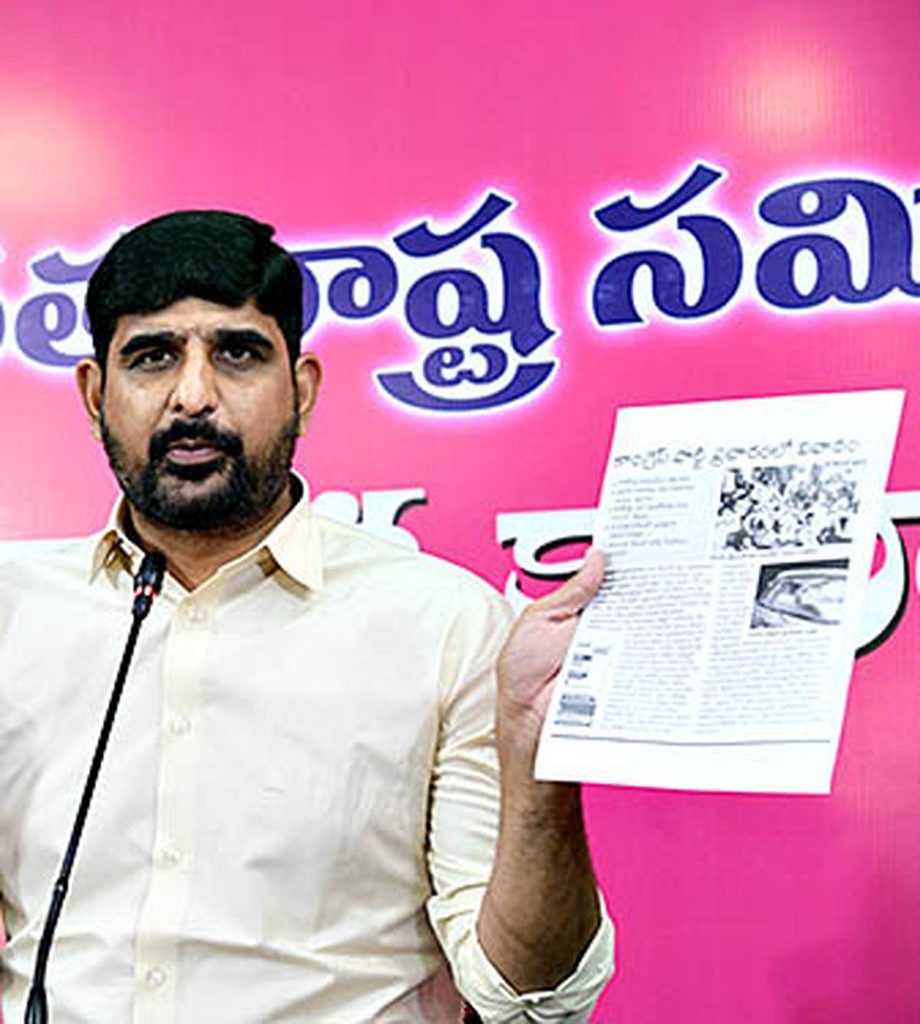
Do they know “Satyameva Jayate (Truth Alone Triumphs)”
Accepting the argument that such a defected legislator is neither eligible nor entitled to continue in office for even a single day, the Division Bench declared that the judgment comes into immediate effect. The court directed the Registry to dispatch copies of the order to the Election Commission of India and the Secretary of the Legislative Assembly. This is justice, constitutional adjudication, and public duty, even if it runs counter to petty political expediency. Whether the national motto Satyameva Jayate (Truth Alone Triumphs) is inscribed on the walls of Parliament, assemblies, and courts or not, it is falsehood that seems to triumph in practice.
The Bench of the Telangana High Court firmly held that Danam Nagender, having been elected as a BRS MLA in the 2023 Assembly elections, had voluntarily given up his membership of the BRS by contesting the 2024 Lok Sabha elections from the Secunderabad parliamentary constituency as an INC candidate while continuing as an MLA. No further proof is required. Did the Speaker truly fail to recognize this basic fact?
The court made it explicit that the Khairatabad Assembly constituency stands vacant. While that consequence is obvious, stating it explicitly became necessary to forestall further excuses before an appeal to the Supreme Court. The High Court quashed the orders issued by the Speaker on March 11 of this year, which had dismissed the disqualification petitions. That means for over six months, he continued unlawfully as an MLA. Right from the moment of defection, public salaries, allowances, protocols, and prestige were illegitimately enjoyed—a reign of political deceit consuming half an elected term.
One wonders how deeply distressing it must have been for legal scholars, constitutional law professors, and especially the High Court Division Bench comprising Chief Justice Aparesh Kumar Singh and Justice G. M. Mohiuddin to adjudicate such an open-and-shut violation. They were compelled to deliver a comprehensive, 91-page constitutional exposition to state what should have been self-evident.
Anyone who has read the Constitution with even minimal comprehension can see through this gross injustice. What follows instead is an endless series of adjournments—the perpetual curse of pendency. The blame does not rest solely on the judicial process; every Speaker who knowingly turns a blind eye, the advocates who facilitate it, and every beneficiary who profits from organized falsehood share an equal measure of guilt.
BRS MLA Padi Kaushik Reddy filed a disqualification petition before the Speaker on March 18, 2024, and BJP Legislative Party leader Aleti Maheshwar Reddy filed another on July 1, 2024, invoking the anti-defection law. Challenging the Speaker’s rejection of these petitions, both approached the High Court separately. After hearing arguments from both sides, the Bench reserved judgment on August 21. Prolonged delays remain inevitable, allowing defectors to run out the legislative clock. Thus, even when acting as a tribunal, the Speaker effectively enables the five-year term to be consumed under the guise of due process.
Why Didn’t the BRS Take Disciplinary Action Against These MLAs?
The Speaker of Telangana understood that he acted with ‘due process’! It is a wonder that, while examining the disqualification petitions, he dismissed them on March 11 of this year, citing “due process.” The Speaker took the view that under the Tenth Schedule, his jurisdiction is confined strictly to conduct and official business within the four walls of the Legislative Assembly, and that political activities conducted outside the House cannot form the basis for disqualification, arguing that this remains the exclusive preserve of the legislative branch unless reviewed by the judiciary.
The Speaker further observed that merely contesting on a Congress ticket in the 2024 Lok Sabha elections was insufficient to prove that Danam Nagender had voluntarily given up his BRS membership, pointing out that he had not tendered a formal resignation, that there was no official documentation evidencing his formal enrollment in the Congress party, and that the BRS itself had not initiated disciplinary proceedings against him. This failure by the political party is an important lesson in organizational negligence. Consequently, the courts had to step in to redress actions committed outside the floor of the House.
All These Were Actions Outside the House
This is precisely why the grounds cited by the Speaker could not withstand judicial scrutiny. The High Court clarified that when determining disqualification under the Tenth Schedule, one need not limit the inquiry solely to a member’s voting pattern or conduct inside the Assembly. Reading mere headlines gives the impression that the law is narrow, but a deeper look exposes how deeply flawed that view is.
The High Court treated Danam Nagender contesting the Secunderabad Lok Sabha election as a Congress candidate after having been elected on a BRS ticket as a decisive “external act.” Did the Speaker lack this basic legal understanding? Filing a nomination on behalf of the Congress party and actively campaigning as its official candidate while holding a BRS legislative seat provides more than sufficient basis to conclude that he had voluntarily relinquished his political allegiance to his original party.
Judgments Abound, but Who Will Enforce Them?
This is hardly novel jurisprudence. Both the High Court and the Supreme Court have reiterated this principle time and again. In Dr. Mahachandra Prasad Singh v. Chairman, Bihar Legislative Council, a Supreme Court bench held that conduct outside the legislative house can firmly ground disqualification under the Tenth Schedule. The apex court had laid down the same principle in earlier rulings including Ravi S. Naik, R. Bhoopathi Reddy, Konda Muralidhar Rao, and Rajendra Singh Rana. Do authorities not read these precedents, or do they deliberately ignore them when issuing orders? Is it not an undisputed fact that Danam Nagender contested the Lok Sabha elections on a Congress ticket? The Division Bench reiterated that disqualification squarely operates under Paragraph 2(1)(a) of the Tenth Schedule.
Even if the Speaker Errs, the Courts Will Intervene
A Speaker acting as a tribunal cannot write orders arbitrarily. The Speaker must adjudicate with the neutrality of a judge, not at the behest of a political party or executive leadership. The Division Bench highlighted that when examining the scope of the anti-defection law, the Speaker’s powers, the boundaries of judicial review, the evidentiary standard, and the effective date of disqualification, the High Court has complete authority to intervene under Article 226 on four established grounds:
- Violation of constitutional mandates,
- Malafides,
- Breach of the principles of natural justice, and
- Perversity or patent illegality.
This too is established law. When exercising jurisdiction under the Tenth Schedule, the Speaker functions as a statutory tribunal, and tribunal orders are subject to judicial review. The High Court held that the Speaker’s reliance on the absence of formal BRS disciplinary action, Danam’s continued presence on party rosters, or compliance with legislative whips amounted to a legally untenable basis that directly contradicted constitutional principles.
Disqualification under Paragraph 2(1)(b) involves voting contrary to a party whip or abstaining from voting, where a party has the statutory discretion to condone the defiance within a stipulated period. However, under Paragraph 2(1)(a), which deals with voluntarily giving up membership, that condonation mechanism does not apply. The mere fact that Danam Nagender remained on BRS membership rolls or that the party refrained from formal disciplinary action cannot wipe out the disqualifying act that occurred on April 23, 2024.
The Speaker had also raised a technical objection, asserting that the disqualification petitions failed because each annexure had not been verified in strict compliance with the Code of Civil Procedure (CPC). The High Court struck down this reasoning, ruling that technical procedural defects cannot be used to defeat substantive constitutional intent.
Ravi S. Naik and Dr. Mahachandra Prasad Singh
A re-reading of Ravi S. Naik and Dr. Mahachandra Prasad Singh makes it abundantly clear that the 1986 Disqualification Rules are merely directory and procedural. Interpreting them as rigid, mandatory conditions would defeat the very purpose of the Tenth Schedule. A defect in form cannot be invoked to shield an illegitimate tenure. The High Court reaffirmed that rejecting a disqualification petition on the basis of procedural verification defects under Rules 6(6) and 6(7) is legally unsustainable.
Nearly three years of the Assembly’s five-year term have already elapsed while this dispute dragged on. Even after the Supreme Court directed on July 31, 2025, that a decision be rendered within three months, eight months slipped away before the Speaker finally issued orders on March 11, 2026. Who bears responsibility for this deliberate delay? Remanding the matter back to the Speaker would only invite further procrastination until the entire legislative term expires. Consequently, the High Court set aside the Speaker’s orders of March 11, 2026, in their entirety.
Relying on SC precedents in Subhash Desai and Shrimanth Balasaheb Patil,
Does any modern politician give up an MLA seat voluntarily without judicial compulsion? The High Court ruled that the date Danam Nagender filed his nomination as the Congress candidate for Secunderabad—April 23, 2024—must be treated as the day he voluntarily surrendered his BRS membership. Relying on Supreme Court precedents in Subhash Desai and Shrimanth Balasaheb Patil, the Bench held that disqualification takes effect from the very date the disqualifying act occurred.
Accordingly, Danam Nagender stood disqualified as a member of the Telangana Legislative Assembly from April 23, 2024, and the Khairatabad seat fell vacant from that very moment. Since his disqualification took effect retroactively from the date of his nomination on the Congress ‘B-Form’, constitutional steps must follow regarding the decisions taken and the public office held over the past year and a half. Every single rupee paid out as salary and allowances during this unlawful tenure ought to be recovered and refunded to the public exchequer. Petitions must be filed seeking precisely such restitution and penalties. Even if the Speaker who authored these orders, the Chief Minister behind them, or the PCC President were to resign, the political stain of this constitutional betrayal would not be washed away.
Similar disqualification petitions were filed before the High Court by BRS MLAs Kalvakuntla Sanjay, K. P. Vivekananda, Palla Rajeshwar Reddy, Chinta Prabhakar, Padi Kaushik Reddy, and G. Jagadish Reddy against defected MLAs T. Prakash Goud, Arekapudi Gandhi, Tellam Venkat Rao, Bandla Krishna Mohan Reddy, Kale Yadaiah, Pocharam Srinivas Reddy, Kadiyam Srihari, and M. Sanjay Kumar. Defectors follow the same familiar pattern. The Division Bench comprising Chief Justice Aparesh Kumar Singh and Justice G. M. Mohiuddin has already adjourned the hearings on these petitions challenging the Speaker’s dismissals to October 6. Will this systemic abuse be rectified in the interim?

Law professor and eminent columnist
Madabhushi Sridhar Acharyulu, author of 63 books (in Telugu and English), Formerly Central Information Commissioner, Professor of NALSAR University, Bennett University (near Delhi), presently Professor and Advisor, Mahindra University, Hyderabad. Studied in Masoom Ali High School, AVV Junior College, CKM College, and Kakatiya University in Warangal. Madabhushi did LL.M., MCJ., and the highest law degree, LL.D. He won 4 Gold Medals at Kakatiya University and Osmania University.
Email: cicsridhar@gmail.com
Mobile: 8447651505