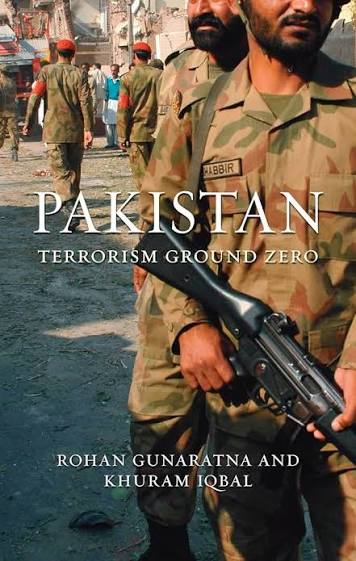
Pakistan’s Political–Terrorist Nexus and the Globalisation of Terror
The reported declaration by Pakistan’s former Interior Minister Sheikh Rasheed Ahmed — “I am Hafiz Saeed’s slave” — is not merely an outrageous political utterance, nor should it be dismissed as the theatrical rhetoric of a politician seeking relevance. If accurately reported, it is a sentence of extraordinary political significance because of what it symbolises: the unsettling proximity between political authority, militant Islamism, cross-border terrorism and the strategic establishment of a nuclear-armed Pakistan.
The speaker was not an anonymous street agitator. Sheikh Rasheed served as Pakistan’s Interior Minister from 2020 to 2022. The man to whom he is reported to have professed such allegiance, Hafiz Muhammad Saeed, is not an ordinary religious preacher or political activist. He is the co-founder and chief figure of Lashkar-e-Taiba, a Pakistan-based terrorist organisation designated by the United Nations Security Council. The United Nations has sanctioned Saeed for his association with Lashkar-e-Taiba and al-Qaeda. India’s National Investigation Agency has, in July 2026, named him in a supplementary chargesheet concerning the Pahalgam terrorist attack and a special NIA court has issued a non-bailable warrant against him.
The words therefore acquire a meaning considerably larger than the man who uttered them.
When a former Interior Minister of a nuclear-armed state publicly places himself in a posture of servitude before a United Nations-sanctioned terrorist figure, the question is no longer merely about one politician. It is about the political culture in which such a declaration can be made.
The fundamental question is stark:
Where does the Pakistani political establishment end and the militant establishment begin?
The Architecture Behind the Outrage
Pakistan’s relationship with terrorism cannot be reduced to the conventional formula of a state fighting terrorists.
Its history is more complicated—and considerably more disturbing.
For decades, militant organisations have existed within a strategic environment in which some were treated as enemies of the state while others were regarded, at different periods and for different purposes, as instruments of strategic policy. The doctrine of the “useful militant” was based upon a seductive but ultimately catastrophic proposition: that armed extremism could be cultivated, compartmentalised and directed against an external adversary without eventually turning upon the state itself.
History has repeatedly demonstrated the fallacy.
A militant organisation once endowed with ideology, weapons, training, money, recruitment networks and social legitimacy does not remain a permanently obedient instrument. It acquires its own interests, its own constituencies, its own political ambitions and its own transnational connections.
The proxy develops a life of its own.
And eventually the distinction between the militant who serves the state and the militant who threatens the state becomes perilously blurred.
This is the heart of Pakistan’s predicament.
The problem is not merely terrorism operating against the State.
It is the possibility of terrorism becoming embedded within the strategic ecosystem of the State.
When the Pulpit Becomes a Political Arsenal
The issue must be approached without either prejudice or euphemism.
The problem is not Islam as a faith. Nor is it Muslims as a people.
The problem is the political instrumentalisation of religion.
A great faith followed by hundreds of millions of people across continents cannot be equated with organisations that invoke religious vocabulary to legitimise violence. Such an equation would be both intellectually dishonest and historically unjust.
The danger emerges when religious identity is converted into political absolutism; political absolutism into militant legitimacy; and militant legitimacy into violence.
When the pulpit becomes a recruiting ground, when martyrdom is transformed into political currency, when dissent becomes apostasy and when violence is sanctified as religious duty, faith is no longer merely a matter of spiritual conviction.
It has been converted into an instrument of political power.
The real enemy, therefore, is not religion.
It is religion weaponised for political domination.
Cross-Border Terrorism: War by Other Means
For India, this distinction has a direct and painful relevance.
Cross-border terrorism is not simply a sequence of isolated attacks. It is a form of asymmetric warfare.
A state or strategic establishment that cannot prevail through conventional military superiority may attempt to impose upon its adversary a disproportionate burden through proxies.
The objective is not confined to killing.
It is to exhaust the adversary economically; maintain permanent insecurity; disturb communal harmony; radicalise vulnerable sections; internationalise a territorial dispute; provoke disproportionate reactions; and compel the target state to devote enormous resources to internal security.
Terrorism becomes, in such circumstances, an instrument of strategic attrition.
The 2008 Mumbai attacks remain one of the clearest examples of the consequences of this architecture. Lashkar-e-Taiba has been internationally designated as a terrorist organisation, and the United Nations records its involvement in major terrorist attacks, including the Mumbai attacks. (Wikipedia)
India has consequently faced not merely individual terrorists but an interconnected architecture comprising ideology, recruitment, training, finance, infiltration, propaganda, logistics and political denial.
That architecture is the real enemy.
The Hafiz Saeed Phenomenon
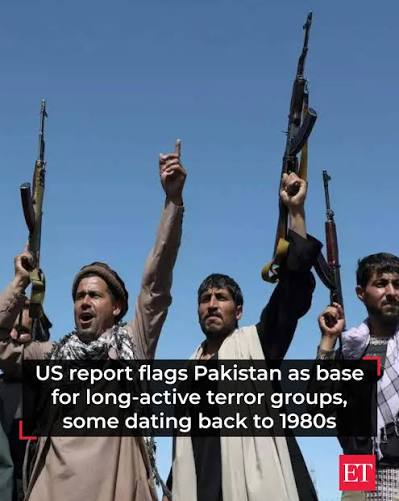
Hafiz Saeed represents something larger than an individual terrorist leader.
He represents the transformation of militancy into an institutional ecosystem.
Lashkar-e-Taiba developed not merely as an armed organisation but within a wider network of religious mobilisation, charitable activity, social influence and political messaging. The use of alternate institutional identities and ostensibly social organisations created precisely the kind of ambiguity through which militant ecosystems can survive political pressure.
The phenomenon is therefore more sophisticated than the image of a terrorist hiding in a remote camp.
Modern terrorism can wear respectable clothes.
It can establish charitable fronts.
It can speak the language of religion.
It can participate in political mobilisation.
It can cultivate public constituencies.
And when political figures themselves begin to seek legitimacy from such personalities, the boundary between terrorism and politics becomes dangerously porous.
That is why the reported words “I am Hafiz Saeed’s slave” deserve to be examined not as political theatre but as a symptom.
The Nuclear Paradox
Pakistan’s most alarming contradiction lies in its possession of nuclear weapons.
There is no responsible basis for asserting that Pakistan’s nuclear arsenal is controlled by terrorists. Such a claim would be reckless.
The danger is subtler.
Nuclear deterrence depends upon institutional stability, disciplined command structures, rational decision-making and responsible political leadership.
Terrorism thrives upon precisely the opposite impulses: ideological absolutism, calculated irrationality, martyrdom, coercion and the deliberate destruction of conventional restraints.
A nuclear state therefore has an extraordinary obligation to maintain political and institutional discipline.
Nuclear weapons should make a state more responsible.
They must never make it more audacious.
The danger is not simply that terrorists might obtain nuclear weapons. It is that the existence of nuclear weapons may create a perception within political or military circles that the state possesses a strategic shield behind which unconventional adventurism can be pursued without unbearable consequences.
That is the real nuclear paradox.
Nuclear deterrence must never degenerate into nuclear audacity.
The Pakistan–Military–Militant Triangle
Pakistan’s civil–military imbalance has historically complicated the question further.
For much of its existence, the military establishment has exercised an influence over national security and foreign policy far exceeding that normally associated with a democratic military institution.
The Kashmir question, relations with Afghanistan, India policy and the management of militant organisations have consequently been shaped within a strategic culture in which the military establishment has often possessed decisive influence.
The danger arises when military strategy, religious ideology and militant proxies intersect.
A state may then find itself pursuing objectives through instruments whose ideological commitments ultimately exceed the calculations of their presumed patrons.
That is how strategic assets become strategic liabilities.
America’s Historical Contradiction
The United States cannot examine this history without confronting its own complicated legacy.
During the Cold War, Pakistan was an important American partner, particularly during the Afghan struggle against the Soviet Union. Militant networks were frequently viewed through the narrow prism of geopolitical necessity.
The immediate objective was understandable.
The long-term consequences were not.
The history of modern terrorism contains a recurring warning:
The strategic instrument of one generation can become the strategic threat of the next.
The United States later became one of the principal powers confronting jihadist terrorism and formally designated Lashkar-e-Taiba as a terrorist organisation.
The lesson should have been permanent.
There is no such thing as a permanently “useful terrorist”.
Once terrorism is legitimised as an instrument of statecraft, its ideological consequences cannot be confined to the battlefield for which it was originally cultivated.
Strategic expediency eventually returns as strategic liability.
China and the Geopolitics of Protection
China adds another dimension to the equation.
The China–Pakistan relationship is rooted in substantial strategic interests: the China–Pakistan Economic Corridor, access towards the Arabian Sea, regional influence, competition with India, security concerns relating to Xinjiang and China’s broader geopolitical ambitions across South and Central Asia.
It would be intellectually lazy to reduce this relationship to a simplistic “China–Pakistan terror conspiracy”.
The deeper issue is diplomatic protection.
On several occasions, China’s position at the United Nations has complicated efforts to designate Pakistan-based militant figures. Such interventions expose the tension between geopolitical partnership and universal counter-terrorism norms.
A major power cannot simultaneously proclaim that terrorism is an existential international threat and then permit strategic calculations to obstruct accountability whenever an organisation or individual is connected to a useful partner.
When geopolitical rivalry takes precedence over counter-terrorism, international institutions become weaker.
And terrorists learn an important lesson:
Great-power rivalry can provide diplomatic oxygen to extremism.
The International Community’s Selective Morality
The international community has perfected the vocabulary of counter-terrorism.
It has not always perfected the practice.
Terrorism is condemned in international declarations, yet terrorist ecosystems frequently survive through political ambiguity, financial networks, ideological patronage and diplomatic protection.
One terrorist organisation is sanctioned.
Another is described as a militant movement.
A terrorist leader is designated by one government but treated as a political interlocutor elsewhere.
The result is a dangerous moral inconsistency.
The world needs to move beyond the narrow vocabulary of counter-terrorism towards counter-terrorism accountability.
The question should not merely be:
Who carried out the attack?
It should also be:
Who financed him?
Who trained him?
Who sheltered him?
Who radicalised him?
Who provided political legitimacy?
Who protected the organisation diplomatically?
And, above all:
Who benefited strategically from the violence?
The Wider Islamic World and the Tragedy of Extremism
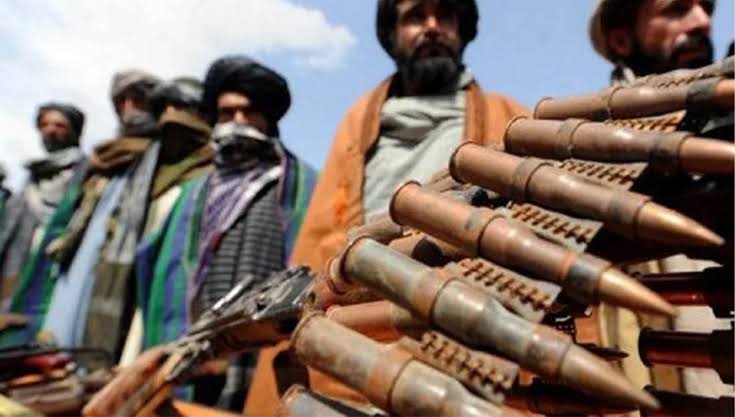
The consequences of militant religious politics have not been confined to India, Europe or America.
They have devastated societies across the wider Islamic world itself.
Muslims have been among the principal victims of jihadist terrorism. Schools, mosques, markets, shrines, government institutions and ordinary families have repeatedly suffered violence perpetrated in the name of religion.
This is why the struggle against religious extremism must never be framed as a civilisational war between Islam and the West.
That would be a gift to extremists.
It would allow them to present themselves as defenders of a civilisation under siege.
The real contest is between faith and its political appropriation; between citizenship and ideological absolutism; between pluralism and coercive uniformity; between spiritual belief and political violence.
The wider Islamic world therefore has not merely a moral responsibility but a civilisational interest in confronting the political exploitation of religion.
The West Asian Spillover
The implications extend into West Asia.
The contemporary geopolitical order no longer permits the neat separation of South Asia, Central Asia, the Gulf and West Asia.
Energy routes, maritime security, religious movements, migration, arms networks, strategic partnerships and ideological currents connect these regions in ways that did not exist with equal intensity in earlier decades.
Pakistan sits at a crucial geographical intersection.
Its proximity to Afghanistan, the Arabian Sea and the wider Islamic world gives developments within its security environment consequences far beyond its own borders.
The danger is therefore not simply that Pakistan may export terrorism to India.
The larger danger is that militant ecosystems can become part of a transnational strategic network stretching across South Asia, Central Asia and West Asia.
Terrorism does not respect geography.
It travels through people, money, ideology, technology and cyberspace.
Pakistan: Victim and Enabler
To describe Pakistan simply as a “terrorist country” is politically emphatic but analytically imprecise.
Pakistan itself has suffered grievously from terrorism.
Its civilians, soldiers, police officers, political leaders and religious communities have paid a terrible price.
The Pakistani people cannot collectively be identified with militant organisations.
Yet another historical reality cannot be evaded.
Pakistan has, at various stages, been accused of providing sanctuary, tolerance, political space or strategic utility to militant organisations. The country has simultaneously fought some extremist organisations while tolerating or exploiting others.
This contradiction is perhaps the most tragic feature of its modern history.
Pakistan has been both a victim of terrorism and a country whose strategic environment has enabled terrorism.
The two propositions are not mutually exclusive.
They are the essence of the problem.
Strategic Ambiguity and Its Price
A state cannot indefinitely cultivate ambiguity without eventually becoming imprisoned by it.
If a militant is a terrorist when he attacks the state but a strategic asset when he attacks the state’s adversary, the distinction between national security and terrorism collapses.
If an extremist is condemned in Washington but celebrated on a political platform in Islamabad or Lahore, international counter-terrorism becomes an exercise in selective morality.
If a nuclear power believes that its strategic arsenal can deter international consequences for militant adventurism, nuclear deterrence itself becomes vulnerable to misuse as a shield for strategic recklessness.
And if major powers continue to protect strategically useful partners from sustained scrutiny, terrorism will inevitably learn to exploit geopolitical competition.
The New Alliances of Terror
The terrorist organisation of the twenty-first century is no longer necessarily a hierarchical structure with one visible command centre.
It is increasingly a network.
It may consist of ideological franchises, encrypted communications, clandestine finance, charitable fronts, online radicalisation, transnational propaganda, criminal networks, sleeper cells and lone actors.
Its greatest weapon may not always be the bomb or the rifle.
It may be legitimacy.
The moment an extremist organisation succeeds in acquiring respectable political intermediaries, charitable institutions, public platforms or electoral rhetoric, the struggle moves from counter-terrorism to the prevention of the normalisation of terror.
Terrorism does not always seek to capture the State by force.
Sometimes it seeks first to capture the imagination of society.
India’s Strategic Imperative
For India, the lesson is unequivocal.
There can be neither complacency nor uncontrolled emotional reaction.
The response to cross-border terrorism must combine intelligence, technological surveillance, border management, financial disruption, diplomatic isolation, international legal cooperation and sustained counter-terrorism capability.
But India must also preserve the distinction between the Pakistani people and the institutions or organisations responsible for terrorism.
India’s target must be the architecture of terror, not an entire nationality or faith.
That distinction is not weakness.
It is strategic maturity.
India must also recognise that the battlefield has changed.
Future terrorism may combine drones, artificial intelligence, encrypted communications, cyber operations, digital finance, social-media radicalisation, sleeper networks and conventional infiltration.
The frontier is no longer merely territorial.
It is digital, financial, ideological and psychological.
The Global Consequence
The Pakistani terrorist nexus cannot therefore be treated merely as an India–Pakistan dispute.
Its ramifications extend into Afghanistan, Central Asia, the Gulf, West Asia and the Indian Ocean.
The world has already witnessed what happens when militant organisations are permitted to acquire sanctuary, money, ideological legitimacy and political protection.
The international community cannot afford to rediscover the same lesson after every terrorist atrocity.
Terrorism must be confronted across its entire chain:
ideology, recruitment, financing, training, logistics, propaganda, political patronage and diplomatic protection.
Destroying only the gunman while leaving the ecosystem intact merely postpones the next attack.
The Final Reckoning
The reported declaration —
“I AM HAFIZ SAEED’S SLAVE.”
— may disappear from tomorrow’s headlines.
Its deeper significance should not.
It forces upon Pakistan and the international community a question that has been postponed for far too long:
Can a State claim to be fighting terrorism while terrorism, religious extremism and political mobilisation continue to occupy overlapping social and political spaces?
The answer cannot remain permanently ambiguous.
A terrorist organisation cannot become respectable merely by changing its name.
A militant cannot become legitimate merely by entering politics.
A religious slogan cannot sanctify murder.
A strategic ally cannot acquire permanent immunity from scrutiny.
And nuclear weapons cannot confer upon any state a moral exemption from responsible international conduct.
Pakistan’s crisis is therefore not merely a crisis of terrorism.
It is a crisis of institutional identity — a struggle to distinguish national interest from ideological militancy, political expediency from strategic responsibility, and religious faith from its violent political appropriation.
The international community faces its own test.
America must remember the consequences of strategic indulgence.
China must recognise that geopolitical partnership cannot indefinitely be purchased at the expense of counter-terrorism credibility.
The wider Islamic world must confront the political exploitation of religion with intellectual courage.
The West must abandon the comforting illusion that terrorism can be confined to distant theatres.
And India must remain vigilant, resilient, strategically patient and uncompromising in its opposition to cross-border terrorism.
For terrorism does not remain where it is cultivated.
It travels.
It crosses mountains, frontiers, oceans, financial systems and cyberspace.
And when politics begins to bow before the terrorist, the issue is no longer merely who controls the gun.
The deeper question is:
WHO CONTROLS THE STATE?
That is the question Pakistan must ultimately answer.
And it is the question the international community can no longer afford to ignore.
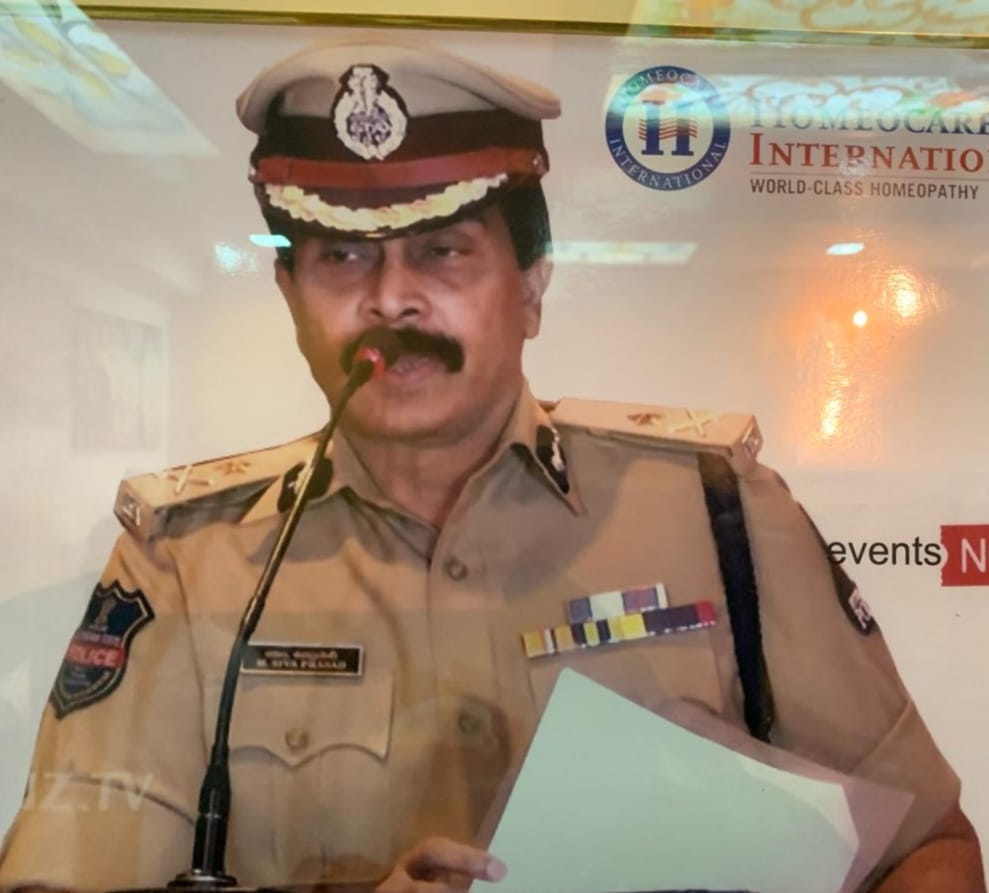
M. Shiva Prasad, IPS (Rtd.) is a dedicated law enforcement professional who served the combined Andhra Pradesh cadre before opting for the Telangana cadre. Though a native of Andhra Pradesh, he considers himself a true Hyderabadi with an abiding love for the Telugu people. Driven by sincerity, fearlessness, and a lifelong fight against inequality and injustice, his ultimate strengths remain his goodwill and deep affection for the public and the police force. Today, he continues his mission by writing snippets and articles true to his conscience.
Email: Shivareach@yahoo.com
Mobile: 98480 38774