BCI and the Limits of Regulatory Power
NALSAR alumni protected their juniors, the 2026 graduates. The students of NALSAR, teachers, and the Vice Chancellor welcomed the support coming from the Supreme Court of India; on 14th August, the Court stepped into the controversy upon a petition filed by NALSAR lawyers Mihira Sood and Abhishek Tiwari. It is good news that the Chief Justice Surya Kant himself strongly disapproved of the BCI’s intervention.
According to news reports and law websites of the hearing, he made it clear that students have the right to protest peacefully. “Who can stop them?” he reportedly asked, emphasising that if students were raising their voices lawfully and peacefully, they must be heard. The Chief Justice described the BCI’s intervention as “totally uncalled for” and suggested that the disagreement was essentially a matter that could be addressed through dialogue.
This response is particularly important because the student campaign had been directed against his proposed participation as chief guest. Instead of demanding punishment for criticism directed at him, the CJI affirmed the students’ right to peaceful dissent.
The Court also passed an interim order restraining the BCI and State Bar Councils from taking punitive action against NALSAR students or faculty in connection with the incidents referred to in the Chairman’s communications.
The CJI reportedly went further, telling the students to obtain their enrolment licences at the earliest, join the Supreme Court Bar and participate in legal-aid work. The message was unmistakable: peaceful criticism should not become a barrier to a young lawyer’s professional future.
A dispute over convocation
The controversy surrounding the Bar Council of India’s action against students of NALSAR University of Law has rapidly developed from a dispute over a convocation invitation into a larger constitutional question: Can a statutory professional regulator threaten the future enrolment of law graduates because students peacefully expressed disagreement with the invitation of the Chief Justice of India as their convocation chief guest?
The Supreme Court’s intervention has now placed that question squarely before judicial scrutiny. The episode also raises serious issues concerning freedom of expression, institutional autonomy, collective punishment, the limits of the Bar Council’s statutory authority and the accountability of those exercising regulatory power.
When Student Dissent Meets Regulatory Power of BCI
It is all about freedom of expression and the autonomy of universities. The controversy involving the National Academy of Legal Studies and Research (NALSAR), the Bar Council of India (BCI), and the 2026 graduating batch has developed into a significant constitutional and institutional debate. What began as a letter by students requesting the university to reconsider inviting Chief Justice of India Surya Kant as the chief guest for their convocation soon escalated into an unprecedented threat to the professional future of an entire graduating batch.
The subsequent intervention of the Supreme Court, the withdrawal of the BCI Chairman’s directions, and the interim protection granted to students and faculty have transformed the episode into a larger question about freedom of expression, the autonomy of universities, the limits of professional regulation and accountability within institutions governing the legal profession.
The students’ protest letter
The controversy began with a collective representation by a large number of students of NALSAR’s outgoing 2026 batch. Reports indicate that around 450 students signed or supported the representation addressed to the university authorities. The students did not seek to disrupt the convocation. Nor did they claim a right to dictate the judicial or political views of the Chief Justice of India. Their request was considerably narrower: they asked the university to reconsider its decision to invite the CJI as chief guest.
The central concern expressed by the students was that a convocation is not merely a ceremonial occasion. For graduating law students, it is also a moment when the institution publicly represents the values it claims to impart—constitutional rights, access to justice, equality, reasoned engagement with grievances and respect for peaceful democratic dissent.
As the students reportedly stated in their representation:
“As students of law, our concern is narrower and more specific to us as a graduating batch. A convocation is meant to be a moment where the University’s own values, including a commitment to constitutional rights, access to justice, and reasoned engagement with grievances, are visibly reflected in the choices it makes.”
They expressed discomfort with certain recent remarks attributed to the CJI during proceedings concerning allegations of police excesses against protesters. Their concern was that receiving their degrees from a dignitary whose recent public conduct, in their perception, appeared dismissive of serious allegations of police brutality sat uneasily with the constitutional values they had studied during their years at NALSAR.
Whether one agrees or disagrees with the students’ assessment of the CJI is not the central constitutional question. In a democracy, criticism of a constitutional authority is not automatically misconduct. The important distinction is between peaceful disagreement and unlawful obstruction. The students, on the available account, chose the former: they wrote a letter and requested reconsideration.
The BCI’s extraordinary intervention
The controversy took a dramatic turn when BCI Chairman Manan Kumar Mishra issued communications concerning the student campaign. The initial direction reportedly sought to prevent the enrolment of NALSAR’s entire graduating class of 2026 as advocates and required the university authorities to provide information concerning the students involved in the campaign. This was an extraordinary step.
Enrolment is fundamental
The consequences of enrolment are fundamental for a law graduate intending to practice. A graduate may complete years of legal education, satisfy the statutory qualifications and yet be prevented from entering the profession if enrolment is withheld.
The direction therefore appeared to impose a professional disability not merely upon identified individuals accused of specific statutory misconduct, but upon an entire graduating batch. The legal community immediately raised serious questions about the source and extent of such power.
The constitutional and statutory problem
The Advocates Act, 1961 gives the BCI important responsibilities concerning legal education and professional standards. But statutory power is not unlimited power. The power to prescribe standards of professional conduct and etiquette primarily concerns advocates and the legal profession. The power to recognise law degrees and regulate standards of legal education cannot automatically be converted into a general authority to investigate the political opinions or peaceful constitutional expression of students.
The fundamental legal question was therefore simple: What provision of the Advocates Act authorises the BCI to punish, or threaten to punish, students who are not yet advocates for peacefully signing or supporting a representation to their university? Similarly, Sections 24 and 24A of the Advocates Act prescribe qualifications and disqualifications for enrolment. Peaceful participation in a student campaign against the choice of a convocation chief guest does not, on its face, appear among the statutory disqualifications. The proposed batch-wide restriction also raised an additional constitutional difficulty. Even if particular individuals were alleged to have committed some identifiable wrongdoing, how could every graduate of the 2026 batch be subjected to a collective professional disability? Such an approach would run directly into the constitutional prohibition against arbitrary state action under Article 14. Individual responsibility cannot ordinarily be replaced by collective punishment.
A question about the Chairman’s authority
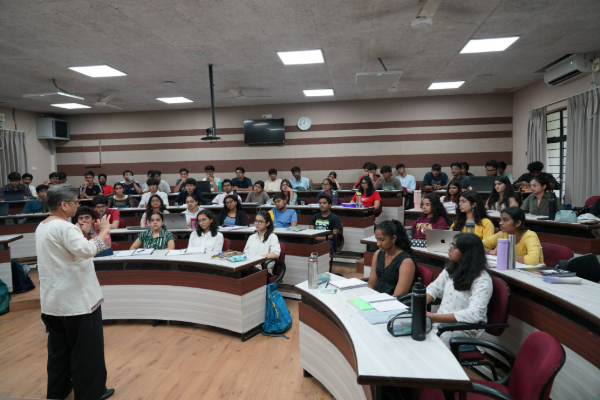
Another major issue arose from the manner in which the directions were issued. Justice Joymalya Bagchi reportedly asked whether the BCI had actually been convened to authorise such a decision and observed: “Was BCI convened to take a resolution like that? We want to know.”
This question goes beyond the NALSAR controversy. The BCI is a statutory body governed by the Advocates Act and its own institutional procedures. Important regulatory decisions affecting the professional future of hundreds of graduates cannot casually be treated as matters of unilateral executive discretion.
The episode therefore raises a serious institutional question:
Was this the decision of the Bar Council of India as a collective statutory body, or an action taken by its Chairman without the necessary collective authorisation?
The Supreme Court’s proceedings may require a clear answer.
The BCI retreats
The initial reaction provoked widespread criticism. Within hours, the direction preventing enrolment of NALSAR graduates was withdrawn or modified. Subsequently, Mishra indicated that the BCI members had not agreed with the hastily issued order and that there would be no action against the students. Reports also indicated that the BCI closed the proceedings after finding no basis to proceed against the graduating batch.
The rapid reversal itself is significant. If the original action was legally justified and institutionally authorised, its almost immediate withdrawal requires explanation. If it was not properly justified, then the withdrawal cannot entirely erase the constitutional consequences of the original threat. A professional career can be affected not only by the final imposition of punishment but also by the fear created by the threat of punishment.
NALSAR and university autonomy
The university’s response also demonstrated the importance of institutional autonomy. NALSAR reportedly stated that the demand for an inquiry into the students would have to be considered by its Executive Council, the university’s highest decision-making authority. It indicated that the university would have to examine whether such an inquiry itself would be constitutionally permissible and consistent with its governance framework. This is an important distinction. A university certainly has the authority to maintain discipline. If students commit violence, intimidation, destruction of property or other misconduct, the university can act through its established disciplinary mechanisms.
But peaceful expression of disagreement with the choice of a convocation guest is a fundamentally different matter. The Vice-Chancellor, the Executive Council and the university’s internal mechanisms cannot be converted into instruments for investigating dissent merely because an external regulator finds the dissent politically or institutionally inconvenient.
The larger question of accountability
The controversy has also generated demands for accountability from within and outside the legal profession. Advocate N. Manoj Kumar, a member of the BCI, reportedly questioned the legality of the Chairman’s action and emphasised that students, like every other citizen, are entitled to express disagreement in a democratic country. Other lawyers and public figures questioned whether Manan Kumar Mishra should continue as Chairman and called for greater transparency and competition in the functioning and leadership of the BCI.
These demands are part of a wider debate about the nature of statutory professional bodies. The Bar Council is not merely an association of lawyers. It exercises public and statutory power. Its decisions can determine who enters the legal profession and who does not. Therefore, its exercise of power must satisfy the highest standards of legality, transparency, procedural fairness and constitutional accountability.
Politics and the independence of the Bar
Critics have also pointed to Mishra’s political associations and his public statements in support of the BJP and Prime Minister Narendra Modi. Others have cited his earlier description of Modi as “Mahatma Gandhi reborn”, as well as his reported use of the expression “My Lord” in a communication to the Prime Minister.
These matters have revived an old and important debate:
How should the independence of a professional regulator be understood when its leadership simultaneously occupies an active political position?
Holding political views is not, by itself, a legal disqualification. Nor should political affiliation automatically invalidate every institutional decision. But where a statutory body responsible for regulating the legal profession exercises extraordinary power, public confidence requires visible independence and institutional impartiality. The Bar is expected to defend constitutionalism, the rule of law and professional independence. The regulator of the Bar must therefore be particularly careful not to create the impression that professional power is being used to reward conformity or punish dissent.
The earlier controversy over same-sex marriage
Criticism of the BCI’s functioning has also revived the controversy surrounding its intervention during litigation concerning same-sex marriage. The BCI, under Mishra’s chairmanship, had passed a resolution claiming that “99.9%” of Indians opposed same-sex marriage. The assertion attracted criticism because the Council did not establish any clear empirical basis for such a sweeping claim. That episode raised a basic institutional question: should a statutory regulator of the legal profession intervene in sensitive constitutional litigation by making broad claims about public morality without demonstrable evidence? The NALSAR controversy has revived similar concerns about whether the BCI should remain strictly within its statutory role rather than entering broader ideological, political or moral controversies.
A lesson for the legal profession
The most striking feature of this episode is the contrast between the students’ original protest and the response it initially provoked. The students wrote a letter. They requested reconsideration. They expressed disagreement. They invoked constitutional values. The response was a threat to the professional future of an entire graduating batch. That imbalance is precisely why the Supreme Court’s intervention matters.
A democracy does not become stronger when young citizens are taught that criticism of constitutional authorities may cost them their careers. The legal profession, in particular, cannot demand fearless advocates while teaching law students that professional survival depends upon unquestioning deference to power.
Respect for judicial institutions is essential. But respect for an institution cannot mean immunity from peaceful criticism. Judicial independence and freedom of expression are not enemies; both are constitutional necessities. The NALSAR episode should therefore be remembered not merely as a controversy over a convocation invitation. It is a warning about the dangers of regulatory overreach. The real constitutional principle emerging from the episode is simple: a law student’s future cannot be held hostage to his or her political opinion, peaceful dissent or disagreement with those who occupy high constitutional office.
The Supreme Court’s intervention has, at least for the moment, restored that principle. The pending proceedings must now answer the larger questions: Who authorised the BCI’s action? What was its statutory basis? Could an entire batch ever have been punished for the conduct of a few? And what safeguards are necessary to ensure that the power to regulate the legal profession is never again used to chill constitutional dissent?
Those questions go far beyond NALSAR. They concern the future character of the Indian Bar itself.

Law professor and eminent columnist
Madabhushi Sridhar Acharyulu, author of 63 books (in Telugu and English), Formerly Central Information Commissioner, Professor of NALSAR University, Bennett University (near Delhi), presently Professor and Advisor, Mahindra University, Hyderabad. Studied in Masoom Ali High School, AVV Junior College, CKM College, and Kakatiya University in Warangal. Madabhushi did LL.M., MCJ., and the highest law degree, LL.D. He won 4 Gold Medals at Kakatiya University and Osmania University.
Email: cicsridhar@gmail.com
Mobile: 8447651505
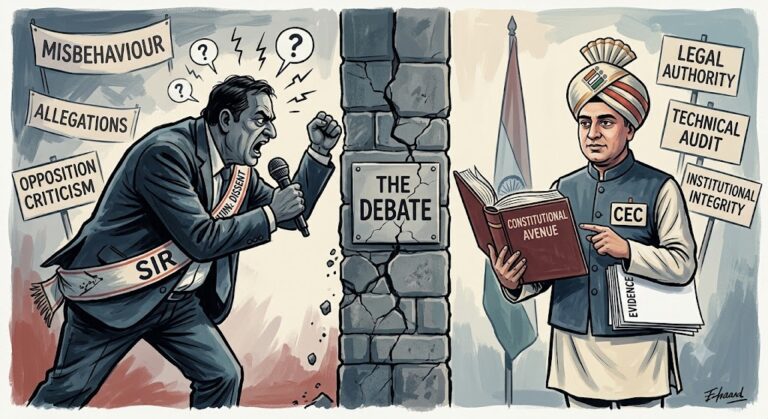


The flip-flops and shifting positions taken by the Chairman of the Bar Council of India against the NALSAR students, as well as the undemocratic nature of his conduct, have been explained authoritatively by Dr. Madabhushi Sridhar garu. Everyone in the legal profession should ask themselves whether Manan Kumar, who appears to have a tendency to treat reasonable and peaceful dissent as a crime, is truly fit to hold such a position.
From teaching at NALSAR to delivering fearless judgments in some of the most significant cases as an Information Commissioner, Dr. Sridhar’s contributions have been immense. His highly analytical article, which explains the present controversy and points out the mistakes that were committed, has provided valuable insight even to the general reader.