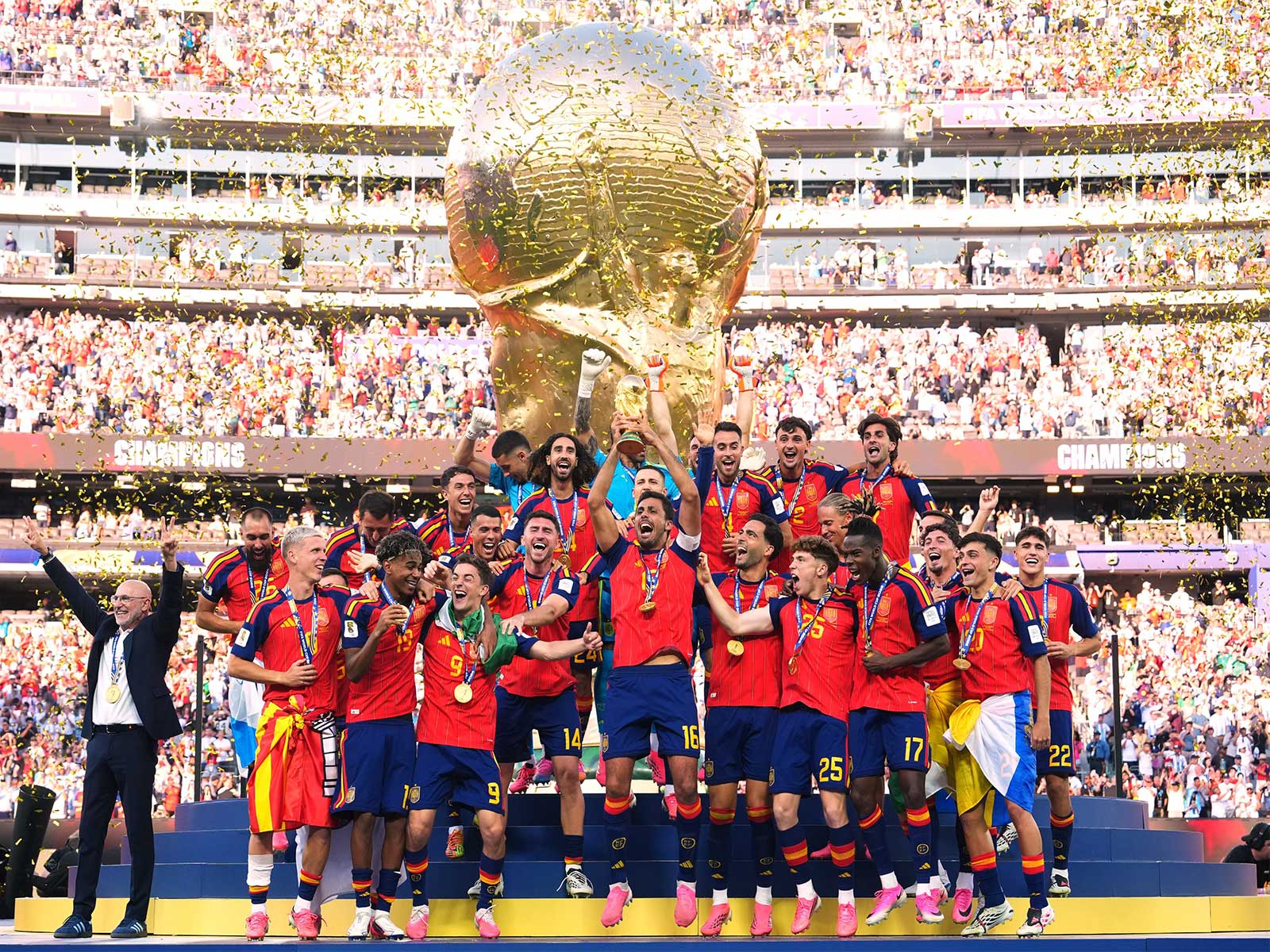
The Blueprint of Brilliance: How Spain’s Patient Precision Redefined the Game
There are football matches that crown champions. There are others that transcend sport and enter the realm of history. The FIFA World Cup Final between Spain and Argentina belonged emphatically to the latter. It was never merely Europe confronting South America, nor simply two footballing superpowers vying for the most coveted trophy in world sport. It was a civilisational dialogue played upon a football field—a poignant reunion between the former imperial power and one of its greatest cultural heirs, between history and modernity, memory and identity.
When the final whistle echoed across the stadium, Spain had not merely won the FIFA World Cup; they had reaffirmed one of football’s timeless truths—that the most enduring victories are often those crafted not through brute force or individual spectacle, but through collective intelligence, tactical discipline and unwavering faith in a common purpose.
The numerical margin of victory, however significant, scarcely captured the true complexion of the contest. Football cannot always be reduced to arithmetic. Dominance is measured not merely by goals but by authority; not merely by possession but by purpose; not merely by statistics but by the invisible control that one team exercises over the very rhythm of the game. By that measure, Spain were masters from beginning to end.
Every Spanish movement bore the unmistakable imprint of meticulous preparation. Their passing possessed mathematical precision. Their positioning resembled architectural symmetry. Their transitions unfolded with mechanical efficiency yet retained the grace of fine art. Every player appeared to function as a perfectly calibrated component within an exquisitely designed system where the collective invariably transcended the individual.
It was football elevated into orchestral performance.

Argentina, true to its immortal footballing tradition, never surrendered either its courage or its emotional intensity. The spirit that once animated Diego Maradona and later Lionel Messi continued to pulse through every Argentine challenge, every forward movement and every determined recovery. They fought with pride, resilience and characteristic passion. Yet inspiration alone found itself repeatedly confronted by an opponent whose organisation bordered on perfection.
Spain demonstrated that modern football is won long before the opening whistle. Tactical preparation, scientific conditioning, spatial awareness, disciplined pressing and flawless execution transformed abstract planning into visible superiority. Their triumph represented the victory of system over spontaneity—not because imagination lacked value, but because imagination itself flourished within an impeccably constructed framework.
Beyond football, however, lay an even more compelling narrative.
Centuries ago, Spanish ships crossed the Atlantic carrying language, law, religion and institutions that would profoundly shape the destiny of South America. Argentina inherited much of that civilisational foundation, yet transformed it into an identity uniquely its own through indigenous traditions, successive waves of European migration and the relentless forging of an independent republic. What once existed as an imperial relationship has matured into one of sovereign equality and mutual respect.
The World Cup Final therefore became an extraordinary historical metaphor. The conqueror and the conquered had long disappeared into history. In their place stood two proud nations, equal before the world, connected not by chains of empire but by enduring bonds of language, culture, faith and shared memory.
The bond between Spain and Argentina speaks far louder than the bondage of history ever could.
Millions of Argentines proudly trace their ancestry to Spain. Their common language continues to unite continents. Their religious traditions share common roots. Their architecture reflects intertwined histories. Their literature converses across oceans. Their cuisines differ in flavour yet celebrate the same warmth of family, conversation and community. Football has merely become the latest chapter in a relationship centuries in the making.
Spain’s victory therefore carried no trace of historical triumphalism. It was neither the celebration of empire nor the vindication of conquest. It was the triumph of excellence over complacency, preparation over uncertainty, collective harmony over fragmented brilliance.
The arithmetic precision of Spanish football deserves particular admiration. Every phase of play reflected exhaustive planning. Every movement anticipated the next. Every defensive adjustment seamlessly merged into attacking construction. Nothing appeared accidental; everything appeared purposeful. Their football resembled the inner workings of a finely crafted Swiss chronometer—complex in design, flawless in execution and breathtaking in reliability.
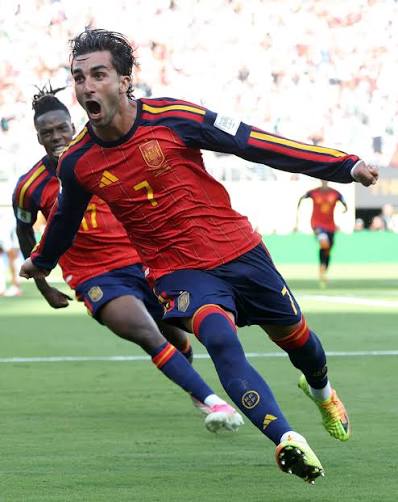
Yet what distinguished Spain most was not cold efficiency but quiet resilience. They neither sought theatrical extravagance nor relied upon emotional excess. Their confidence was understated, their composure unwavering and their ambition disciplined. They conquered pressure through calmness and adversity through organisation. Championships are often remembered for unforgettable goals. This final may instead be remembered for something even rarer—the triumph of collective intelligence.
Spain reminded the footballing world that greatness is not merely assembled from extraordinary individuals. It is patiently constructed through shared vision, disciplined preparation, mutual trust and relentless execution. Their victory was less an explosion than a carefully woven masterpiece; less a moment of inspiration than the culmination of years of philosophical conviction.
As history once flowed from Madrid to Buenos Aires across the Atlantic, football has now completed that remarkable civilisational circle. Empire has yielded to equality. Colonial memory has given way to mutual admiration. Shared heritage has blossomed into friendly rivalry. Two nations, bound by centuries of history yet separated by oceans, once again found themselves united before the watching world.
Spain did not merely lift the FIFA World Cup.
Spain spun history into glory.
And in doing so, they reminded humanity that while empires may fade, civilisations endure; while political power may diminish, cultural bonds remain; and while football crowns only one champion, it possesses the rare power to unite history, identity and humanity within ninety unforgettable minutes.
That is why this final will endure—not simply as Spain’s victory, but as football’s finest celebration of civilisation itself.

M. Shiva Prasad, IPS (Rtd.) is a dedicated law enforcement professional who served the combined Andhra Pradesh cadre before opting for the Telangana cadre. Though a native of Andhra Pradesh, he considers himself a true Hyderabadi with an abiding love for the Telugu people. Driven by sincerity, fearlessness, and a lifelong fight against inequality and injustice, his ultimate strengths remain his goodwill and deep affection for the public and the police force. Today, he continues his mission by writing snippets and articles true to his conscience.
Email: Shivareach@yahoo.com
Mobile: 98480 38774