Prelude
We have looked at building a foundation at Somnath and finding balance at Mallikarjun. We mastered stillness at Mahakaleshwar, found our true self at Omkareshwar, and explored our multi-dimensional flow at Trimbakeshwar. Now, we leave the plains and the forests to ascend. At Kedarnath, we face the challenge of the summit. This is not just about a mountain. It is about the “high-altitude” mindset required when you reach the peak of your career or life. It is about the oxygen of faith and the gravity of responsibility.
The Jyotirlinga Map
Geographically, our journey moves from the river sources of the Deccan to the majestic Mandakini valley in the Himalayas.
- Somnath (Paper 1): The Power of Resilience
- Mallikarjun (Paper 2): The Synergy of Opposites
- Mahakaleshwar (Paper 3): Mastering the Stillness in the Storm
- Omkareshwar (Paper 4): Finding True Self over Designations
- Trimbakeshwar (Paper 5): Finding Your Multi-Dimensional Flow
- Kedarnath (Paper 6): Mastering the Summit
This map shows our vertical progress. At Kedarnath, we are standing at the highest point of our internal geography. We are learning what it takes to survive and thrive where the air is thin.
The Legend: The Hump of Persistence

The story of Kedarnath begins after the great Kurukshetra war. The Pandavas were the winners. But they felt a heavy weight in their hearts. They had killed their own relatives and teachers in the battle. They wanted to find Lord Shiva to ask for his forgiveness.
The Lord was not happy with them. He was angry at the violence and the loss of life during the war. He felt that the Pandavas needed to show real effort to get his grace. He did not want to be found easily. He wanted to test if their regret was real.
To stay hidden, Shiva took the form of a bull. He joined a herd of cattle at a place called Guptkashi. He hoped the brothers would not see him there. But Bhima was the strongest and very observant. He recognised the divine light even in the form of a bull. Bhima moved to stop the animal. The Lord tried to dive into the earth to escape. He wanted to vanish completely. Bhima acted quickly. He lunged forward and grabbed the bull by its hump.
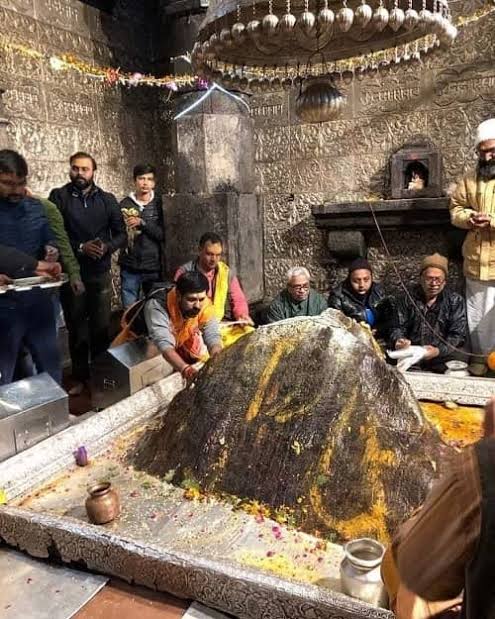
Shiva was impressed by this act. He saw that the Pandavas would not let go of their goal. Their persistence was absolute. He finally appeared in his true form. He forgave their sins. He stayed at that spot as a Jyotirlinga. Today, the deity is still in the shape of that triangular stone hump.
History: The Architect of the Heights
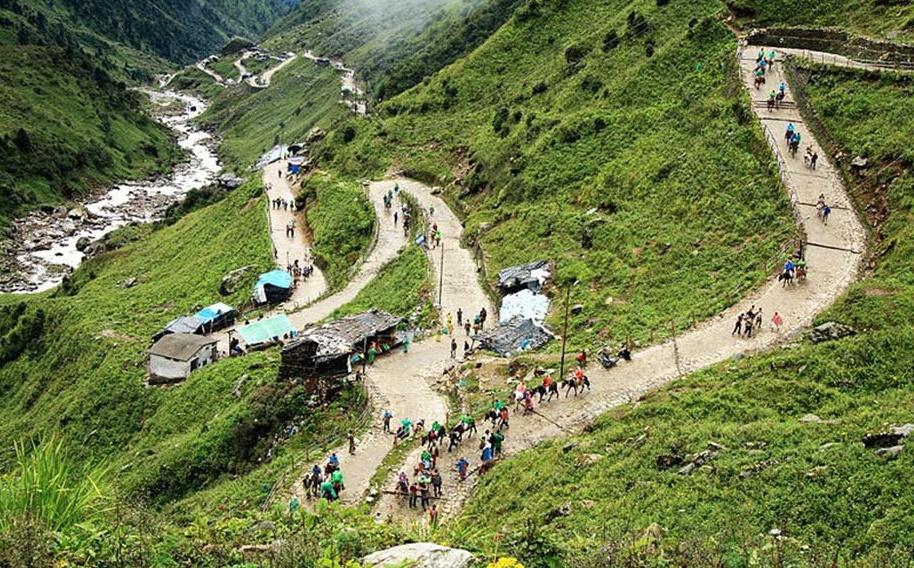
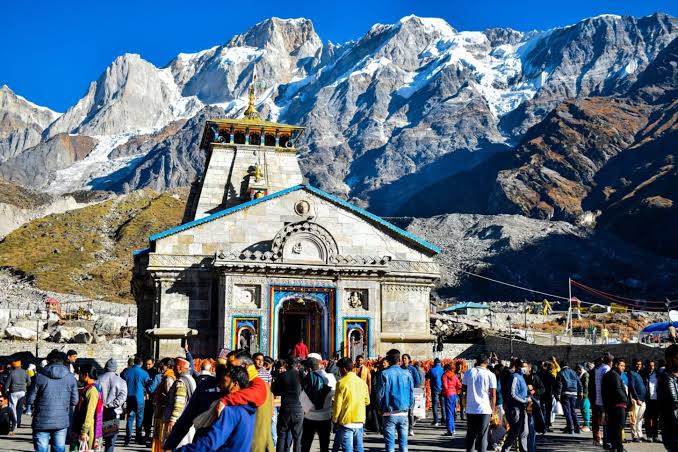
Kedarnath stands at 3,583 metres. It is a feat of ancient engineering that defies modern logic. While the original temple is credited to the Pandavas, the current structure was revived by Adi Sankara in the 8th century. He chose this extreme location to establish the northern anchor of his spiritual map.
Sankara was attracted to this place because it represented the ultimate boundary of human effort. He saw it as a spot where the physical world ends and the spiritual world begins. He wanted to show that the highest wisdom is accessible even in the most difficult terrain. For him, the silence of the peaks was the perfect classroom for the logic of the soul.
His time here was deeply moving. After building the temple, Sankara looked at the snowy peaks behind the shrine. He was only thirty-two years old. He felt his mission to unite India through philosophy was finished. He had walked the length of the land. Now, he wanted to walk into the infinite. He chose the biting cold and the white silence of Kedarnath as the place to leave his physical body. He did not say goodbye. He simply walked upward until he became one with the light.
The temple is built of massive, grey stone slabs. It has survived centuries of snow and ice. It even survived the devastating floods of 2013. The geography here is a harsh teacher. It reminds us that the higher you go, the more weatherproof your character must be. The summit is not a place for fragile things. It is a place for people built to endure the elements.
Deep Meaning: The Two Paths of the Summit
Kedarnath offers two distinct lessons for our internal growth. They come from the two figures who defined this landscape. One is about the power of commitment. The other is about the grace of letting go.
The Lesson of Bhima: The Grip of Resolve
Bhima was a man of action. When he saw the Lord diving into the earth, he did not wait for a sign. He did not ask for permission. He reached out and grabbed the hump of the bull. This is not just a physical hold. It is The Logic of Ownership.
In our modern lives, we often suffer from a lack of follow-through. We start projects but let them fade when they get difficult. We blame the market or the timing when our goals start to disappear into the ground. Bhima shows us that at the summit, your intent must be total. To have a Grip of Resolve is to take absolute responsibility for the outcome. It is the refusal to be a passenger in your own life. It is the steady pressure you apply when everyone else is ready to give up. Real leadership is the ability to hold the line when the bull of your vision tries to escape.
The Lesson of Sankara: The Logic of the Peak
Sankara offers a different perspective. He arrived at the summit after he had finished his work. He did not grab anything. Instead, he walked away from everything. This is a lesson in The Power of Simplicity. As we rise in our careers, we often become top-heavy. We collect titles, possessions, and worries. We become like a tree with too many branches that breaks in a storm. Sankara’s life at Kedarnath is a masterclass in the Logic of Subtraction. He showed that the higher you go, the less you should carry.
He stripped away his roles and his body to become one with the light. He teaches us that the peak is not a place for luxury. It is a place for clarity. To survive at the high altitude of leadership, you must be willing to shed the clutter of the valley. You must become as simple and sturdy as the triangular stone of the temple itself.
These two lessons seem like opposites, but they are partners. A true leader must master the timing of both. You need the Grip of Resolve to drive a project to its end. You must tighten that grip when the challenge is at its peak. But you must also know when the task is accomplished.
A leader who cannot let go becomes a prisoner of their own success. They stay stuck in the struggle long after the victory is won. The grace of Sankara is knowing when to open your hand. True balance comes from knowing when to tighten your grip to finish the work and when to let go to walk into the silence.
Contemporary Relevance: The Rare Air of Leadership
In his book Good to Great, the author Jim Collins talks about “Level 5 Leadership.” He explains that the highest level of leadership is a paradox. It is a mix of personal humility and professional will. These leaders are not celebrities. They are the steady humps of their organisations.
Kedarnath is the physical manifestation of Level 5 Leadership. It stands in the cold and the silence. It is unmoving while the world changes below. The ideas in the book are the modern version of the Kedar legend. It is about the will to hold on to your vision when support runs low.
Think of a professional in their early sixties who has finally reached the top office. They have the title, but the air is thin. The pressure is immense. They feel isolated. They have every perk but no one to share the burden.
They are losing their grip because they are trying to carry the valley’s clutter to the mountain top. They carry old grudges, unnecessary meetings, and the need for constant applause. They have forgotten that a summit leader must be as simple and sturdy as the rock itself. Depending on the situation, they must learn to tighten their grip on the mission while letting go of the noise.
Real-Life Examples
- The CEO in a Crisis: Imagine a CEO whose company faces a massive hurdle. Instead of panicking, she anchors herself in the core values of the firm. She becomes the hump that the entire organisation holds onto. She wins by being unmovable.
- The Veteran Mentor: Think of a senior partner in a law firm who is nearing retirement. Instead of coasting, he takes on the hardest cases to protect the younger associates. He uses his altitude to see the storms before they arrive. He proves that the peak is a place of service.
- The Family Matriarch: Consider a grandmother who becomes the emotional anchor during a family tragedy. While everyone else is reacting to the weather, she remains as steady as the Kedar stone. Her years of life have made her weatherproof. She provides the calm that allows everyone else to breathe again.
Seeker Summary: The Lesson of Kedarnath
This paper explores the shift from climbing to standing firm. The core problem we face at the top is isolation and the clutter of ego. The solution lies in the Logic of the Peak. It is about becoming stable, simple, and unmovable. Good to Great serves as the modern tool to understand Level 5 Leadership. The mindset is to hold onto your vision with the persistence of Bhima. The goal is not just to reach the summit, but to become a landmark that others can look up to!
[R Srinivsa Murthy, the author of the article, is a corporate leader, independent writer and is a student of Hindu philosophy. He is a Demystic, dedicated to stripping away unnecessary mysticism around traditions and practices to present a practical system for the next generation. His upcoming book, “Logic of And: Sanatana Dharma as a Toolkit for the Contemporary Seeker“, bridges the gap between ancient wisdom and modern life to build an inclusive and living civilization].

With a journalistic long journey, we bring you https://primepost.news, a dynamic platform committed to unraveling the intricate tapestry of Indian politics, particularly delving deep into the heart of Telangana and Andhra Pradesh. Our blog is not just a source of news; it’s a reservoir of insights, analysis, and thought-provoking reviews.



Good article. The ancient from the modern perspective. Application of the old to the new .
Thanks for sharing.
I have come to know the significance of the ‘Kedar Temple’ and it’s placement. Wonderful it is. I understand that all ‘Jyotirlingas’ have got it’s own valid reasons for the formation. Well narrated. Thanks For Sharing.
Great article with lot of insights with ancient history and today’s practical business/corporate world
Very informative.
Explains beautifully, handling of life’s opposites and paradoxes by taking the example of Kedarnath.👌
Explains beautifully, handling of life’s opposites and paradoxes by taking the example of Kedarnath. Our pilgrim centres and our own lives are not isolated. They whisper something we ought to listen with respect!👌
I read this article & know some un known facts.
Very well explained the insites of Kedarnath and beautifully narrated the logic of ancient way of thinking VS today’s leadership levels. It’s Great learning for young executives to accomplish to become great leaders. Beautiful article. A big thanks to the writer.
చార్ ధామ్ లలో ఒకటి అయిన కేదార్ నాధ్ గురించి బాగా రాసారు. ఇతర జ్యోతిర్లింగాలు గురించి కూడా బాగా వివరణ ఇచ్చారు.