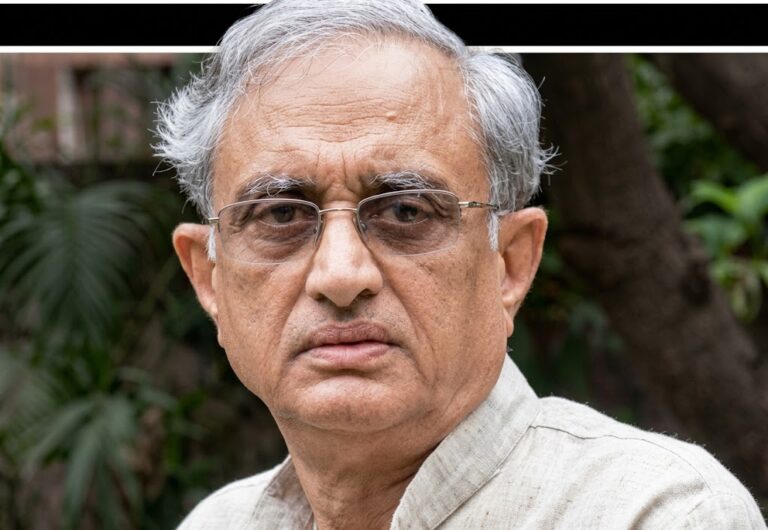
In a democracy governed by constitutional morality, no institution wielding immense public power can remain beyond accountability. This principle was powerfully articulated in 2018 by former Central Information Commissioner Madabhushi Sridhar Acharyulu. His landmark order, declaring the Board of Control for Cricket in India a “public authority” under the Right to Information Act, remains one of the most consequential interventions in Indian sports governance.
At a time when cricket in India transcends its status as a mere sport, becoming a national institution commanding unparalleled emotional, economic and cultural influence, the Central Information Commission was confronted with a profound question: Can an organisation that controls Indian cricket, selects the national team, regulates players, governs stadiums, enjoys state patronage and represents the nation internationally still claim to be a purely private body insulated from public scrutiny?
Prof. Sridhar Acharyulu answered this question with constitutional clarity.
In his detailed order dated October 1, 2018, delivered in Geeta Rani vs CPIO, Ministry of Youth Affairs & Sports, he held that the BCCI performs functions of immense public importance and therefore falls within the scope of Section 2(h) of the RTI Act. This order was not based on rhetoric but on a carefully reasoned constitutional interpretation of accountability, public duty and transparency.
The Commission observed that the BCCI enjoys a complete monopoly over cricket administration in India. No player can represent the country without its approval, and no rival institution can officially govern Indian cricket. Its decisions impact careers, public institutions, commercial rights and national representation. Such extraordinary powers, the order reasoned, necessarily attract public accountability.
Prof. Sridhar Acharyulu also rejected the narrow argument that only direct government grants constitute “substantial financing” under the RTI Act. Instead, the order adopted a broader constitutional understanding. It recognised that the Board of Control for Cricket in India (BCCI) receives enormous indirect support from the state in the form of tax exemptions, subsidised public land, police security during matches, infrastructural support and governmental facilitation for international events. These privileges, the Commission held, cannot coexist with complete opacity.
Most importantly, the order elevated transparency from a procedural obligation to a democratic necessity. Cricket in India is not merely entertainment; it is intertwined with national identity, public sentiment and vast economic interests. In such a framework, citizens possess a legitimate right to know how decisions are taken, how public resources are utilised and how the game is administered.
The significance of the Acharyulu order lies not only in its legal conclusions but in the constitutional philosophy underpinning it. The decision affirmed that institutions exercising public functions cannot escape scrutiny simply because they are registered as private societies. Functional reality, not formal labels, must determine accountability.
Years after the order was passed, its relevance continues to resonate in legal and public discourse. Significantly, recent observations and discussions surrounding the reforms proposed by former Supreme Court judge R. M. Lodha have once again brought attention to the foundational issues of transparency and institutional accountability within Indian cricket administration. The Lodha reform framework itself emerged from concerns over governance failures, conflict of interest, concentration of power and lack of transparency in cricket administration – concerns that Prof Sridhar Acharyulu’s order addressed with remarkable precision.
The continuing reference to the 2018 order in contemporary debates demonstrates that the issue was never confined to a technical interpretation of the RTI Act. It concerns the very nature of power in modern India. When private entities begin exercising functions that affect public life on a national scale, democratic accountability can no longer remain optional.
Critics of the order argued that bringing BCCI under RTI would interfere with its autonomy. However, transparency and autonomy are not constitutional opposites. Accountability does not weaken institutions; it strengthens public trust in them. The fear of scrutiny can never become a legal defence against transparency.
Today, Indian cricket stands at a crossroads where commercial expansion, political influence and public expectations intersect more intensely than ever before. In such a climate, the principles laid down by Prof. Sridhar Acharyulu acquire even greater relevance. The question before the nation is no longer whether cricket administration affects public interest — that reality is undeniable. The real question is whether institutions wielding immense public influence should remain answerable only to themselves.
The answer offered in 2018 remains both legally persuasive and morally compelling.
Transparency is not an intrusion into cricket. It is the protection of the public’s right over a game that has long transcended the boundary rope and entered the heart of the Republic itself.
(A Harshvardhana Raju, the author of the article is a scholar and assistant professor)

With a journalistic long journey, we bring you https://primepost.news, a dynamic platform committed to unraveling the intricate tapestry of Indian politics, particularly delving deep into the heart of Telangana and Andhra Pradesh. Our blog is not just a source of news; it’s a reservoir of insights, analysis, and thought-provoking reviews.