Electoral Roll Irregularities and Exclusion Risks in SIR Process
Let us start with a simple fact. No law in India makes a voter ID card a mandatory document for a citizen. Registering to vote is a right, not a duty. So how is a voter expected to hold a record in a 2002 roll that she was never obliged to be on? And on what basis does the lack of that record turn a citizen into a suspect, to be scrutinised as either a citizen or an “infiltrator”?
Legally, the Supreme Court has stated that the final word on citizenship rests with the Union government, not the Election Commission. Therefore, deletion from the roll is not a finding that you are not a citizen. Yet in practice, when we look at the aftermath of SIR in West Bengal and Bihar, governments have stated that people deleted during SIR will not receive ration and welfare benefits. Although the Supreme Court has ruled that deletion cannot be used to deny these entitlements, West Bengal has reportedly issued at least three orders cutting those benefits. Cases documented by the Sabar Institute show deleted voters there struggling to renew passports, obtain domicile certificates, and even secure hard-earned MBBS seats. Thus, a deleted voter is treated as a suspected non-citizen without any authority having made that finding. That is second-class citizenship by the back door. The Election Commission says its purpose is error-free rolls. I take it at its word on intent; my concern is outcomes. So let me tell you what has happened here in Telangana.
Telangana: Too many phases, and no rulebook
Consider what an ordinary voter has been asked to follow: first, pre-mapping; then enumeration; then claims and objections, which itself came as three separate lists—the draft list, the ASDD list, and the notice list; then the final SIR list; and finally, a post-SIR phase. Is that not turning a simple voter validation exercise into a maze? The draft list came out on 17 August, and with it came about 92 lakh notices. The largest category was voters classified as “unmapped with last SIR”: 32.37 lakh, or 34.9 per cent. The rest were flagged for “anomalies.” For none of these phases was a Standard Operating Procedure published. As civil society, we ended up writing the process documents ourselves—simple guides so that citizens could understand what to do at each stage. That was the Election Commission’s job.
Instead, the rules changed as we went. Midway, the CEO changed the notice process itself: voters were no longer made to visit ERO offices, and hearings were to be held online or through BLOs, with in-person appearances required only in exceptional cases. I welcome that, but it shows the original design was too burdensome. A process that touches crores of voters should be stable, written down, and announced in advance. Here, it was voters and BLOs who paid for the changes.
The yardstick: The 2002 roll
The yardstick for all of this is the 2002 roll. However, it is a snapshot, not a citizenship register. The key differences between the previous and current SIR are:
a. The existing electoral roll was used as a base in 2002.
b. No enumeration form was given.
c. A Voter ID was one of the documents citizens could produce.
d. Shifted voters were marked as ‘S’, not deleted.
e. The burden was not on the voter to prove lineage.
f. There was no term called ‘logical discrepancy’.
When the 2002–03 revision was held, Chief Election Commissioner J. M. Lyngdoh explained that it was needed because the rolls had many missing names. The purpose then was to add the missing. As ADR has argued in the Supreme Court, the burden then lay on the enumerator; now it lies on the voter.
Draft list, notices, and due process
Telangana had approximately 3.38 crore voters before SIR; now the draft list has 2.6 crore voters, with the remaining deleted in the ASDD list. Almost 1 crore voters received notices (92,88,188). Notices went out for non-mapping with 2002, name mismatches, a parent’s name mismatch, or an unusual age gap. Voters received notices citing incorrect reasons, while those who genuinely had a problem in their SIR form were exempted, thanks to the software used. A confirmed 2,01,249 voters in Telangana were served blank notices. How does a citizen answer a charge that has not even been written down?
Officials’ own sources say many notices stem from BLO errors in the 2002 revision itself. The citizen is answering for the government’s old mistakes. Furthermore, some notices arrived after the hearing date had passed; in Hyderabad, over 4.93 lakh notices lapsed unanswered. A notice is the beginning of a citizen’s defence. It must reach her in time and tell her what is wrong. Lapsed notices must not become quiet deletions.
Exclusions, Barriers, and the Missing Accountability
ASDD: Struck off without being told
Now we come to the most critical group of all: voters marked Absent, Shifted, Dead, or Duplicate—the ASDD list. In Telangana, nearly 73 lakh voters ended up on it. In Hyderabad district alone, the Sabar Institute’s preliminary report counts 19,41,444 deletions across all 15 constituencies—roughly two in every five voters. A whopping 62 per cent of deleted voters come under a single category: “shifted.” In Hyderabad, it is 69.3 per cent, or over 13 lakh people. For women who moved upon marriage and for migrants who work away, “shifted” has become the easiest box to tick.
Here is what I find hardest to accept
A Form 6 applicant gets an SMS at every stage, yet a voter marked ASDD does not get a single SMS telling her so. One message “You have been marked under ASDD”—is all it would take. The Commission’s own letter of 6 November now asks officers to reach these voters by SMS, WhatsApp, or email. The means existed all along; why were they not used?
The standard deletion process informs a voter and lets her object before her name is removed. That safeguard was missing here. Now there is a U-turn: ASDD voters may file enumeration forms again. It is a U-turn taken in the wrong lane, after the damage was done. And what about Indian citizens born in other countries? Form 6 still does not allow any place of birth other than India. A citizen by law is shut out by the design of a form. Set this against the 2023 election. In every one of Hyderabad’s 15 constituencies, deletions exceed the winning margin. Yakutpura was won by 878 votes, yet 1,54,982 names have been deleted there. In Malakpet and Yakutpura, more names were deleted than votes were cast in 2023. I am not saying how these people would have voted; I am showing you the scale.
Documents, language, and technology
On technology: the ECINET app changed again and again during this process. At times, it felt as though we were dealing with employees of a software company rather than with citizens—in a population where about 20 per cent of people cannot read at all and around 70 per cent do not understand apps and online forms. Family Register Certificates issued by the Telangana government through MeeSeva were ruled invalid, though many families had understood them to be acceptable proof. Then there is language. Forms were printed in Telugu, and in English only in Hyderabad. Urdu is Telangana’s second official language, yet the High Court had to ask the Commission to consider Urdu forms. A form a voter cannot read is not an invitation; it is a barrier.
Who bears the burden?
The paperwork asks the most of those who have the least. Migrants keep their registration in native villages. Women who moved upon marriage, or those who have limited literacy, often do not know what “unmapped” means or where to find a 2002 roll. Over 12 lakh Hyderabad voters had to attend hearings in person; the elderly are exempt only if the ERO approves. In Musheerabad, where we conducted our social audit, 1,40,070 names were deleted—up to 49 per cent of the 2023 roll and more than three times the 2023 winning margin. At our public hearing there on 10 October, we heard directly from working-class voters.
Deletions and Form 7
Form 7, meant to be a safeguard, can become a weapon. On 1 October, the CEO said nearly 29,000 Form 7 applications had been filed in Telangana. Every Form 7 must appear in Form 10, a public list, so voters can see who objected. [Reporter name, outlet] downloaded every Form 10 on the CEO’s website and found that fewer than 15 per cent of those Form 7s had been published as of date. The public cannot scrutinise what is never published. In Musheerabad, the ERO himself complained that a BJP booth-level agent brought 30 pre-printed Form 7s to a polling station. An FIR followed; the agent is accused, not convicted, and the BJP denies it.
Accountability
Who is answerable for wrongful mapping, wrong and blank notices, wrongful exclusions, and unresolved complaints? So far, no one. Yet a citizen is held to account for a spelling error in a 2002 roll—an error that may not even have been her own. Accountability cannot run in one direction only.
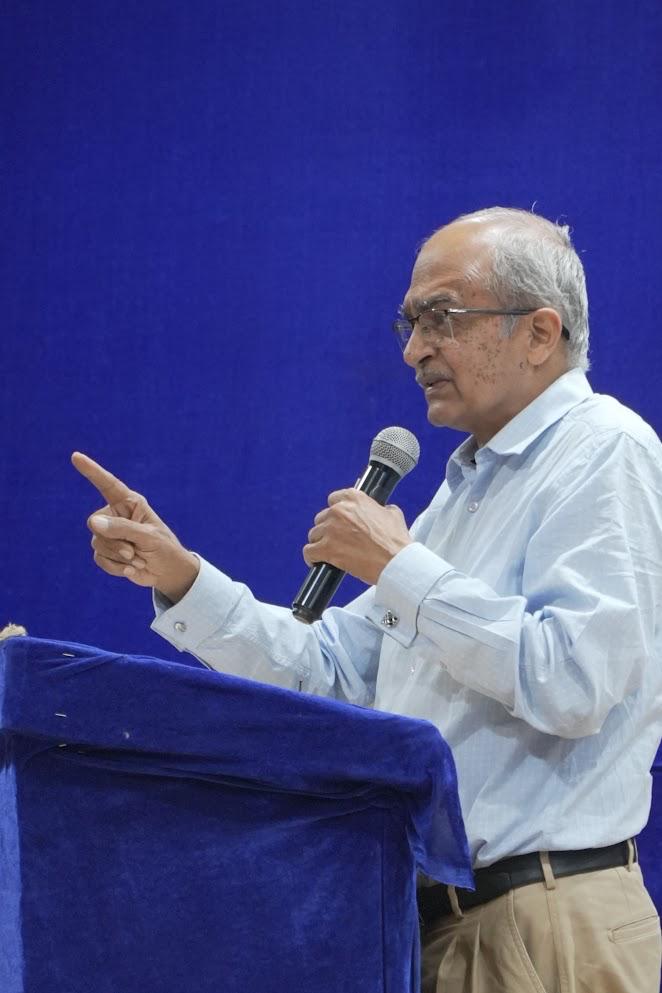
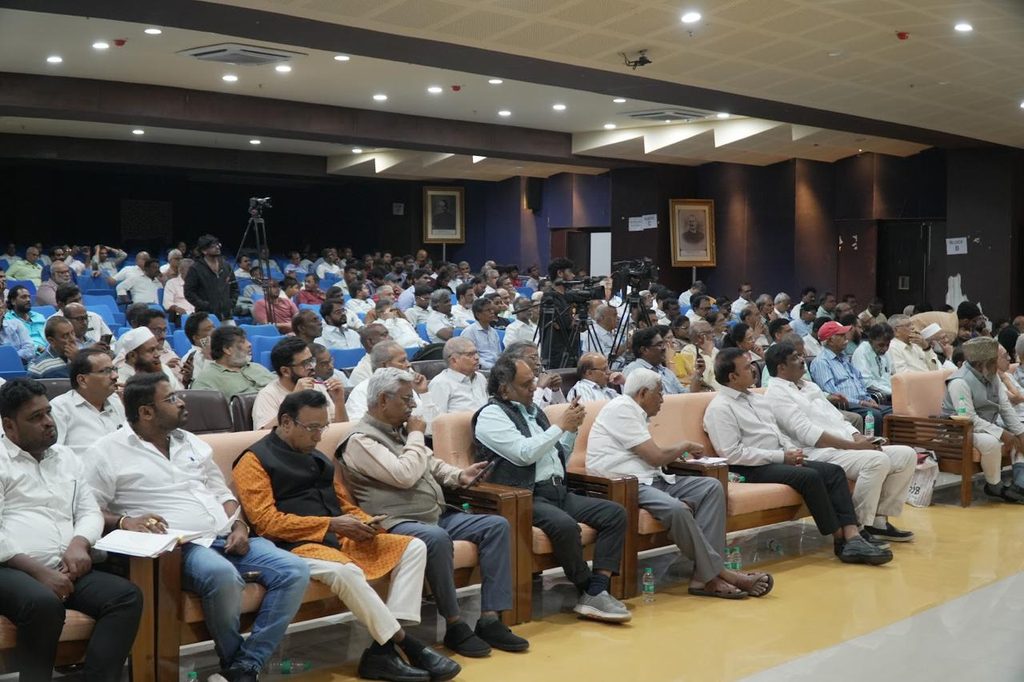
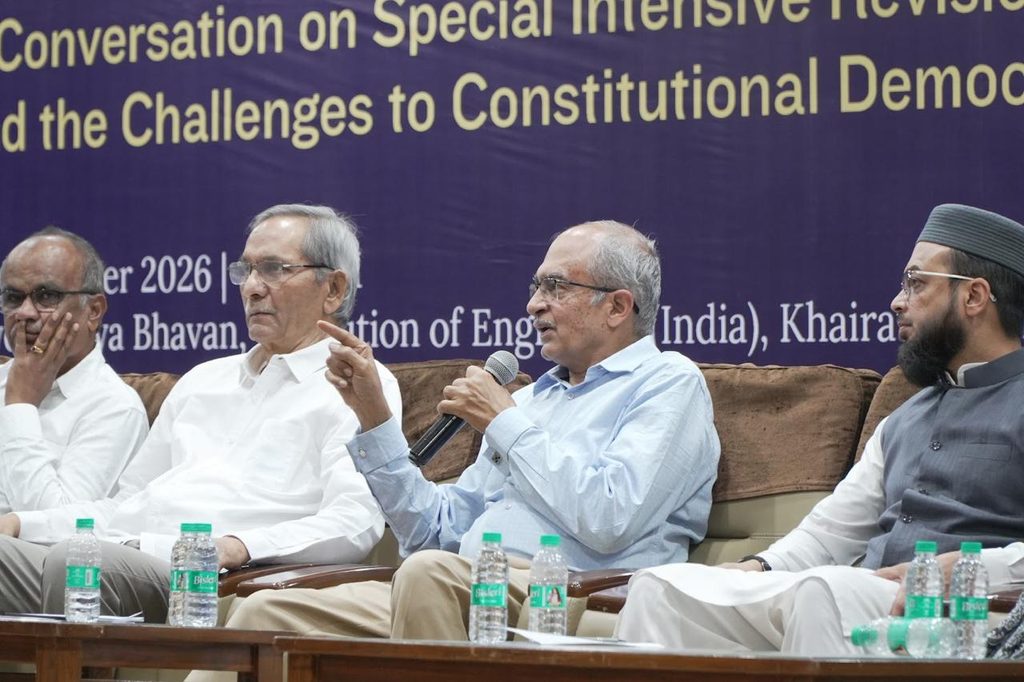
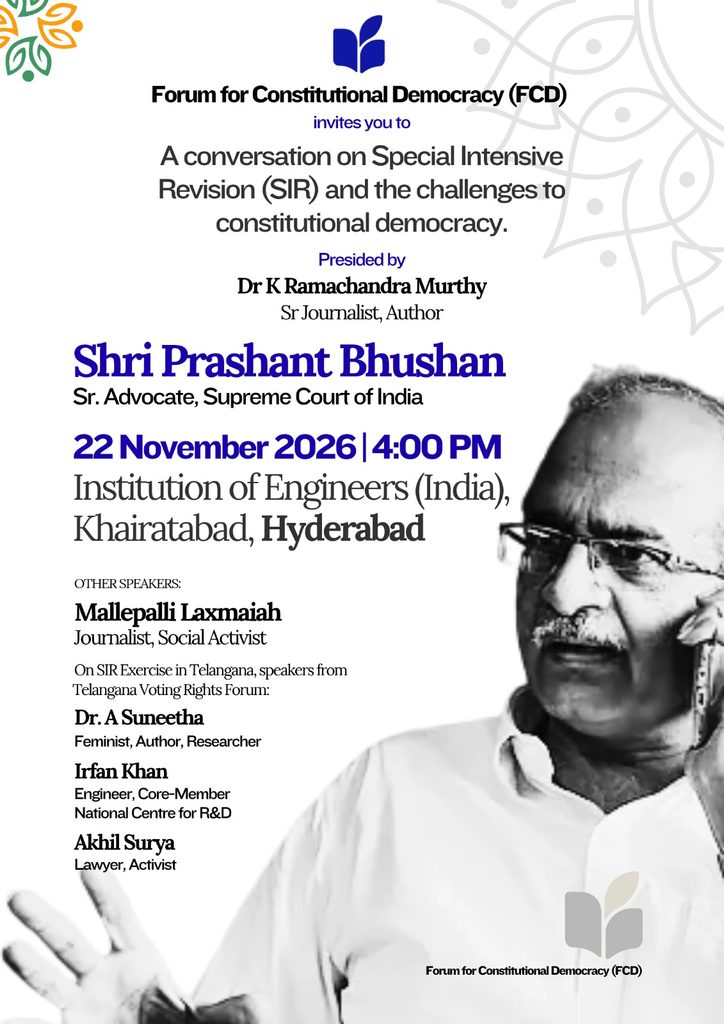
(Irfan Khan, SIR analyst and software professional, delivered a lecture on ‘Special Intensive Revision (SIR) and the Challenges to Constitutional Democracy’ at a meeting organized by the Forum for Constitutional Democracy (FCD) at the Institution of Engineers (India), Khairatabad, Hyderabad, on November 22, 2026)

With a journalistic long journey, we bring you https://primepost.news, a dynamic platform committed to unraveling the intricate tapestry of Indian politics, particularly delving deep into the heart of Telangana and Andhra Pradesh. Our blog is not just a source of news; it’s a reservoir of insights, analysis, and thought-provoking reviews.