Modi’s controversial visit to Naidu’s residence in Hyderabad
The Naidu Factor and Telangana’s Pulse
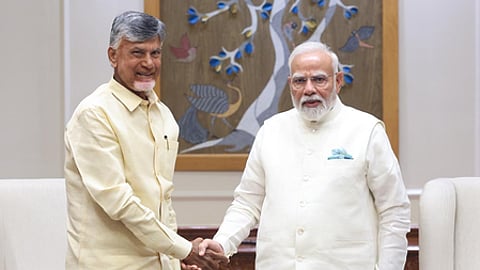
Prime Minister Narendra Modi’s Hyderabad visit on Sunday was remarkable for more than one reason. A huge buildup was given by the local BJP leaders that Modi after taking over as PM for the third time and after winning in West Bengal, Assam and Puducherry is visiting Telangana for the first time with the sole purpose of installing BJP government in the state after the next elections. Modi spoke well in the public meeting at Parade Grounds. He appealed to the people to show discretion while using petrol, diesel and gas in view of the crisis in the gulf. More important than the meeting is his decision to visit the residences of Andhra Pradesh Chief Minister Chandrababu Naidu and Deputy Chief Minister Pawan Kalyan. The PM spent almost an hour at Naidu’s residence. Visiting their residences in Hyderabad is a key decision for which Modi will have to pay the price.
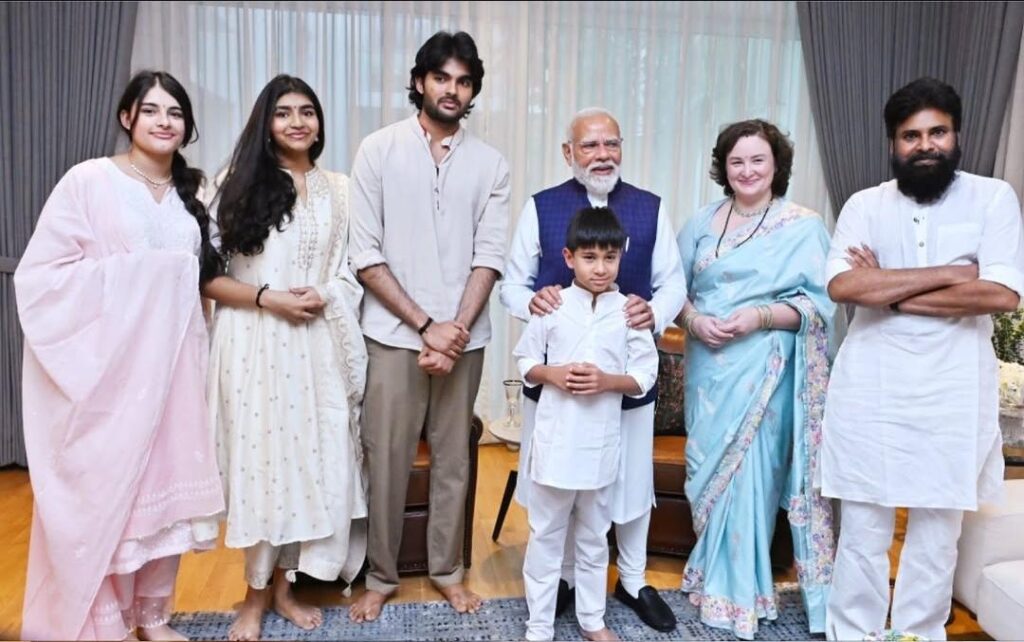
People of Telangana do not like either BJP leaders or Congress leaders to have close relationship with Naidu. When in 2018-19, Rahul Gandhi moved closer to Naidu, the people of Telangana punished the Congress by giving a massive mandate to TRS (now BRS). Moreover, both Modi and Naidu criticized each other in that period. While Modi said Polavaram has become an ATM for Naidu, the then chief minister asked how a person who could not manage his wife is expected to manage the affairs of the country. In that particular period Naidu guessed that Modi would lose elections in 2019. Modi won bigger majority and Naidu lost his elections. He regretted the decision to go against Modi and made amends later to become more loyal to Modi than a BJP chief minister. It looks odd when we observe the obedience of Naidu towards Modi and the PM’s affection for Naidu and Lokesh. For Narendra Modi it is nothing new. He is used to criticizing politicians of corruption and allow them to join his party and give them positions ignoring the charges.
The Bengal Shift: Suvendu Adhikari’s Rise
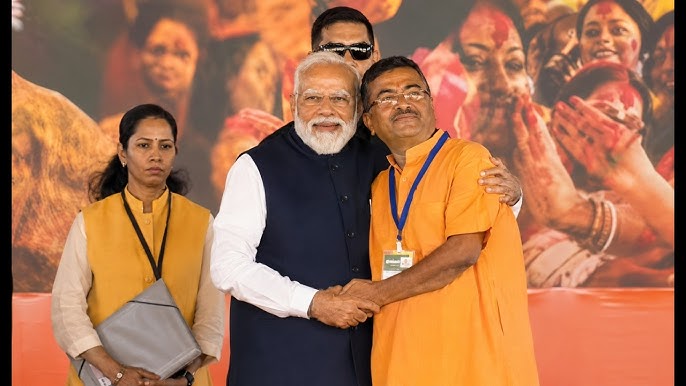
Suvendu Adhikari, who took oath as Chief Minister of West Bengal on Saturday in the august presence of Prime Minister Narendra Modi is one of the few lucky politicians who got plum positions instead of going to jail. The other lucky politicians are those who faced corruption allegations and joined the BJP and became chief ministers of deputy chief ministers. More than attaining political position, the severe corruption allegations disappear into thin air the moment they join the BJP. The person who made the allegations and who blessed them as chief ministers is one and the same- Modi himself. That is the beauty of Indian politics we have been witnessing since 2014, the year in which Modi took over as prime minister and became numero uno in the BJP.
In 2016, Modi was making allegations on Mamata Banerjee saying that Suvendu Adhhikari and Mukul Roy were the collection agents of the chief minister. Suvendu was caught on camera collecting money and Modi made fun of it in public meetings asking the people if they saw the concerned pictures on TV shown by Narad sting operations. Suvendu Adhikri was transport minister at that time. Both Suvendu Adhikari and Mukul Roy had joined the BJP in 2020. The same Suvendu who was called corrupt by Modi was made chief minister now. People clapped on both the occasions. Mathew Samuel, an investigative journalist, recorded on his camera the Trinamool leaders taking bribes. He was working for Tehelka. But he differed with Tehelka management, walked out of the organization and launched his own outfit called Narada News. In 2019 election campaign in West Bengal, Modi said Mamata who dreams to become prime minister one day is equal to the Congress in corruption. He referred to Narada sting operations and reiterated his allegations against TMC leaders. The CBI arrested four TMC leaders in 2021 basing on Mathew’s sting operations. But Suvendu was not among them because he had already joined the BJP one year ago.
The Assam Model: Himanta Biswa Sarma
Chief Minister of Assam Himanta Biswa Sarma was number two leader in Congress when Tarun Gogoi was the chief minister. He was ambitious. He used to criticize Narendra Modi and other BJP leaders. Modi and others in turn made corruption allegations against Sarma. The Congress made him the minister in charge of major portfolios but did not make him chief minister. The Congress party kept its faith in ageing Tarun Gogoi. Sarma left the Congress, resigned from the membership of the Assembly and joined the BJP at the Delhi residence of Home Minister Amit Shah on23 August 2015. He was picked up by Modi and Shah. He was made an important minister in the ministry of Sonowal whom he succeeded as CM after the 2021 elections. He won the recent elections held in 2026 with greater majority and continues as CM.
Bihar Chief Minister Samrat Choudhary was in JDU till 2017 when he joined the BJP. He was criticized for corruption by BJP leaders and Prashant Kishor when he was a minister. But he was selected by the BJP to succeed Nitish Kumar as chief minister of Bihar.
Consolidating the Heartland: Bihar and Maharashtra
Then Modi himself made an allegation in a Mumbai meeting against late Ajit Pawar saying that he swindled thousands of crores and asked the courts to send him to jail. But soon Modi had got the NCP split and made Ajit Pawar the deputy chief minister. After Ajit Pawar died in a helicopter accident, his wife Sunetra Pawar was made the deputy chief minister and president of her husband’s party. In the same way, Shiv Sena was charged with huge corruption, the party was split and the leader of the splinter group Eknath Shinde was made the chief minister of Maharashtra. In 2025 Assembly elections, the BJP has got enough seats on its own to get a majority and Fadnavis of the BJP was made chief minister and Shinde was demoted to the position of deputy chief minister.
Conclusion: The Strategy of Frozen Charges
So, the chief ministers of Assam, West Bengal and former chief minister of Maharashtra had faced corruption charges by the BJP, split their parties, joined the BJP and became chief ministers. When BJP makes corruption allegations against a particular leader the intention is not to punish him or end corruption but to force the concerned leader to join the BJP and then make him some minister or deputy chief minister or chief minister. The corruption charges against some 25 such leaders are not followed up and they are frozen. This is Modi’s strategy of using corruption charges to his advantage. Make allegations, allow the targeted politician to join the BJP, ignore the charges and give the concerned leader some important position. Along with the corrupt leaders, thousands of workers also join the BJP thus strengthening the party. This is Modi’s way of building the BJP. However, it does not mean that Modi has stopped lecturing about corruption and the need to put an end to it. In his latest address to the nation from the Red Fort, Modi said corruption has reached new heights and it needs to be curbed immediately. Godi media does not question Modi how it is possible to end the corruption when the corruption charges are not pursued after the leaders against whom the charges are made joined the ruling party.
Prominent Journalist
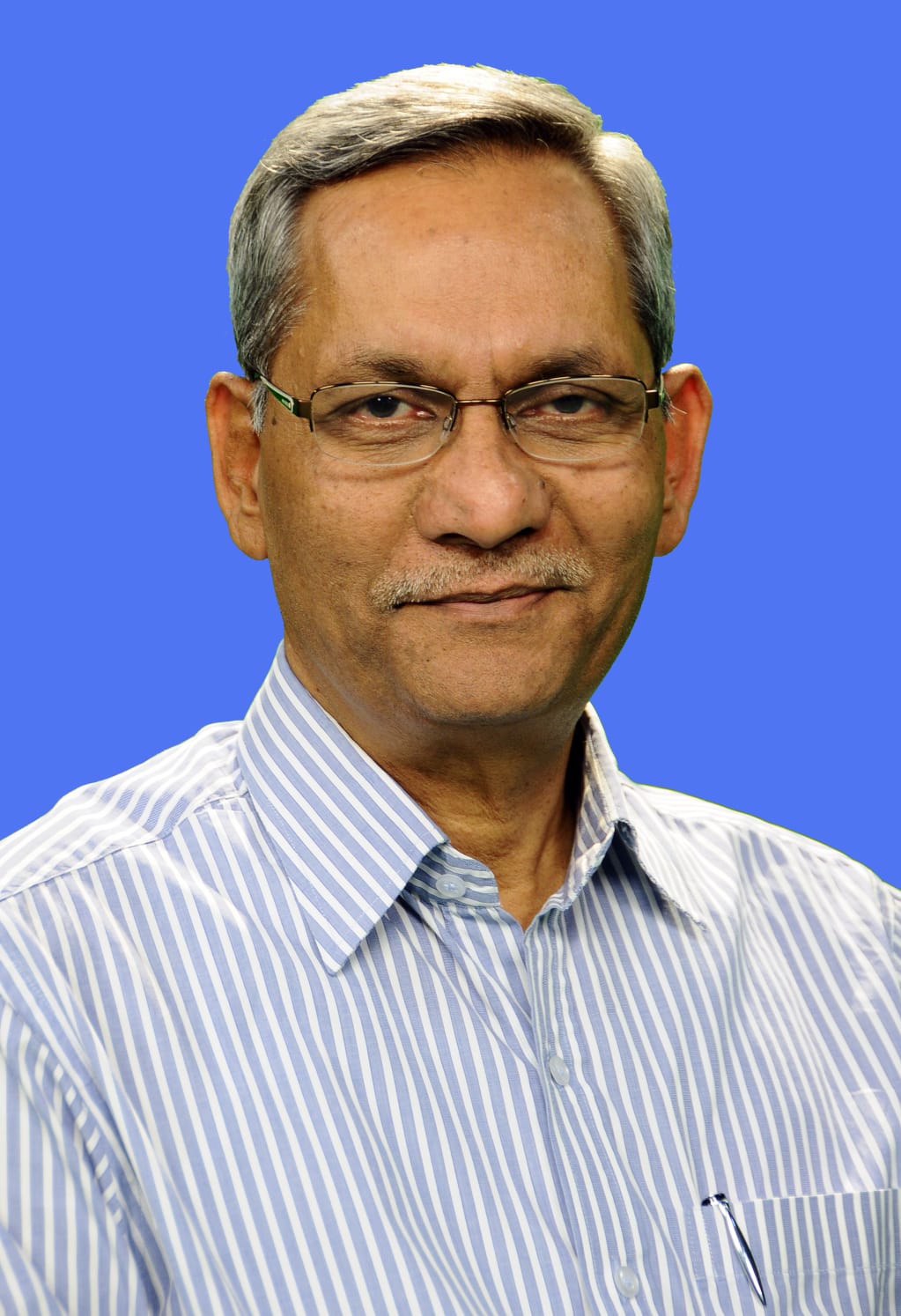
Dr. K. Ramachandra Murthy is a versatile journalist with a distinguished career. Dr. Murthy began his extensive career with Andhra Prabha of The Indian Express group in Bengaluru. He was editor of Udayam, Vaartha and Andhra Jyothy. Dr. Murthy founded and edited HMTV news channel and The Hans India, an English newspaper. He was also editorial director of the Telugu newspaper, Saakshi. He was awarded Ph. D for his research work in rural reporting. Dr. Murthy’s five decades in journalism showcases his influential roles across both print and electronic media. He wrote the political biography of NTR published by Harper Collins.
Email: murthykondubhatla@gmail.com
Mobile: 9908002211