The Constitutional Mission of Journalism
Truth, Accountability, and Public Consciousness
In an era saturated with algorithmic noise, political polarization, and rapid disinformation, the core function of journalism remains unchanged: to make power explain itself. As leaders, veteran journalists, and legal minds underscored at the recent National Conclave of the Federation of Press Clubs in Hyderabad, journalism cannot exist merely as a commercial enterprise or a megaphone for public relations. Its historical and constitutional mission—rooted in awakening public consciousness and informing the electorate—demands that credibility, ground reporting, and rigorous verification take precedence over sensationalism and speed.
Core Duties of Modern Journalism
- Prioritizing investigative reporting, long-form narratives, and data-driven analysis to restore public trust.
- Serving as a reliable buffer against AI-generated misinformation, deepfakes, and hyper-partisan rhetoric.
- Introspecting against proximity to corporate and political influence, ensuring editorial purpose outweighs commercial convenience.
- Establishing transparent codes of conduct, independent self-regulation, and news ombudsmen to hold reporting to rigorous standards.
The Press Crisis: Erosion of Trust
The modern media landscape faces severe friction from both external coercion and internal vulnerabilities. Externally, the state and non-state actors possess formidable coercive tools—ranging from criminal prosecution and device seizures to surveillance and attempts to dilute statutory protections. Internally, the proliferation of contractual employment, stagnant wages, and the weakening of unions have left working journalists uniquely vulnerable. Furthermore, the substitution of shouting matches for substantive debate on broadcast networks has widened the public trust deficit.
Hopeful or Hopeless?
While the challenges are severe, the situation is far from hopeless. The trajectory of journalism is not defined solely by current vulnerabilities, but by the capacity of the fraternity to organize and adapt: As highlighted by the adoption of the Hyderabad Declaration, media bodies are actively forming unified platforms to provide legal defense funds, emergency financial support, and reporting fellowships for underfunded public-interest beats. Reader-funded platforms, non-profit consortiums, and open-source infrastructure demonstrate that sustainable alternatives to corporate dependency are viable. Embedding critical media literacy into education empowers audiences to distinguish verified reporting from deliberate propaganda.
The media landscape remains contested rather than defeated. So long as journalists embrace solidarity, uphold investigative rigor, and maintain the courage to challenge authority, journalism will retain its vital role as an indispensable pillar of democracy.
Fourth Estate of Constitutional Pillar

At the Federation of Press Clubs National Conclave in Hyderabad, veteran media figures and political leaders gathered to assess the contemporary landscape of Indian journalism.
The discussions also turned toward structural and labor issues within the news industry. Former Supreme Court Judge B. Sudarshan Reddy voiced serious concern over the journalistic fraternity’s silence regarding statutory attempts to regulate the press, urging broader societal alliances and collective action against coercive state actions. Speaking at a panel discussion on ‘Protection of Journalists, the Need for Collectivisation to Protect Journalists from Coercion by the State’ at the national conclave, he said attempts to dilute laws intended to protect journalists were a matter of concern. He attributed journalists’ growing vulnerabilities to neoliberal economic policies and divisions within the journalistic community. Justice Reddy said a proper understanding of the prevailing socio-economic and political conditions was necessary to safeguard their rights effectively.
Governor Shiv Pratap Shukla stressed that accuracy, impartiality and credibility must remain the foremost principles of journalism in the digital age. The media, as the “eyes and ears of society and the voice of the people”. Artificial Intelligence and data analytics offered new opportunities, while deepfakes, AI-generated videos and misinformation posed serious challenges. The journalists were not to be influenced by social media trends or sensationalism, stressing that “speed should not come at the cost of credibility. With information spreading rapidly through social media, the responsibility of journalists has increased considerably. The growing influence of social media on Gen-Z made it particularly important for journalists to provide young people with accurate and credible information.
Reclaiming Purpose and Autonomy
At the National Conclave of the Federation of Press Clubs in Hyderabad, senior editors, legal scholars, and political leaders gathered to assess the mounting challenges confronting Indian media. Setting the context, Telangana Deputy Chief Minister Mallu Bhatti Vikramarka emphasized that journalism must remain an instrument to hold power accountable rather than operating strictly as a commercial trade. Recalling the anti-colonial press—from Tilak’s Kesari to Amrita Bazar Patrika and The Hindu—he noted that historical publications existed to “produce citizens” rather than merely balance sheets. Invoking Jawaharlal Nehru’s famous message to cartoonist Shankar (“Don’t spare me, Shankar”), Mr. Vikramarka asserted that governments must retain the courage to listen to criticism. He also urged media houses to move beyond routine event reporting to analyze deeper societal currents, citing the critical introspection required over incidents like the “purification” ceremony held after a political rally in Haldwani.
Trust Deficits and External Pressures
Veteran journalist and Director of The Hindu Group, N. Ram, highlighted two deeply interconnected crises: the erosion of public trust and growing threats to press freedom. He cautioned that media organizations share responsibility for the credibility deficit through sensationalism, lax verification, and cozy proximity to political and corporate interests. On external pressures, he pointed out that coercive state tactics, including raids, device seizures, and criminal cases, require strong pushback, citing the successful nationwide protests against the 1988 Defamation Bill. Governor Shiv Pratap Shukla similarly urged media professionals to ensure that speed does not compromise accuracy in the digital age, calling for collective efforts against deepfakes, AI-driven disinformation, and algorithmic sensationalism.
Hartosh Singh Bal, Executive Editor of The Caravan, warned against the precarity caused by contractual employment and the weakening of press unions. To build resilient alternatives to corporate media dependence, Alt News co-founder Pratik Sinha advocated for reader-funded economic models and open-source infrastructure, while Syeda Faiza Kirmani of The Siasat Daily underlined the lasting credibility of in-depth print reporting.
Purpose, Power, and Public Trust
Telangana Deputy CM Mallu Bhatti Vikramarka highlighted that while digital platforms and AI have democratized free speech, discipline has suffered, making journalistic credibility its most valuable asset. It reminds Public Duty. Invoking Jawaharlal Nehru’s classic remark to cartoonist Shankar, “Don’t spare me, Shankar”, Bhatti underscored that governments must retain the courage to listen to sharp criticism.
He highlighted that independent journalism survives by resisting political conformity and returning to uncompromised ethical standards. He noted that while modern technology has democratized free expression, discipline has eroded, making journalistic credibility an essential early-warning system for society.
Bhatti said: “Publications such as Amrita Bazar Patrika and The Hindu had also helped shape public opinion during the colonial period; the common thread was that journalism was not merely about producing news but about “producing citizens” by informing people, awakening them, challenging authority and giving a voice to those with little power. Their reason for existence was larger than their balance sheet.
The media should introspect on whether it retained the ability to make governments uncomfortable; they should not stop at reporting events but should sometimes examine what those events meant for society. Recalling the influence wielded by editors and newspaper proprietors such as Ramnath Goenka, while acknowledging the commercial realities of running news organisations, he cautioned against allowing journalism to become “only a trade”. “A newspaper must have a market. But journalism must have a purpose.”
Further addressing institutional pressures, The Caravan Executive Editor Hartosh Singh Bal cautioned against the silencing of the press through dilutive media legislation, precarious contractual employment, and the weakening of unions. Another panellist, Pratik Sinha, the co-founder and editor at Alt News, also stressed the need to develop new economic models for journalism. Digital Desk Editor of The Siasat Daily, Syeda Faiza Kirmani, said print media continued to play an important role by providing in-depth and accurate information.
Telangana Media Academy chairman K. Srinivas Reddy, Special Chief Secretary M. Dana Kishore, Hyderabad Press Club president S. Vijay Kumar Reddy, General Secretary V. Ramesh, Director, The Hindu Group Publishing Pvt. Ltd, N. Ram, and Federation of Press Clubs president Gautam Lahiri were present.
The Federation of Press Clubs has resolved to facilitate legal aid for journalists facing persecution by the State, corporate interests and other non-State entities while pursuing legitimate journalism. The federation also plans to offer reporting fellowships to journalists working on important but underfunded subjects and intervene legally against legislation that adversely affects press freedom and freedom of expression.
How to Protect Freedom of Speech
The conclave culminated in the formal adoption of the Hyderabad Declaration, a collective framework initiated by the newly formed Federation of Press Clubs to safeguard journalists and defend press freedom under Article 19(1)(a) of the Constitution. These resolutions, as detailed by The Hindu, United News of India and reported in the Deccan Chronicle, shift the narrative from despair to structured collective resilience. To counter increasing legal intimidation and precarious work conditions, the declaration commits to:
- Providing dedicated legal defense for reporters and photojournalists targeted by state or non-state entities, alongside legal challenges against legislation that restricts media freedom.
- Offering emergency medical and financial aid, social security mechanisms, and funded reporting fellowships to support critical, underfunded investigative beats.
- Formulating nationwide media literacy curricula to train the public to evaluate news critically, while advocating for independent news ombudsmen and statutory self-regulation.
These decisions form part of the Hyderabad Declaration adopted at the conclusion of a two-day National Media Conclave organised by the Press Club Hyderabad. The federation resolved to coordinate with press clubs across the country to advance journalism and create a common platform for collective action. It stressed the need to strengthen press freedom and ensure the unhindered practice of journalism as guaranteed under Article 19(1)(a) of the Constitution. The safety and security of journalists and other mediapersons, including their physical, mental and employment-related concerns, have been identified as key priorities.
The federation proposed timely assistance to journalists, photojournalists and other media professionals facing distress, particularly during medical emergencies and financial hardship. It also proposed to develop curricula for media literacy courses and collaborate with reputed State and non-State organisations. It resolved to work with national and international organisations involved in protecting press freedom and journalists’ rights.
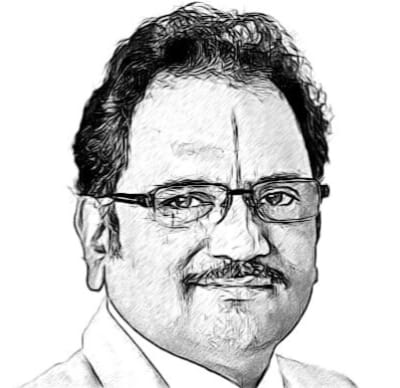
Law professor and eminent columnist
Madabhushi Sridhar Acharyulu, author of 63 books (in Telugu and English), Formerly Central Information Commissioner, Professor of NALSAR University, Bennett University (near Delhi), presently Professor and Advisor, Mahindra University, Hyderabad. Studied in Masoom Ali High School, AVV Junior College, CKM College, and Kakatiya University in Warangal. Madabhushi did LL.M., MCJ., and the highest law degree, LL.D. He won 4 Gold Medals at Kakatiya University and Osmania University.
Email: cicsridhar@gmail.com
Mobile: 8447651505