The Sufi Foundations-The Hindu Devotional Practices
Inside a small, dilapidated village mosque in late 19th-century Maharashtra, two sounds echoed together every single day: the chanting of Islamic prayers (Fatiha) and the ringing of Hindu temple bells (Aarti). The man sitting on the floor wore the coarse robe of a Muslim mendicant, kept a sacred fire burning, and welcomed orthodox scholars and manual labourers to sit on the same mat. He called his mosque Dwarkamai.
Long before modern scholars and courts debated how different communities could live together in India, this unlettered mendicant in an obscure village showed how it was actually done. He did not issue policy papers, write treatises, or host interfaith summits. He simply opened the doors of an old village mosque and invited everyone to sit on the same floor.
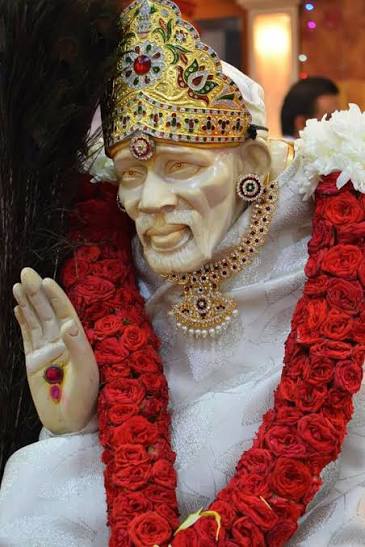
For over a century, observers, theologians, and legal custodians have attempted to resolve a central debate: Was Sai Baba of Shirdi fundamentally a Muslim Sufi mystic or a Hindu divine avatar?
Partisans on both sides bring forward extensive historical evidence:
- The Sufi Perspective: To Islamic scholars and Sufi historians, he was an itinerant Muslim mendicant (fakir). He lived in a village mosque, wore the traditional unstitched robe (kafni), spoke of Quranic principles like Tawakkul (trust in God) and Saburi (patient perseverance), and constantly repeated the invocation “Allah Malik” (God is the Master).
- The Avatar Tradition: The Avatar Tradition: To millions of Hindu devotees, particularly within the Dattatreya tradition of Western and Southern India, he was embraced as a avatar (incarnation) of the divine trinity—representing Lord Dattatreya, the composite form of Brahma, Vishnu, and Shiva. Devotees witnessed his miraculous acts (leelas), revered his deep expositions of the Bhagavad Gita, and offered traditional worship such as Aarti and Abhishekam. Sanatana Dharma has long recognized that while ancient deities represent the foundational expressions of the divine, new enlightened forms emerge across generations to guide humanity toward peace, self-realization, and immediate spiritual solace.
Yet, trying to fit his life neatly into an exclusive religious box misses the real point of his historical legacy. Sai Baba was, above all, a practiced pluralist. His refusal to be categorized was not a passive compromise. It was a deliberate, highly effective strategy for building social harmony from the ground up.
The Strategy of Sacred Ambiguity
Instead of choosing one distinct religious identity or attempting to establish a new formal religion, Sai Baba relied on what social thinkers call strategic ambiguity. By keeping his birth, parentage, personal background, and caste intentionally unannounced, he built a neutral domain that welcomed people from every background. No single religious community could claim exclusive ownership over his persona.
Maintaining this shared sanctuary required active intervention, not passive neutrality. When conservative elements occasionally attempted to block non-traditional worship inside Dwarkamai, Sai Baba used his fierce personal authority to protect devotees, ensuring that people of all backgrounds could perforum their sacred rituals safely and without fear.
Inside Dwarkamai, two distinct devotional traditions ran side by side without friction:
- Simultaneous Devotion: Islamic prayers (Fatiha) were recited in the exact same room where Hindu followers rang temple bells, offered Aarti, and distributed Prasad.
- Breaking Caste and Purity Rules: In a society structured by strict rules of ritual purity and social distance, Sai Baba made everyone sit on the same floor mat. Orthodox scholars, manual labourers, landed gentry, and marginalized communities sat together, ate from common dishes, and received sacred ash (Udi) directly from his hands.
- Ethics Over Dogma: He stripped away complicated scriptural arguments, focusing instead on two clear, universal pillars: Shraddha (firm faith) and Saburi (patient endurance). By keeping the focus on personal character, he removed the usual triggers for religious dispute.
The Daily Habits: Dressing, Speech, and Sacred Routines
To truly understand Sai Baba’s lived pluralism, one must look closely at his daily habits. He did not preach abstract philosophy from an isolated platform. His daily routines communicated his message directly to everyone who entered Shirdi.
1. Attire and Demeanour
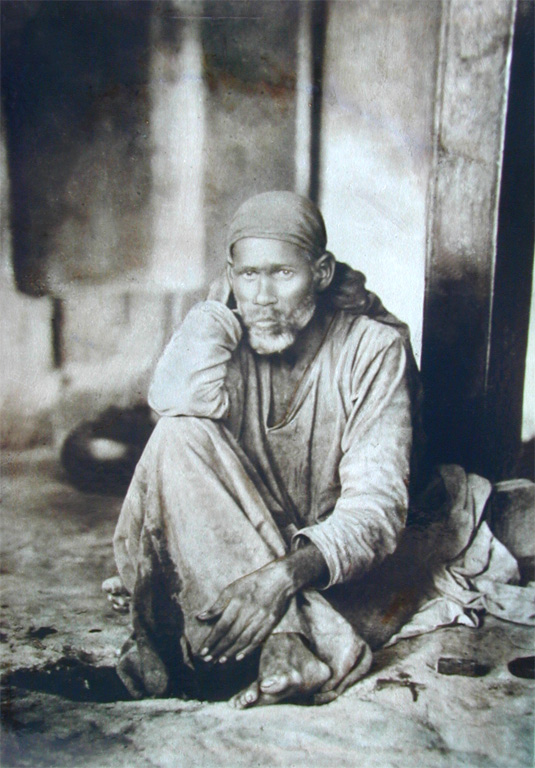
For nearly five decades, Sai Baba dressed as a simple mendicant. He wore a long, unstitched robe (kafni) made of coarse cloth and wrapped a piece of cloth around his head. His appearance reflected absolute detachment from material wealth. He walked barefoot through the lanes of Shirdi, begging for food (madhukari) every morning from a few fixed households, taking bread and lentils without inquiring whether the household was Hindu or Muslim.
2. The Continuous Fire (Dhuni)
Inside Dwarkamai, he maintained a continuous sacred fire (Dhuni). This practice drew seamlessly from both Nath yogi lineages (an ancient Shaivite ascetic tradition known for Hatha Yoga and keeping sacred fires) and Sufi paths. From this fire, he distributed sacred ash (Udi) to every visitor. For devotees, receiving Udi was not a matter of theological alignment; it was a tangible token of grace, comfort, and physical healing.
3. Language and Instruction
His everyday language blended Islamic terminology with local Maharashtrian vernacular. He routinely uttered phrases such as “Allah Malik” (God is the Master) and “Ya Parvardigar” (O Sustainer / Creator). At the same time, when learned scholars sat at his feet, he offered deep, intuitive insights into Hindu sacred texts, including the Bhagavad Gita, the Upanishads, and the Eknathi Bhagavata (a popular 16th-century Marathi text by Saint Eknath that explained devotion in simple, everyday language).
Active Participation in Hindu Festivals
Sai Baba did not merely tolerate Hindu customs from inside a mosque; he actively embraced, hosted, and blessed them in his courtyard.
1. Ram Navami and the Urs Synthesis
The most striking example of his lived synthesis occurred in 1897, when a devotee named Gopalrao Gund proposed celebrating an annual local fair (Urs) in honour of Sai Baba. Sai Baba agreed, but suggested that the fair be held on the auspicious day of Ram Navami. From that year onward, the Hindu festival celebrating the birth of Lord Rama and the Islamic procession of Urs were celebrated together in Shirdi on the exact same day.
2. The Sandal Procession and Flag Raising
The atmosphere during this joint festival was electric, defined by two distinct cultural processions winding through the narrow village lanes of Shirdi:
- The Muslim Sandal Procession: Initiated by Muslim devotees, this procession carried bowls of fragrant sandalwood paste (Sandal) accompanied by traditional music and incense. The procession marched directly to Dwarkamai, where the paste was reverently smeared on the threshold and walls of the mosque, a traditional Sufi ritual honouring a saint’s sanctuary.
- The Hindu Flag Procession: Simultaneously, Hindu devotees organized a colourful procession carrying large embroidered silk flags (Nishan). They marched to the mosque and hoisted these flags high atop its roof and domes, symbolic of a traditional Hindu temple festival (Utsav).
Rather than causing friction over which community owned the space, Sai Baba personally welcomed and blessed both groups. He stood at the mosque entrance as sandal paste was applied to his dwelling, while watching Hindu flags flutter above its roof. By inviting both traditions into the exact same yard, he turned potential conflict into a shared village celebration.
3. Diwali and Lighting the Mosque
On Diwali nights, Sai Baba took great delight in illuminating the mosque with small earthen lamps (diyas). Local oral history records that when village shopkeepers once refused to give him oil for his lamps as a prank, Baba simply filled the lamps with water, lit them, and kept Dwarkamai brilliantly illuminated throughout the night.
By actively hosting Ram Navami, lighting Diwali lamps, and blessing Gokulashtami celebrations inside a mosque, he turned traditional religious boundaries into shared cultural moments.
Top-Down Engineering vs. Organic Harmony
The historical model established in Shirdi stands in sharp contrast to official efforts to force religious unity from the top down.
Throughout history, rulers and states have occasionally tried to manufacture blended traditions by imperial decree. A famous example is Emperor Akbar’s Din-i-Ilahi in the 16th century. While noble in intention, Akbar’s synthetic creed was an elitist project born out of royal court philosophy. It failed to take deep root among ordinary citizens and virtually disappeared after the emperor’s death because people felt it was an artificial construct imposed from above.
In contrast, the Shirdi model succeeded because it was organic, local, and non-institutional:
- No Political Ambitions: Sai Baba sought no political power, started no formal organization, built no material wealth, and asked for no royal favours. Because he threatened no group’s social or political position, people gathered without fear or hostility.
- Shared Living Habits: Harmony was achieved not through high-level theological summits or official policy documents, but through daily shared habits—sitting together, sharing food, and seeking spiritual solace in the same room.
Historical Footnote: Lokmanya Tilak’s Visit (1917)
A striking historical illustration of Sai Baba’s broad appeal was the visit of Lokmanya Bal Gangadhar Tilak in May 1917. Accompanied by his associate G.S. Khaparde, Tilak—a giant of the Indian national movement and a renowned scholar of orthodox Hindu philosophy—travelled to Shirdi to seek an audience with the saint.
The encounter at Dwarkamai was brief but profound. Tilak offered his respects inside the mosque, where shawls were exchanged as a mark of mutual regard. Sai Baba blessed Tilak’s efforts in national awakening, while offering practical guidance on patience, health, and the importance of steady perseverance (Saburi) during intense public agitation.
This meeting underscored how Sai Baba’s presence resonated across the spectrum of Indian society: a leading nationalist figure found spiritual quietude inside a rural mosque hosted by an unlettered mendicant.
The Inclusion Takeaway: From Ritual to Action
We live in an age where religious devotion often gets reduced to competitive symbolism, loud public rituals, or rigid identity markers. The history of Shirdi demonstrates that enduring social harmony is rarely manufactured in government offices or legal courts. It is built in shared physical spaces where common ethics override formal divisions.
Demanding a single, final answer to whether Sai Baba of Shirdi was a Sufi saint or a Hindu avatar misses the entire lesson of his life. Divisions simply fade away when people place shared moral values, mutual respect, and authentic quiet faith above rigid religious boundaries.
The true definition of devotion, in the Shirdi model, was never found in mere outward ritual or competitive prayer. Real devotion lay in active, everyday conduct.
Sai Baba did not organize interfaith summits, write theological manifestos, or hold conferences on national unity. Instead, he quietly revolutionized daily social life in Shirdi. He made people sit side-by-side on the exact same woven mat, eat meals cooked in the exact same pot, and celebrate each other’s sacred festivals in the exact same courtyard. By breaking down centuries of caste distance and religious division at the dining mat, he proved that genuine human connection is built not through speeches, but through shared living.
If we seek to truly honour Sai Baba today, it cannot be achieved merely by making pilgrimages, placing flowers on a shrine, or offering ritual prayers inside Dwarkamai. True devotion is not a passive performance; it is active imitation. The real test of honouring his legacy lies in whether we possess the courage to live as he lived. It means becoming practiced examples of radical compassion, practicing quiet humility in an age of loud assertions, and creating active, lived spaces of inclusion within our own families, workplaces, and communities.
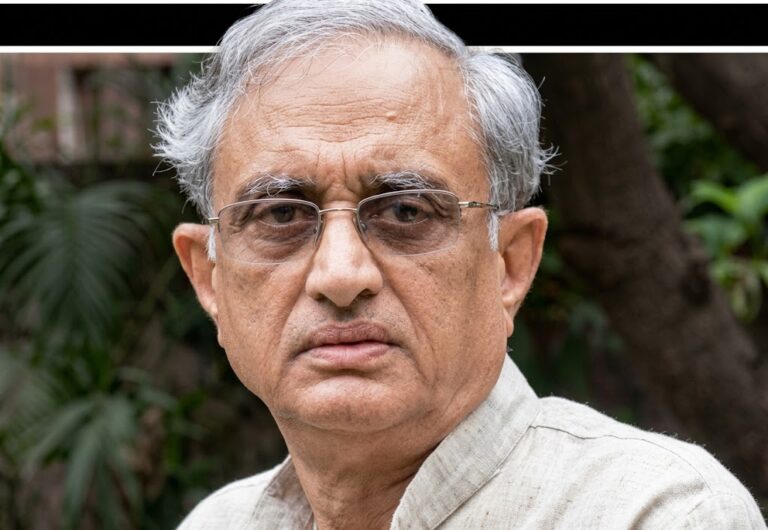
Author Biography: – R Srinivasa Murthy, the author, is a corporate leader, an independent writer, and a student of Hindhu Philosophy. He Identifies as a Demystic, committed to removing unnecessary mysticism from traditions to offer practical systems for the next generation. His upcoming book, Logic of And: Sanatana Dharma as a Toolkit for the Contemporary Seeker, aims to bridge ancient wisdom with modern life to foster an inclusive, living civilisation.

With a journalistic long journey, we bring you https://primepost.news, a dynamic platform committed to unraveling the intricate tapestry of Indian politics, particularly delving deep into the heart of Telangana and Andhra Pradesh. Our blog is not just a source of news; it’s a reservoir of insights, analysis, and thought-provoking reviews.

Superb sir 🌞
Lot of information about Sai Baba.
Nice and read in a Easy understanding language.
Thanks sir
Dear Murthy ji, I read your article with great interest, and it genuinely touched me. What I found particularly meaningful was how beautifully you have brought out the true essence of Sai Baba, not through grand speeches or rituals, but through the simple act of bringing people together and making equality, compassion and inclusion a part of everyday life. The thought that true devotion is not merely about worshipping, but about living the values that Sai Baba stood for, is both profound and very relevant to our times. Knowing you personally and having had the opportunity to work with you, I could also connect with the deeper message of the article, the importance of humility, compassion and treating people with dignity, irrespective of position or background. It is a wonderful piece, Sir, and more than an article, I feel it is a gentle reminder to all of us about how we should strive to live. Truly inspiring. 🙏
Well written about the great personality of Shirdi Saibaba that helped bring Hindus and Muslims together. Visit of Lokmanya Tilak illustrates the importance of Saibaba even in terms of collective strength required from both communities in freedom struggle!
Probably a second successive article on the role and personality of Satya Saibaba ( seen as re-incarnation of Shirdi Saibaba) may be befitting – as relevant to later years in fostering Universal love, institutionalized service, Vegetarianism, and supporting Sanatan Dharma without creating controversy. Interestingly both these great personalities were close to the hearts of Hindus only.
Very good writeup