press freedom within the fundamental right of every citizen
Though the framers of the Indian Constitution chose not to mention a separate clause for the press, they intentionally nested press freedom within the fundamental right of every citizen to “freedom of speech and expression” under Article 19(1)(a). As the Supreme Court has affirmed in landmark rulings from Romesh Thappar to Indian Express Newspapers, the press is the primary vehicle through which citizens exercise their democratic right to receive and impart information. While reasonable restrictions exist under Article 19(2), such as public order and the sovereignty of the state, the threshold for state interference remains exceptionally high. Bureaucratic overreach disguised as “regulation” has consistently met severe judicial and civil pushback.
Fourth Estate of Constitutional Pillar
India’s post-independence history features distinct episodes where united journalistic mobilization and public outcry compelled powerful governments to withdraw restrictive measures.
Victory of Press: 1988 Defamation Bill
In September 1988, the Rajiv Gandhi government introduced the controversial Defamation Bill in the Lok Sabha, attempting to widen the legal scope of criminal defamation to penalize investigative reporting and stifle dissent.
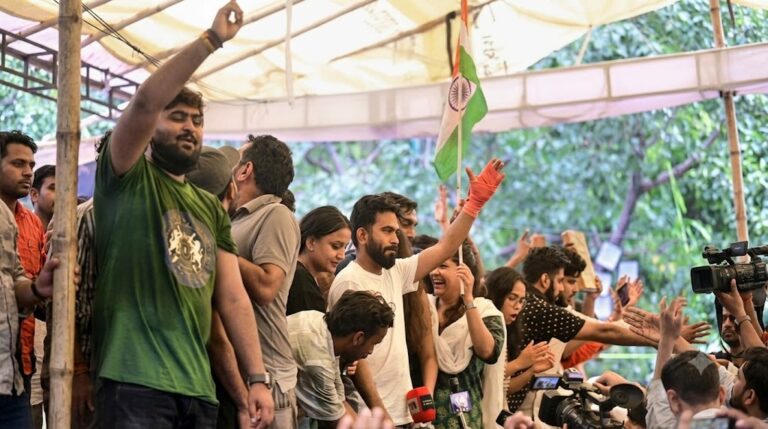
The response was immediate and unprecedented: Nationwide Collective Action resulted in journalists, editors, publishers, lawyers, students, and trade unions staging nationwide protests and strikes, and over 100 public meetings took place in district towns across the country. Coordinated Boycotts by Media professionals adopted a unified strategy. At government press conferences, senior reporters asked ministers upfront whether they supported the bill; when officials hedged, journalists staged mass walkouts.
Then it was unconditional withdrawal. Faced with unified solidarity led by independent voices like The Indian Express under Arun Shourie, along with resistance from within the ruling party, the government withdrew the bill unconditionally, reaffirming that a free press remains vital to democratic accountability.
Let us see the historic turning points in press resistance. In 1975-77, the Emergency resulted in a fight between censorship vs defiant press resistance. In 1988, Rajiv Gandhi’s Defamation Bill resulted in a nationwide strike forcing total withdrawal. Then in 2018, the NDA issued a Fake News Circular; within it was “out 24-hour rolled out” after swift outcry by media bodies. Now in 2026, the Federation of Press Clubs National Conclave in Hyderabad called for credibility, AI, and the fight for ethical freedom.
Fighting NDA on the 2018 “Fake News” circular
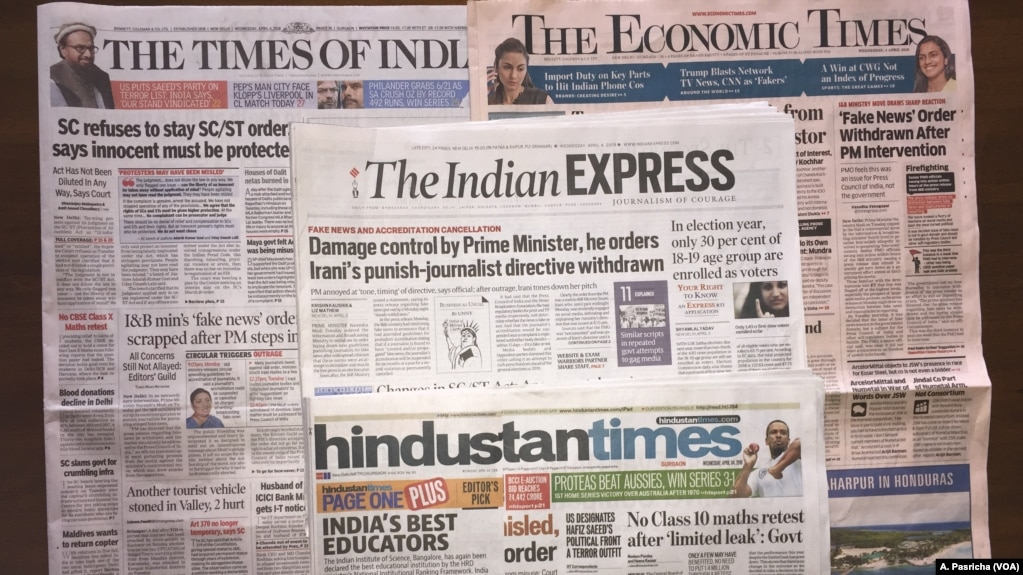
Three decades later, in April 2018, the Ministry of Information and Broadcasting introduced an amendment to journalist accreditation guidelines. Under this directive:
- Accusations of “fake news” against accredited journalists were to be referred to the Press Council of India (PCI) for print or the News Broadcasters Association (NBA) for broadcast.
- Crucially, a journalist’s accreditation was to be suspended immediately during the 15-day probe window, followed by suspensions of six months, one year, or permanent cancellation upon subsequent violations.
A senior official in the PMO said: “The PM has directed that the press release regarding the fake news be withdrawn and the matter be addressed only by the Press Council of India.” The government has also taken the view that the government should not interfere in the matter, the official added. Following the message from the PMO, the Ministry said in a statement that the guidelines “to regulate fake news… stand withdrawn.”
Earlier, the then Minister Smriti Irani announced the norms said accreditation of a journalist could be cancelled if the news reported by him/her was found to be “fake.” Interestingly, the notification, which did not define the phrase “fake news,” said complaints would be referred to the Press Council of India if they pertained to the print media and to the News Broadcasters Association (NBA) if they related to the electronic media. The regulatory agencies would have 15 days to dispose of a complaint. During the period of probe, the journalist’s accreditation would be suspended, the note said. The note further said that on first violation, the accreditation would be suspended for six months, on the second violation for a year and on the third violation, it would be cancelled permanently.
Because the order lacked a legal definition of “fake news” and imposed punitive suspensions before guilt was proven, media bodies and opposition leaders raised widespread alarm. Gautam Lahiri, then president of the Press Club of India, asserted:
“The government has no mandate to control the press. The media were also worried about growing incidents of fake news, but the Press Council is the right platform to deal with complaints.”
Facing backlash from media organizations that drew parallels to Emergency-era controls, the Prime Minister’s Office (PMO) intervened within 24 hours, directing that the press release be withdrawn and that matters concerning news standards remain solely within self-regulatory bodies like the PCI.
For example, Jency Jacob, the managing editor for boomlive.in, sought a fact-checking website to disprove fake stories. Jency said:
Political parties often create fake news, not the media; the order was an attempt by the government to confuse people about the origins of fake news. Many senior journalists questioned the timing of the effort to stop fake news.
There will be important state elections before the general elections in 2019. N. Bhaskars Rao, head of the Center of Media Studies in New Delhi, said: “The reversal has started. Somewhat bad press is coming up. This is an overreaction to that.” The BJP has ignored the criticism. The party said the order was removed quickly because the Centre wanted to reinforce its belief in press freedom. Most fake news in India spreads through the social media platform WhatsApp. Its influence has grown as the spread of mobile phones increases internet availability around the country.
Checking Fact-checking websites
A few people have started fact-checking websites to stop the spread of fake news. They say many people, especially in the countryside, do not ask where information comes from on social networks. They have also found that untrue information includes everything from false weather reports to bad health information.
Another example is Pratik Sinha, who started the website Altnews, who said the number of fake stories with political messages on social media often grows at election time. He said the December elections in Gujarat state showed that both the ruling and opposition parties have used fake news as a campaign tool. Sinha said that the biggest problem is that fake news can increase religious tension and cause violence. His website has found fake news from many people who are ideologically active. The editor of the website Postcard News was arrested for writing an untrue story about Muslims attacking a Jain monk, a religious worker who had been hurt in an accident. A year ago, untrue stories in a village about child kidnappers led to the death of seven people.
Nation-Building
From its roots in the anti-colonial struggle, Indian journalism has functioned as a public watchdog rather than a mere industry. The press was foundational to creating an informed citizenry through pioneering publications:
- Mahatma Gandhi: Young India, Navjivan, and Harijan
- Dr. B.R. Ambedkar: Mooknayak and Bahishkrit Bharat
- Lokmanya Tilak: Kesari and Mahratta
- Dadabhai Naoroji: Rast Goftar
- Maulana Abul Kalam Azad: Al-Hilal
- Historic Dailies: Amrita Bazar Patrika and The Hindu
Preserving the vitality of Article 19(1)(a) requires a double commitment: unwavering solidarity among press clubs and civil society against executive overreach, combined with rigorous, independent ethics from journalists to retain the public trust. It is our story of the resilience of Indian democracy. It has always been tied to the independence of its fourth estate. Freedom of the press in India is not a statutory concession handed down by the state; it is embedded within the constitutional guarantee of free expression under Article 19(1)(a) of the Indian Constitution. Whenever executive power has sought to curtail this freedom, whether through sweeping penal codes or bureaucratic accreditation guidelines, collective resistance and constitutional vigilance have repeatedly demonstrated that the right to speak, question, and report cannot be easily
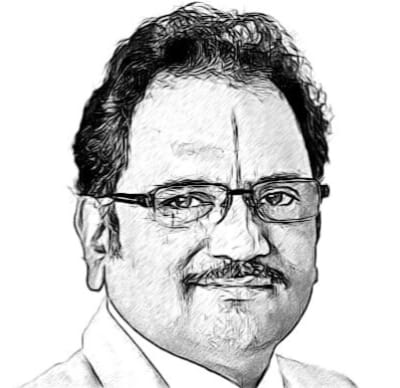
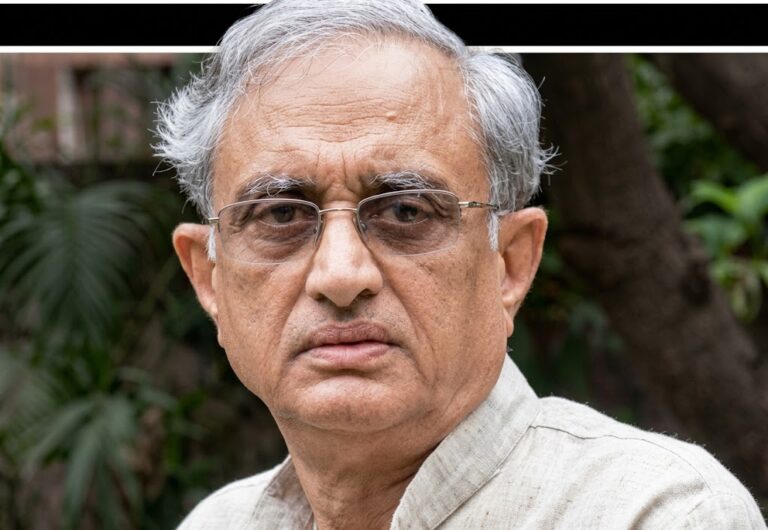
Law professor and eminent columnist
Madabhushi Sridhar Acharyulu, author of 63 books (in Telugu and English), Formerly Central Information Commissioner, Professor of NALSAR University, Bennett University (near Delhi), presently Professor and Advisor, Mahindra University, Hyderabad. Studied in Masoom Ali High School, AVV Junior College, CKM College, and Kakatiya University in Warangal. Madabhushi did LL.M., MCJ., and the highest law degree, LL.D. He won 4 Gold Medals at Kakatiya University and Osmania University.
Email: cicsridhar@gmail.com
Mobile: 8447651505