A SATIRICAL REALIST PORTRAIT OF PROTEST, POLITICS, AND THE PERILOUS BURDEN OF LAW ENFORCEMENT
Democracy celebrates dissent.
Politics frequently commercialises it.
The Constitution guarantees the citizen the right to assemble peacefully. It does not guarantee the right to intimidate, vandalise, assault, or paralyse the institutions of the State. The distinction is neither semantic nor philosophical—it is the very foundation upon which constitutional democracy survives.
Yet, in contemporary politics, this distinction is increasingly blurred.
What begins as a protest often ends as political theatre.
What is announced as public outrage sometimes resembles carefully choreographed mobilisation.
What is proclaimed as the “voice of the people” occasionally sounds remarkably like the echo of partisan strategy.
The modern police officer therefore stands not merely between two opposing groups but between constitutional duty and political convenience.
He becomes the reluctant actor in a drama written by others.
Political parties, irrespective of ideology, have discovered that a street protest often generates greater political dividends than a parliamentary debate. The street offers spectacle. Parliament demands substance. Television cameras prefer burning barricades to reasoned arguments. Social media rewards confrontation far more generously than constitutional discourse.
Thus, outrage has become a political commodity.
Agitation has become electoral currency.
The crowd has become an instrument of negotiation.
The police become the inevitable target.
The tragedy is almost Shakespearean.
Those who quietly draft protest strategies seldom stand in the front ranks when stones begin to fly. They remain comfortably distant while ordinary young men, emotionally charged and politically mobilised, confront rows of police personnel. The architects of confrontation rarely suffer fractured skulls or broken limbs. The consequences are borne by the anonymous constable and the equally anonymous protester.
Violence has no ideology.
It merely changes slogans.
The overwhelming majority of demonstrators in any democracy may assemble peacefully and lawfully. Their constitutional right deserves full protection. Yet history repeatedly demonstrates that genuine grievances can be hijacked by those seeking confrontation rather than reform. Criminal elements, habitual offenders, organised provocateurs, or individuals pursuing entirely different agendas may exploit the cover of a large gathering. Such allegations require evidence and due legal process, not political rhetoric. But if violence occurs, the law cannot distinguish between a stone thrown in anger and one thrown for political advantage. Both strike with equal force.
A peaceful procession deserves police protection.
A violent mob demands police intervention.
Confusing the two destroys both liberty and law.
There exists another fashionable illusion—that every police response constitutes oppression.
Nothing could be more intellectually dishonest.
The first duty of the police is not popularity.
It is prevention.
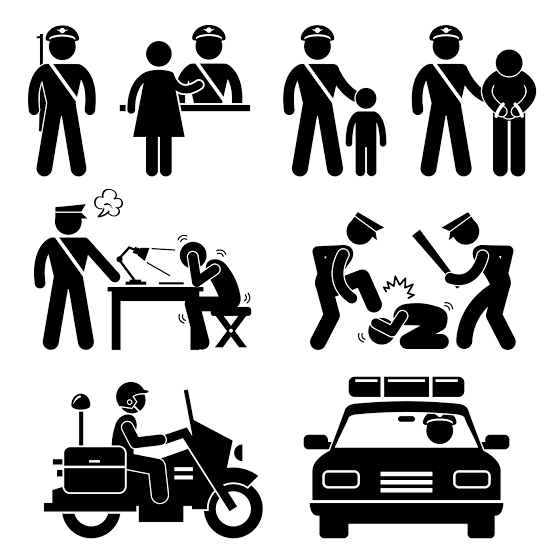
When intelligence warns that a protected institution, a legislature, a court, or another vital public establishment faces the risk of unlawful intrusion or violence, the police cannot simply become passive spectators in the name of appearing democratic. Preventive action, undertaken within the bounds of law and with the least force reasonably necessary, is often what prevents a volatile situation from becoming a national tragedy.
The public frequently applauds restraint.
They seldom appreciate the consequences of unlimited restraint.
A police officer who hesitates excessively in the face of escalating violence may later be condemned for failing to protect lives and institutions. The same officer, if compelled by circumstances to use lawful and proportionate force to restore order, may be accused of excess. Such is the peculiar arithmetic of public life: action invites criticism; inaction invites disaster.
The law does not demand paralysis.
It demands proportionality.
It demands restraint.
It also demands effectiveness.
The difficult question is not whether force should ever be used.
The real question is whether every reasonable alternative has first been exhausted and whether the force employed remains lawful, necessary, and proportionate to the threat.
That is the burden the police carry.
It is a burden that politicians rarely share.
The satirical irony is irresistible.
Political parties routinely extol the sanctity of peaceful protest while simultaneously celebrating every dramatic confrontation that enhances electoral narratives. The vocabulary changes with political location. Yesterday’s “violent mob” miraculously becomes today’s “brave citizens.” Yesterday’s “firm policing” becomes today’s “State repression.” Principles often migrate with astonishing speed—from opposition benches to treasury benches and back again.
The uniform alone remains constant.
It changes neither colour nor ideology.
It merely changes shifts.
Civilisation is not tested when citizens agree.
It is tested when they disagree.
The right to protest is among democracy’s greatest strengths.
The refusal to remain peaceful is among its gravest dangers.
A republic cannot permit violence against its institutions or against those entrusted with protecting them, for such violence ultimately weakens the constitutional order itself. Equally, the State must ensure that policing remains disciplined, restrained, accountable, and firmly anchored in the rule of law.
The policeman is neither the enemy of democracy nor its master.
He is its custodian.
The protester is not the enemy of the State.
He is its citizen.
Politics should not convert either into expendable instruments for partisan advantage.
For when the street becomes Parliament, and Parliament merely becomes an audience to the street, constitutional democracy begins to surrender its dignity to organised spectacle. The true strength of a democracy lies not in the volume of its slogans but in the discipline of its citizens, the responsibility of its political leadership, and the measured restraint of those who stand in uniform between liberty and anarchy.
WHEN POLITICS INCITES, THE STREET IGNITES.
WHEN THE STREET IGNITES, THE POLICE BLEED.
WHEN THE POLICE BLEED, THE CONSTITUTION ITSELF IS PUT TO THE TEST
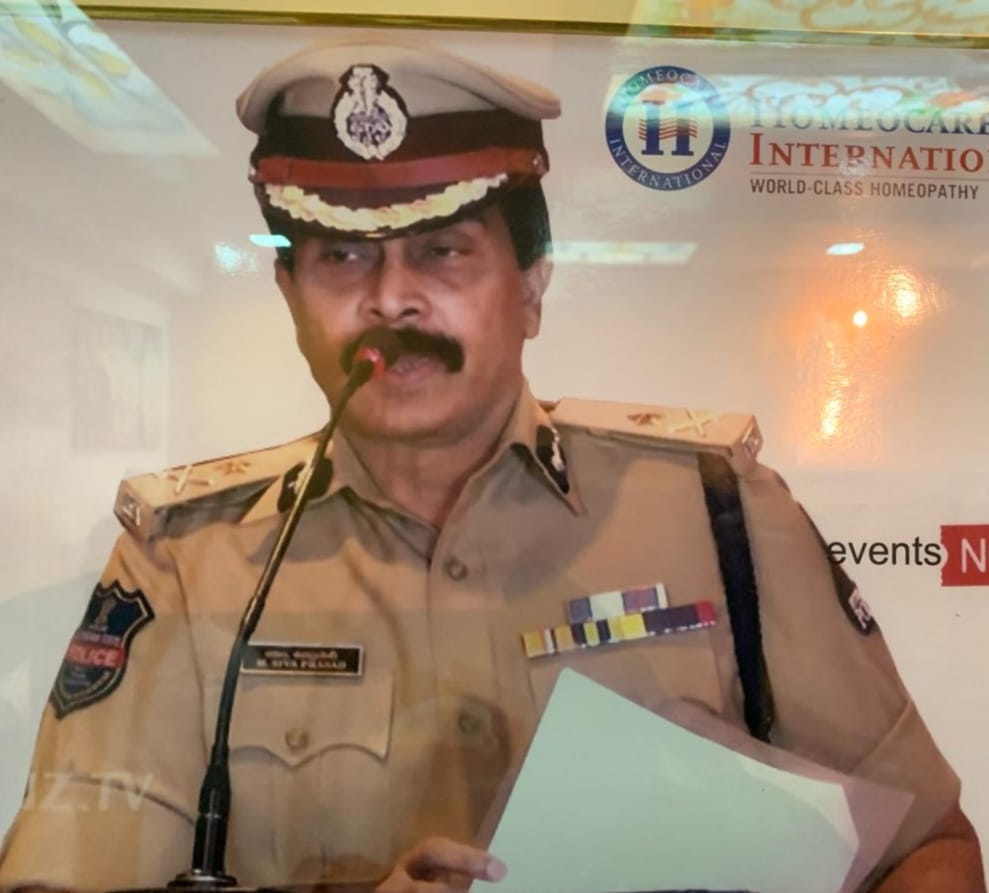
M. Shiva Prasad, IPS (Rtd.) is a dedicated law enforcement professional who served the combined Andhra Pradesh cadre before opting for the Telangana cadre. Though a native of Andhra Pradesh, he considers himself a true Hyderabadi with an abiding love for the Telugu people. Driven by sincerity, fearlessness, and a lifelong fight against inequality and injustice, his ultimate strengths remain his goodwill and deep affection for the public and the police force. Today, he continues his mission by writing snippets and articles true to his conscience.
Email: Shivareach@yahoo.com
Mobile: 98480 38774