PART-I
Beyond the Horizon: The Life, Philosophy, and Eternal Presence of Visionary Guru
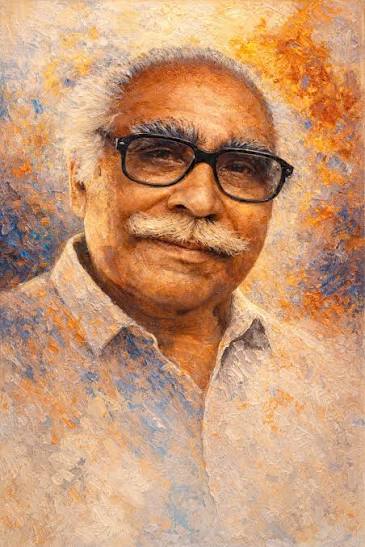
To fully understand the monumental impact of Chennavajhyala Viswanadhan popularly known as C.V.N. Dhan, one must first grasp the historical landscape of Indian education. For millennia, India served as the spiritual, cultural, and intellectual lighthouse of the world. It was a civilization where knowledge was not merely a commodity for economic advancement, but a sacred pursuit aimed at human transformation and liberation.
The Ancient Foundations: Long before the rise of modern Western universities, ancient India birthed world-class centers of higher learning that attracted scholars across continents. Takshashila (Taxila): Flourishing as early as the 6th century BCE, it was a crucible of statecraft, medicine, and philosophy, where sages like Chanakya composed foundational treatises.
Nalanda: A sprawling residential university hosting thousands of students and international scholars, it functioned as a global hub for advanced theological, philosophical, and scientific discourse. These institutions operated on the foundational principles of the Gurukul system—a model defined by deep mentorship, rigorous personal discipline, holistic character development, and a sacred bond between the Guru (teacher) and the Shishya (disciple).
The Transition to Modernity and the Role of BHU
With the advent of colonial rule, the traditional Indian educational fabric was systematically dismantled, replaced by a Western-centric framework designed primarily to produce administrative clerks. However, the early 20th century witnessed a powerful cultural renaissance aimed at reclaiming the Indian intellectual identity.
Central to this revival was the establishment of Banaras Hindu University (BHU) by Pandit Madan Mohan Malaviya. BHU arose as a unique bridge between eras. It synthesized traditional Indian knowledge, values, and spiritual philosophy with modern scientific inquiry. Graduating from BHU was not merely an academic milestone; it was a socio-cultural baptism. It instilled a deep sense of responsibility to utilize education as a tool for national awakening and societal elevation.
It was within this intellectual lineage—spanning from the ancient corridors of Nalanda to the vibrant, nationalistic campus of BHU—that the worldview of Sri C.V.N. Dhan was forged. He would later transplant this profound educational philosophy into the heart of modern Andhra Pradesh. Early Life, Lineage, and Structural Hardships: The journey of Sri C.V.N. Dhan is a classic testament to how vision and internal grit can triumph over structural limitations. His story began in an environment starkly detached from the bustling urban educational hubs he would later construct.
Origins and Topography of Raghavapuram
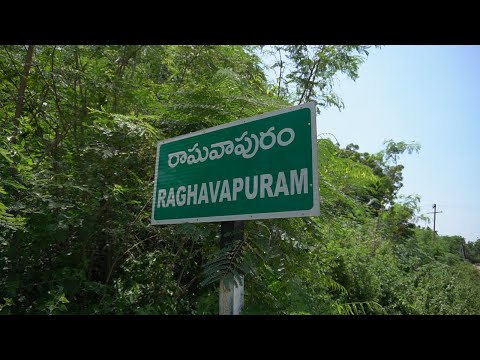
Sri C.V.N. Dhan was born in Raghavapuram, a small, remote village located roughly two kilometers from the town of Nandigama in the Krishna district of undivided Andhra Pradesh. At the time of his birth and early childhood, Raghavapuram was insulated by geographic and infrastructure deficits: The village lacked paved, operational roads. There were no public or motorized commuting facilities connecting it to broader regional networks. Daily life was dictated by agrarian rhythms and the physical constraints of isolation.
Parentage and Scholarly Heritage: Despite its material poverty and lack of modern infrastructure, Raghavapuram possessed deep intellectual and spiritual resources. Dhan was born into a household steeped in traditional erudition. His parents were Sri Chennavadhyala Yajnanarayana Sharma and Srimati Hanumayamma. His father, Sri Yajnanarayana Sharma, was a highly revered scholar of classical scriptures, philosophy, and Sanskrit language. In this domestic ecosystem, the young boy—C.V.N. Dhan—absorbed the values of rigorous study, moral rectitude, and linguistic precision. Education was treated not as a path to personal enrichment, but as a righteous duty (Dharma).
High School Hardships and the Walk to Nandigama
The academic trajectory of C.V.N. Dhan outlines a relentless battle against economic adversity, requiring immense personal sacrifice and a steadfast refusal to yield to circumstances. While Dhan was able to complete his rudimentary primary education within the confines of his native village of Raghavapuram, the village offered no avenues for higher schooling. To attend high school, he had to enroll in the Board High School located in the nearby town of Nandigama.
Without access to bicycles, buses, or carts, the young Dhan had to walk a distance of three miles every single day, navigating rugged terrain through seasonal extremes. Returning home after dusk, he faced a village completely devoid of electricity. Undeterred, he spent his nights huddled over the dim, flickering light of a kerosene lamp, training his eyes and mind on his books late into the night. This rigorous daily routine built the exceptional focus, physical stamina, and mental endurance that defined his later career.
The Turning Point: Financial Constraints and the Pivot to Philosophy
As he completed his school finals with stellar marks, a clear aspiration took root within his family: he was to study medicine and become a doctor. This path aligned with his sharp intellect and innate desire to serve society. However, life presented a major roadblock. The acute financial constraints of an impoverished scholarly family made the exorbitant costs of medical education completely unsustainable.
Forced to pivot, Dhan did not descend into despair. Instead, he redirected his intellect toward the humanities, relocating to Guntur to join the prestigious Andhra Christian (AC) College. Here, he pursued a Bachelor of Arts (B.A.) in Philosophy. His brilliant analytical mind found a perfect home in the subject. He dominated his classes and graduated standing first in his batch, capturing top honors.
The BHU Synthesis
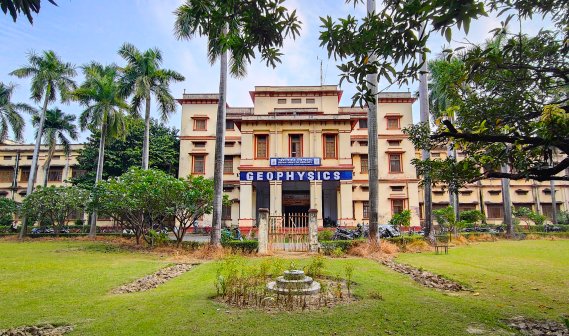
His stellar performance at AC College paved the way for his admission into Banaras Hindu University (BHU) for his post-graduation (M.A. in Philosophy).At BHU, Dhan submerged himself in classical Indian philosophies (Advaita, Vaisheshika, Nyaya) alongside advanced philosophy and psychology like western metaphysical and psychological systems. This advanced training gave him a deep understanding of human motivation, behavioral patterns, and cognitive development. It was this unique blend of philosophical depth and psychological insight that later formed the foundation of his revolutionary teaching methodologies.
Leadership, Charisma, and the Calling to Teach
Dhan ’s time at Banaras Hindu University did more than just sharpen his intellect; it also catalyzed his leadership skills and public presence. Student Leadership and Political Awakening– During his university days, Dhan emerged as a highly charismatic and politically astute figure. He was deeply attuned to the social realities of a changing, post-independence India. Recognizing his integrity, oratorical prowess, and natural leadership, the student community elected him Student Union President. This leadership role served as a crucial testing ground. It taught him how to organize large groups, navigate complex administrative structures, manage diverse human dynamics, and command the attention of an audience. These skills would eventually enable him to build and run an educational empire.
Choosing the Chalk over Lucrative Vistas
Upon returning to Andhra Pradesh with a stellar academic record from BHU and proven leadership credentials, Dhan had numerous lucrative career paths open to him in administration, law, and politics. However, he felt a clear calling toward the classroom. He viewed teaching not as a mere job, but as an active tool for nation-building. He stepped into the role of a lecturer, quickly earning a reputation as an exceptionally inspiring, articulate, and fiercely disciplined educator. He realized that to truly implement his vision of a balanced, culturally rooted education, he needed a blank canvas. This realization led to the founding of his own institution: Ravi College in Guntur.
The Genesis and Atmosphere of Ravi College: In the mid-1970s, specifically in 1974, Sri C.V.N. Dhan laid the foundation stone of Ravi College in the bustling locality of Brodipet, Guntur. This single act permanently transformed the town’s destiny, turning it into the educational capital of undivided Andhra Pradesh. A Modern-Day Gurukul: Ravi College was designed to be much more than a collection of classrooms; it was built to function as a modern-day Gurukul. Dhan believed that true learning could not happen in a chaotic or permissive environment. He sought to create a structured space where character building and academic excellence were treated as two sides of the same coin.
The Atmosphere of Absolute Discipline at Brodipet
Entering the Ravi College campus in Brodipet was often described by contemporaries as stepping into an ashram governed by an unyielding code of conduct. The environment was defined by strict order, focus, and structural accountability. The Code of Conduct: Total silence prevailed outside the classrooms. The moment students and faculty crossed the threshold of the Campus, a deep sense of focus took over.
Classroom Order: Classrooms were meticulously organized, with hundreds of students sitting in rapt attention. There were no distractions, no idle chatter, and no wasted time. A Culture of Diligence: Every hour spent on campus was optimized for learning, demanding total mental engagement from both teachers and students.
The Presence of “Dhan Guru”
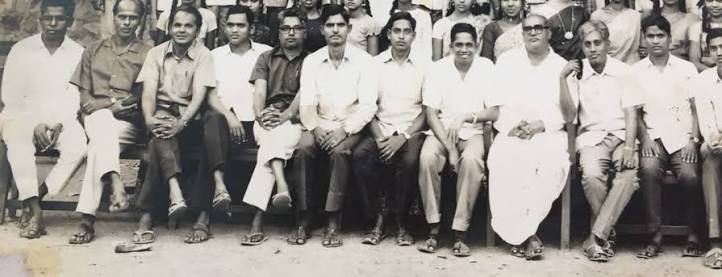
At the absolute center of this disciplined ecosystem was the towering figure of C.V.N. Dhan himself. Affectionately and reverently called Dhan Guru, his physical presence alone was enough to instantly command a room. “He was a towering personality whose very sight inspired a powerful mix of deep respect and a healthy sense of fear among students and faculty alike.”
As he walked down the corridors of Ravi College, his eyes sweeping across the classrooms, an immediate hush would fall over the entire building. Yet, this strict exterior was never malicious. The students quickly realized that his uncompromising demands masked a profound, lifelong dedication to their personal and professional success. His strictness was a protective shield designed to guard his pupils against mediocrity, complacency, and distraction.
The Influx from Across the State
The Coaching Revolution: Transforming Guntur into an Educational Hub
As the news of Ravi College’s highly effective methods and stellar success rates spread, Guntur quickly became a major educational destination. Students began to flock from every corner of undivided Andhra Pradesh—from the remote villages of Rayalaseema to the coastal towns of Circar and the interior districts of Telangana. Before Sri C.V.N. Dhan established Ravi College, preparation for professional streams like Medicine and Engineering was largely unorganized, highly localized, and accessible primarily to privileged urban elites. Dhan single-handedly changed this dynamic.
Under his visionary leadership, Ravi College single-handedly transformed Guntur into a premier educational hub. This development laid the foundation for the regional infrastructure of schools, academies, and coaching centers that continues to define the area today.
Editor, Prime Post
Ravindra Seshu Amaravadi, is a senior journalist with 38 years of experience in Telugu, English news papers and electronic media. He worked in Udayam as a sub-editor and reporter. Later, he was associated with Andhra Pradesh Times, Gemini news, Deccan Chronicle, HMTV and The Hans India. Earlier, he was involved in the research work of All India Kisan Sabha on suicides of cotton farmers. In Deccan Chronicle, he exposed the problems of subabul and chilli farmers and malpractices that took place in various government departments.
Email: ravindraseshu7@gmail.com
Mobile: 9063718675