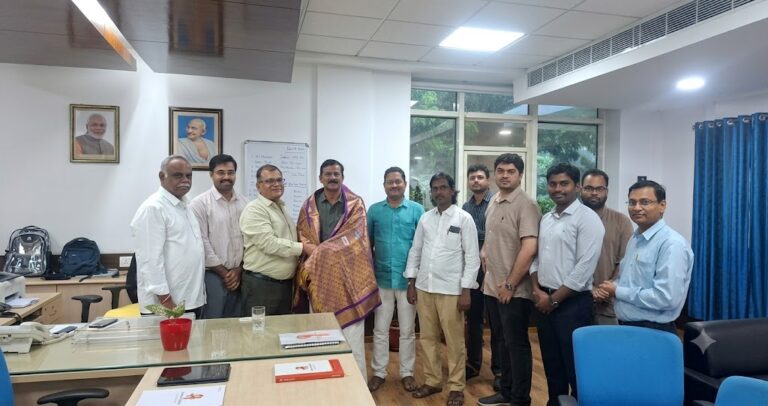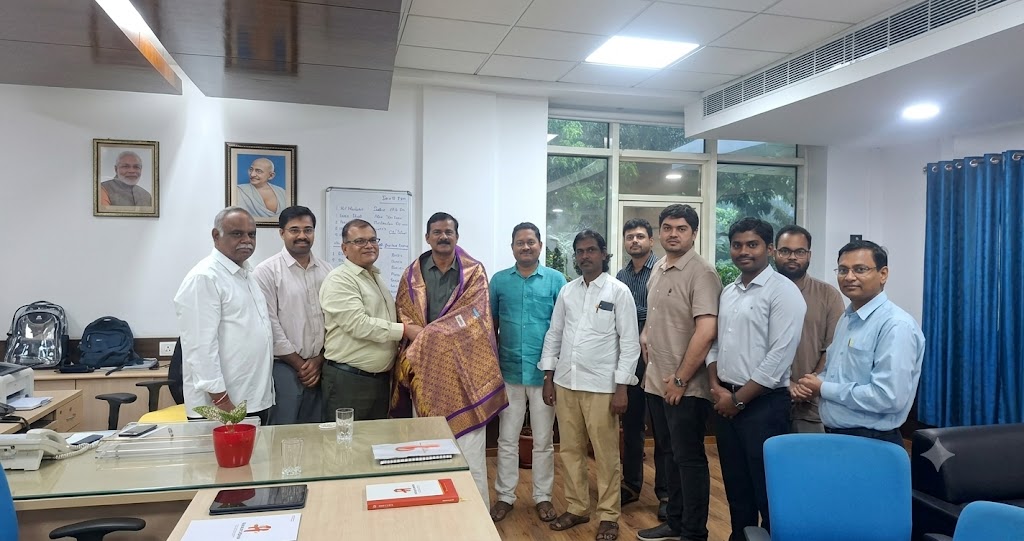
BMS Zonal Organising Secretary and ESIC Central Board Standing Committee former member V Radhakrishnan’s surprise visit
Why ESIC Hospitals in Andhra Pradesh are Failing?
The Employees’ State Insurance Corporation (ESIC), designed under the Ministry of Labour & Employment as a social security shield, is facing an operational breakdown in Andhra Pradesh. ESIC Central Board Standing Committee former member and Bharatiya Mazdoor Sangh Zonal Organising Secretary V. Radhakrishnan’s recently expressed sharp discontent over the dismal state of affairs in the state’s facilities. While private and corporate hospitals in Andhra Pradesh flourish, public healthcare infrastructure meant for the working class lies underutilized, underfunded, and systematically neglected.
The Signal Behind ESIC National Member V. Radhakrishna’s Dissent
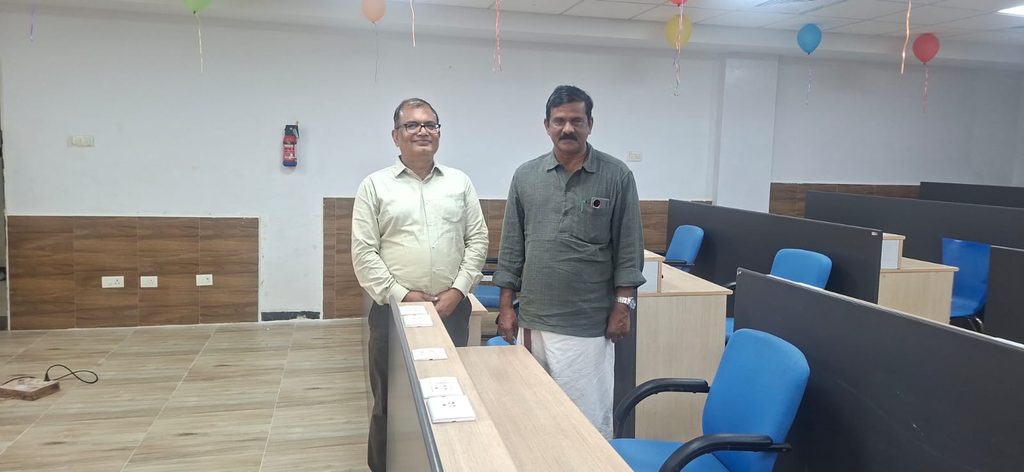
Bharatiya Mazdoor Sangh Zonal Organising Secretary V. Radhakrishna’s outcry serves as a warning regarding administrative failure. Observing sprawling infrastructure—such as the 25-acre Vijayawada ESI Hospital—handling as few as 5 patients a day highlighted a massive waste of public capital. His critique exposes a breakdown in governance where hundreds of crores spent by the Central Government on physical structures yield zero health outcomes due to state-level operational neglect. Services in Visakhapatnam halting simply due to the lack of basic support staff like a washerman (dhobi) illustrates an institutional collapse. Tirupati, Kakinada and Rajahmundry ESI hospitals witnessed poor maintenance. BMS -Andhra Pradesh organising secretary K Lova Reddy organised the program and ESI director Pranav Kumar and Dr R Pradeep Kumar, ESI senior doctor, took part in it.
Why AP ESIC Hospitals Fail While Private Hospitals Flourish
The stark contrast between struggling ESIC facilities and booming corporate healthcare stems directly from funding mechanisms, operational accountability, and service delivery: Fund Flow Blockades: While ESIC infrastructure construction is financed by the Central Government, day-to-day operations and medical delivery fall under the State Government. The state’s failure to release operational funds leaves facilities starved of basic maintenance, essential medicines, and basic auxiliary staff. Quality and Trust Deficit: Chronic shortages of medicines, missing diagnostic equipment, and unmaintained facilities push beneficiaries toward private hospitals. Corporate hospitals thrive by capturing patients who prefer out-of-pocket expenses or state insurance schemes (like NTR Vaidya Seva) over poorly maintained ESI dispensaries. Operational Paralysis: Lacking basic budget allocations for upkeep, hospital administrators and medical staff remain paralyzed, unable to offer comprehensive care despite having bed capacities state-wide reaching up to 400 beds .
Exclusion of Industrial Workforce: The Membership Gap
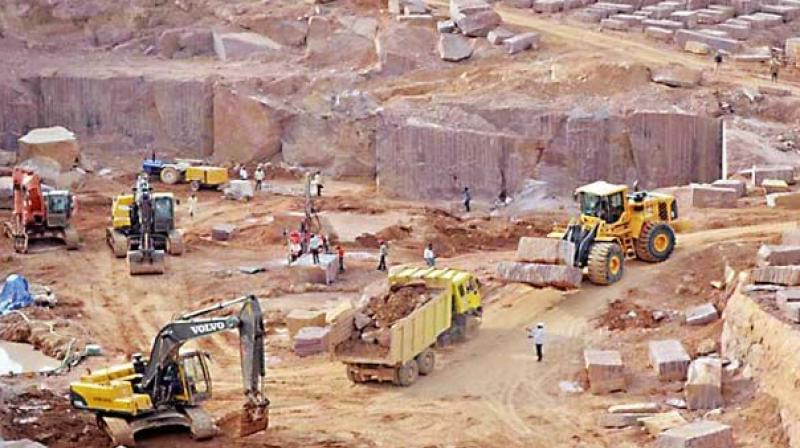
A major concern raised is the exclusion of massive informal and industrial workforces from the ESI umbrella. In districts like Prakasam alone, nearly 200,000 workers in the granite and galaxy industries lack basic ESI enrollment. The figure will be around 13 lakh in other parts of Andhra Pradesh. This exclusion persists due to weak enforcement of labour laws, compliance evasion by factory and quarry owners, and a lack of local ESI infrastructure (such as dispensaries in industrial hubs like Chimakurthy) to incentivize registration. Consequently, hundreds of thousands of hazardous-industry workers remain stripped of health safety nets, pensions, and injury compensation.
Why Kerala Outperforms in ESI Delivery
Kerala’s ESI model succeeds because of integrated healthcare delivery. State Budgetary Priority: The Kerala government treats ESI health services as a core public health priority, ensuring seamless fund flow for medicines, maintenance, and staffing. High Literacy and Worker Awareness and strong trade union networks and high social awareness ensure workers demand their legal ESI rights, keeping administrative bodies accountable. The primary Health Integration and ESI dispensaries in Kerala are deeply integrated into local community health networks, resulting in well-equipped facilities and high daily patient turnout.
Without urgent policy intervention, strict compliance enforcement on employers, and immediate release of operational funds by the state government, Andhra Pradesh’s ESIC infrastructure risks remaining an empty, costly shell.
Principal Correspondent, Prime Post
CS Kulasekhar Reddy had thirty five years experience in journalism. He worked in Udayam and Andhra Bhoomi as reporter and sub-editor. He highlighted various social issues in Chitthoor, Ananthpur, Kadapa and Kurnool districts. He covered assembly sessions and Secretariat happenings.
Email: sangatiksr@gmail.com
Mobile: 9000400679