How VDCs Threaten Rural Democracy and Social Equality
VDC Diktats and the Struggle for BC-Caste Rights
Caste Hegemony and the Struggle for Social Democracy
In the agrarian landscapes of Telangana’s erstwhile Nizamabad district, the shadow of medieval feudalism continues to obscure the promises of modern Indian democracy. Under the pretext of community welfare and rural self-governance, non-constitutional bodies known as Village Development Committees (VDCs) have mushroomed across the region. Far from fostering true collective progress, these informal councils function as extra-judicial fiefdoms that perpetuate upper-caste diktats under the guise of village development. The recent events in Tallarampur village, Yergatla mandal, serve as a stark reminder of how caste hegemony remains deeply entrenched within local structures, directly undermining the egalitarian spirit of the Indian Constitution.
The Tallarampur Crisis: Social Boycott as an Unlawful Weapon
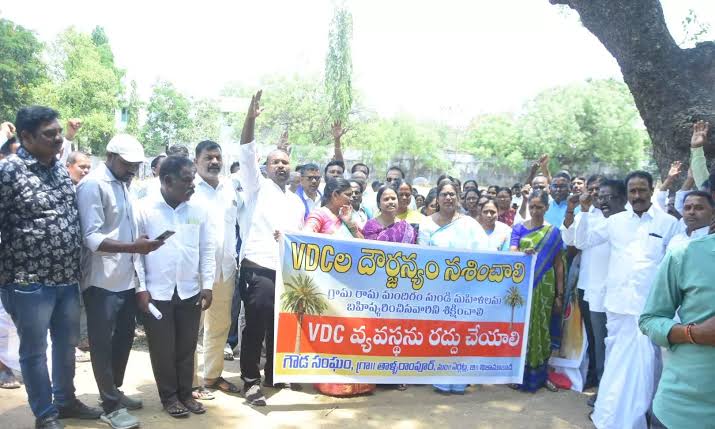
The severe human rights violations perpetrated by the VDC in Tallarampur offer a vivid depiction of modern feudalism at work. What began as a dispute over traditional toddy tree tapping rights and community payments quickly escalated into a campaign of social coercion. When members of the Goud (Backward Class) community resisted illegal monetary demands imposed by the VDC in the name of “development,” the committee enacted a sweeping social boycott. Around 39 Goud families and 10 Scheduled Caste (SC) families were ostracized, with the VDC issuing decrees imposing a fine of Rs 25,000 on any villager who dared to interact with, sell goods to, or support the victimized households. Local livelihoods were disrupted, access to essential services was blocked, and basic dignity was denied.
Senior Nizamabad journalist Pulloor Narender captured this structural hypocrisy, observing, “Though the VDCs used to claim that they are being constituted in a democratic way by taking a member from each caste, the diktat of forward castes is being implemented in the veil of it. Prevailing of upper caste domination in the guise of development is a fact”.
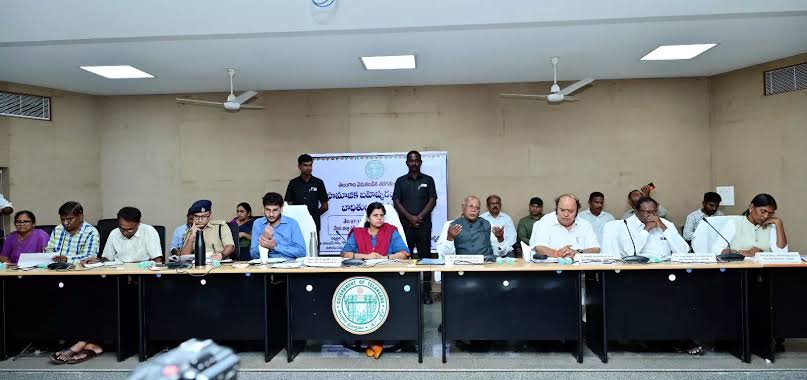
It was only after the victimized families approached law enforcement that the Telangana Backward Classes (BC) Commission took formal note of the crisis, visiting Nizamabad to investigate complaints and directing local authorities to strictly enforce legal prohibitions against extra-constitutional social boycotts.
Historical Continuities: The Legacy of Structural Oppression
The administrative tyranny exercised by VDCs—extorting fees from liquor vendors, toddy-tappers, and local businesses—is not an isolated phenomenon. It is the continuation of centuries of institutionalized discrimination endured by Backward Classes (BC), Scheduled Castes (SC), and Scheduled Tribes (ST). Historically, caste hegemony in rural India relied on total economic leverage and physical segregation to maintain dominance. Lower-caste communities were subjected to forced labour, denied property rights, and systematically excluded from public resources. Whenever these communities asserted their economic independence or sought equal rights, traditional elites resorted to social boycotts, economic blockades, and physical violence to enforce compliance. The modern VDC is simply an evolution of this feudal logic—rebranding traditional caste dominance behind a administrative label.
Philosophical Critique -Ambedkar, Phule, and Periyar
Government authorities and champions of democracy must remain vigilant against these authoritarian tendencies and nip them in the bud. The rise of extra-judicial bodies like VDCs illustrates the danger that social hierarchy poses to democratic institutions, a reality foretold by India’s greatest anti-caste thinkers. Dr. B.R. Ambedkar repeatedly warned that formal political equality remains fragile without underlying social democracy. Highlighting how caste dominance subverts true collective governance, Ambedkar famously remarked, “Political democracy cannot last unless there lies at the base of it social democracy.” In analyzing the oppressive tools used by dominant groups to suppress resistance, Ambedkar noted that social boycotts are used as instruments of control to prevent lower castes from asserting their basic rights.
Mahatma Jyotirao Phule, who pioneered anti-caste activism in 19th-century Western India, exposed how elite groups monopolized power and institutionalized slavery over the Bahujan masses. Phule emphasized that true freedom requires dismantling oppressive social structures rather than accepting superficial reforms under elite control.
E.V. Ramasamy (Periyar) campaigned against the insidious ways traditional power structures adapt to modern times. Periyar asserted that real self-respect cannot exist alongside institutionalized social hierarchies, advocating for the active dismantling of extra-legal bodies that enforce caste dominance.
The Path Forward – Upholding Constitutional Governance
The ongoing dominance of VDCs highlights an urgent governance challenge. When unconstitutional bodies override elected Gram Panchayats, enforce illegal fines, and impose social boycotts, they erode the rule of law and nullify fundamental rights guaranteed under Articles 14, 15, and 21 of the Indian Constitution. To protect vulnerable communities and uphold democratic values, state authorities must move beyond reactionary interventions. Strict Legal Enforcement should be need of the hour. Local administrations must proactively prosecute VDC members who issue illegal diktats or enforce social boycotts under the Protection of Civil Rights Act and relevant provisions of the Bharatiya Nyaya Sanhita (BNS).
Empowering Gram Panchayats
Constitutional village governance must be fortified to prevent informal committees from usurping public revenue and local authority. Sustained Vigilance is need of the hour. District administrations must maintain continuous monitoring mechanisms to ensure marginalized communities can pursue their livelihoods free from extortion and caste-based coercion. Democracy cannot co-exist with systemic social tyranny. Eradicating the feudal oversight of VDCs is an essential step toward fulfilling the constitutional promise of liberty, equality, and fraternity for every citizen.
Editor, Prime Post
Ravindra Seshu Amaravadi, is a senior journalist with 38 years of experience in Telugu, English news papers and electronic media. He worked in Udayam as a sub-editor and reporter. Later, he was associated with Andhra Pradesh Times, Gemini news, Deccan Chronicle, HMTV and The Hans India. Earlier, he was involved in the research work of All India Kisan Sabha on suicides of cotton farmers. In Deccan Chronicle, he exposed the problems of subabul and chilli farmers and malpractices that took place in various government departments.
Email: ravindraseshu7@gmail.com
Mobile: 9063718675