When Maha Kavi Sheshendra was forced to retire!
The Indian Emergency of 1975–77 remains one of the darkest periods in the history of Indian democracy. Press censorship, arrests of opposition leaders, suppression of dissent, and an atmosphere of fear spread across the country.
Many prominent poets and writers of the time either remained silent or openly praised the regime. Shesendra chose the opposite path.
Bringing out an anti-Emergency Telugu anthology in 1976 was itself an act of courage. It was not merely a literary gesture but a political risk. Though he was a government employee, he did not retreat from writing against authoritarianism.
Forced Retirement: Punishment for Poetry
Shesendra served in the Andhra Pradesh government. Because of his criticism of authoritarian tendencies within the establishment, disciplinary actions were initiated against him. Eventually, he was subjected to “compulsory retirement.”
Many viewed this not as an administrative measure but as political retaliation against literary freedom. In a democracy, a poet losing his career because he opposed the Emergency raised profound questions about freedom of expression.
What distinguished Shesendra was that his opposition to power did not arise from personal hatred. It arose from resistance to authoritarianism itself. That is why his writings remain alive even today.
The Poets who feared, and those Poets resisted
Ironically, many celebrated Telugu poets of the Emergency era wrote songs and poems glorifying the regime and praising Indira Gandhi.
Prominent Journalist and Poem A Raja Hussain, recollected that in 1975, the Andhra Pradesh Information Department published a poetry anthology titled Deeksha, describing it as a “rebellion of Telugu poets against injustice.” Yet critics later observed that the anthology never clearly identified what those injustices were, who committed them, or why they existed. Among the bhajan (in praise of the ruling parties-Congress Party) include: Dasarathi, Doctor C Narayan Reddy, Dr. Boyi Bheemanna, Dr. Divakarla Venkatavadhani, Mudigonda Veerabhadramurthy, J Bapu Reddy, Parimala Someshwar, Dr. Veturi Ananda Murthy, S Muni Sundaram, PSR Anjaneya Shastry, Gutthi Konda Subbarao, Jyotirmayi, Viraahi, Shalivahana, Lasunaa, Talla Pragada Bhadriraja, and Devi Priya. He pointed out that thousands of copies of the anthology were officially printed and distributed by the state. Many prominent literary figures contributed to it.
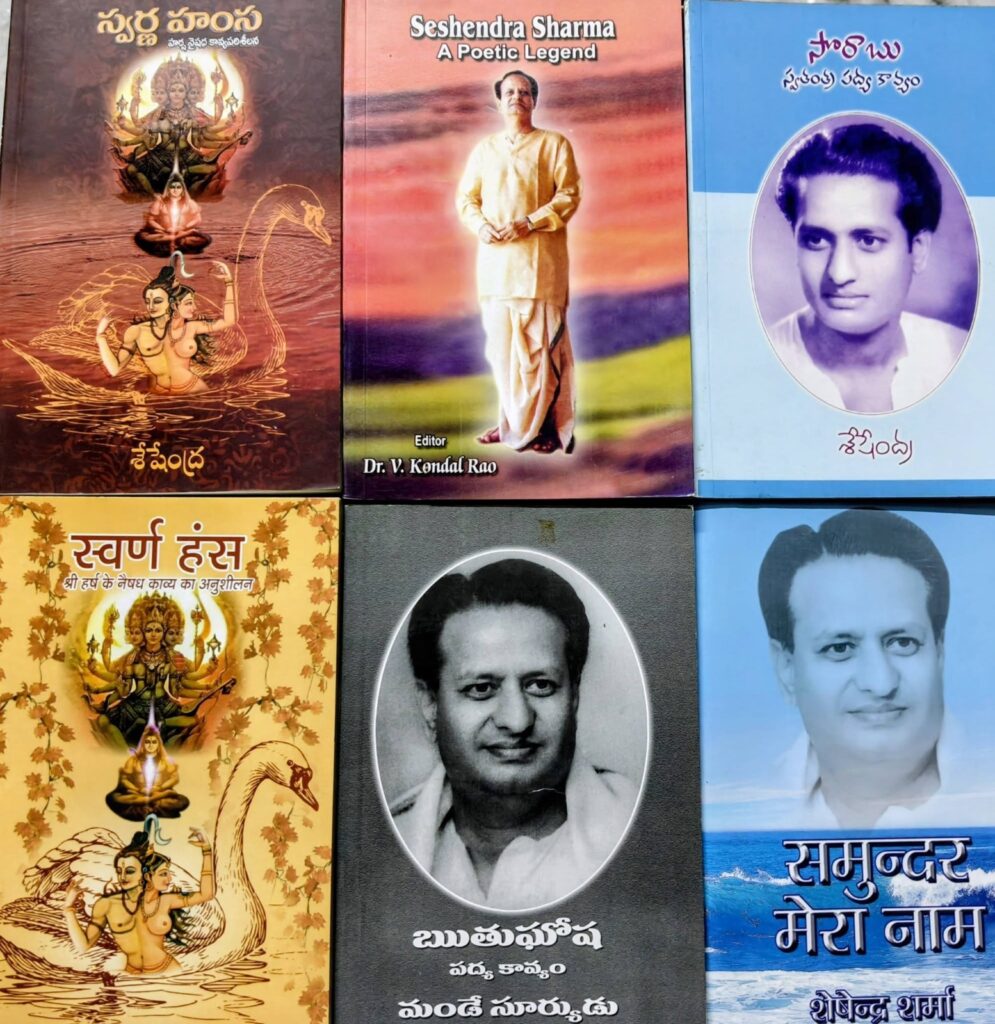
Raja Hussain later wrote courageously that while most poets chose silence or praise during the Emergency, Shesendra alone wrote Pashu Parvam as a fierce poetic denunciation of authoritarianism. The word “Emergency” never appears directly in the poem, but its terror resonates throughout the work. Thus, it became one of the earliest Telugu poetic texts of resistance against Emergency rule.
‘Mutyala Muggu’ Controversy
Shesendra was not only a poet of revolutionary literature; he also wrote for cinema. Though he penned very few songs, his lyric “Nidurinche Thotaloki” from the Telugu film Mutyala Muggu became immortal.
It remains one of the most poetic songs in Telugu cinema. Although the song was reportedly considered for the prestigious Nandi Award, literary circles long believed that political and institutional discomfort with Shesendra’s rebellious image prevented the honour from being granted.
This became an enduring example of how an artist’s political views can affect official recognition of artistic excellence.
Adhunika Maha Bharatam
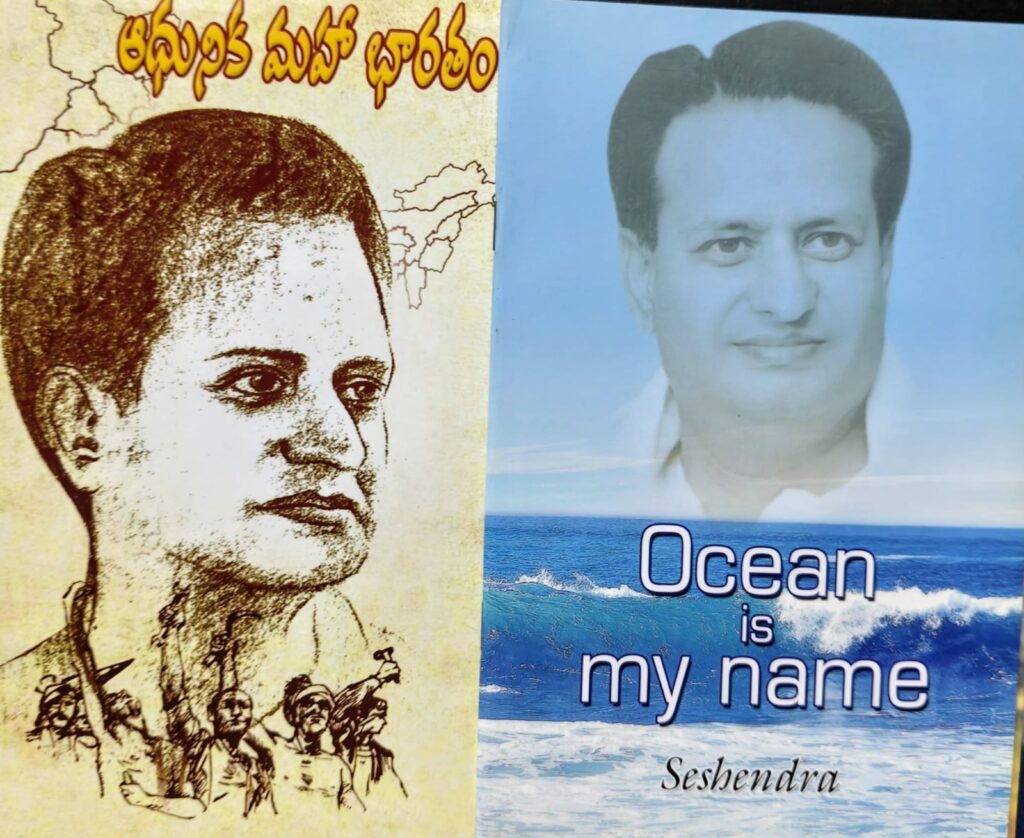
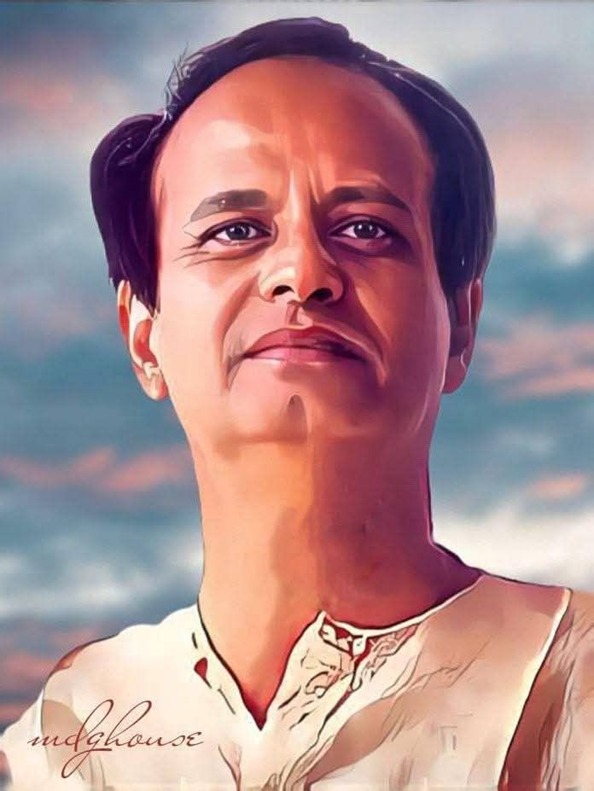
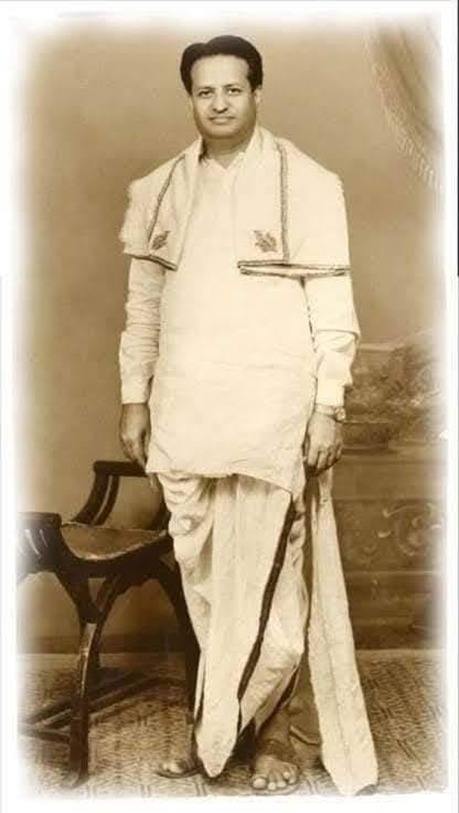
In the history of Telugu literature, Gunturu Seshendra Sharma stands as a unique pole star. Poet, critic, linguistic thinker, and politically conscious literary intellectual, his place remains singular. As the centenary celebrations of Shesendra begin on May 31, 2026, another remarkable coincidence emerges: it is also the golden jubilee period of his revolutionary poetic work Gorilla. Few poets in Telugu literature fused together rebellion, resistance to the Indian Emergency, and literary dissent against the establishment as powerfully as Shesendra did. One of Shesendra’s most celebrated lines declares:
“When I raise my pen, it carries the pride of a national flag.”
This single line encapsulates his entire literary philosophy. That is why Shesendra is not casually called a “great poet.” To him, the poet’s pen was a weapon, writing was a political declaration, and poetry itself was a flag of resistance. This was not mere romanticism; it was literary defiance.
The first canto of Pashu Parvam in his monumental Modern Mahabharata, written during the era that produced Gorilla, remains one of the most intense political and existential expressions in modern Telugu poetry. This is not ordinary poetic language. It is poetry born in moments when the inner self of the poet transformed into rebellion under an oppressive political order. Read against the background of the Indian Emergency (1975–77), the symbolism becomes even more powerful.
“Night” as a Symbol of Political Fear
At the very beginning of the poem, the haunting line appears:
“The night, deprived of sleep, is barking over the rooftops.”
This is not merely a description of nature. Here, “night” symbolizes: the darkness of democracy, the atmosphere of fear, and the suppression of human freedoms. During the Emergency, the nation was pushed into political darkness, and Shesendra expressed that suffocation through symbolic poetry.
Born on October 20, 1927, Shesendra refused to confine poetry to sentimentality. He infused it with political consciousness. His works reflected the conflict between the individual and the system. To describe him merely as a “modern poet” is to underestimate him. Within him coexisted: Marxist sensitivity, Indian philosophical depth, international political awareness, and a profound faith in individual liberty.
Shesendra passed away on May 30, 2007. Celebrating his centenary in 2026 is not merely an act of remembrance. It is also an occasion to reopen debates on freedom, dissent, and literary autonomy in contemporary India.
Gorilla: Golden Jubilee of a Revolutionary Voice
Published around 1976, Gorilla was an extraordinary event in Telugu literature. It was not just a poem; it was a declaration of war against authoritarian structures. The “gorilla” in the poem is not an animal. It is the oppressed human being, the energy of rebellion, hunger, rage, and resistance against systems of domination.
Shesendra wrote:
“Gorillas rise within my heart.”
The gorilla here becomes the embodiment of public anger, revolutionary energy burning with hunger and humiliation. Other unforgettable lines include:
“My chest has become a railway platform for this country.”
“By dawn, my flag had turned red.”
“The ocean does not bark; the mountain does not bend.”
In these lines, the poet compares his conscience to elemental natural forces. Elsewhere, he says: “A mountain never bends in salute to anyone.”
This becomes a metaphor for the writer who refuses to bow before authority.
My Country, My People: Why It Provoked Discomfort
One of Shesendra’s most influential works was Na Desam Na Prajalu (“My Country, My People”).
In this work, the nation is not treated as territory but as the suffering of its people. The poem raised uncomfortable questions: Rulers were portrayed as detached from ordinary citizens. Hunger, unemployment, and inequality were presented as national humiliations. History, he argued, is made not by rulers but by the people. Patriotism does not mean praising governments; it means articulating the pain of the people. The citizen in his poetry is not obedient but questioning. These ideas deeply unsettled the political establishment.
Shesendra’s Relevance Today
Three truths become clear when we study Shesendra’s life:
Poetry must not become a servant of power.
Freedom is essential for a writer.
Literature that does not speak of people’s suffering will not survive history.
Even today, amid debates over censorship, dissent, and freedom of expression, Shesendra appears strikingly contemporary. Reading him is not merely an aesthetic experience; it is an education in democracy itself. His centenary is therefore not just a literary celebration. It is a historical moment to rethink the responsibilities of writers, citizens, and democracy in India.

Law professor and eminent columnist
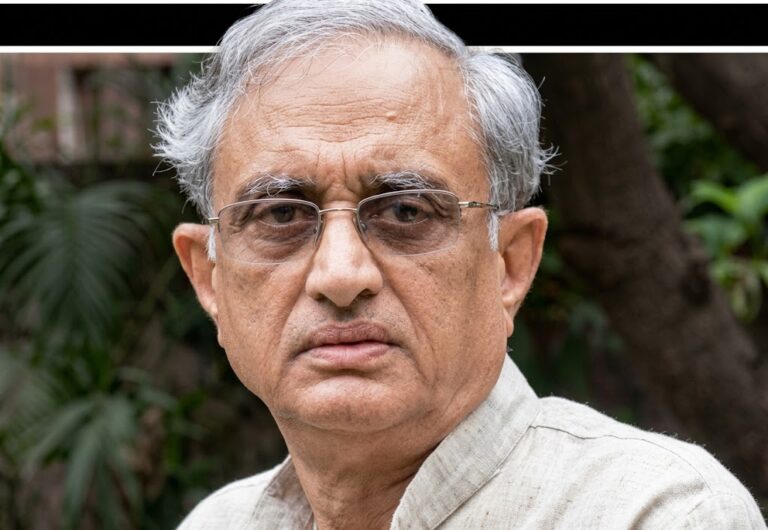
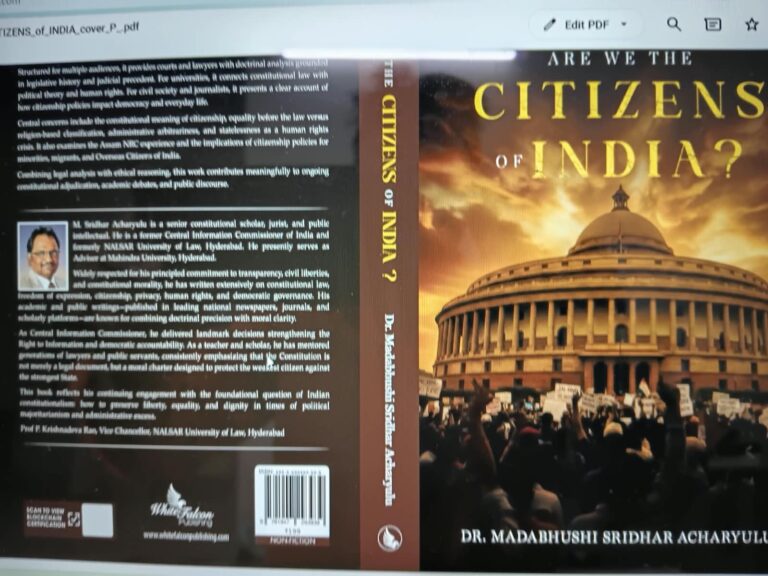
Madabhushi Sridhar Acharyulu, author of 63 books (in Telugu and English), Formerly Central Information Commissioner, Professor of NALSAR University, Bennett University (near Delhi), presently Professor and Advisor, Mahindra University, Hyderabad. Studied in Masoom Ali High School, AVV Junior College, CKM College, and Kakatiya University in Warangal. Madabhushi did LL.M., MCJ., and the highest law degree, LL.D. He won 4 Gold Medals at Kakatiya University and Osmania University.
Email: cicsridhar@gmail.com
Mobile: 8447651505