Part-I
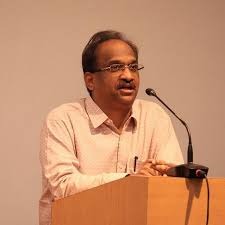
Threatening for speaking: K Nageshwar, (Political Analyst)
Professor K. Nageshwar, a well-known political analyst and former MLC in Hyderabad, was involved in a major controversy in May 2026 over remarks he made about Jana Sena Party (JSP) chief Pawan Kalyan. The dispute centered around allegations that the Jana Sena leader had lobbied Union Home Minister Amit Shah to take action against former Andhra Pradesh Chief Minister Y.S. Jagan Mohan Reddy. Nageshwar further claimed that Shah rejected this request, stating that the BJP’s alliance with the TDP was temporary while calling Jagan his “long-term friend”.
A chilling effect of State action
Andhra Pradesh police arrived at Professor Nageshwar’s Hyderabad residence regarding the FIRs filed against him, leading to fears of his arrest. In response to the police presence and online harassment, Telangana police provided personal security for Nageshwar and his family at his residence. Nageshwar unconditionally withdrew
his statements on live television, stating that his sources for the claims may have been incorrect.
Multiple FIRs Filed:
Despite the withdrawal, multiple FIRs were registered against Nageshwar in Andhra Pradesh under various charges, including criminal conspiracy and promoting enmity.
Backlash:
The police action drew condemnation from across the political spectrum. Leaders from the BJP, BRS, and YSRCP, as well as activists and journalists, rallied behind him to protect freedom of speech.
Regional Politics: The incident sparked a broader political storm between the states of Telangana and Andhra Pradesh, with critics framing the legal action as political harassment across state boundaries.
Trolling abuses continue, and the chilling effect too.
Andhra Pradesh Deputy Chief Minister and Jana Sena Party chief Pawan Kalyan’s response to the controversy, particularly his decision to visit Hyderabad around Telangana Formation Day and his remarks defending his right to conduct political activities in Telangana, is not correct and unconstitutional. No major political party or Telangana leader had opposed his visit or political activities in the state.
It became the central issue that was not whether one agreed with Prof Nageshwar’s views, but whether there was any factual error or objectionable content in his analysis. Saying so, former Justice Sudershan Reddy strongly defended a very popular political analyst Prof Nageshwar, and called for the withdrawal of cases filed against him, asserting that the controversy surrounding his recent political commentary should be ended. A mere assurance not to arrest is not enough.
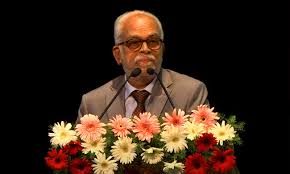
Justice Sudershan Reddy’s speech was extempore. It might contain repetitions, humour, digressions, and conversational remarks. In fact, that is a better approach. It is about Journalism, Confidential Sources, and the Right to Political Analysis. That is the essence of talk.
The controversy surrounding political analyst K. Nageshwar raises an important constitutional question: can a journalist or commentator be targeted merely for analysing political developments based on information received from sources? He argued that the answer must be an emphatic no.
According to him, journalism and political commentary operate through information networks. Reporters, analysts, and editors routinely receive information from sources within political parties, government offices, bureaucracies, and public institutions. The identity of those sources is traditionally protected because source confidentiality is one of the cornerstones of press freedom.
Analysis of the relevance of the Constitution
This is where the Constitution becomes relevant. Article 19(1)(a) guarantees freedom of speech and expression. The Supreme Court has repeatedly stated that freedom of expression is not merely one right among many rights.
Without freedom of expression, other freedoms become meaningless. As constitutional jurisprudence has recognised: “It is a pre-condition for any liberty and existence of a civilized society.”
That is how important freedom of expression is. The great constitutional thinkers of the world have spent centuries explaining why freedom of expression is essential.
What is the rationale behind free expression? Why is it so important?
What is the deeper meaning hidden within this freedom?
The first answer is obvious.
If democracy is to survive, there must be discussions.
There must be debates.
There must be public meetings.
There must be newspapers.
There must be editorials.
There must be commentaries.
There must be criticism.
Without these, democracy loses its meaning.
But there is another important reason.
Freedom of expression promotes social tolerance.
Think carefully about that.
Unfortunately, what we are witnessing today is exactly the opposite.
Instead of tolerance, we are witnessing intolerance.
The crucial question, therefore, is not who supplied the information but whether the analysis itself was lawful. If a commentator expresses an opinion, interprets political developments, or discusses possible political negotiations, such activity falls squarely within the protection of Article 19(1)(a) of the Constitution of India.
Justice Sudershan Reddy raised questions and explained
…. if we speak of experience, Nageshwar himself began as a reporter, worked through PTI, UNI, and has interacted with global journalism traditions represented by international media institutions and other internationally respected publications. One of the most important rights available to journalists, editors, and writers throughout the world is the right to protect their sources. Source protection is a special right. It is a constitutional right.
Justice Sudershan Reddy points out that democratic societies recognize a journalist’s right to
protect confidential sources. Across the world, investigative journalism depends on insiders
willing to share information without fear of exposure. If journalists are compelled to reveal
their sources, whistle-blowers disappear, and public accountability suffers.
Justice and Journalist
No one has the authority to ask a journalist: Justice explained about the conversation as follows:
“Who told you this?”
No one can compel a journalist to reveal:
“Who informed you?”
A journalist can legitimately say:
“This is the information available to me, and based upon that information I have made this analysis.”
Now, let us ask another question.
Did his analysis contain vulgar language? Did it contain obscenities? Did it contain insults? Did it contain words intended to humiliate or degrade someone?
No.
It was a political analysis. Nothing more.
What exactly was the allegation?
Two great political leaders met and discussed something.
If I want to call myself a great leader, then I must call him a great leader too. If he stands beside me, then perhaps we both become great leaders.
The issue under discussion was simply this:
Who informed him about that meeting?
How do journalists obtain information?
Who tells them?
The answer is simple.
Walls have ears.
Every political office has people.
Someone tells them.
A secretary tells them.
A personal assistant tells them.
A personal security officer tells them.
A member of the political entourage tells them.
A worker tells them.
A supporter tells them.
Someone who was present says: “Sir, this happened.”
The journalist receives information, evaluates it, and analyses it. That is journalism.
Why Journalistic Sources Must Be Protected
The controversy also raises a critical issue concerning the protection of sources. Throughout the democratic world, journalists depend upon confidential sources to expose corruption, maladministration, abuse of power, and political misconduct.
The demand that journalists reveal their sources is often the first step toward destroying investigative journalism.
• A whistle-blower speaks only when confidentiality is assured.
• If confidentiality disappears, truth disappears with it.
• The European Court of Human Rights in the famous Goodwin case described source protection as one of the basic conditions of press freedom.
• Without such protection, potential sources would be discouraged from assisting journalists in informing the public on matters of public importance.
• India does not yet have a comprehensive “journalistic shield law.” However, constitutional principles strongly support source protection.
• A journalist’s duty is to verify information, not to expose the individuals who risk their careers and safety to reveal matters of public interest.
• When authorities ask:
• “Who told you this?”
• the constitutional question becomes:
• “Why should a journalist be forced to betray a source?”
• The burden must lie upon the State to justify any such intrusion.
To be continued…
Law professor and eminent columnist
Madabhushi Sridhar Acharyulu, author of 63 books (in Telugu and English), Formerly Central Information Commissioner, Professor of NALSAR University, Bennett University (near Delhi), presently Professor and Advisor, Mahindra University, Hyderabad. Studied in Masoom Ali High School, AVV Junior College, CKM College, and Kakatiya University in Warangal. Madabhushi did LL.M., MCJ., and the highest law degree, LL.D. He won 4 Gold Medals at Kakatiya University and Osmania University.
Email: cicsridhar@gmail.com
Mobile: 8447651505

Excellent.not revealing is journalist’s right.👍