While disposing the petition SC directs Registry to forward it to ECI
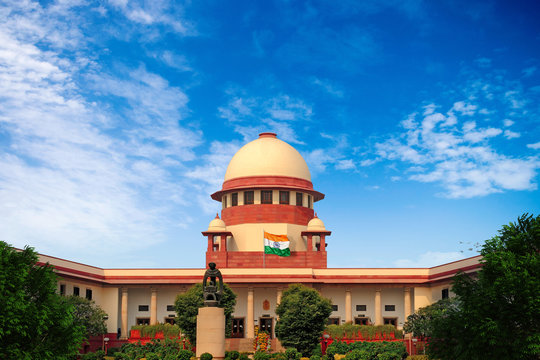
The Supreme Court on Wednesday disposed of a public interest litigation (PIL) seeking inclusion of the exact time of vote recording on Voter Verifiable Paper Audit Trail (VVPAT) slips to boost electoral transparency, leaving the issue for consideration by the Election Commission of India (ECI) as a technical matter within its domain.
While disposing the petition filed by Nalla Suresh Reddy without issuing any substantive directions, Supreme Court directed the Registry to forward the petition to the ECI, to be treated it as a representation for consideration. The petition was filed through advocate P Satish Kumar in the case filed by NALLA SURESH REDDY Vs UNION OF INDIA | D No. 22538/2026. Appearance for petitioner: Sr Adv. Devadatt Kamat, Sr Adv. Amit Rawal, Adv. Swati Mishra, Adv. Shivam Dwivedi, Adv. Prince Yadav and Adv. Ankita Yadav.
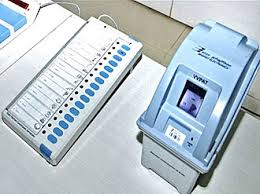
The three judges bench headed by Chief Justice of India Surya Kant heard the matter. The petitioner, Nalla Suresh Reddy, stated to be a businessman, had approached the Court in public interest seeking a direction to the ECI to modify VVPAT guidelines so that each slip would display the precise time at which a vote was cast.
Senior Advocate Devadatt Kamat, for the petitioner, contended that while the Conduct of Election Rules provide for VVPAT, the present system does not record the exact time of vote on the physical paper trail. The petitioner argued that this creates a “physical audit gap,” particularly in cases where questions arise over voting patterns during the closing hours of polling. It was submitted that the absence of a time stamp weakens the evidentiary value of the paper trail in verifying such concerns.
The petitioner reportedly referred to instances of significant last-minute voter turnout in previous elections and argued that printing the exact time on VVPAT slips would improve transparency and auditability of the electoral process. However, the bench observed that while the issue raised pertained to electoral integrity, the specific relief sought involved questions of technical feasibility, which fall within the institutional domain of the Election Commission.
“Having heard the counsels for the parties, it seems that the issue raised by the petitioner concerns electoral integrity. However, the prayer sought by the petitioner, namely whether such a measure is feasible, is a technical issue falling within the domain of the ECI,” the Court observed. Accordingly, the Court disposed of the petition without issuing any substantive directions, while directing the Registry to forward the petition to the Election Commission, to be treated as a representation for consideration.
The petition sought systemic changes to the VVPAT framework to require every slip to display the exact time at which a vote was recorded, in addition to the existing details such as candidate serial number, name and symbol.
The petitioner argued that the present VVPAT framework creates a significant “audit gap” because while Form 17A records voter participation, Form 17C accounts for votes polled, and the EVM control unit stores vote totals, the VVPAT slip itself does not indicate when the vote was cast. According to the plea, this becomes problematic where disputes arise over late-hour voting, abnormal turnout spikes, polling beyond regular hours, booth-level complaints, or discrepancies between electronic and paper records.
The plea contended that exact time-stamping would create a neutral audit marker without compromising ballot secrecy, as the time entry would not be linked to the voter’s identity, serial number, or any personally identifiable record. It suggested that the ECI could prescribe safeguards relating to time synchronisation, clock certification before mock polls, and secure technical protocols.
Relying on the Supreme Court’s earlier decisions in Dr. Subramanian Swamy v. Election Commission of India (2013), which recognised paper trail as indispensable to free and fair elections, N. Chandrababu Naidu v. Union of India (2019), which increased mandatory VVPAT verification, and Association for Democratic Reforms v. Election Commission of India (2024), the petitioner argued that the present plea sought only a limited enhancement of the existing verification mechanism rather than any fundamental challenge to EVM-based voting.
The petition also referred to public concerns regarding alleged late-night voting and turnout revisions in the 2024 Andhra Pradesh elections, citing a report published by The Wire. However, the petitioner clarified that these references were not intended to challenge any concluded election result, but only to demonstrate the need for prospective safeguards to improve transparency and verifiability.
Apart from time-stamping, the plea sought preservation protocols for such VVPAT slips and related records, including strong-room access logs, movement registers, CCTV or videography records where maintained, complaint records under Rule 49MA of the Conduct of Elections Rules, and election petition-related documentation, to ensure evidentiary continuity in case of disputes.

Editor, Prime Post
Ravindra Seshu Amaravadi, is a senior journalist with 38 years of experience in Telugu, English news papers and electronic media. He worked in Udayam as a sub-editor and reporter. Later, he was associated with Andhra Pradesh Times, Gemini news, Deccan Chronicle, HMTV and The Hans India. Earlier, he was involved in the research work of All India Kisan Sabha on suicides of cotton farmers. In Deccan Chronicle, he exposed the problems of subabul and chilli farmers and malpractices that took place in various government departments.
Email: ravindraseshu7@gmail.com
Mobile: 9063718675