The ‘oath’ was forgotten. Even once, under the leadership of Indira Gandhi, the Union of India did not think of impeaching the President, which is a blatant violation of the Constitution of India and the oath to preserve, protect, and defend the rule of law. India suffered a serious violation of rights that it never thought of. Exactly 50 years ago, the then-President had an opportunity to avoid the Emergency. Then why did Fakhruddin Ali Ahmed, as President of India, not face impeachment proceedings related to the imposition of the Emergency in 1975? While he did declare the Emergency and give his assent to related actions, the Constitution of India provides a mechanism for impeachment, but it wasn’t initiated in his case. For suspending the freedom of speech and expression, he deserved to be impeached, including the Emergency, without a cabinet resolution. Simply what the PM wanted, and the President signed blindly whenever ordered.
One should examine Article 352 of our Constitution to read that empowers the President to impose a national Emergency on his satisfaction that the security of India or any part of it is threatened by war, external aggression, or internal disturbance. Article 74 of the Constitution, as it then stood, provided for “a Council of Ministers with the Prime Minister at the head to aid and advise the President”. The Union Council of Ministers had not met and advised the proclamation of an Emergency. Ahmed signed the bill of amendment. The expression “internal disturbance” was termed to “armed rebellion” by the forty-fourth Constitutional Amendment Act, which also added in Section 74 that the President “may require the Council of Ministers to reconsider such advice, either generally or otherwise, and the President shall act in accordance with the advice tendered after such reconsideration.”
Do you know the President pledged to ‘Preserve, protect, and defend’?
The President of Bharat (Bharat ke Raṣṭrapati) is the head of state of the Republic of India. The president is supposed to be a nominal head of the executive, the first citizen of the country, as well as the supreme commander of the Indian Armed Forces. The office of the president was created when India became a republic on 26 January 1950, when its Constitution came into force. One should read Article 60 ‘Oath or affirmation’ by the President, which says: Every President and every person acting as President or discharging the functions of the President shall, before entering upon his office, make and subscribe in the presence of the Chief Justice of India or, in his absence, the senior-most Judge of the Supreme Court available, an oath or affirmation in the following form, that is to say “I, A.B., do swear in the name of God/solemnly affirm that I will faithfully execute the office of President (or discharge the functions of the President) of India and will to the best of my ability preserve, protect and defend the Constitution and the law and that I will devote myself to the service and well-being of the people of India.”

It means the President should have read out the form of the oath of office, “the ability to preserve, protect, and defend the Constitution”. The ‘oath’ is that the only President, under Article 60, especially states what he or she would do to protect the Constitution, while all others promise to uphold allegiance, etc. That is the unique privilege of the President, who needs to understand and implement it. Not only Fakhruddin, but every President should remember the ‘oath’. That’s how Rashtrapati Bhawan lost and found “the Constitution of India.”
How does the President reach satisfaction?
The President’s satisfaction refers to it in a constitutional sense, which means that it is the ‘satisfaction’ of his Council of Ministers. The President acts on the advice of the Council of Ministers in most matters, including the giving of assent to bills or many more significant bills, like amendments. Therefore, when a provision requires the President’s satisfaction, it means that the Council of Ministers must be satisfied with the provision before it is presented to the President for his assent. The Ministers of the Union play a crucial role in the functioning of the President’s office. They are responsible for advising the President on various matters, including giving assent to recommendations by the Prime Minister and Cabinet. The Constitution vests the executive power of the Union in the President, but this power is to be exercised on the aid and advice of the Council of Ministers.
A criminal wrong ‘ratified’!
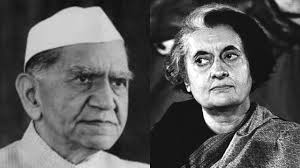
Indira Gandhi requested a compliant President Fakhruddin Ali Ahmed to proclaim a state of emergency. Unfortunately, the President did not know that it was approved the proposal had been approved by the PM without discussion with the Union Cabinet. The President learned only after the ‘ratification’ of the Cabinet the next morning. Earlier, within three hours after the imposition of the Emergency, the electricity to all major newspapers was cut, and the political opposition was arrested. Author Gyan Prakash picked up this excerpt from the book Emergency Chronicles: Indira Gandhi and Democracy’s Turning Point, the Penguin Random House. He wrote: “President Fakhruddin Ali Ahmed summoned his secretary, K. Balachandran, at
around 11:15 p.m. on June 25, 1975.
Top Secret
Ten minutes later, Balachandran met the pajama-clad president in the private sitting room of his official residence at Rashtrapati Bhavan. The president handed his secretary a one-page letter from Indira Gandhi marked “Top Secret.” Referring to the prime minister’s discussion with the president earlier that day, the letter said she received information that internal disturbances posed an imminent threat to India’s internal security. It requested a proclamation of Emergency under Article 352 (1) if the president was satisfied with this score. She would have preferred to have first consulted the cabinet, but there was no time to lose. Therefore, she was invoking a departure from the Transaction of Business Rules in the exercise of her powers under
Rule 12 thereof.
The president asked for his aide’s opinion on the letter, which did not have the proposed proclamation attached. Balachandran said that such a proclamation was constitutionally impermissible on more than one ground. That means he knew the blunder! At this, the president said that he wanted to consult the Constitution. Balachandran retreated to his office to locate a copy. Meanwhile, the deputy secretary in the president’s Secretariat showed up. The two officials launched into a discussion about the constitutionality of the prime minister’s proposal before they returned to President Ahmed with a copy of the Constitution.
Balachandran explained that the president’s satisfaction that internal disturbances posed a threat to internal security was constitutionally irrelevant. What the Constitution required was the advice of the Council of Ministers.
Balachandran withdrew when the president said he wanted to speak to the prime minister. When he re-entered the room ten minutes later, President Ahmed informed him that R.K. Dhawan had come over with a draft Emergency Proclamation, which he had signed. Then the president swallowed a tranquilizer and went to bed. And the Rashtrapati Bhavan will not find a copy of the ‘Constitution’. The author Gyan Prakash explained the sordid episode as follows This late-night concern for constitutional propriety is revealing. What we see unfolding in the hunt for a copy of the Constitution, the leafing through its pages to make sure that the draft proclamation met the letter of the law, is the meticulous process of the paradoxical suspension of the law by law. The substance of the discussion concerns the legality of the procedures to follow in issuing the Emergency Proclamation. The political will behind the act goes unmentioned. This is because Article 352 (1) of the Constitution itself had left the judgment of the necessity for the Emergency proclamation outside the law.
The doctrine of necessity regards the judgment of crisis conditions as something that the law itself cannot handle; it is a lacuna in the juridical order that the executive is obligated to remedy. This leaves the sovereign to define the conditions necessitating the suspension of law. Accordingly, the discussion at Rashtrapati Bhavan did not refer to the politics of the Emergency proclamation. Instead of resigning, he signed! That happened because of manipulation and misinformation, to say the least, because the President did not read the Constitution of India, or his secretary did not find a copy, before he signed. Instead of resigning from the position as President, he has resigned! At least, somebody should have been impeached.
(Second of 3-part article based on the “Constitutional Day Lecture’ on “the
Constitutional Criminality & Democratic Morality” by this author, at BRAOU – Dr. B.R.
Ambedkar University, Hyderabad.)
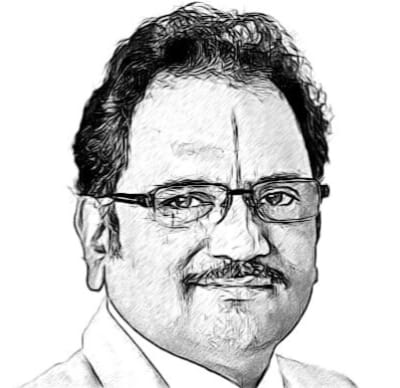
Law professor and eminent columnist
Madabhushi Sridhar Acharyulu, author of 63 books (in Telugu and English), Formerly Central Information Commissioner, Professor of NALSAR University, Bennett University (near Delhi), presently Professor and Advisor, Mahindra University, Hyderabad. Studied in Masoom Ali High School, AVV Junior College, CKM College, and Kakatiya University in Warangal. Madabhushi did LL.M., MCJ., and the highest law degree, LL.D. He won 4 Gold Medals at Kakatiya University and Osmania University.
Email: cicsridhar@gmail.com
Mobile: 8447651505