JUDICIAL AUTHORITY, EXECUTIVE DEFIANCE AND THE POLITICS OF RELIGIOUS IDENTITY
A Perspective – Humane, Sane and Constitutional
“सत्यमेव जयते नानृतम्” — Truth alone triumphs, not falsehood. (Mundaka Upanishad, 3.1.6)
“सर्वे भवन्तु सुखिनः, सर्वे सन्तु निरामयाः” — May all be happy; may all be free from suffering.
These ancient philosophical injunctions acquire profound contemporary relevance in the unfolding Thiruparankundram controversy. The dispute over lighting the Karthigai Deepam at the Deepathoon has escalated into a constitutional confrontation involving judicial authority, executive accountability, religious freedom, secular governance and the fragile equilibrium of communal coexistence. What began as a dispute over a religious observance has exposed deeper institutional contradictions in India’s constitutional democracy. The fundamental question is not merely where a ceremonial lamp should be lit, but whether constitutional morality can withstand the competing pressures of political expediency, religious assertion and institutional aggrandisement.
HISTORICAL LEGACY AND THE GENESIS OF THE DISPUTE
Thiruparankundram, near Madurai, is a landscape of layered religious and civilisational traditions. It houses the celebrated Subramania Swamy Temple, one of Lord Murugan’s six sacred abodes, and the Sikandar Badusha Dargah. Jain archaeological remains further testify to its historical plurality. The ownership dispute dates back to litigation instituted in 1920. The 1923 civil court decree recognised the temple’s rights over the greater portion of the hill while excluding specified areas associated with the mosque, its flagstaff, access steps and Nellithope. The Privy Council restored the material findings of the trial court in 1931. These historical adjudications are central to the present controversy, although the precise religious character and customary use of the disputed pillar require separate determination.
The immediate dispute concerns whether the Karthigai Deepam, traditionally lit at the Deepa Mandapam near the Uchipillaiyar Temple, can also be ceremonially lit at the hilltop Deepathoon. Following proceedings before the Madras High Court, a Division Bench in January 2026 upheld permission for the additional lighting. The State challenged the decision, questioning the historical custom, the character of the pillar, administrative authority and potential implications for communal harmony.
THE SUPREME COURT’S INTERVENTION: AN INTERIM JUDICIAL MANDATE
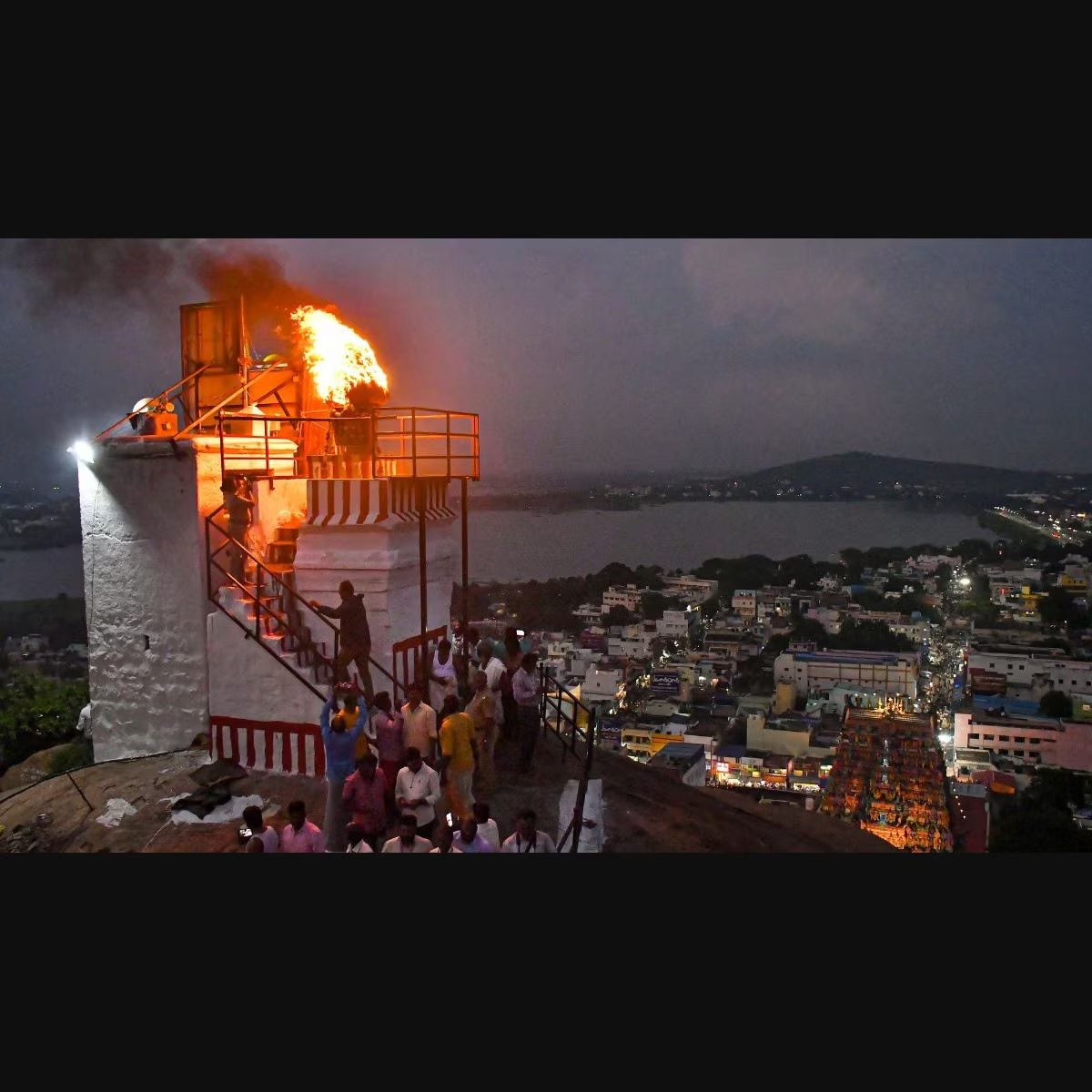
On November 20, 2026, the Supreme Court stayed the relevant findings of the Madras High Court but permitted the Deepam to be lit at Deepathoon on November 24 as a one-time interim arrangement, subject to safeguards protecting the adjoining dargah and its access. The Court consciously refrained from finally adjudicating the wider questions of religious custom, property rights and the constitutional limits of judicial intervention. The Tamil Nadu government exercised its legitimate right to seek review. However, filing a review petition did not suspend the operative direction. On November 24, the lamp was lit at the customary Uchipillaiyar Mandapam but not at the disputed pillar. The temple administration cited established tradition, while the petitioners alleged deliberate non-compliance.
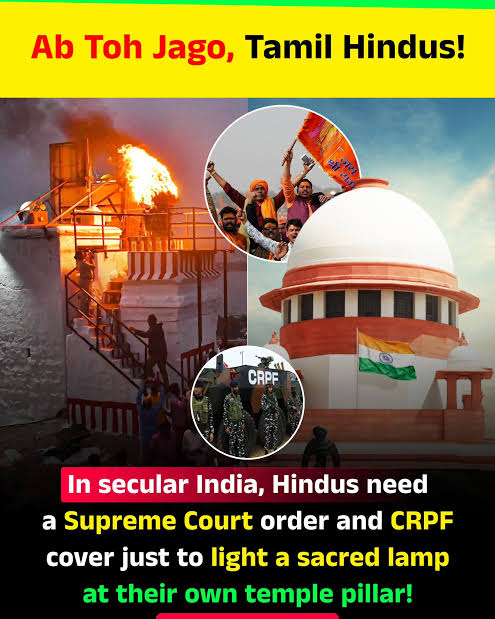
On November 27, the Supreme Court adopted an extraordinary course. It directed the lighting of the lamp on November 28, permitted devotees to participate subject to a 50-metre safeguard from the dargah, suspended the temple’s Board of Trustees, appointed two retired Madras High Court judges, Justice S. Vaidyanathan and Justice V. Parthiban, as receivers, and entrusted the security of the hill to the CRPF. Contempt show-cause notices were issued to 13 officials and temple functionaries. The Chief Secretary was directed to furnish an affidavit explaining the chain of administrative communications and appear personally before the Court. The Bench characterised the conduct as prima facie wilful and flagrant disobedience, warning that institutional defiance could produce constitutional chaos. These observations are serious, but they do not constitute final findings of contempt. The officials retain the right to respond through due process.
JUDICIARY VERSUS EXECUTIVE: THE CONSTITUTIONAL EQUILIBRIUM
The controversy strikes at the foundations of constitutional governance. Article 144 obligates all civil and judicial authorities to act in aid of the Supreme Court; Article 129 confers contempt jurisdiction, while Article 141 makes the law declared by the Supreme Court binding on all courts. An operative judicial order cannot be treated as an administrative recommendation or subjected to executive discretion.
The distinction between judicial disagreement and judicial disobedience is fundamental. The State could seek review, clarification or a stay, but could not unilaterally suspend compliance. Public order, though primarily a State responsibility, cannot become a constitutional alibi for frustrating judicial directions. Yet constitutional supremacy must not be confused with unrestrained institutional supremacy. The judiciary, too, must remain within the parameters of constitutional proportionality, procedural fairness and institutional restraint. Suspending a temple board, appointing judicial receivers and transferring security responsibility to a central force are exceptional measures. Their statutory justification, necessity, duration and proportionality deserve continuing scrutiny. The constitutional architecture requires neither executive subservience nor judicial aggrandisement, but institutional comity, accountability and fidelity to the rule of law.
SECULARISM, RELIGIOUS FREEDOM AND MINORITY PROTECTION
Articles 25 and 26 guarantee freedom of conscience, religious practice and denominational rights, subject to constitutional limitations. These guarantees are universal, not privileges of numerical majorities. Equally, minority protection cannot become immunity from lawful adjudication or an instrument to extinguish the rights of another religious institution. The temple’s claims must be adjudicated on documentary evidence, historical decrees and applicable law. The dargah’s established rights, access and worship must receive equal constitutional protection. Secularism does not signify hostility towards religion; it demands principled neutrality, equal citizenship and non-discrimination. The Court’s 50-metre safeguard and CRPF deployment seek to reconcile competing religious interests. Their implementation must ensure that neither worshippers nor religious establishments are intimidated, obstructed or disadvantaged. The State’s obligation is to facilitate peaceful coexistence, not to adjudicate religious sensitivities through political calculations.
THE POLITICAL SUBTEXT: IDEOLOGY AND ELECTORAL EXPEDIENCY

Tamil Nadu’s Dravidian political inheritance is rooted in rationalism, social justice, linguistic identity and resistance to caste and religious hierarchies. These historical contributions deserve recognition. However, ideological commitments cannot justify selective constitutional compliance. Equally, the assertion of Hindu religious identity cannot become a vehicle for majoritarian mobilisation or electoral polarisation. The ruling establishment has defended its position through arguments concerning established tradition, public order and communal harmony. The BJP and other opposition formations have characterised the episode as an affront to Hindu religious rights and judicial authority. Muslim organisations have expressed concern about the dargah’s access and the introduction of a new ritual practice, while emphasising that they are not opposed to the Karthigai Deepam festival itself. The VCK, Left parties and other political formations have raised concerns about the potential communal repercussions of the dispute.
Whether the government’s conduct was politically motivated, administratively negligent or deliberately obstructive cannot be conclusively inferred from partisan allegations. The official correspondence, administrative instructions and affidavits sought by the Supreme Court must establish the factual position. The Court’s observation that executive authorities appeared to have acted at the behest of political leadership is a serious allegation requiring evidentiary examination, not a final verdict.
INSTITUTIONAL HEGEMONY AND THE DANGER OF POLARISATION
Three forms of institutional excess warrant vigilance: religious majoritarianism, ideological exclusivism and executive arbitrariness. No community can claim constitutional supremacy through numerical predominance. No political formation can monopolise secularism. No elected government can regard its electoral mandate as immunity from judicial scrutiny. Conversely, judicial intervention must not become an unqualified substitute for ordinary civil administration.
Public reactions reflect divergent interpretations. Hindu devotees and organisations have welcomed the Supreme Court’s intervention as an affirmation of religious freedom and judicial authority. Muslim organisations have expressed apprehensions concerning customary practices, access and communal harmony. Political parties have sought to interpret the episode through their respective ideological frameworks. These responses are documented positions, not evidence of a unanimous public verdict. The ordinary citizen, irrespective of faith, has a more fundamental stake: security, equality, freedom of worship and the assurance that public institutions will remain impartial. A local religious dispute must not become a permanent communal fault line or an electoral instrument.
CONSTITUTION DAY: THE IRONY OF CEREMONIAL COMMITMENT
The proximity of this controversy to Constitution Day, November 26, is particularly instructive. The Preamble promises justice, liberty, equality and fraternity. These are not ceremonial affirmations to be invoked selectively; they are constitutional commitments demanding fidelity in governmental conduct and institutional behaviour. Dr B.R. Ambedkar’s emphasis on constitutional morality remains profoundly relevant. Constitutional democracy survives not merely through textual provisions but through restraint, accountability and respect for institutional boundaries. A government cannot celebrate constitutional values while treating judicial obligations as negotiable. Equally, constitutional courts must demonstrate procedural fairness and proportionality while exercising extraordinary powers.
THE WAY FORWARD: RESTRAINT, ACCOUNTABILITY AND RECONCILIATION
The immediate judicial direction must be implemented faithfully, with adequate protection for both religious establishments. The contempt proceedings must follow due process and distinguish deliberate disobedience from administrative failure. Historical decrees, property records, archaeological evidence and religious traditions must inform the final adjudication. Exceptional receivership and central security arrangements should remain subject to judicial review and cease when their necessity expires. A permanent consultative mechanism involving temple authorities, dargah representatives, archaeological institutions, local administration and community representatives could prevent recurring disputes over religious observances, access and public order. Political parties must desist from instrumentalising religious sentiment, while the administration must demonstrate impartiality and institutional competence.
CONCLUSION: LET THE CONSTITUTION BE THE FINAL ARBITER
Thiruparankundram is not merely a controversy over a ceremonial lamp; it is a test of India’s constitutional maturity. The Supreme Court must command institutional respect; the executive must discharge its obligations without partisan interference; religious institutions must respect the equal dignity and rights of other communities; and political establishments must desist from converting faith into an instrument of electoral polarisation. India’s secularism is neither the negation of religion nor the ascendancy of one faith over another. It is the constitutional accommodation of diversity under a common legal and moral framework. The historical character of Thiruparankundram should remind us that India’s civilisation has evolved through overlapping religious, philosophical and cultural traditions. Pluralism is not a concession; it is a constitutional inheritance.
LET THE LAMP BE LIT, BUT LET NOT THE FLAMES OF COMMUNAL DISTRUST BE IGNITED. LET THE LAW PREVAIL WITHOUT HUMILIATION, RELIGIOUS FREEDOM FLOURISH WITHOUT DOMINATION, AND POLITICAL POWER REMAIN SUBORDINATE TO CONSTITUTIONAL MORALITY. THE TEMPLE MUST BE PROTECTED, THE DARGAH MUST BE PROTECTED, AND THE DIGNITY OF EVERY CITIZEN MUST REMAIN INVIOLABLE. THE REAL VICTORY AT THIRUPARANKUNDRAM WILL NOT BELONG TO A RELIGIOUS COMMUNITY, A GOVERNMENT OR A COURT; IT MUST BELONG TO JUSTICE, INSTITUTIONAL RESTRAINT, MUTUAL RESPECT AND HUMAN FRATERNITY.
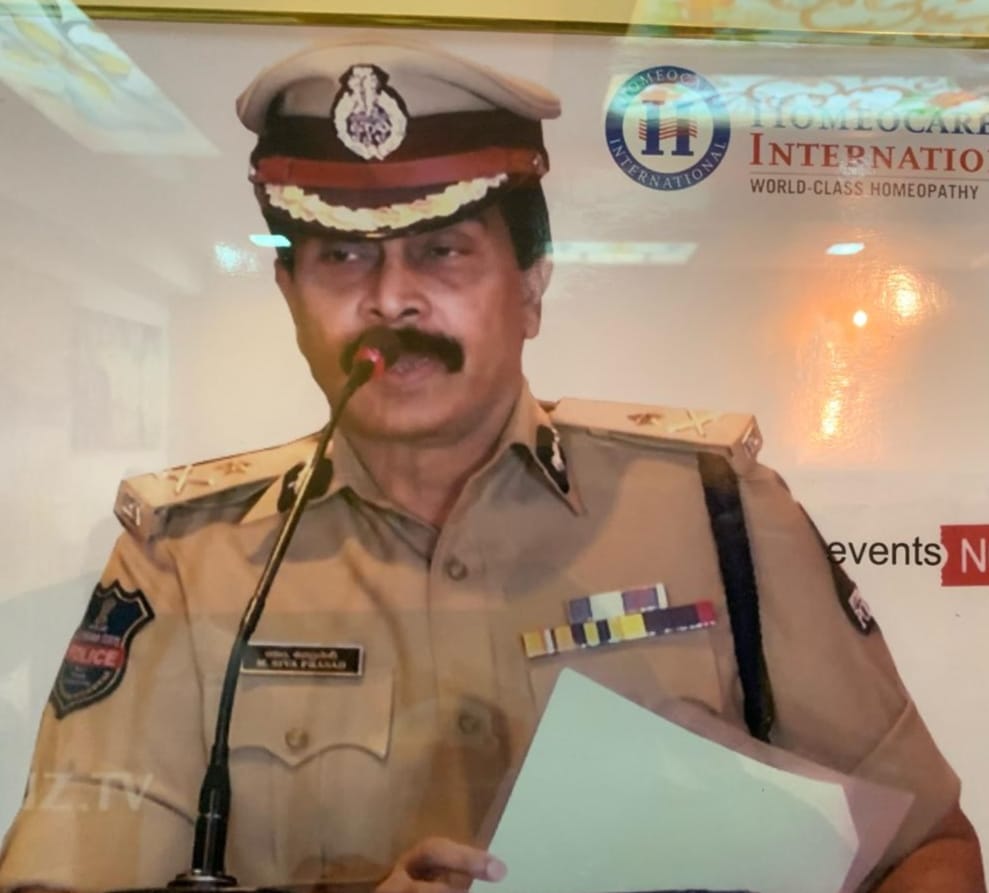
M. Shiva Prasad, IPS (Rtd.) is a dedicated law enforcement professional who served the combined Andhra Pradesh cadre before opting for the Telangana cadre. Though a native of Andhra Pradesh, he considers himself a true Hyderabadi with an abiding love for the Telugu people. Driven by sincerity, fearlessness, and a lifelong fight against inequality and injustice, his ultimate strengths remain his goodwill and deep affection for the public and the police force. Today, he continues his mission by writing snippets and articles true to his conscience.
Email: Shivareach@yahoo.com
Mobile: 98480 38774