The High Price of Misgovernance
Political Apathy, Bureaucratic Inefficiency and the Erosion of Purchasing Power
An Unenviable Distinction
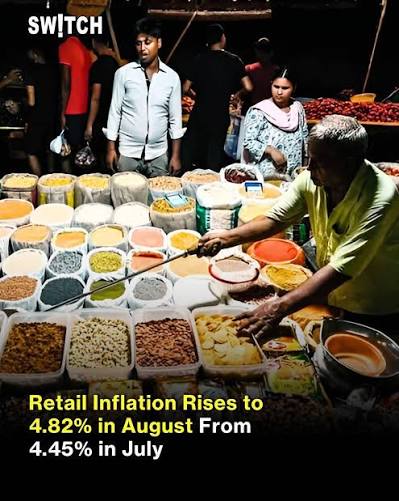
Andhra Pradesh has acquired an unenviable distinction in the country’s economic landscape. Its food inflation soared to 13.23% in October 2026, against the national average of 8.94%, placing it at the top among the States. Tamil Nadu recorded 12.37%, Karnataka 12.16%, Telangana 11.66% and Kerala 10.92%. The disparity of 4.29 percentage points above the national average is particularly disconcerting. This is not merely a statistical aberration. It raises fundamental questions about the State’s economic management, agricultural marketing, administrative preparedness and capacity to safeguard household purchasing power. While overall retail inflation in Andhra Pradesh stood at 7.25%, the disproportionate escalation in food prices is especially consequential for households that devote a substantial proportion of their earnings to essential consumption. Food inflation is, ultimately, an economic burden measured not in percentages but in the diminished purchasing power of ordinary citizens.
The Kitchen Under Siege
The escalation in essential commodity prices has placed household budgets under considerable strain. Fine-quality rice, reportedly available at approximately ₹70 per kilogram three months ago, has crossed ₹90 in several markets. Toor dal costs between ₹180 and ₹200 per kilogram, cooking oil prices have increased by approximately 25%, and eggs have crossed ₹8 a piece. Onions, garlic, ginger and lemons have witnessed particularly sharp increases. The repercussions extend beyond domestic kitchens. Hotels, restaurants and roadside tiffin establishments have reportedly raised menu prices by 10% to 20% to absorb higher input costs. Students, unemployed youth, pensioners, daily-wage earners and lower-middle-class families are disproportionately affected. When even an inexpensive meal becomes a financial consideration, inflation ceases to be an abstract economic proposition and becomes a question of everyday survival.
Global Disruptions and Domestic Vulnerabilities
International developments, particularly the conflict in West Asia, uncertainty surrounding the Strait of Hormuz and volatility in energy markets, have intensified concerns over petroleum supplies, transportation costs and global commodity prices. India’s dependence on imported energy and fertiliser inputs makes its economy susceptible to external disruptions. Climatic uncertainties and supply-chain constraints further complicate agricultural production and distribution. Nevertheless, international developments cannot become a universal alibi for domestic administrative deficiencies. The transmission of global price shocks into local markets depends considerably on procurement, storage, transportation, distribution and regulatory efficiency. The distinction between unavoidable external pressures and preventable domestic inefficiencies must inform the government’s response. A competent administration is expected not merely to react to economic disruptions but to anticipate them and minimise their consequences.
Political Promises and the Governance Deficit

The TDP-led coalition government, comprising the Jana Sena and BJP, assumed office with promises of accelerated development, industrial investment and employment generation. Its political narrative has emphasised infrastructure expansion, investment proposals and economic transformation. However, the credibility of development must ultimately be measured by improvements in living standards. Investment memoranda, industrial proposals and ambitious infrastructure announcements cannot substitute for affordable essentials, remunerative agricultural prices and secure employment.
The government must explain why Andhra Pradesh’s food inflation has substantially exceeded the national average and identify the institutional and economic deficiencies responsible for the situation. An electoral mandate is an instrument of public responsibility, not an exemption from scrutiny. Economic governance must be judged by measurable outcomes rather than political declarations.
Bureaucratic Inefficiency and Administrative Accountability
The Civil Supplies, Agriculture and Marketing Departments, together with district administrations, have a statutory and administrative responsibility to monitor prices, anticipate shortages and maintain efficient distribution networks. The absence of timely market intelligence, inadequate coordination and delayed intervention can aggravate inflationary pressures. Regular assessments of wholesale-retail price differences, procurement requirements, storage capacity and distribution bottlenecks are indispensable. District Collectors and departmental secretaries must be evaluated on demonstrable performance rather than the number of review meetings conducted or instructions issued. Administrative machinery cannot remain confined to files, protocol and procedural formalities while consumers confront escalating prices. Political leadership must provide direction, but the bureaucracy must translate policy into tangible results. Institutional accountability is not an administrative ornament; it is the foundation of effective governance.
Corruption and the Cost of Inefficiency
Corruption, wherever established, further undermines the State’s ability to protect consumers and producers. Opaque procurement, irregularities in transportation and warehousing, diversion of subsidised commodities and selective enforcement can distort distribution systems and increase transaction costs.
Public procurement and essential commodity distribution demand transparent procedures, independent scrutiny and effective internal controls. Audit observations of the Comptroller and Auditor General must receive appropriate legislative and administrative attention. It would be simplistic to attribute the entire inflationary surge to corruption. Nevertheless, rent-seeking, financial irregularities and administrative negligence, where present, can compound existing economic vulnerabilities. Public resources must serve public welfare rather than private interests or political patronage. Transparency must be accompanied by accountability, and enforcement must remain impartial.
Agriculture: The Producer-Consumer Paradox
Andhra Pradesh possesses considerable agricultural potential, with fertile river basins, extensive cultivation, horticultural production and a substantial coastal economy. Yet farmers frequently confront escalating input costs, procurement difficulties, inadequate storage and uncertainty over remunerative prices. Consumers, meanwhile, are compelled to purchase agricultural produce at increasingly exorbitant retail prices. This contradiction exposes structural deficiencies in agricultural marketing and distribution. The government must strengthen regulated markets, farmer-producer organisations, cold-storage facilities, scientific warehousing and direct market linkages. Procurement should be timely, payments transparent and farmers assured of remunerative returns. An efficient agricultural economy cannot permit producers to suffer distress while consumers pay excessive prices. The interests of both must be protected through an integrated and accountable supply-chain mechanism.
Rural Distress and Employment Insecurity
Rural households face a double burden: escalating food prices and uncertain incomes. Farmers contend with expensive seeds, fertilisers, pesticides, diesel and machinery, while agricultural labourers and informal-sector workers frequently lack regular employment and adequate social protection. The difficulties confronting cooperative sugar factories, jute mills and the Visakhapatnam Steel Plant also warrant attention. Industrial uncertainty and employment losses affect not merely direct employees but ancillary enterprises, transport operators, small businesses and dependent families. Food inflation cannot therefore be examined in isolation from employment generation, industrial revival and rural purchasing power. Rising prices accompanied by insecure incomes create a particularly damaging economic predicament for vulnerable households.
From Announcements to an Actionable Policy Framework
The government must move beyond episodic interventions and adopt a coordinated, time-bound strategy to contain food inflation.
* Integrated price surveillance: Establish a State-level price-monitoring mechanism with daily wholesale and retail price reporting, district-wise comparisons and early-warning indicators for essential commodities.
* Strategic procurement and buffer stocks: Strengthen advance procurement, scientific warehousing and decentralised storage. Release buffer stocks promptly whenever shortages or abnormal price movements emerge.
* Strengthening public distribution: Ensure uninterrupted supplies of rice, pulses and other essential commodities through ration shops, Rythu Bazaars and affordable distribution outlets. Improve accessibility and prevent diversion.
* Agricultural market reforms: Expand farmer-producer organisations, cold chains, processing facilities and direct marketing arrangements. Reduce avoidable intermediaries while ensuring remunerative returns to farmers.
* Effective market enforcement: Conduct evidence-based inspections, investigate artificial scarcity and take action against proven hoarding, collusion and profiteering. Enforcement must be impartial and free from political interference.
* Administrative accountability: Constitute an interdepartmental task force under the Chief Secretary to review price movements, supply shortages and district-level performance. Fix responsibility for identifiable lapses and publish periodic compliance reports.
* Protection of vulnerable households: Expand affordable food distribution and strengthen nutritional support for students, pensioners, agricultural labourers and low-income families. Anna Canteens and subsidised outlets should operate with adequate stocks and transparent eligibility arrangements.
* Financial and procurement transparency: Subject public procurement, warehousing contracts, transportation expenditure and subsidised distribution to regular audits and independent scrutiny.
These measures must be supported by clearly defined timelines, measurable targets and public disclosure of results. Inflation management cannot be reduced to occasional review meetings or temporary price-control announcements. It requires institutional coordination, fiscal prudence and sustained political commitment.

M. Shiva Prasad, IPS (Rtd.) is a dedicated law enforcement professional who served the combined Andhra Pradesh cadre before opting for the Telangana cadre. Though a native of Andhra Pradesh, he considers himself a true Hyderabadi with an abiding love for the Telugu people. Driven by sincerity, fearlessness, and a lifelong fight against inequality and injustice, his ultimate strengths remain his goodwill and deep affection for the public and the police force. Today, he continues his mission by writing snippets and articles true to his conscience.
Email: Shivareach@yahoo.com
Mobile: 98480 38774