Political Rivalries, Police Neutrality, and Public Trust
The Future of Democratic Integrity in Andhra Pradesh
The recent wave of political friction and violent clashes surrounding local body elections in Andhra Pradesh—particularly across sensitive belts like Rayalaseema and Palnadu—highlights the deeply entrenched nature of partisan rivalries in the state’s local democracy. Under alleged police excesses, critics point to selective lathi-charges, arbitrary detentions, and the hindering of nominations as evidence of a compromised system. In response, the official state stand maintains that law enforcement is acting neutrally to enforce the law, manage violence and fires, and protect candidates.
Allegations of Electoral Fear and Government Insecurity
Critical observers and opposition factions argue that the political tension stems from underlying administrative anxieties. Critics claim that the ruling NDA coalition fears a grassroot backlash due to the partial or delayed implementation of key electoral promises (“Super Six” welfare guarantees). Local body elections serve as an immediate test of popular approval, and any setback at the Panchayat or Municipal level can disrupt a ruling party’s momentum. Conversely, the ruling coalition firmly rejects these allegations, maintaining that opposition parties are inciting unrest to stall the election process due to their own fear of a definitive defeat.
Intra-Caste Factionalism and Grassroots Hegemony
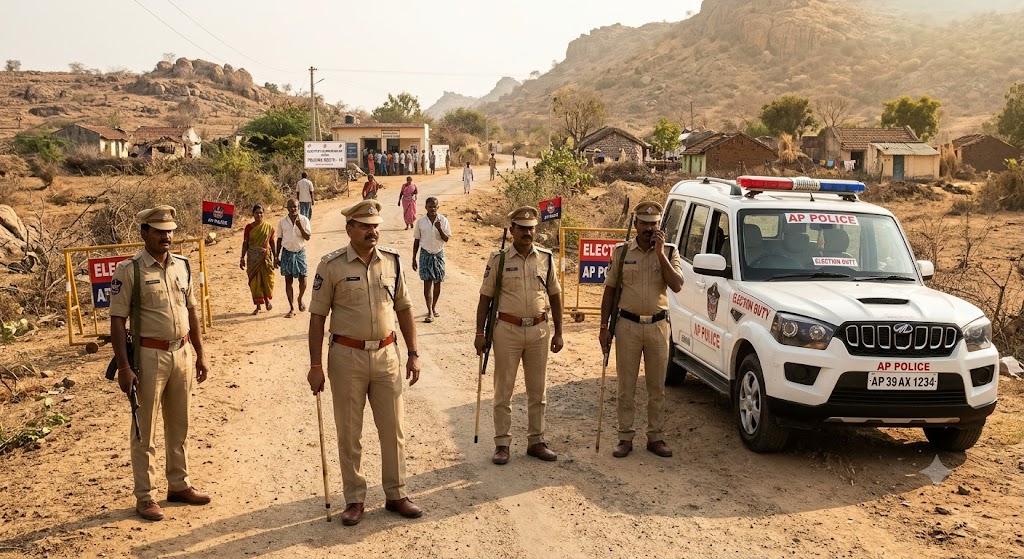
In regions like Rayalaseema, political violence often intersects with deeply rooted factional dynamics. Factional rivalries frequently transcend party labels, splitting community cadres across political divides. In this context, control over local administrative bodies means securing economic patronage, local contracts, and territorial clout. The conflict between rival local leaders is driven as much by socio-political dominance as by electoral victory, making local body nominations a flashpoint for clashes, paper-snatching, and intimidation. Policing, Factional Politics, and Structural Institutional Vulnerabilities -The role of the police apparatus in Rayalaseema and Palnadu during election cycles has drawn intense scrutiny, with allegations ranging from institutional bias to high-handedness.
A sharp contrast in perspectives regarding the situation
Under alleged police excesses, critics point to selective lathi-charges, arbitrary detentions, and the hindering of nominations as evidence of a compromised system. In response, the official state stand maintains that law enforcement is acting neutrally to enforce the law, manage violence and fires, and protect candidates.
Deviations from Standard Policing Norms
Reports of police detentions, lathi-charges, and selective interference near nomination centers have raised questions regarding police neutrality. Critics contend that giving excessive discretionary freedom to local police leads to partisan enforcement, where opposition candidates face bureaucratic hurdles or physical intimidation, while ruling party supporters operate with relative impunity. Law enforcement authorities, however, maintain that heavy deployment and firm action are essential responses to widespread stone-pelting, arson, and obstruction of election officials.
Hidden Systemic Pressures on Civil Machinery
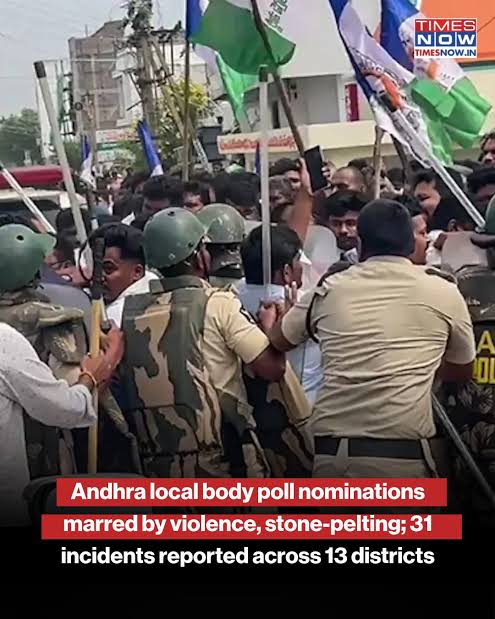
Behind the visible clashes lie structural issues within local administration:Politicization of Transfers: Frequent political transfers of ground-level police officers force local law enforcement to align with local political bosses for career stability. Hyper-Localized Stakes: Unlike assembly or parliamentary polls, local elections directly impact local revenue and policing, increasing the pressure on police personnel to maintain the political status quo. Institutional Erosion: When law enforcement is perceived as an extension of the state executive rather than an independent regulatory force, standard operating procedures give way to reactive, arbitrary measures.
Democratic Repercussions and the Path Ahead for Public Trust
The normalization of poll-related violence and partisan policing carries severe, long-term risks for democratic institutions in Andhra Pradesh. Key Concern: Unchecked political violence during local elections risks reducing voter turnouts, disenfranchising independent candidates, and eroding institutional faith in free and fair elections.
Negative Consequences of Unchecked Executive Power
Granting unchecked freedom to local law enforcement compromises the system of checks and balances. When citizens perceive the police force as a weapon of political expediency rather than a neutral arbiter, institutional trust collapses. It creates an environment where violence becomes an accepted tool for political survival, discouraging grassroots democratic participation and independent candidacies.
Public Resentment and Electoral Accountability
While violence and police heavy-handedness may offer short-term tactical advantages to dominant local groups, history shows that voters do not remain passive spectators indefinitely. Systemic high-handedness, administrative failure, and unmet promises often result in silent voter consolidation. Public discontent manifests during larger assembly and general elections, where voters use the secret ballot to hold accountable those seen as damaging the democratic fabric. To restore faith in democratic processes, impartial oversight by the State Election Commission, strict implementation of webcasting, and structural police reforms, remains imperative.

Principal Correspondent, Prime Post
CS Kulasekhar Reddy had thirty five years experience in journalism. He worked in Udayam and Andhra Bhoomi as reporter and sub-editor. He highlighted various social issues in Chitthoor, Ananthpur, Kadapa and Kurnool districts. He covered assembly sessions and Secretariat happenings.
Email: sangatiksr@gmail.com
Mobile: 9000400679