What is the fate of ‘The Right of AP People”
The Historical Weight of “Visakha Ukku–Andhrula Hakku”
Operational Challenges and Financial Crisis
Policy Shift, Government Bailout, and Future Outlook
From Expansion to Crisis: The Deepening Operational Strain
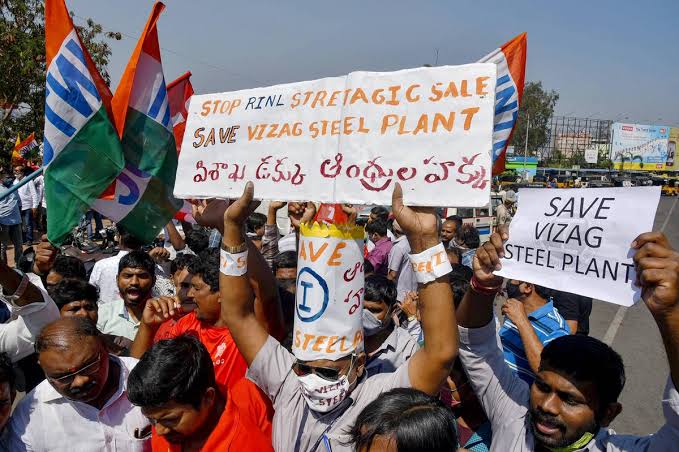
The slogan “Visakha Ukku–Andhrula Hakku” (Vizag Steel is the Right of the Telugus) originated during the late 1960s when 32 people sacrificed their lives in public agitations demanding a shore-based steel plant in Andhra Pradesh. For the region, Rashtriya Ispat Nigam Limited (RINL) is not merely an industrial asset; it is a symbol of political self-respect, regional pride, and collective socio-economic movement. The slogan remains active because the plant’s operational continuity and ownership model are repeatedly questioned. Whenever financial distress or disinvestments surface, civil society and labor unions invoke this historic sentiment to mobilize public resistance, turning economic decisions into political debates.
Separation from SAIL: A Strategic Misstep?
RINL was carved out as an independent corporate entity from the Steel Authority of India Limited (SAIL) in 1982. At the time, management and trade unions envisioned operational autonomy and focused regional industrial growth. In hindsight, this decision turned out to be a structural disadvantage. Loss of Raw Material Security: Integrated steel units under SAIL retained captive iron ore mines, safeguarding them against market volatility. RINL was left without dedicated captive mines. Financial Insulation: As an independent unit, RINL had to bear capital expenditure, debt servicing, and raw material procurement costs without absorbing shocks through a broader national umbrella like SAIL. Cost Disadvantage: Procuring iron ore at market rates from NMDC increases RINL’s production expenses by Rs 5,000 to Rs 7,000 per tonne compared to steel makers with captive mines.
Core Root Causes Behind RINL’s Financial Crisis
The plant’s underlying structural challenges stem from three main operational factors. Absence of Captive Mines: RINL is the only major public sector steel producer in India without captive iron ore or coking coal mines, forcing it to buy raw materials at prevailing market prices. High Debt Servicing Costs: Debt taken to fund capacity expansion from 3 million tonnes to 7.3 million tonnes created severe interest liabilities when global steel demand contracted. Working Capital Depletion: Prolonged operational losses led to working capital shortages, forcing two of its three blast furnaces to temporarily shut down during peak crisis periods.
Allegations of Procurement and Low-Grade Equipment
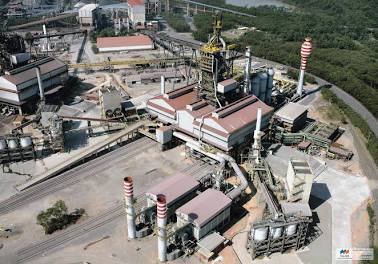
Over the decades, trade unions and political factions have pointed to internal procurement decisions and equipment choices as factors in operational downtime. Opponents and union leaders alleged that certain machinery installed during initial setup and expansion phases failed to perform at benchmark efficiency, leading to higher maintenance costs. The management countered that capital equipment was procured through standard global tendering processes under public sector guidelines, where technical suitability and financial bids determined suppliers. While periodic internal and external audits took place, these procurement issues added to operational overheads during periods of low-capacity utilization.
Workforce Structure and Misappropriation Allegations
The issue of manpower and financial management in RINL has seen debate across union and management circles. Manpower Ratios: RINL historically maintained a higher ratio of regular and contract workers per million tonnes of capacity compared to modernized private steel units. Contractual Reliance: Trade unions argue that contract labor was crucial for operational flexibility, whereas administrative reviewers highlighted that bloated workforce numbers inflated fixed overheads. Misappropriation Claims: Various audit reports and investigative agencies investigated irregularities regarding scrap sales, local contract allocations, and raw material logistics over the years. While individual cases led to administrative inquiries, systemic corruption was not formally cited as the sole cause of RINL’s distress.
Reasons for the Stalling of RINL Expansion Plans
RINL aimed to expand its annual installed liquid steel capacity from 3 million tonnes per annum (MTPA) to 7.3 MTPA. However, execution hit multiple roadblocks and capital shortfalls. Delays in equity support and rising interest debt slowed equipment installation and commissioning schedules. The Market Downturns: Global steel gluts and dumping of cheap steel reduced revenues just as key expansion projects required capital funding. Working Capital Crunches: High raw material costs left insufficient cash flows to maintain consistent operational momentum across all units simultaneously.
Present Financial Status of RINL
RINL experienced severe financial strain, recording a negative net worth of Rs 4,538 crore along with exhausted borrowing limits. However, major capital support interventions have stabilized the plant’s operational position. Production Recovery: Capacity utilization improved significantly as all three blast furnaces returned to active operation, driving daily hot metal production past 19,000 tonnes. Financial Support Tranches: Equity infusions and working capital loan restructuring helped meet immediate operational liabilities. Turnover Growth: Higher operational production helped the company recover revenue streams and improve operating cash flows.
Ex-Gratia and Bonus Issues Relative to SAIL
The non-payment or delay of ex-gratia payments to RINL employees—particularly during festival periods like Durga Puja—remains a point of friction between unions and administration. Legal Framework: Ex-gratia and performance-linked bonuses in Central Public Sector Enterprises (CPSEs) are governed by the Payment of Bonus Act and Department of Public Enterprises (DPE) guidelines. Profitability Clauses: Unlike SAIL, which maintained overall corporate profitability allowing uniform festival advances, RINL’s persistent net operating losses restricted statutory provisions for discretionary performance payouts. Government Stance: The Ministry of Steel maintained that operational cash flows must first cover raw material liabilities and debt obligations before authorizing non-statutory employee bonuses.
Privatization and Disinvestment Policy Shift
In early 2021, the Cabinet Committee on Economic Affairs (CCEA) granted in principle approval for 100% strategic disinvestment of RINL through privatizing management and equity. Such decision faced pushback from local communities, political parties, and trade unions. In response to regional economic priorities and strategic steel requirements, the policy approach shifted toward operational restructuring, equity infusion, and long-term public sector revival over immediate private offloading.
The NDA Government’s Revival and Bailout Package
The Union Government implemented a multi-stage financial package for RINL. Cabinet Approval: A initial package of Rs11,440 crore was approved, including Rs10,300 crore in direct equity infusion and Rs1,140 crore converted into preference shares. Secondary Equity Support: Additional proposals for fresh equity support were planned to address remaining capital structure liabilities. State Level Conversions: The Andhra Pradesh state government assisted by converting power and water supply dues into equity preference shares.
Central Government’s Mindset and Strategic Position
The central policy mindset around RINL focuses on self-sufficiency, debt reduction, and production targets. National Steel Policy Alignment: Restoring RINL’s 7.3 MTPA operational capacity helps meet target domestic steel production goals. Employment Protection: Restructuring capital protects direct and indirect jobs associated with the industrial ecosystem. Pragmatic Public Sector Policy: Capital support is contingent on operational metrics, cost control, and eventual self-sustained financial health.
Future Outlook: Public Sector Ownership vs. Private Transfer
RINL’s near-term future is tied to its operational turnaround, debt management, and raw material access. Public Ownership Retained: With fresh equity capital provided by the Union Government, immediate privatization plans have been set aside in favor of public-sector-led operational recovery. Long-term Viability: Sustained profitability will depend on allocating captive iron ore blocks, maintaining full blast furnace utilization, and keeping fixed costs managed. Integration Possibilities: Industry analysts continue to discuss long-term options, such as merging RINL back with SAIL or NMDC, as a structural solution to secure captive raw material supplies permanently.
Lobbying-the only option before trade unions to protect RINL
The primary focus of the unions should shift toward lobbying the Central and State governments for permanent captive iron ore mine allocations or long-term cost-effective supply agreements with NMDC. Support restructuring initiatives, skill multi-tasking, and voluntary rationalization of contract labuor to optimize labor cost per tonne. Engage in pragmatic negotiations regarding employee benefits and ex-gratia payouts, tying incentive structures directly to plant profitability and cash-flow recovery targets. Continually demonstrate that public-led management can remain financially viable, eliminating the need for future strategic disinvestment proposals.
Principal Correspondent, Prime Post
CS Kulasekhar Reddy had thirty five years experience in journalism. He worked in Udayam and Andhra Bhoomi as reporter and sub-editor. He highlighted various social issues in Chitthoor, Ananthpur, Kadapa and Kurnool districts. He covered assembly sessions and Secretariat happenings.
Email: sangatiksr@gmail.com
Mobile: 9000400679